A bus route map fixed at an old bus stop caught my eye when I was walking past Supachalasai Stadium in Pathumwan.
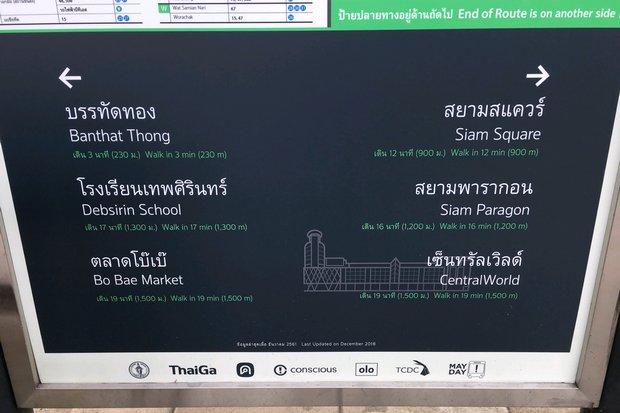
The board -- which shows a list of bus numbers and destinations in both Thai and English -- really is quite informative and user-friendly.
The 1- by 1.5 metre board features a locality map, complete with the locations of bus stops within walking distance around the stadium, a "route finder" that shows a list of popular spots along with the buses that serve each destination, as well as a list of emergency phone numbers.

Sirinya Wattanasukchai is a columnist, Bangkok Post.
This board, by any means, isn't the best route map. After all, it is impossible to include all places of interest -- including hospitals, temples, and other places of worship -- on a small board.
Despite this being a good beginning, there is definitely room for improvement.
To date, this is probably the most practical and user-friendly route map that Bangkok has ever had. It is easy for commuters to find their destination on the list, along with the correct bus to take and the correct stop to alight.
As a bus commuter myself, I know how confusing our bus system and routes are. It is tough for non-regulars to figure out which bus to take, and sometimes it is hard to locate a bus stop as some are unmarked, except by the gatherings of bus commuters.
This new bus route map will make the life of commuters easier, but City Hall's Traffic and Transportation Department has only rolled out 50 of these new maps. As a comparison, Bangkok has about 5,000 bus stops -- TTD promises to roll out 500 more maps by the end of the year.
The new map was developed by Mayday, a group of young people who are passionate about public transportation and are engaged in activities to help improve the service.
The youths behind the new map debuted their creation during the funeral period of King Bhumibol in 2016, when members of the public were encouraged to use public buses to help ease congestion. The map's design was also used at last year's Bangkok Design Week, where it received high praise for its user-friendliness.
Why am I making such a big deal out of a route map at an old bus stop?
Because the map is one of the few examples of a state-provided service that is actually user-oriented. I'm glad that this time, City Hall is doing things the right way -- by letting people who have the know-how do their jobs.
If you happen to be out of the loop, last year the TTD introduced its own bus route map, which was widely seen as a failure. Although the board also features all the necessary information, it was certainly not user-friendly -- commuters have to kneel down on the pavement as the route list is positioned too low on the board.
The English translation of the route information are written in such a fine print that you would need a magnifying glass to be able to read it. At one million baht each, it isn't hard to see why the board was extensively mocked by the mainstream media, as well as social media users.
The lack of user-friendly bus stops in Bangkok is caused by the lack of cooperation between state agencies responsible for managing the city's public transportation system.
The TTD -- which is in charge of the bus stops, including the shelter and signs -- is under the Bangkok Metropolitan Administration. However, the Bangkok Mass Transit Authority -- which operates the buses -- is a state enterprise under the Transport Ministry.
I daresay that the map made by the TTD was designed by people who do not have the slightest idea about commuter needs. It is immediately evident the TTD's map was drawn up by people who do not use buses in their daily commute. The Mayday team, on the other hand, are doing the legwork on the field -- riding buses to see what can aspect of the service can be improved. And their hard work is paying off.
The new bus route map is a small but important example of how the state must listen to the public in order to serve them better. This ensures that their tax money isn't going down the drain.
A channel must be set up for the state to communicate with members of the public, who are also stakeholders. The latter must have a say in the city's development, from small issues like how the footpaths should be paved, to bigger issues including the management of street food, the future of Makkasan Park as well as the riverside promenade.
Sirinya Wattanasukchai is a columnist, Bangkok Post.