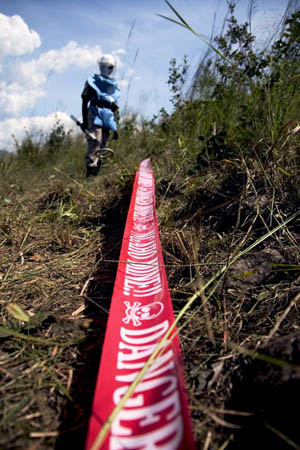
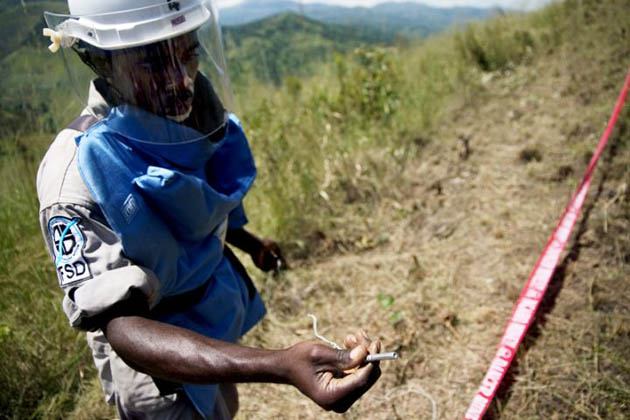
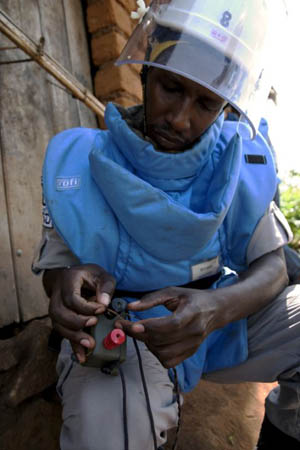
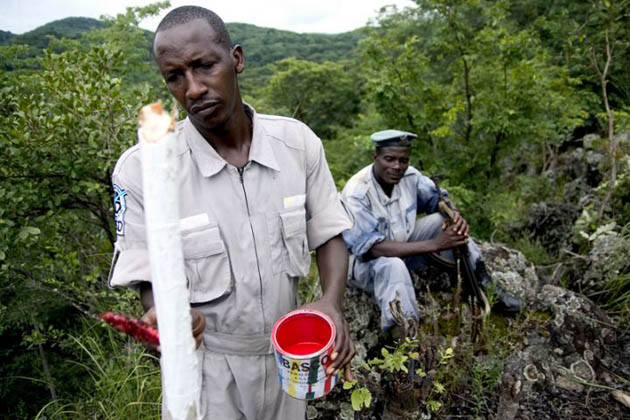
Didier Perardel (right), technical adviser with the Swiss Foundation for Mine Action (FSD), holds a briefing for the de-mining team before they hike into the village of Bugume to follow a report of an unexploded rocketPhotograph: Saeed Taji Farouky/freelancePontien Biyaka, a de-miner with FSD, wires the detonator to demolish a fragmentation mine discovered in the village of Kayanga. The team's original map contained only two mines, but when they arrived, they found dozens surrounding the entire hillPhotograph: Saeed Taji Farouky/freelancePontien Biyaka, a de-miner with FSD, paints a picket fence that marks the border between the cleared and uncleared areas of a remote mountain in the province of Bururi. Behind him is an armed escort from the Burundian National Police - the area is notorious for rebel activity and attacks by armed banditsPhotograph: Saeed Taji Farouky/freelance
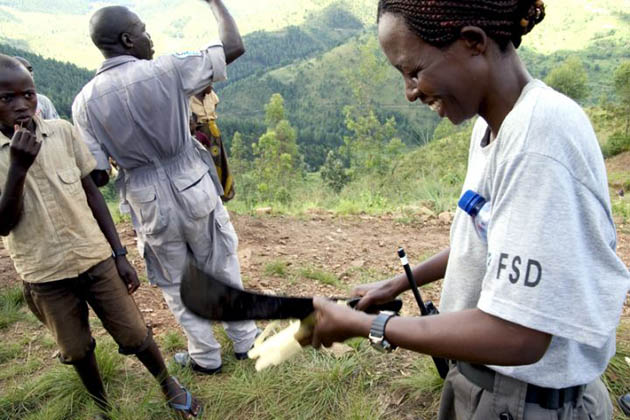
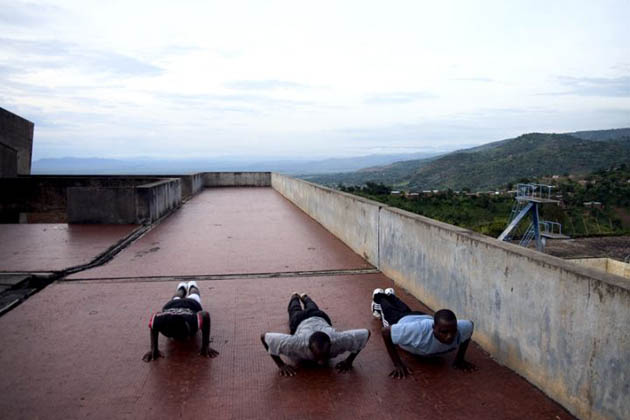
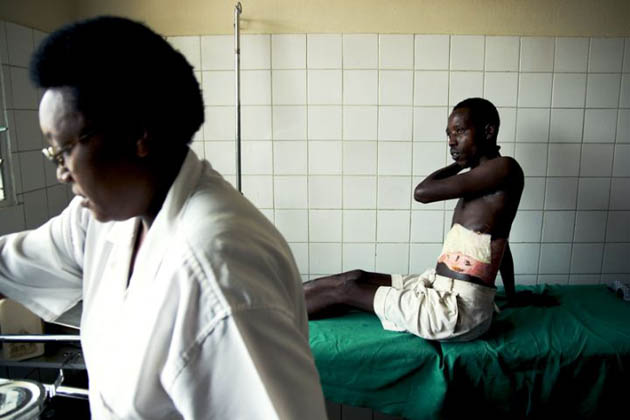
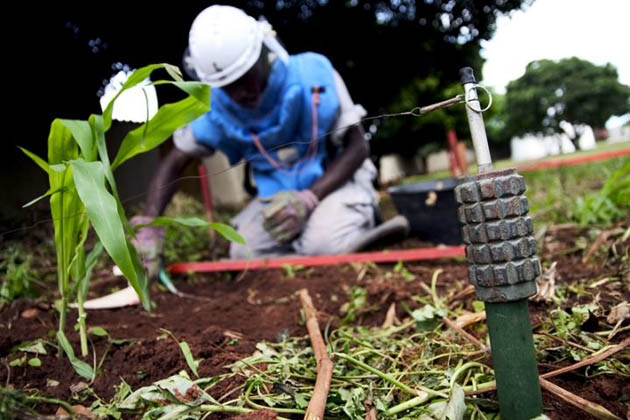
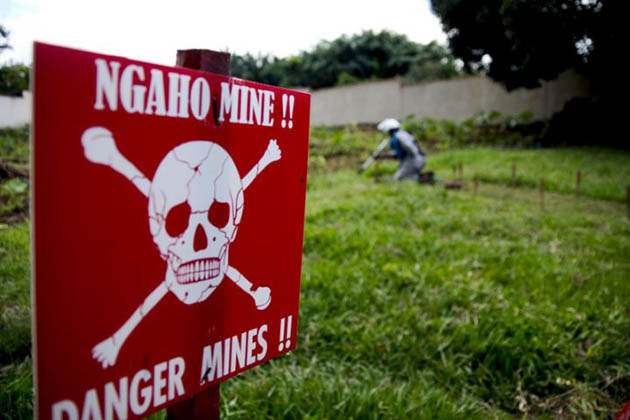
Innocent Nsindabinezwe, 31, is treated for burns after he was attacked in his village in the province of Bubanza. He says he was targeted because he is a Tutsi. Even after Burundi's genocide, in which 300,000 people lost their lives, ethnic violence is not unknownPhotograph: Saeed Taji Farouky/freelanceElias Ndabirereke (left) surrounded by his family. His brother, a soldier in the Burundian army, was killed on this spot by a fragmentation mine. For nearly 10 years, the family was unable to bury their dead relative until the area had been clearedPhotograph: Saeed Taji Farouky/freelanceJean Ntirandekura, a de-miner with FSD, practises on a dummy fragmentation mine. Programme manager Zlatko Gegic wants the team to continue working independently, possibly in neighbouring countries, once the programme ends in SeptemberPhotograph: Saeed Taji Farouky/freelanceAngel Gabriel Ndayirukiye, a de-miner and translator with FSD, practises locating mines in a model minefield on the grounds of the FSD base in BujumburaPhotograph: Saeed Taji Farouky/freelancePontien Biyaka (centre) and Aaron Minarambona (right) ask local children in the village of Kayanga about the location of a number of unexploded mines. FSD interviewed 67,000 people over three years to compile a definitive survey of mines and unexploded ordnancePhotograph: Saeed Taji Farouky/freelanceMathias Niyonzima, a de-miner with FSD, searches the perimeter of a hill in the village of Kayanga that was encircled with dozens of mines by the Burundian army. They kept no maps, so FSD has to manually search every inch of landPhotograph: Saeed Taji Farouky/freelanceMedic Esperance Singirankabo slices open sugar cane after a gruelling hike from the village of Bugume in the remote province of Bubanza. The team was following reports of an unexploded rocket, but luckily found only fragments, and the field was declared safePhotograph: Saeed Taji Farouky/freelanceJean Ntirandekura, a de-miner with FSD, holds an explosive charge as he prepares the demolition of a fragmentation mine discovered in the village of Kayanga. The team's original map contained only two mines, but when they arrived, they found dozens surrounding the entire hillPhotograph: Saeed Taji Farouky/freelanceMen exercise at the University of Bujumbura. Because of its high vantage point over the entire city, the university was occupied by government troops during Burundi's 13-year civil war. FSD is now working to eradicate the deadly legacy of that warPhotograph: Saeed Taji Farouky/freelance
Sign up to read this article
Read news from 100’s of titles, curated specifically for you.

,--7279.jpg)
-3771.jpg)
-an-5543.jpg)