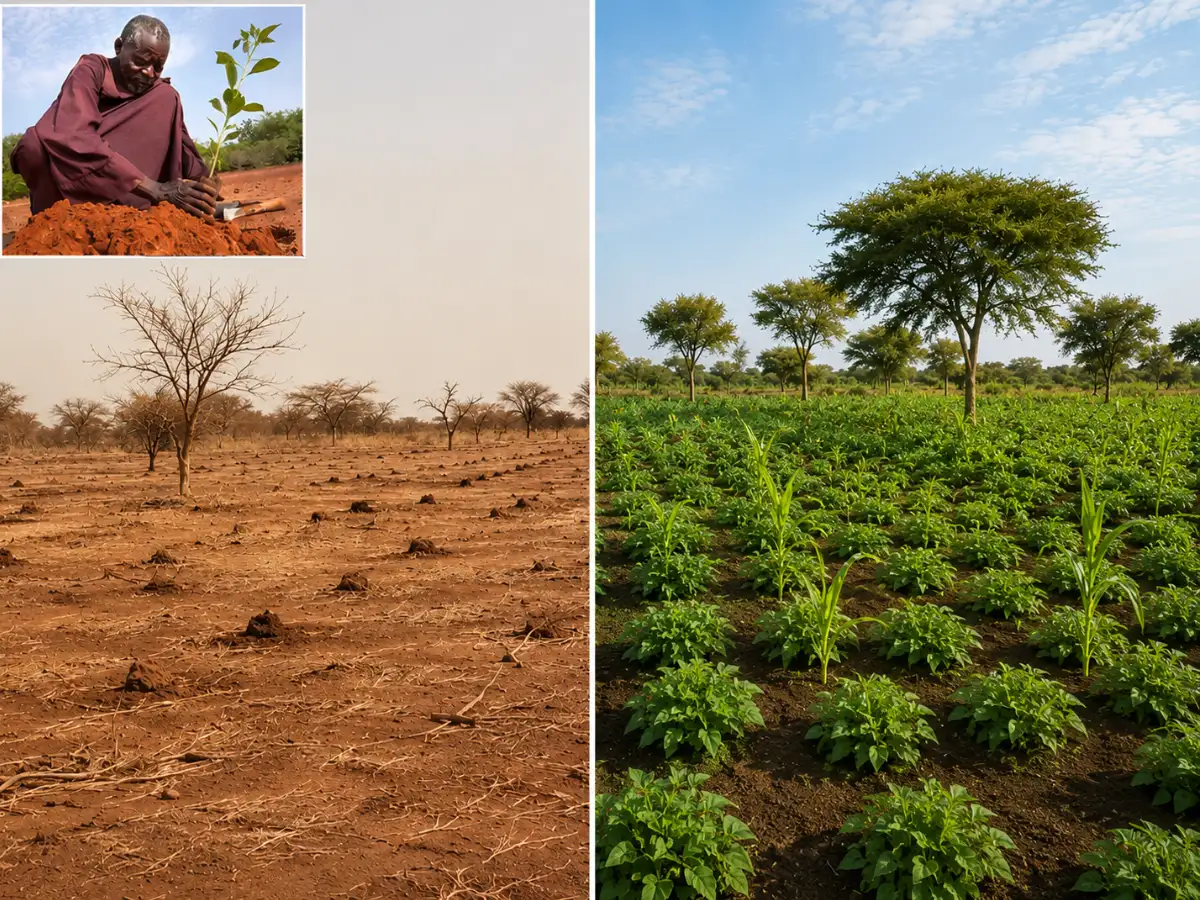
If you've spent any time on climate TikTok, you probably know the feeling: the earth is warming, and it feels like there’s nothing one person can do. Yacouba Sawadogo, a farmer in northern Burkina Faso, never received that memo. He had a hoe, compost, and an old technique that most of his neighbors had abandoned. Beginning around 1980, he spent the next four decades turning a dead, cracked plateau into a forest of nearly 40 hectares with more than 60 species of trees and bushes.
In the peer-reviewed study, ‘Soil and Water Conservation in Burkina Faso, West Africa,’ published in the journal Sustainability, the low-tech farming method Sawadogo revived has been documented across Burkina Faso to increase crop yields by more than 100% on restored land, even in years of poor rainfall. That’s the scientific backbone of this story, and it’s worth understanding why the stubbornness of one farmer became a case that scientists are still studying today.
When the rain stopped coming
The Sahel region of West Africa experienced severe droughts in the early 1980s. The crops died, wells dried up, and people died of starvation. Most families did what was sensible; they moved to the cities to find work. Sawadogo did the opposite. He left his job at the market stall and returned to his home village in the province of Yatenga to restore fertility to a land so barren it had been left fallow.