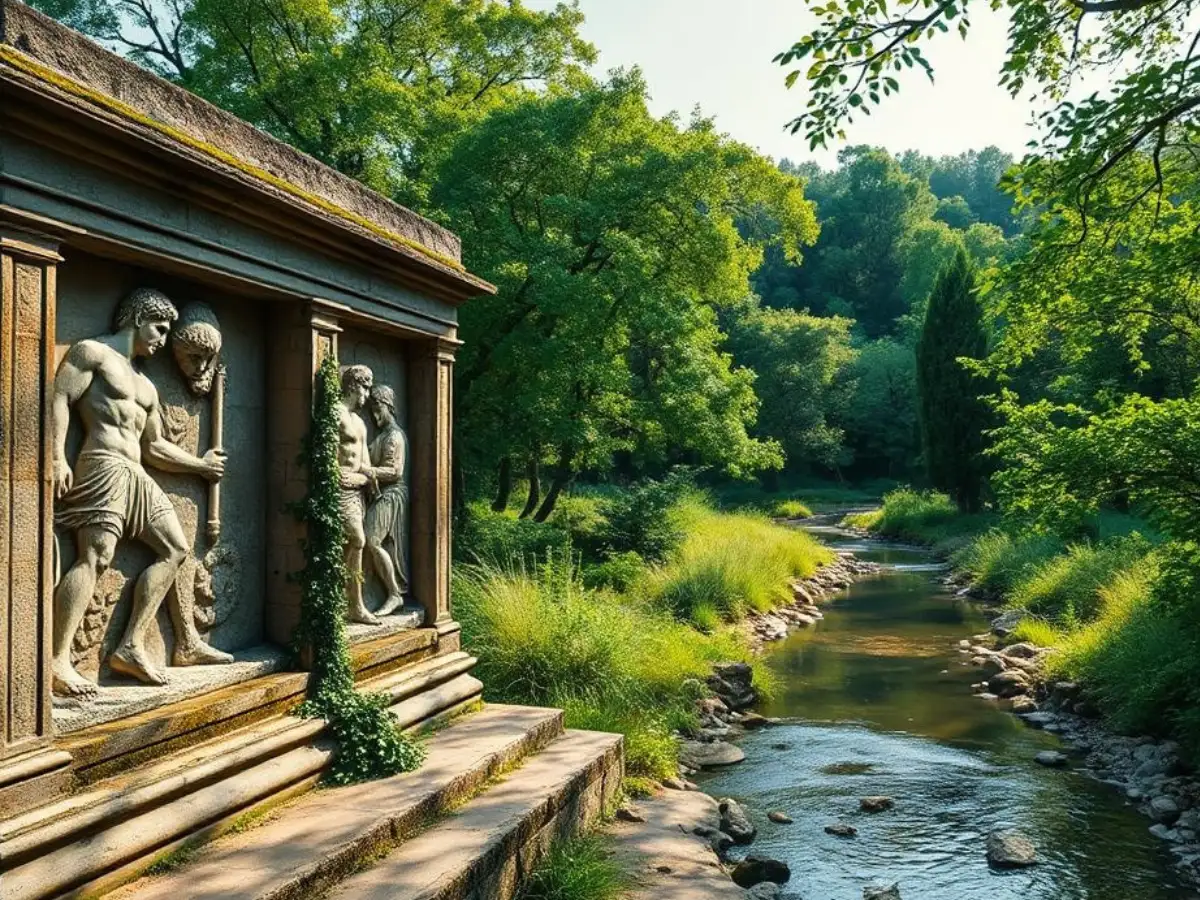
It wasn’t found by archaeologists with maps and ground-penetrating radar. A flood did the trick instead.
Serrentella, a stream in the small southern Italian town of Apollosa, overflowed its banks after heavy flooding in September 2021. When the waters finally subsided, they left something unexpected behind: a row of large limestone blocks jutting out of the earth along the edge of the stream.
Local volunteer Marco Zamparelli noticed the stones didn't look right. Too neat. Too deliberate. He alerted the authorities, and what followed was a years-long dig that wrapped up in January 2026 with one of the most remarkable Roman discoveries in recent memory.
Excavation has revealed some 40 blocks which once formed a Roman funerary monument, a circular mausoleum some 40 feet in diameter, dating to the early first century AD, in the age of Augustus.