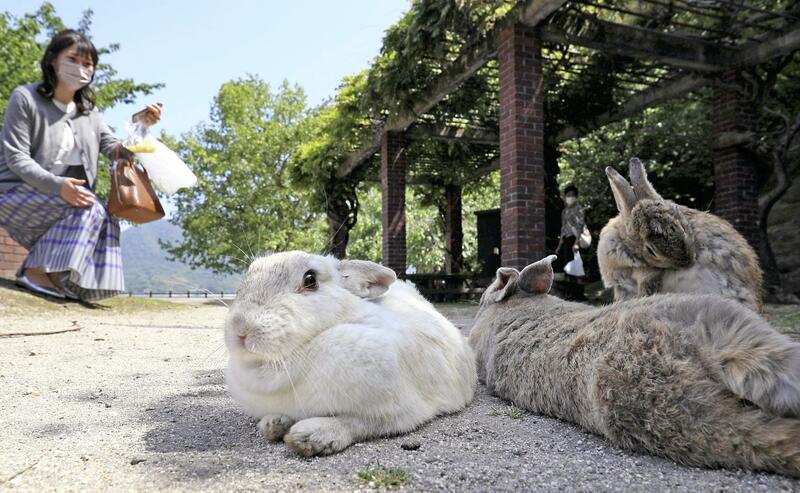
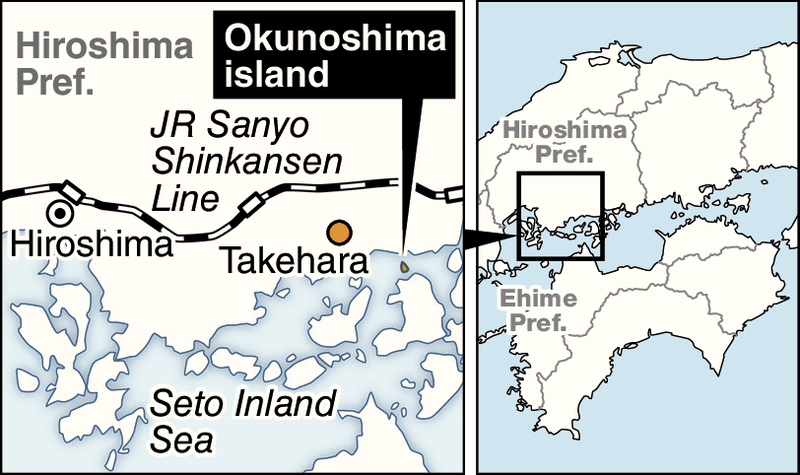
TAKEHARA, Hiroshima -- On Okunoshima island, also known as Rabbit Island, in the Seto Inland Sea, the wild rabbit population is decreasing because there is less food available as a result of the pandemic causing a slump in tourism.
The island in Takehara, Hiroshima Prefecture, is an uninhabited isle that has a perimeter of about four kilometers. However, what the island is known for, even overseas, is its wild rabbit population.
Local residents have begun discussing how they can protect these animals as they are an important resource for tourism.
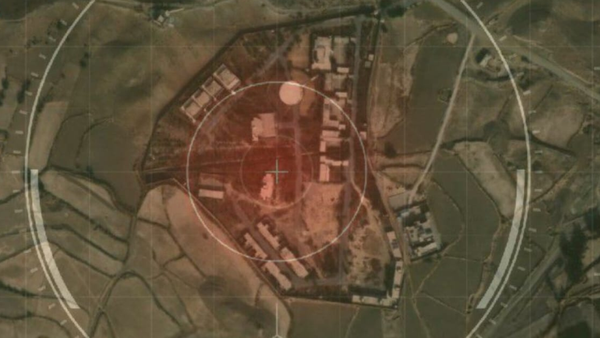
Before and during World War II, the Imperial Japanese Army had a poison gas factory on the island, and at the time, it was removed from maps for security reasons. In 1950, the island became a national park and is now a popular tourist destination. The abandoned factory still stands, and lodging facilities and campgrounds have been developed.
The rabbit population started to increase in the 1970s. It is thought that rabbits, which were kept at an elementary school off the island, were brought over and they multiplied.
The island's fame skyrocketed around 2013 when foreign tourists and others posted about Rabbit Island online. The number of annual tourists reached about 407,000 in 2017, compared to about 125,000 in 2013.
The rabbit population is believed to have exploded because of the number of tourists feeding them nutritious food. The Environment Ministry, which manages the island, conducted a survey in 2018 and confirmed there were about 1,000 rabbits living there.
However, the number of tourists plummeted to about 153,000 last year because of the coronavirus pandemic. The ministry surveyed the island in January and confirmed the population had decreased to about 500.
"Many of the rabbits have starved or have become infertile because of the lack of food," said Fumio Yamada, a visiting professor at Okinawa University.
Yamada suggested that because rabbits can reproduce quickly, giving birth every few months, there are more rabbits who are now unfamiliar with humans, so it is possible that many of the rabbits have stayed hidden. In response to this situation, local residents have started discussions on how to best interact with the rabbits.
While the rabbits have become a tourist attraction, they have also damaged the island by eating the plants and roots that had prevented slopes from collapsing. As the population increased, some rabbits became injured because of competition for food. The impact on the island's ecosystem cannot be ignored.
The Environment Ministry, the Takehara city government and local residents have been discussing the issue since last December and are considering making new rules regarding tourists feeding the animals. It is said the island faces many issues with tourists in terms of etiquette, including littering.
"We want to find the best way to balance promoting tourism and protecting the ecosystem," said a ministry official.
Yamada said: "You could say the situation before the pandemic was rather unnatural as the rabbits were allowed to roam free on the island. So, we need to take this opportunity to think about what we want the island to be and what is best for the rabbits."
Read more from The Japan News at https://japannews.yomiuri.co.jp/