As John Bercow’s statement drifted into its third minute, heads lolled and eyes rolled ostentatiously on the backbenches, while behind the Speaker’s chair several MPs amused themselves by making winding-up hand gestures. It wasn’t an entirely appropriate response to news of the celebrations of the 800th anniversary of Magna Carta and the 750th anniversary of Simon de Montfort’s first parliament, though it was one that was more or less in keeping with the preceding 30 minutes of prime minister’s questions.
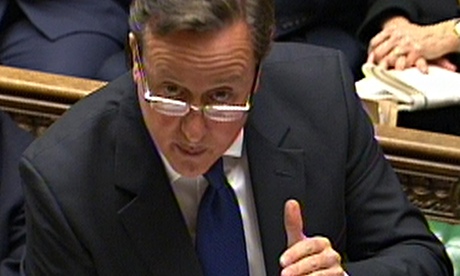
David Cameron arrived in the chamber already red-faced and became progressively redder. Last week’s humiliation over the love affair with the Greens that is preventing him from taking part in the TV debates clearly still rankled but the cherries had lined up nicely in the interim for him to get his revenge.
Unemployment had fallen, Labour’s suggested energy price freeze had horribly backfired due to falling oil prices, the International Monetary Fund had given the UK economy a guarded – the prime minister later forgot to mention this qualifier – thumbs up and, best of all, his Best Bro, aka President Obama, had been far nicer to him than he had dared hope. That Obama is so well disposed towards Cameron says as much about the president’s own domestic problems in the US as it does about Ed Miliband’s lack of global credibility. Leaders under the cosh tend to stick together.
None of this was quite enough for Cameron, though. He wanted more than just to get the better of the Labour leader in their exchanges. He wanted to grind him into the dust and before long he had his chance. With his own backbenchers braying at the scent of the kill, Cameron delivered his coup de grace, which was to repeat a story that had appeared in the Mail on Sunday.
“We learned at the weekend what he can achieve in one week in Doncaster,” he said. “Where he could not open the door, he was bullied by small children, and he set the carpet on fire.” Short of adding that Miliband wet his pants and cried at school, Cameron couldn’t have made himself plainer. Miliband’s problem wasn’t that he was bullied, because there’s nothing wrong with bullies. Bullies are winners. It was being such a wetty that he allowed himself to be bullied by people smaller and younger than himself. The prime minister’s attack was petty and vindictive. So much for Compassionate Conservatism. Unfortunately, it was also effective. Miliband tried to shrug it off but looked crushed.
The one moment of real drama and importance came when Sir Peter Tapsell, the father of the house, asked a question about the much-delayed Chilcot report. Having, as so often, referenced the Crimean war – Tapsell likes to keep the gag that he was alive then running – he turned to “the disgraceful incompetence of the Chilcot inquiry into widely held suspicions that Mr Blair conspired with President George W Bush several months before March 2003, and then systematically sought to falsify the evidence on which action was taken?”
It was quite a moment to hear a former prime minister being accused of lying to parliament by its most senior MP, but Cameron’s only concern was to remind the Commons that any delay in publication was nothing to do with him. He also couldn’t resist another jibe at Labour by saying the report would have been published long ago if Labour had set up the inquiry earlier, which was a bit like saying the Iraq war would have ended earlier if it had ended earlier. Cameron might also have thanked Miliband for saving him the embarrassment of a later inquiry into the war in Syria. But he forgot that. Is this what Simon de Montfort really had in mind?