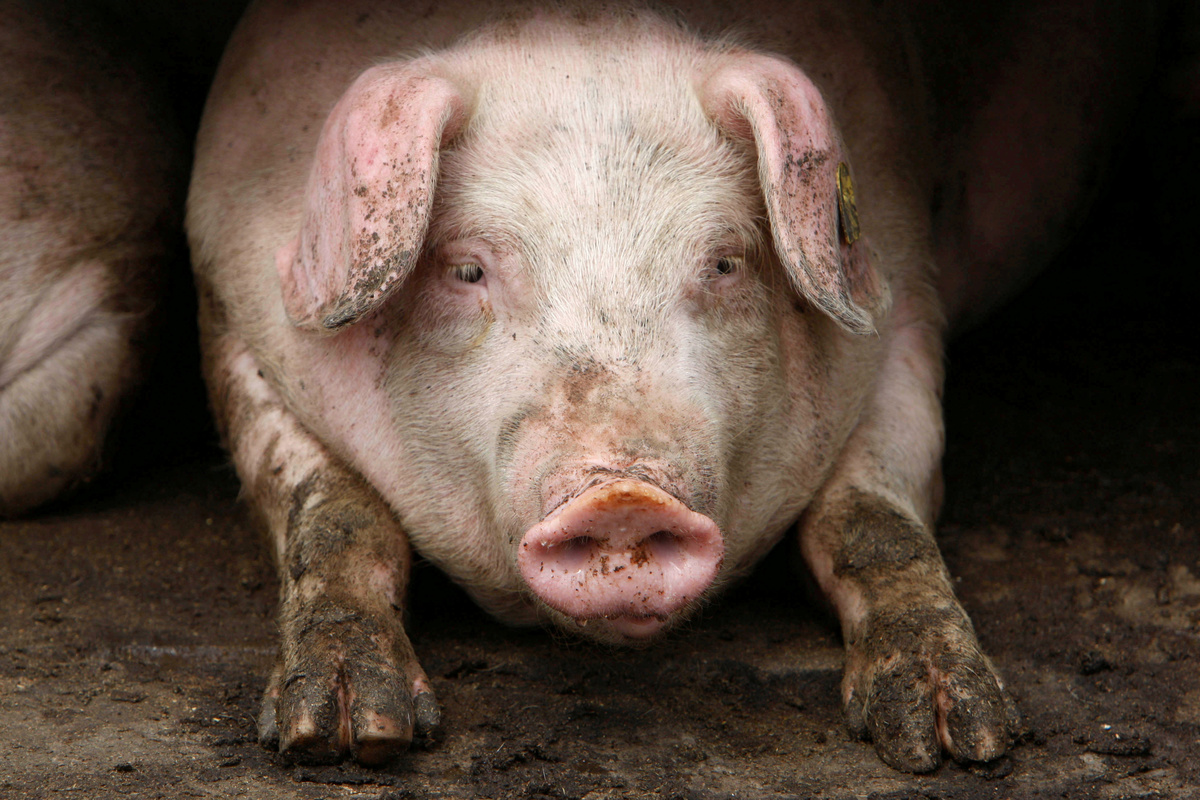
SOFIA (Reuters) - Bulgarian Prime Minister Boyko Borissov said the Balkan state's government will compensate owners who voluntarily cull their domestic pigs, as the country works to stamp out an outbreak of the highly contagious African swine fever.
Almost 130,000 pigs have been killed on six breeding farms in the Black Sea country in the past two weeks. Authorities have so far detected 30 incidents of the incurable disease, which is deadly to pigs but harmless to humans, at industrial or backyard farms.
In an attempt to stop it spreading, the Agriculture Ministry has set up 20km (12.4 miles) sanitary zones around all registered industrial pig farms in the country, with officials ordering the culling of home-raised pigs in these zones.
Borissov said the government would pay 300 levs ($170) to every owner who voluntarily culled their pigs, adding that 75% of the sum will be provided by the European Union.
His announcement came after protests in several parts of southern Bulgaria on Friday, with hundreds resisting government orders to kill their pigs or face the animals being culled by the Food Safety Agency, saying there had been no swine fever outbreaks in their regions.
"No one is pleased about this (African Swine Fever)," Borissov said late on Friday in the southern town of Pazardzhik. "It is like protesting against cancer. We managed to master it for two years, but now we are not."
Bulgaria is one of the poorest European Union member states and almost every household in rural areas keeps home-raised pigs. Industry officials fear the virus could cause damages of up to 2 billion levs ($1.1 billion).
Analysts say the price of pork in the country has increased by up to 30% in less than a month because of the outbreaks and could rise by a further 15% in the autumn.
(Reporting by Angel Krasimirov; Editing by Hugh Lawson)