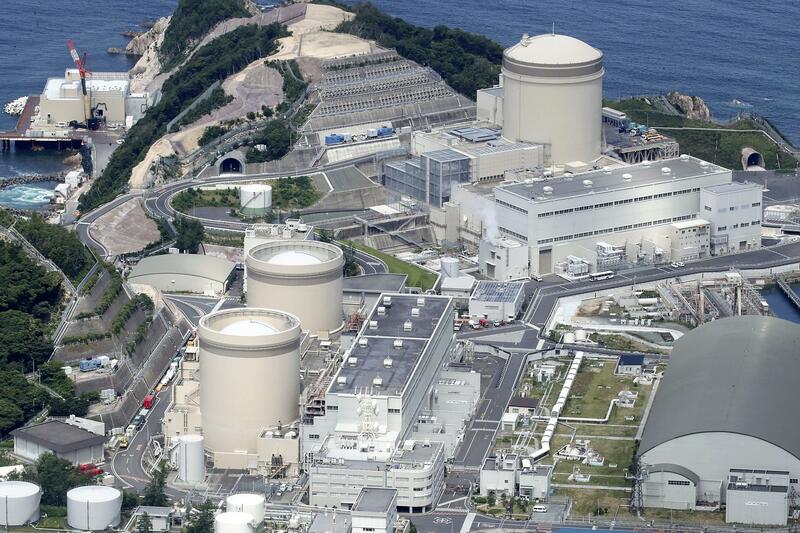
The building or rebuilding of nuclear reactors will not be mentioned in the strategic energy plan to be compiled this summer, according to a draft obtained by The Yomiuri Shimbun, although the plan will state that nuclear power generation will be "used on the scale necessary in a sustainable manner."
The nation's energy plan is reviewed about every three years. According to sources, a decision on whether new reactors should be built is likely to be delayed until the next examination.
The draft plan obtained by the Yomiuri maintained the existing statement that Japan will reduce its dependency on nuclear power as much as possible. This was first included in 2014, following the disaster at the Tokyo Electric Power Company Holdings, Inc.'s Fukushima No.1 nuclear power plant in 2011.
Gaining the public's trust for nuclear power is still a work in progress, and the decision not to mention building or rebuilding reactors in the plan was likely based on that fact.
The current plan stipulates that nuclear power will account for 20% to 22% of the energy mix in fiscal 2030.
If nuclear power reactors are operated for the legally allowed maximum of 60 years, then 23 reactors could be in operation in 2050, contributing about 10% to 20% of the total power generation in Japan. Therefore, whether to refer to building or rebuilding reactors in the future, with an eye on mid- to long-term use, was one of the key points of this summer's review of the energy plan.
Prime Minister Yoshihide Suga has set a government goal of reducing greenhouse gas emissions to net zero by 2050. To achieve that target, the plan will state that renewable energy will be used as a major power source.
-- Eye on election
Not making the building of new reactors an issue in the next lower house election, to be held by this autumn, is believed to be another factor in the decision. It remains unclear whether the nation can provide a stable supply of electricity and achieve decarbonization at the same time.
To achieve Suga's goal of net-zero greenhouse gas emissions by 2050, it is imperative to reduce the nation's dependence on thermal power generation, which emits a large amount of carbon dioxide. How to secure alternative power sources was a major point of the discussions on reviewing the energy plan.
Since the Fukushima disaster in 2011, the government has put off deciding whether to build new reactors or rebuild existing ones. Some government officials have said the longer the decision takes, the more difficult it will be to greenlight building or rebuilding.
"The next review will be the last possible opportunity," said a senior official at the Economy, Trade and Industry Ministry.
However, as opposition against nuclear power remains strong in society, many ruling party lawmakers have said the energy plan should not present a clear view on building or rebuilding nuclear reactors, apparently fearing that the issue will be a weak point for them in the next lower house election.
The ruling parties' struggles in the Tokyo Metropolitan Assembly election on Sunday also motivated the decision.
Renewable energy sources such as wind and solar power do not emit CO2, but their output fluctuates depending on weather conditions. There are also concerns that electricity prices may rise when the use of renewable energy expands.
Discussions on how to balance decarbonization and economic growth must be deepened, or the possibility of achieving a decarbonized society will recede further.
Read more from The Japan News at https://japannews.yomiuri.co.jp/