Written by Maria Trindade and Lauren Murray, illustrated by Alexis Cuddyre and Anna Louise Brooks
Building brands in challenging categories – in pictures
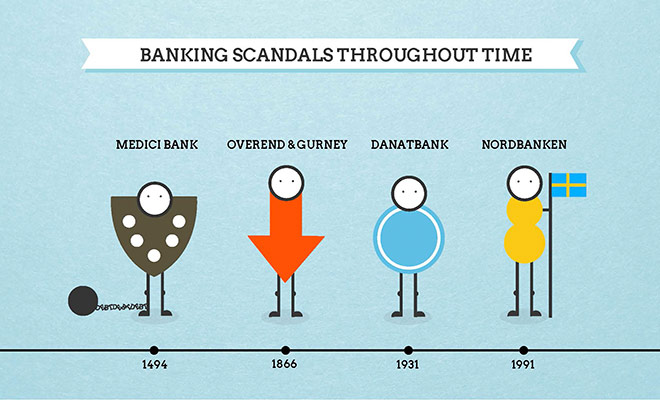
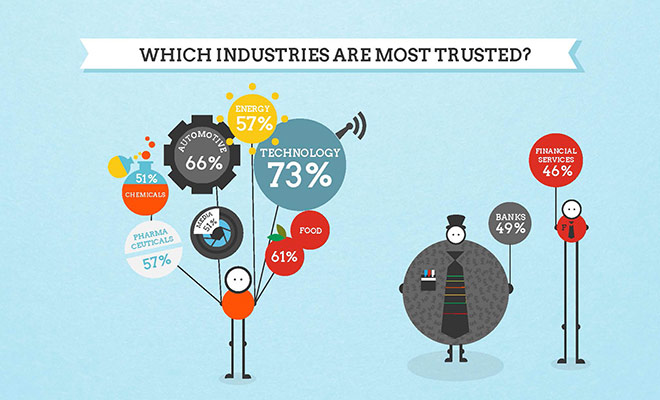
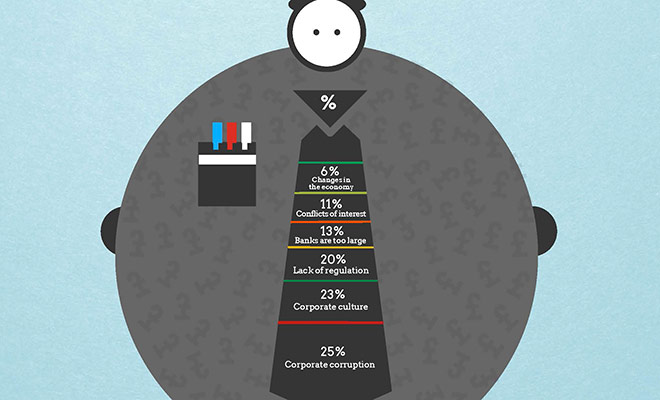
Reputational issues are inherent to banks. You may not be surprised to hear that one of the first institutions ever recorded to have collapsed was a bank, the insolvency of the Italian Medici bank in 1494.Photograph: Brand UnionAccording to the 2013 Edelman Trust Barometer, banks and financial services have been voted the least trusted of all global industries, whereas product-based categories – such as electronics, cars and food – were regarded more favourably.Photograph: Brand UnionThe global trust deficit that banks are currently facing is strongly linked to faulty culture. Despite the size of these organisations, scandals are perceived to be driven internally and fully within a business’ control.Photograph: Brand Union
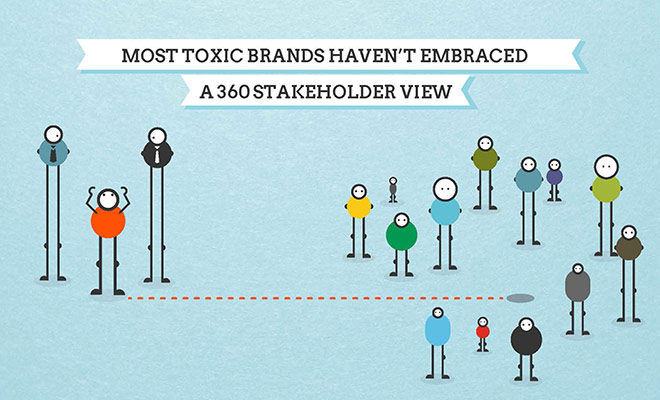
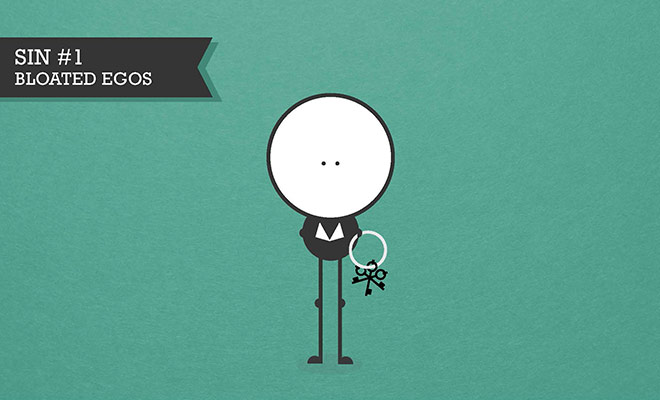
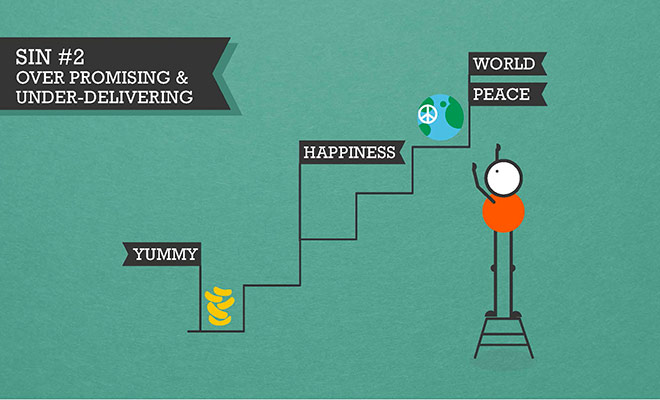
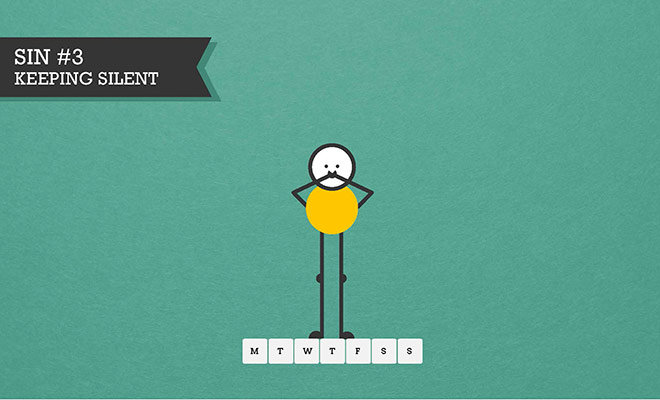
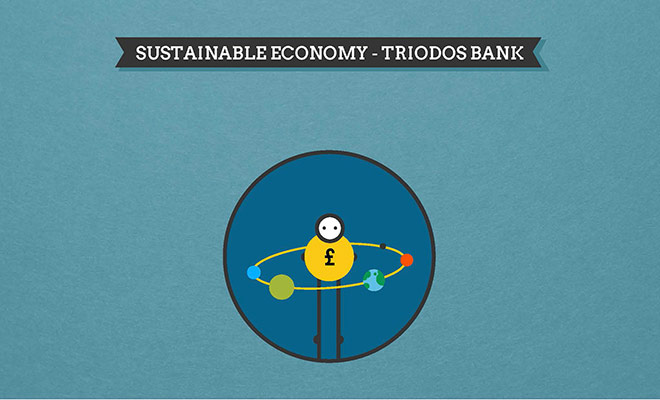
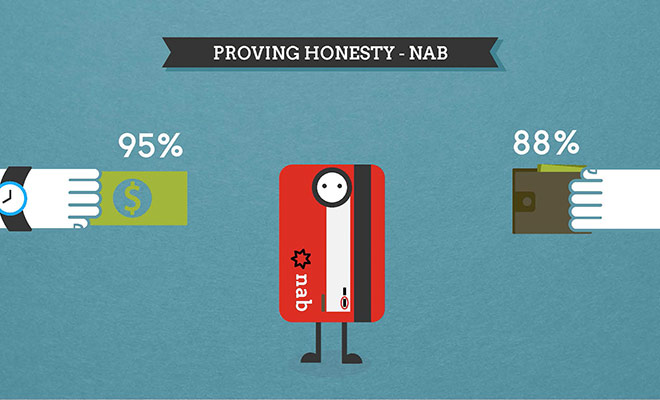
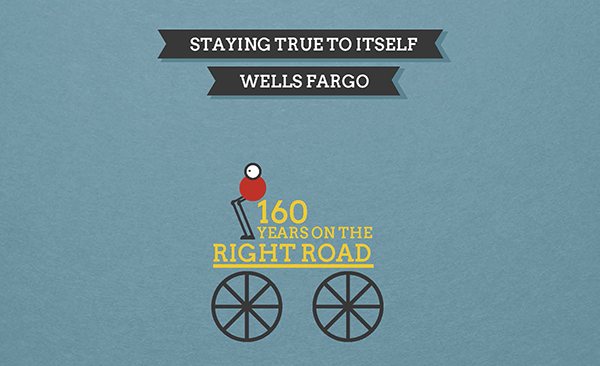
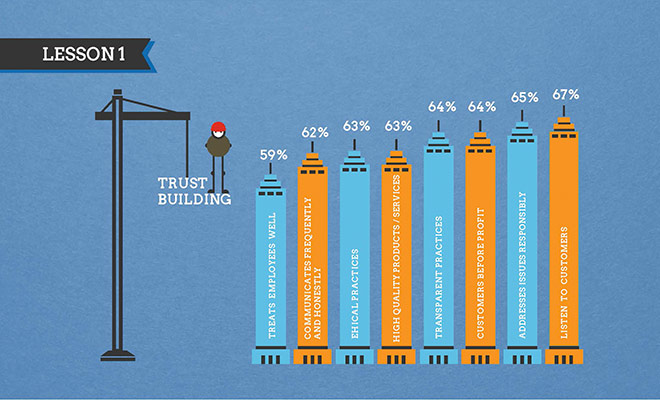
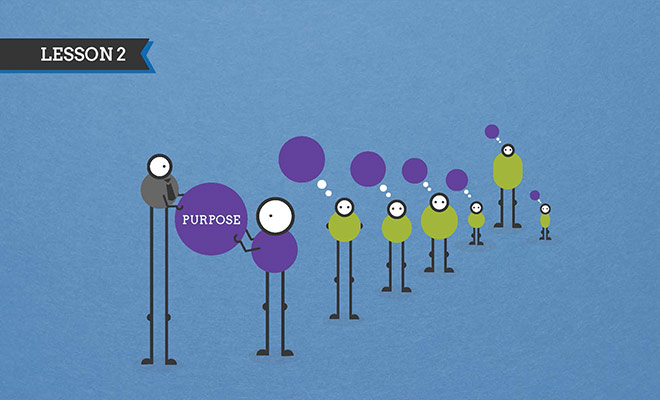
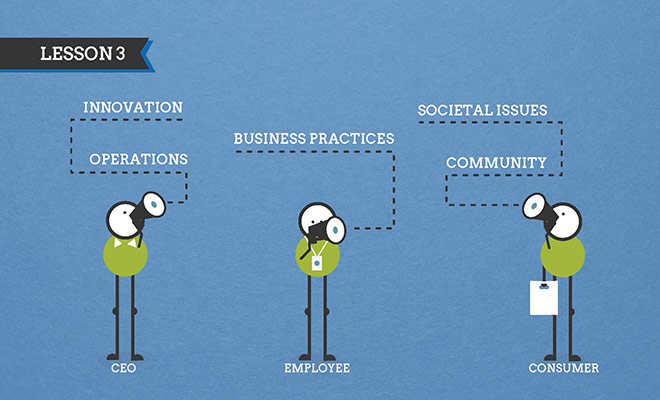
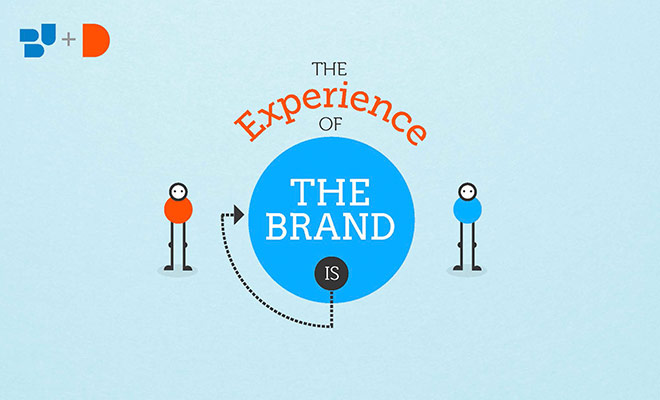
Some brands are succeeding within categories as challenging as banking, and they’re doing so by adopting an extended stakeholder strategy. This holistic view considers everything that the brand interacts with – from people to animals to trees – in order to drive real value beyond shareholder profits.Photograph: Brand UnionThe Libor scandal exposed the reckless, brazen behaviour and arrogant attitudes of traders, fuelled by a belief that they operate in a superior industry exempt from rules. Events such as these have been the basis of severe damage.Photograph: Brand UnionWhen a company doesn’t effectively set and manage expectations, it is actually motivating more than half of its customers to defect. According to Accenture, 63% of consumers expressed feeling extremely frustrated when, as part of a service experience, a company delivers something different from what they promised upfront, with 78% noting that ‘broken promises’ would mean a likely switch to a different provider.Photograph: Brand UnionWith extensive platforms for communication, people expect a response, even and especially if it’s to say sorry. With reports showing that 50% of consumers give a brand only one week to respond before they stop doing business with them, silence is not an option.Photograph: Brand UnionTriodos Bank is a pioneer in ethical and sustainable banking. Headquartered in The Netherlands, its mission is to make money work for positive social, environmental and cultural change by adopting a 'Triple Bottom Line' approach: placing equal importance on people, planet and profit.Photograph: Brand UnionThe financial sector is not a lost cause. When trust plummeted after the financial crisis, NAB decided to differentiate itself by launching a major initiative focused on honesty. They conducted a series of experiments that put Australian honesty to the test, such as leaving cash-filled wallets on the streets to see if they were returned, and then posted videos of honest Australians on YouTube.Photograph: Brand UnionThe Wells Fargo brand is worth about $40bn, making it America’s most valued banking brand. Its disciplined, responsible and conservative approach to lending is what has allowed the company to grow and prosper through many economic cycles and avoid the credit traps many banks have experienced. Wells Fargo proves that even bigger banks can retain trust through the times.Photograph: Brand UnionAccording to the Edelman Trust Barometer for financial services, there are three top actions for building trust. The first is listening to customer needs and feedback. Most financial services brands are clearly not delivering on these top attributes, interlinked by one clear theme: empathy.Photograph: Brand UnionThe second lesson is taking responsible actions to address issues or crises. Even for banking institutions, generally accepted by the public as commercially-minded, aggressively competitive organisations, defining a purpose above profit is critical.Photograph: Brand UnionThe third lesson is having the right person for each message. For example, when talking about a company’s situation in a time of crisis or a company’s business practices (both positive and negative), an employee is most trustworthy. When talking about financial earnings, operational performance or innovation, the CEO is most credible.Photograph: Brand UnionSuccessful brands make lasting impressions on us as a result of continual, positive moments of interaction, and these experiences influence satisfaction, loyalty and emotional attachment. The experience of the brand is the brand.Photograph: Brand Union
Sign up to read this article
Read news from 100’s of titles, curated specifically for you.