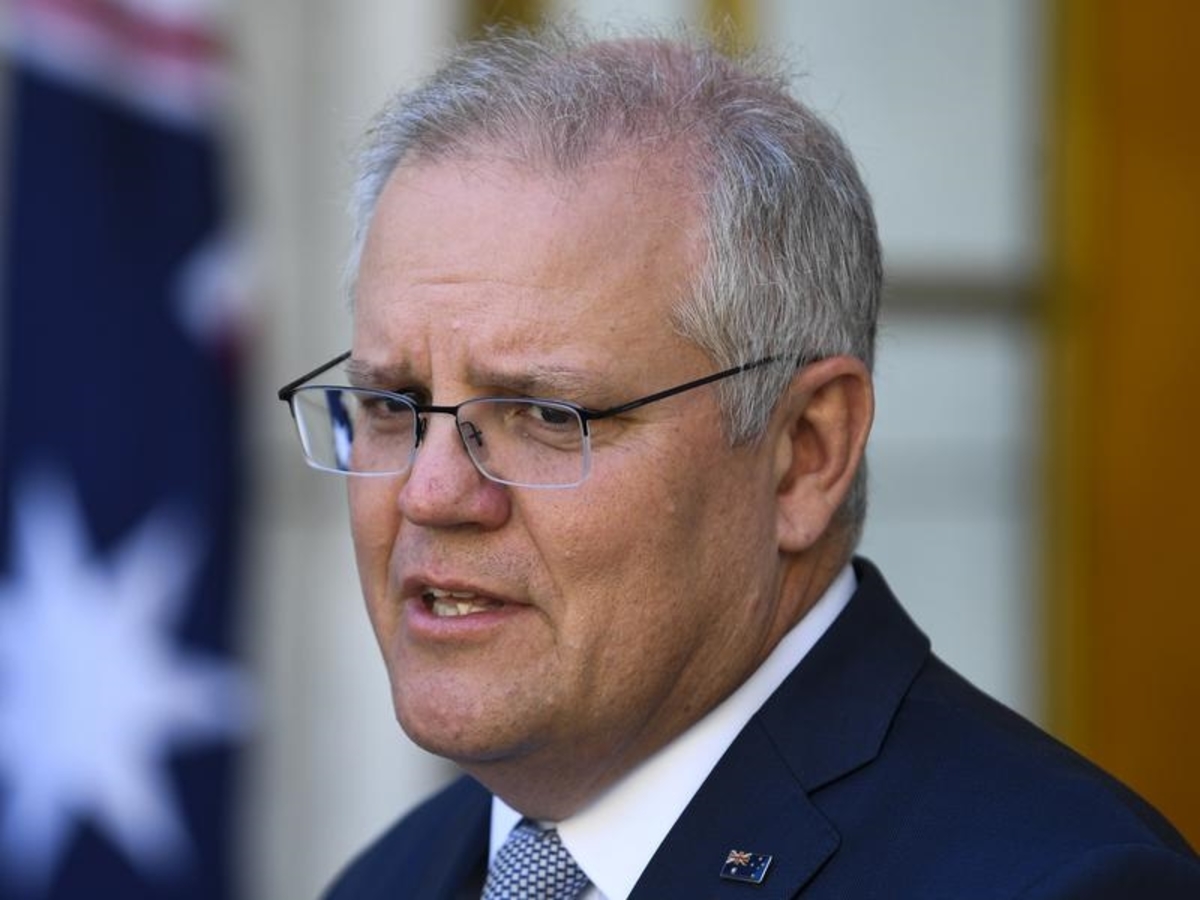
Scott Morrison has framed next week's federal budget as the most important since the Second World War.
"We find ourselves in unprecedented times," the prime minister told reporters in Canberra on Tuesday.
"The budget will confirm once again the strong plan we have for economic recovery."
His latest pre-budget announcement is $800 million for digital technologies.
More than $250 million will be spent upgrading online systems so Australians can access more government services using facial recognition.
At least 1.6 million people and 1.16 million businesses already use facial recognition to access 70 government services.
The budget funding will support the full integration of the digital identity program with MyGov and 14 additional services, such as getting a director identification number or tax file number.
People will also be able to use facial recognition to lodge bankruptcy applications, register drones, enrol to vote and apply for welfare payments.
Mr Morrison is hoping to make it safer and easier for individuals and businesses to use government services, saving them time and money.
The biggest single piece of the digital technology package is more than $400 million to modernise business registers, allowing companies to quickly view, update and maintain their data in one location.
Mr Morrison said many businesses moved online quickly when the coronavirus pandemic hit, undergoing a decade of change in months, finding new customers and ways of doing things.
"The plan supports Australia's economic recovery by removing outdated regulatory barriers, boosting the capability of small businesses, and backs the uptake of technology across the economy," he said.
Almost $30 million will be spent supporting private companies in the agriculture, mining, logistics and manufacturing sectors invest in 5G technology trials.
The various initiatives build on $4.5 billion previously announced to deliver ultra-fast internet to millions of homes and businesses through the national broadband network.
They also complement an existing $1.67 billion cybersecurity strategy and investments in online safety.