Infrastructure: $296 million funds about four big Crown-owned regional entities to seize drinking water, wastewater and stormwater assets from local councils
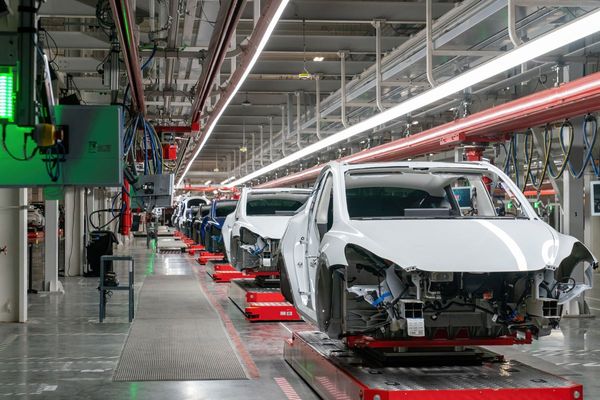
It was when Grant Robertson announced $85 million to build a local rail wagon assembly line at Hillside Workshops, in Dunedin, that he made the most overt attempt to step out from the shadow of Winston Peters.
The NZ First leader had campaigned (unsuccessfully) at Hillside in the run-up to last year’s election - but today, it was the Labour Government Finance Minister who announced the investment in jobs and training at the plant.
This reflected a Labour Government commitment to rebuild manufacturing in New Zealand, he said.
“The facility will initially assemble 1500 wagons,” he said, “and for the first time in decades create some on-shore resilience for our rail sector.”
Somewhere north of the Beehive - perhaps in Auckland, perhaps at his family home in Whananaki, perhaps in his favourite retreat in the newly-opened tropical haven of Rarotonga, Peters would surely have scowled.

And in truth, as good as the Hillside news is for Dunedin, there was a far clearer respect in which this unprecedented majority Labour Government stamped its mark on the Budget with a more wide-reaching piece of infrastructure spending. Robertson didn’t need to steal Winston Peters’ policies.
The clearest evidence that Ardern's Cabinet was changing the narrative was in the unapologetic move back to something approaching the Big Government of the 1970s.
Budget 2021 allocates a further $296m to fund the costs of the creation of new regional entities - probably four of them - to take control of the so-called Three Waters.
Robertson pointed out that it was 30 years since Ruth Richardson's Mother of all Budgets that sped up moves to much smaller government. But it's also little more than 30 years since the implementation of the Fourth Labour Government's local government reforms, in which about 850 small borough councils merged into 86 more powerful, more autonomous local authorities with control over a range of community facilities, and transport, energy and water infrastructure.
"The Government is committed to water remaining in public ownership, with local authorities, communities, iwi and others playing a central role." - Grant Robertson
Now, Minister Nanaia Mahuta has announced a new, once-in-a-generation review of local government - and has gained Cabinet agreement to begin by returning water infrastructure to central government control.
Robertson told the House the four professionally-run entities would "effectively, equitably and efficiently manage water infrastructure and provide New Zealanders with safe supply wherever they live".
"The Government is committed to water remaining in public ownership, with local authorities, communities, iwi and others playing a central role."
"Because Grant and a lot of his colleagues here have grown up in Wellington, everyone thinks in this Government that everything should be run out of Wellington." - Andrew Bayly, National
A Cabinet paper indicates all the water assets will be moved from the ownership of city and district councils - where they make up sometimes half the balance sheet, and are heavily leveraged - to public ownership. Regional governance bodies, with council and iwi representatives, will appoint professional competence-based boards to each of the four entities.
"We are making good progress on this work and expect to make further announcements on the details and further support for the programme in the coming months," Robertson said.
National infrastructure spokesperson Andrew Bayly criticised the loss of local autonomy. "Because Grant and a lot of his colleagues here have grown up in Wellington, everyone thinks in this Government that everything should be run out of Wellington. We disagree with that approach."
The three waters reforms dominate the infrastructure spending in Budget 2021. All in all, it's a budget will disappoint the construction sector, with a stark absence of roading projects, in particular, nor even any clear renewal of government commitment to existing projects that may face the chopping block.
But it does continue the Government's commitment to infrastructure investment with $1.3 billion for rail, and a strong focus on trade training,
The rail spending includes $722m to continue replacing locomotives and wagons, and $450m investment in track and supporting infrastructure.
And there is funding to help 16,000 people to retrain and transition into new careers by bringing back the Training Incentive Allowance. The numbers of apprentices in the construction sector are already at all-time record numbers, but infrastructure companies have been crying out for more.
Employment Minister Carmel Sepuloni recalled how the Training Incentive Allowance had helped her, as a sole parent, get back into the workforce.
“This is an investment in people and will mean better skills, qualifications, jobs, incomes and lives," she said.
"The impacts of Covid-19 mean reinstating the Training Incentive Allowance for higher-skill courses is more important than ever. We need to grow the skills of New Zealanders to fill the needs of employers and this allowance will be a vital tool we can use to do just that."
"New Zealand is facing many long-term infrastructure challenges, including responding to demographic and technological change, addressing climate change, catching up on housing supply, and upgrading run-down water infrastructure." - Ross Copland, Te Waihanga
Though there is not a single mention of any roading project in the entire Budget document, it does note that government already has $42bn of infrastructure investment underway for roads and rail, schools and hospitals, housing and energy generation. And there is a $4 billion boost to the capital allowance.
The Infrastructure Commission, Te Waihanga, welcomed the commitment entailed in allowing more space in the capital allowance. This would support investment in roads, public transport, schools, health, housing, and climate change mitigation, said ays chief executive Ross Copland.
"New Zealand is facing many long-term infrastructure challenges, including responding to demographic and technological change, addressing climate change, catching up on housing supply, and upgrading run-down water infrastructure.
"But it’s not all about building new things. We need to be thinking about how we make smarter and better decisions about the existing infrastructure we have. Most of the infrastructure we will be using in 30 years’ time is already around us.
"The infrastructure sector is capacity-constrained, and the construction sector is already dealing with a significant workload and skills shortage. There are 2400 projects in the infrastructure pipeline worth $60 billion so there’s a lot of work to do."