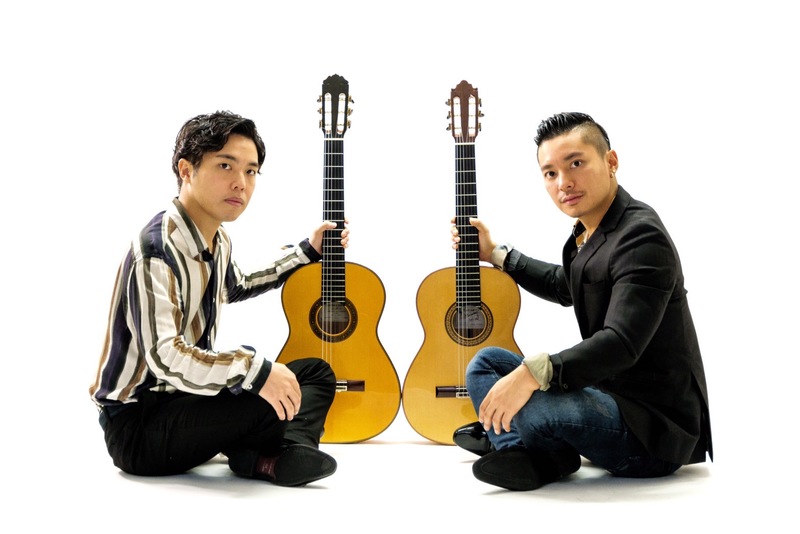
The Tokunaga Brothers stand out in many respects.
Despite their young ages, Kentaro, 28, and younger brother Kojiro, 26, are already accomplished flamenco guitarists, improvising freely and showcasing complex techniques.
They both left for Spain, the home of flamenco, at 15 after graduating from junior high school. They spent years studying and performing flamenco guitar, not only accompanying singers and dancers but also performing as a duo, which is not so common in flamenco.
"Japanese. Flamenco guitarists. Brothers in a duo," Kentaro said during an interview with The Japan News. "We're a novelty even in Spain. Every time we perform, we get a great response."
The brothers are slated to release their fourth album as a duo, "Guitarra Flamenca," on Jan. 22. Their first three albums were self-released, but this time they signed with an independent label in the hopes of getting more exposure.
Their new self-proclaimed "best album" consists of 10 tracks, including newly recorded originals from previous albums and new pieces. It also features "Aka Tombo" (Red Dragonfly), a well-known Japanese children's song that the brothers play in the typical 12-beat flamenco rhythm on the album.
"Surprisingly, the song suits flamenco," Kentaro said. "When we play it live, Japanese audiences really enjoy it. We've wanted to include the song on an album."
The brothers said the highlight of the album is the closer "Buleria de padre," an original creation of their father's. The track was recorded in collaboration with Juan Jose Villar and other leading Spanish flamenco artists. The powerful tapping, "palma" (handclapping) and "jaleo" (shouts of encouragement) gave the piece "something special."
Born in Niigata, the brothers grew up listening to flamenco as their father is also a flamenco guitarist and their mother dances flamenco, so their entry into this world was almost inevitable.
"I didn't like studying. So I thought I had no choice but to go to Spain. As I was only a junior high school student, I didn't think deeply," Kentaro said.
Meanwhile, Kojiro was occupied with school club activities and playing games, doing things similar to that of most other Japanese children of his age. But when Kojiro saw his brother's guitar skills significantly improve after going to Spain, he decided to follow suit. "I didn't want him to be way ahead of me," Kojiro recalled.
The brothers took courses at the Cristina Heeren Foundation of Flamenco Art, a flamenco school in Seville, Spain, where they were surrounded by people of various ages and from different countries. "At first, I was only able to say 'Si' or 'No,'" Kentaro said.
After completing courses, they taught there for several years. In 2012, their first major solo concert was held in Tokyo, after which they traveled back and forth between Japan and Spain until 2015, when the brothers eventually settled in Tokyo to boost their presence in Japan's flamenco scene.
The two have opposing personalities. While Kentaro is instinctive and also meticulous, Kojiro keeps his own pace and moves after careful consideration. That seems to make them a balanced duo. "Since we're brothers, we don't compromise with each other. We often end up arguing when making music together," Kentaro said.
Kojiro said the best part of flamenco guitar is "communication" without words. Although they have performed live on numerous occasions, they said they always feel nervous ahead of and even during a performance.
"Playing flamenco guitar is like having conversations with various people. The personalities of performers are revealed in their playing," Kojiro said. "Some are very talkative and loud while others are good listeners."
Kojiro said he initially "talked" politely when performing as he is usually the youngest on the stage. "But I've come to think I should enjoy 'talking' without holding back," he said.
Improvisation is an important aspect of flamenco that requires not only technique but also performing experience. This is the duo's strength. They said they would "freeze" if they were asked to play music from scores.
The brothers' talent has brought them wider recognition and they are now sought-after both as soloists and accompanists. "It's difficult to switch modes as playing with and without accompanists involve different playing styles," Kentaro said. "But we want to do as much as possible while we can."
The Tokunaga Brothers will perform at the Ueno Gakuen Ishibashi Memorial Hall in Tokyo on Jan. 18 to commemorate the release of their new album.
Read more from The Japan News at https://japannews.yomiuri.co.jp/