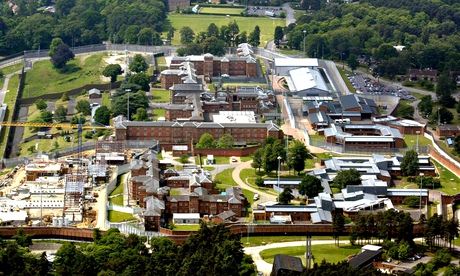
One of the biggest challenges of being clinical director of Broadmoor hospital is changing the public perception of severe mental illness.
The ITV documentary was a wonderful opportunity for us to be able to tell the story of the hospital. It’s no secret that the hospital faces many misconceptions: Broadmoor is often misrepresented as a prison rather than a high secure hospital. We treat mentally disordered men, not prisoners.
We care for some 200 severely mentally disordered men. Our patients may be experiencing mental illnesses such as schizophrenia, paranoia or have personality disorders. Many have more than one diagnosis and that is why we have an extended period of assessment to determine their treatment needs.
It wasn’t easy to open Broadmoor’s doors to a film crew. It took five years of negotiations. We had to think about risk assessments at every stage. We are hesitant to get involved with the media due to security and the amount of misrepresentation the hospital has had over the years – so we had to overcome that anxiety.
We made sure patients were at the heart of everything concerning the documentary. We were absolute in our requirement that our patients had to give informed capacity to agree to be filmed. Inevitably this put some limitations on what could be filmed but, having said that, the film crew were given access to our intensive care wards, our high dependency wards, rehabilitation wards – ITV did capture the entire picture of the hospital.
People are right to be fascinated but they are misguided to be frightened by Broadmoor. One of Broadmoor’s main purposes is to protect the public – we are here to ensure that the risk that individual patients pose to others is reduced. We ensure that that risk stays lower than it was on admission, so that patients can make the transition to medium security safely.
A common misconception is that patients who come to Broadmoor are so irreparably damaged that they can’t move on. The truth is the opposite – patients suffer from illnesses that are very amenable to treatment. In fact, patients stay at the hospital on average just under five years, and have a far lower repeat offending rate than the general population.
Depending on the nature and severity of their illness, patients may be treated in intensive care, high dependency or move from assessment to assertive rehabilitation wards that prepare patients to move on from the hospital. Detailed care plans with contributions from across the multi-disciplinary team ensure that the programmes of treatment are carefully tailored to each patient’s needs.
The documentary conveys that recovery is a reality in high secure services. People will see Dylan in the documentary, a patient from Canterbury ward – a ward that prepares people for moving on from the hospital. Dylan was abused and assaulted from an early age; he committed arson and became violent, homeless and alcohol dependent which led to his admission. You will see Dylan recognise that he crossed the line, and acknowledge that he is in a good stage in his recovery journey.
Dylan decided to participate in the documentary because he wanted the public to know that something positive was happening at Broadmoor and I wanted to take part for the same reason. It’s my hope that the documentary will go a long way to informing people’s views of the hospital. It is a hospital that in my opinion we should be very, very proud of. We do an incredible job at treating high-risk mentally disordered men, and we are able to reduce that risk effectively before they move on.
Treatment at the hospital is not quick and sometimes, as we see in the film, patients suffer a relapse. However, being admitted to Broadmoor hospital is not a life sentence – it is an opportunity for recovery and patients move on from here.
This for me is the most rewarding aspect of my role. I see the most challenging patients in the country recover. To see a patient spend time on our intensive care unit and make those steps into lower dependency settings before moving out of the hospital, able to understand the journey they have been through, is immensely rewarding.
Dr Amlan Basu is the clinical director of Broadmoor hospital. He tweets @amlan_basu
• The second episode on Broadmoor is on ITV on Wednesday 12 November at 9pm
Are you a member of our online community? Join the Healthcare Professionals Network to receive regular emails and exclusive offers.
Read more stories like this:
• Political attitudes to mental health are harming patients and staff
• Improving prevention is the key to treating mental health problems
• It’s time to tackle mental health inequality among black people