
BROADCASTERS are failing to challenge politicians and their claims, instead relying too heavily on interviewing the public for soundbites, a study has found.
The research, conducted by the University of Cardiff, examined how UK television channels reported on May's elections across England, Wales and Scotland, with much of the study focused on the Senedd.
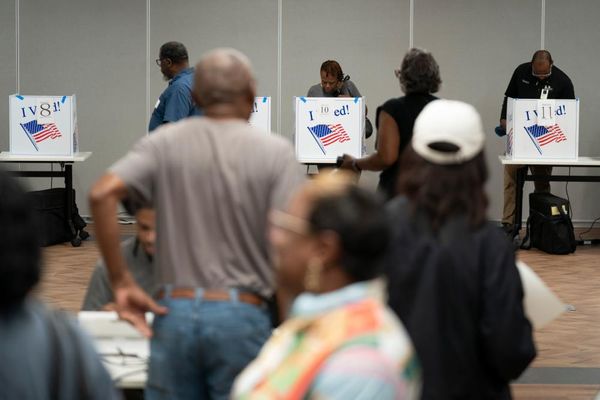
The researchers found that “large chunks of airtime were dedicated to vox pops”, which featured in 26.3% of all Welsh television news items covering the election, and that this came at the expense of in-depth coverage of actual policy or scrutiny of political claims.
Vox pops are a form of interview with members of the general public. The most common form of them is a street interview.
The report found that vox pops were featured "far more than the perspectives of political candidates", and that while the views of the public can provide useful insight, at the scale of their use in the media coverage they came at "at the expense of policy coverage, scrutiny of political claims and explanation of the workings of the Welsh political system".
The prevalence of vox pops, and impartiality rules requiring equal airtime across all of the "major" political parties, led to "over 70%" of claims made by politicians going unchallenged with "no or little scrutiny".
The report found that 49% of broadcasts that specifically focused on party policy, political claims, or candidate interviews saw zero scrutiny or fact-checking, while 22% offered only brief scrutiny and just 29% provided substantial scrutiny.
It added that coverage of individual parties, like one-on-one interviews and coverage of manifesto launches, featured more scrutiny than bulletins that attempted to cover all of the major parties.

Explaining the drawbacks of impartiality rules that broadcasters like the BBC are subject to, the report said that by "prioritising the breadth of party-political perspectives, coverage did not consistently interrogate the depth or credibility of competing claims".
The researchers found that broadcasters did generally provide relatively equal visibility across their TV and digital platforms, but found that competing claims were not always interrogated in part due to time constraints.
Stephen Cushion, a researcher in the university's journalism department who co-wrote the report with Keighley Perkins and Maxwell Modell, commented: "In an age of multiparty politics, our new research raises serious questions about whether the UK’s current due impartiality rules are fit for purpose during an election campaign period.
"This does not mean impartiality should be abandoned in a Fox News-style way, but the rules need to be rethought to give broadcasters the flexibility to provide greater scrutiny in day-to-day news reporting.
“The public expect broadcasters not only to cover political parties during a campaign, but to scrutinise their promises and challenge false or misleading claims.”
The report also examined the overrepresentation of voter apathy in media coverage. The report found that one of the key areas vox pops were effective in was providing a "snapshot" of public opinion, but recurrent themes of apathy failed to materialise as much as had been expected.
The vox pops “did not appear to accurately capture the level of interest and engagement with the campaign”, the researchers noted, adding that Wales saw its highest ever turnout of 52%, and Scotland's remained at around its average with 53%.
The study looked at coverage on the BBC News at Ten, ITV News at Ten and Channel 4 News, as well as the key evening bulletins in Wales: BBC Wales Today and ITV Wales at Six.
It did not look at ITV Evening News, which typically broadcasts at 6.30pm for an hour.
ITN responded to the study saying the report undervalues its total output by focusing solely on News at Ten. ITV broadcasts nearly two hours of daily national news alongside regional programming. ITV Evening News reaches double the audience of News at Ten and includes more political insight.
The BBC declined to comment to the Guardian.