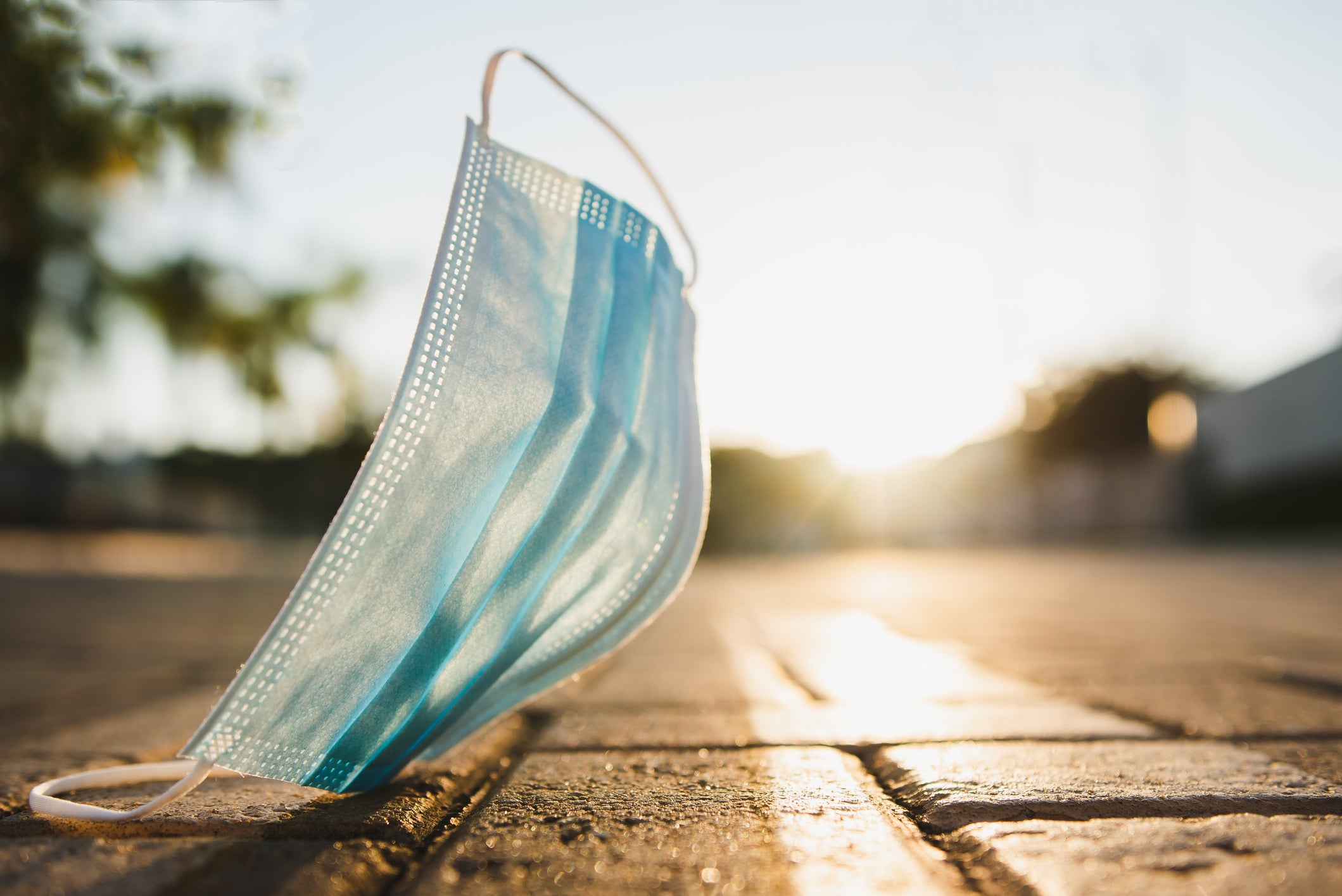
Britons are being encouraged to use reusable face coverings as a new study reveals that more than 100 million disposable masks are being thrown away each week in the UK.
In newly released research by the North London Waste Authority (NLWA), it was also revealed that many people don’t realise the damage they’re doing to the environment by wearing disposable face coverings, with nearly 70 per cent of people unaware they’re made from single-use plastic.
Additionally, roughly one in five people were found to wrongly believe that disposable face masks could be recycled.
In light of the findings, the NLWA is launching a new campaign urging people to wear reusable face masks over disposable ones.
“The progress we've all made in reducing our reliance on single-use plastics is at risk of being undone during the pandemic, and disposable facemasks are a major culprit,” said the NLWA’s chair, Clyde Loakes.
"They are not made of paper, they are not recyclable and whether they are binned or littered they will damage the environment.
"Today we are urging people to keep doing their bit to help tackle the climate emergency by switching to reusable masks, which offer just as much protection as disposables.”
As part of its campaign, the NLWA has partnered with not-for-profit social enterprise Fashion Enter to create 1,400 reusable facemasks to be distributed in the run-up to Christmas via food banks and other support services across north London.
The NLWA has advice on its website about how to properly dispose of single-use face masks.
“Tissues and sanitary waste, such as face masks, should never be put in the recycling,” it states.
"If you have tested positive for COVID-19/coronavirus or have symptoms please make sure that contaminated tissues and other personal waste is double bagged, the bags closed, and left for 72 hours before being put out with the general household waste.
“This is to reduce the risk of infection to collection and disposal crews.”
You can read more about the NLWA’s campaign here.