Afternoon summary
- Michael Gove, the environment secretary, has insisted that he did not know about a controversial £625,000 donation to a tiny, fellow pro-leave organisation when he was helping to run Vote Leave. Gove was co-convenor of Vote Leave’s campaign committee, but he said he did not know about the donation it made to BeLeave that is now at the centre of claims it broke campaign spending rules. Gove told Sky News:
I wasn’t involved in the day to day running of the campaign, I was out there making the case for leaving the EU rather than managing the hidden wiring of the campaign.
But I think this case has been investigated twice by the Electoral Commission since it occurred and I think on both those occasions the Electoral Commission said it’s quite right that one campaign can donate to another organisation, and indeed my understanding is that the remain campaign did pretty much the same thing.
Others involved in running Vote Leave have insisted that the BeLeave donation was legitimate. In a post on his blog today, Dominic Cummings, Vote Leave’s campaign director, said:
Michael Gove was never on the board of Vote Leave ... Further neither Gove nor Boris [Johnson] had anything to do with such matters as legal compliance.
- Cummings has also used a blog post to hit back at the Guardian and the Observer over claims that Vote Leave broke election spending rules. In a long post, he addressed some of the claims made by Christopher Wylie, the Cambridge Analytica whistleblower, in his evidence to MPs yesterday and effectively accused the Guardian/Observer of hypocrisy (on the grounds that we have run online marketing masterclasses and that our app shares data with Facebook). Amid talk of “multiple legal actions”, he also restated his claim that Vote Leave did nothing wrong because it had written permission from the Electoral Commission to make the payment that it did make to BeLeave. (The commission did send Vote Leave an email saying in principle donations of this kind were fine. What is unclear is whether the commission would have agreed to this specific donation if it had known the full extent of collaboration between Vote Leave and BeLeave that has now been alleged. Cummings contests these allegations, and insists the arrangement was legitimate.) In his blog Cummings also claimed that what Vote Leave did was relatively simple. He said:
As has been discussed publicly, what actually happened is relatively simple. Through a combination of focus groups and polling, we were aware that the people we wanted to reach were in particular demographic categories, basically ‘between 35-55, outside London and Scotland, excluding UKIP supporters and associated characteristics, and some other criteria’. We created ads, mainly focussed on the NHS, that AIQ put onto Facebook. These were targeted at this very broad segment of society, completely legitimately and with no use of American voter data (obviously!) to reach about 20% the voting population of the UK. Our use of so-called micro-targeting was minimal. Further, we made ZERO use of so-called ‘psychographic’ marketing because our campaign was informed by looking at what serious science suggests works and Big5/OCEAN profiling for politics is very marginal (and expensive) at best.
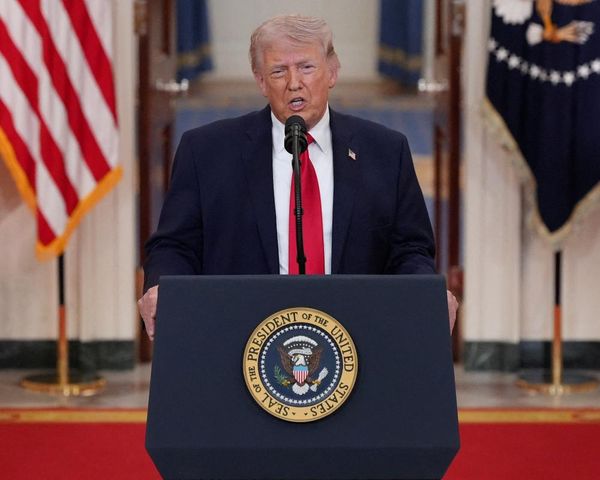
- Theresa May has used a phone call with Donald Trump to welcome his decision to expel 60 Russian diplomats from the US. A Downing Street spokesman said:
The PM said the US had delivered a very strong response and welcomed the breadth of international action in response to Russia’s reckless and brazen behaviour – with 26 countries now putting expulsions in place.
The prime minister welcomed the temporary exemption to steel and aluminium tariffs announced by the US last week in relation to the European Union.
She said she looked forward to constructive talks taking place between the EU and the US on making the exemption permanent.
-
Leaders of the Jewish organisations that organised Monday night’s protest against antisemitism in the Labour party have told Jeremy Corbyn that until he stops the abuse of the MPs and peers who attended it, they will not accept his invitation to meet them. As Anne Perkins reports, several MPs have been attacked by the leftwing blog, the Skwawkbox, while David Lammy, the MP for Tottenham, may face a deselection challenge from his local party. In a letter to Corbyn, Jonathan Arkush and Jonathan Goldstein, the leaders of the Board of Deputies of British Jews and the Jewish Leadership Council said:
Those Labour party members and Labour-supporting blogs pushing the abuse are largely doing so in your name. They need to hear you say, publicly and your own voice that we had every right to protest about antisemitism, and that Labour MPs had every right to support us … that anyone directing abused, intimidation or threats at those of us who oppose anti-semitism is damaging your efforts to eliminate it.
That’s all from me for today.
Thanks for the comments.
Updated
As well as introducing us to the concept of a ‘blah, blah, blah’ divorce, Emily Thornberry’s comments (see 3.24pm) are interesting because they could be seen as a sign that Labour is gearing up to vote in favour of the final Brexit withdrawal agreement in the autumn. She said:
The difficulty with a meaningful vote in October - which we have secured - is what is it that we are going to be agreeing on ? We have our six tests. If you hold up ‘blah, blah, blah’ to the six tests, it will probably pass it ...
In a speech on Monday Sir Keir Starmer, the shadow Brexit secretary, said that Labour wants to amend the EU withdrawal bill so that MPs will get a proper “meaningful vote” on the final deal in the autumn. He wants to ensure that, if MPs reject the deal, parliament gets to decide what happens next, so that ministers could be sent back to Brussels to try to get a better deal.
But the government says, if MPs vote against, the UK will simply leave without a deal. It has always said this implicitly, but recently it has become much more explicit about this. (See what Lord Callanan, the Brexit minister, said in the Lords earlier this month, or what the prime minister’s spokesman said at lobby on Monday.)
Given that EU leaders are unlikely to be keen to reopen the negotiations only a few months before Brexit day, the government’s argument is quite plausible. That might be leading Labour figures to conclude that they will have to support the deal in the end. Thornberry’s comment today follows a report that Barry Gardiner, the shadow international trade secretary, told a private meeting last week that, if parliament voted down the deal, the UK would just “crash out of the EU” regardless, implying Labour would have to vote in favour of the agreement. (Gardiner contested Adam Payne’s Business Insider story, claiming his remarks had been taken out of contest, but his protest was not especially convincing, not least because Payne quoted a Labour leadership source saying Gardiner was just reflecting party policy.)
Thornberry says Brexit withdrawal agreement will be so vague it will be 'blah, blah, blah' divorce
Emily Thornberry, the shadow foreign secretary, has been speaking at Chatham House today. She predicted that the Brexit withdrawal agreement would be so vague that it would amount to little more than a ‘blah, blah, blah’ divorce. She said:
What we have said is quite clearly you cannot negotiate everything before the divorce. We need to have an interim period when the status quo prevails. So the question then is, what is the nature of the divorce?
So far if the evidence of the past few months is anything to go on, it is going to be a ‘blah, blah, blah’ divorce. It is not going to make any decisions, it is going to continue to kick things down the road. We don’t seem to have come to any difficult decisions at the moment.
So the difficulty with a meaningful vote in October - which we have secured - is what is it that we are going to be agreeing on ? We have our six tests. If you hold up ‘blah, blah, blah’ to the six tests, it will probably pass it and then we leave the EU and then we are in the status quo and during that period there has to be a negotiation as to what our final relationship is going to be.
So I just hope upon hope we have a general election in the meantime and the grown-ups turn up, so it is decree nisi rather than a decree absolute.
Updated
The Commons culture committee has announced that Alexander Nix, the CEO of Cambridge Analytica who was suspended from his post after the recent Channel 4 News/Observer revelations about its activities, will appear before it on Tuesday 17 April. He has already given evidence before to the committee as part of its fake news inquiry, but he has been recalled to explain discrepancies between what he said in evidence and what has been subsequently revealed about CA’s reliance on Facebook data.
Lunchtime summary
- David Gauke, the justice secretary, has defended his decision not to launch a judicial review on behalf of the Ministry of Justice of the Parole Board’s decision to release the black cab rapist John Worboys. He considered going to judicial review, but decided against. Instead two victims, Sadiq Khan, the mayor of London, and the Sun newspaper did launch a judicial review, and today succeeded in blocking Worboys’ release. In a statement to MPs Gauke said that if he had gone to court himself, he could have reduced the chances of the victims winning. He said he considered a challenge on the basis that the Parole Board’s decision was irrational, but was told this was probably fail. He went on:
I also received advice on the failure of process argument [the argument that the Parole Board did not follow proper processes - an argument used in court by the victims and Khan] and was advised that this was not one that I as secretary of state would have been able to successfully advance. The victims were better placed to make this argument and this was the argument on which they have won their case.
It is right that the actions of ministry officials, as well as the Parole Board, in this important and unusual case have been laid open to judicial scrutiny.
I have always said I fully support the right of victims to bring this action. I’ve been very concerned at every point not to do anything to hinder the victims’ right to challenge and to bring their arguments and their personal evidence before the court. Indeed, the judgment suggests that had I brought the case, the standing of the victims may have been compromised.
In the Commons Dominic Grieve, the Conservative former attorney judgment, backed Gauke’s position. He said that if Gauke had launched a judicial review, it would probably have failed, and he could have prevented others from bringing a case.
- The head of the Army, General Sir Nick Carter, is to be the new Chief of the Defence Staff, the government has announced. As the Press Association reports, Gen Carter will succeed Air Marshal Sir Stuart Peach when he stands down as Britain’s most senior military officer in June to become chairman of Nato’s military committee. The announcement of Gen Carter’s appointment comes just two month after he publicly entered the debate over defence spending, warning the UK was in danger of being left behind by adversaries like Russia.
- Labour MPs in Yorkshire and Humber have given their support to Dan Jarvis, the backbencher who is defying the Labour leadership and refusing to stand down after being chosen as the party’s candidate for Sheffield city region mayor. A new Labour party rule introduced very recently says he should stand down as an MP because MPs can no longer hold separate elected positions in the party. But Jarvis, a centrist who at one time was seen as a potential leadership challenger to Jeremy Corbyn, is refusing to give up his parliamentary seat. These are from the Yorkshire Post’s Arj Singh.
EXC Dan Jarvis will attempt to defy Jeremy Corbyn and Labour’s ruling NEC to become Sheffield City Region mayor while remaining an MP. He has the backing of S. Yorks council leaders and Yorkshire and Humber Labour MPs, and they have all written to high command, I understand.
— Arj Singh (@singharj) March 28, 2018
If Labour chooses to strip Jarvis of nomination for mayor because he won’t stand down as an MP, he will not fight the election against a Labour candidate as an independent. Party now in difficult position given Jarvis backing from MPs, councils and members.
— Arj Singh (@singharj) March 28, 2018
Here is the letter from the Labour Yorkshire and Humber PLP group of MP in support of Dan Jarvis combining Sheffield City Region mayor and Barnsley Central MP jobs. pic.twitter.com/Cqc4148MXM
— Arj Singh (@singharj) March 28, 2018
Updated
Sadiq Khan, the mayor of London, told the World at One that he was “appalled” that Jews don’t have faith in Labour. He told the programme:
I’m appalled and heartbroken that Londoners of Jewish faith don’t feel the Labour party’s for them.
I think the Labour party needs to do much more. It’s the Labour party’s responsibility.
Jeremy is the leader but it’s the Labour party’s responsibility to take decisive, swift action against those members of our party against whom allegations have been made.
No 10 says May has full confidence in David Gauke
The prime minister’s official spokesman said she had full confidence in justice secretary David Gauke and that, despite not launching his own judicial review of Worboys’ release, he had made it clear throughout that he supported the victims in their decision to do so.
On the prospect of a ring-fenced NHS tax, he referred to May’s words in the Commons on the government’s “balanced approach” to public spending which included “ensuring that we keep taxes as low as we can”.
Asked whether that was a hint that hypothecation was off the table, he said:
You had her words yesterday, you have her words today in the House about our balanced approach. Ultimately the government policy going forward is part of that approach to the economy.
Updated
PMQs - Verdict from the Twitter commentariat
This is what political journalists and commentators are saying for PMQs.
Generally there is quite a lot of praise for the way Corbyn raised mental health, but he is also being criticised for not raising the Worboys case. Some people think he should have attacked David Gauke, the justice secretary, for not taking the Parole Board’s decision to judicial review himself.
(Gauke says he was advised that a legal challenge was “highly unlikely to succeed”. But a legal challenge did succeed. UPDATE: See 2.27pm for more on this.)
From the New Statesman’s George Eaton
My #PMQs review: Theresa May had no answer to Corbyn's charge that physical and mental health are still unequally funded. https://t.co/f5DEcOcHoz
— George Eaton (@georgeeaton) March 28, 2018
From HuffPost’s Paul Waugh
Jeremy Corbyn striking measured tone in #PMQs avoiding accusations of bad faith by PM. Also uniting his party on mental health. He and @lucianaberger both allies on this.
— Paul Waugh (@paulwaugh) March 28, 2018
From the Spectator’s Isabel Hardman
That was one of Corbyn’s best PMQs: detailed policy points, unusually agile in responding to the PM’s points, and prosecuted a case for more money for mental health following May’s comments about a long-term settlement for NHS
— Isabel Hardman (@IsabelHardman) March 28, 2018
From the Daily Mirror’s Kevin Maguire
Mental health a heartfelt, genuine concern of Corbyn. Impressively robust performance when he must be bruised by anti-Semitism charges, Russia controversy https://t.co/sQoeSiGHZr
— Kevin Maguire (@Kevin_Maguire) March 28, 2018
From the Times’ Patrick Kidd
Dull PMQs. Corbyn asked six decent, pointed but rather muted Qs on children’s mental health; May avoided them well enough; and then a load of backbench sycophancy
— Patrick Kidd (@patrick_kidd) March 28, 2018
From Sky’s Lewis Goodall
Whisper it: for once, that was quite a good #PMQs. Important topic, decent exchanges. PM looking at the most confident she's been in a fair old while.
— Lewis Goodall (@lewis_goodall) March 28, 2018
From the Sunday Times’ Tim Shipman
This may be an important subject but the leader of the opposition has a duty to try to get a cabinet minister fired when there is an open goal. Truly bizarre. Tory MPs/spads are texting incredulity that he’s not going for it
— Tim Shipman (@ShippersUnbound) March 28, 2018
From the Guardian’s Pippa Crerar
While mental health is a crucial issue, slightly surprised that Corbyn didn’t use #PMQs to ask questions on MoJ/ David Gauke handling of Worboys case...
— Pippa Crerar (@PippaCrerar) March 28, 2018
From the Independent’s Tom Peck
It's almost like #PMQs is some sort of new therapeutic treatment, where the nation's politicians come together at the midpoint of the week, to ignore utterly all of the questions facing the nation.
— Tom Peck (@tompeck) March 28, 2018
From the Telegraph’s Christopher Hope
Why isn't Jeremy Corbyn questioning Theresa May about John Worboys? Does she have confidence in David Gauke? It seems a dereliction of duty not to do so. #PMQs
— Christopher Hope 📝 (@christopherhope) March 28, 2018
Updated
Corbyn challenges May over 'crisis' in mental health services
This is what the Press Association has filed on the May/Corbyn exchanges.
Jeremy Corbyn asked Theresa May to explain why there are “5,000 fewer mental health nurses” than in 2010.
The Labour leader used PMQs to raise concerns about mental health care after a health trust was fined 2 million after neglect at a care unit led to the “completely avoidable” deaths of two vulnerable patients.
He paid tribute to the families of Connor Sparrowhawk and Teresa Colvin who died while in the care of Southern Health NHS Trust and asked: “How confident is the prime minister that deaths like Connor’s and Teresa’s could not happen today?”
And he went on to ask: “Could the prime minister explain why there are 5,000 fewer mental health nurses than there were in 2010?”
May also paid tribute to the families “for the way in which they have campaigned on this particular issue” and said lessons had been learnt by the health and care system as a result of the failings of Southern Health.
She added: “We have already committed to improving mental health services on the ground: we are putting extra money into mental health services and I am pleased to say that around 1,400 more people are accessing mental health services every day compared to when we came into power.”
Corbyn repeatedly raised funding concerns over mental health services, particularly for children, and used his final remarks to call for the PM to ring-fence NHS mental health budgets.
He said: “Mental health affects us all and it’s welcome there’s much less stigma surrounding mental health, however, our NHS is in crisis. The crisis is particularly acute in mental health services.
“Despite legislating for parity of esteem, the government has failed to fund it.
“We have fewer resources for mental health trusts, fewer mental health nurses, fewer child and adolescent psychiatrists.
“So will the prime minister commit to ring-fencing NHS mental health budgets to support those going through a mental health crisis at a time they most need our help and our support?”
May said the NHS is receiving extra funding for mental health and other services, adding: “Since November, [chancellor Philip Hammond] has announced an extra £10bn which is going in to our NHS over the next few years.”
Ian Blackford, the SNP leader at Wesminster, used his questions to ask about election spending. He started by saying:
Does the prime minister agree with me that transparency in political campaign spending and the integrity of electoral laws across the UK must be upheld, and will the prime minister join with me in saying all allegations of improper spending during the EU referendum must be fully investigated?
May said the Electoral Commission had already investigated these allegations.
Blackford than asked about donations to the DUP.
The DUP received £425,000 from the Conservative-run Constitutional Research Council, chaired by Richard Cook, former vice-chair of the Scottish Tories. We know some of the money was given to AIQ, a reported franchise of [Cambridge Analytica] ...
The shady business of data mining and undermining electoral law goes right to the heart of the prime ministers party. Will the prime minister give full details between the transactions of the DUP and the Scottish Tory-linked CRC?
May said the Electoral Commission had looked at this twice, but that it should consider any new evidence.
If there is an allegation of criminal activity that should be taken to the police”
My understanding is the Electoral Commission continue to investigate these and will continue to do so.
I’ve taken the quotes from PoliticsHome.
Labour’s Liz Twist says she will be meeting De La Rue workers from her constituency today. Will May promise no decision on the passport contract until after the recess.
May says a final decision has not been announced, but a preferred bidder has been announced. The Home Office is following the proper process, she says.
May says all MPs should make it clear there is no place for racial hatred or hate crime in our society, whether it is Islamophobia or antisemitism.
Labour’s Jack Dromey says 209 years of GKN history will be decided in the next 24 hours. There is evidence of a hedge fund scam to buy shares in GKN while avoiding paying tax on the shares that will decide its future, he says.
May says Greg Clark, the business secretary, has sought assurances from the prospective GKN purchasers. If Dromey has evidence of illegal activity, he should report it to the police, she says.
Zac Goldsmith, a Conservative, asks about the Worboys ruling.
May says she has the greatest sympathy for his victims. She welcome the judgment. She says David Gauke, the justice secretary, will make a statement on this shortly. Gauke has now made it clear that he will abolish the rule saying the Parole Board cannot give reasons for its decisions.
Joanna Cherry, the SNP MP, asks about a Syrian refugee at school in her constituency who cannot go on a school trip because he does not have the right documents.
May says the home secretary will look into this.
Caroline Spelman, a Conservative, asks May to congratulate those behind the exhibition in the Commons about Yazidi women held in conditions of slavery. May says she wants to ensure these women are freed.
Ken Clarke, the Conservative former chancellor, asks May to confirm that it will not be possible to introduce a hard border by the end of 2020. So will May seek a customs arrangement similar to staying in the customs union.
That is a reference to what May told the Commons liaison committee yesterday.
May says she wants trade to be as frictionless as possible. It is not completely frictionless today. The government has put forward plans. She says the government is putting steps in place to ensure the new system is ready by the end of the transition.
Caroline Lucas, the Green MP, says the Cambridge Analytica revelations suggest there is something rotten in the heart of our democracy. Will May ensure that the regulatory framework for elections is fit for the digital age.
May says the Cambridge Analytica revelations are concerning. People should feel confident about what happens to their data, she says.
May says she can announce today that the government is giving the Ministry of Defence £600m for MoD Dreadnought submarine programme. It is also getting another £200m, she says. She says the UK continues to spend 2% of GDP on defence.
Alan Brown, the SNP MP, says Boris Johnson was the figurehead for the Vote Leave campaign. And Michael Gove was co-convenor. Dominic Cummings says AggregateIQ were essential to the campaign. How does May feel about them using immoral data mining tactics?
May says those allegations have been denied. She says if anyone is suggesting the outcome of the referendum was invalid, she does not accept that.
Craig Mackinlay, a Conservative, asks about dental care in his constituency.
May says NHS England will be offering dental services when the practice mentioned by Mackinlay closes.
PMQs - Snap verdict
PMQs - Snap verdict: The last two weeks have been the best for May since the general election (given the wide praise she has had for her stance on Russia, the diplomatic coup she achieved with the co-ordinated spy expulsions, and Brexit moving forward), and perhaps the worst for Corbyn (antisemitism and Russia), but this afternoon the May resurgence came to a shuddering halt as Corbyn comprehensively and gracefully upended her at PMQs. He picked a second-tier public policy issue where the government’s record is weak and focused on specific questions, not party policy rhetoric - often the best way for the opposition leader to score a hit at PMQs. But he did it well, picking up on points that May made when she replied, and he adopted a more-in-sorrow-than-anger tone (giving credit to May for caring about this, paying tribute to the police) that enhanced his credibility. Crucially, though, he was on winning grounds on points of substance. May just couldn’t answer his argument about how the commitment to mental health parity in the NHS has not been matched by parity of funding. May seemed to run out of things to say after her second answer and towards the end she made a particularly far-fetched attempt to make a connection between mental health and the activities of Corbynite Twitter trolls - although she did not quite have the courage to make the link explicit, and in the end her insinuation was left hanging.
Updated
Corbyn acknowledges the work the police do. But his point is there should be more professionals. The number of child and adolescant psychiatrists has fallen by 6%, he says.
May says the government is addressing this. But there is a wider issue here. When she goes to talk to young people, when she hears about them, one of the issue that she hears about is the use of social media. She hopes Corbyn will join with him in saying social media should not be used in a way that contributes to mental health problems.
Corbyn says he hopes May will support Labour’s digital bill which will ensure adequate protections for young people. He mentions a letter from someone waiting months for treatment. NHS affects us all, he says. It is in crisis, and that is particularly acute in mental health services. Will May commit to ring-fencing mental health services?
May says the NHS is receiving extra funding. An extra £10bn is going in, she says. That is because the government has adopted a balanced approach to the economy. Labour’s approach would mean increased debt, and ordinary people would pay the price.
Corbyn says the government did introduce parity for mental health in the NHS. But that was after a Labour amendment was accepted in the Lords. And the money never followed. Corbyn says he accepts May’s concern. But money has not followed. He says analysis shows mental health trust have less money than five years ago.
May says more people are accessing mental health. Spending has increased to a record £11.6bn. She criticises Labour MPs for “chuntering”. Dealing with mental health means addressing it in various way.
Corbyn says mental health spending fell between 2010 and 2015. Too often problems have to be dealt with by friends or relatives. Spending is too low. Why is only 5% of the budget spend on children and young people, when they make up 20% of the population?
May says spending on mental health services for young people is going up. And she is taking action in other areas, she says. As home secretary she addressed the problem of mental health patients being held in cells. There has been a dramatic reduction.
Jeremy Corbyn says this week is autism awareness week. He mentions two families whose loved ones, Teresa Colvin and Conor Sparrowhawk, died while they are in care. Is May confident these cases could not happen again?
May says she hopes the lessons from these cases have been learnt. A report into Souther Health is due later this year.
Corbyn asks why there are 5,000 fewer mental health services now than in 2010.
May says more money is being put into mental health services. Some 1,400 more people are accessing mental health services ever day under this government. This is about the NHS, but about services in the community too. She says she was pleased to launch an initiative for mental health training in schools.
Mike Wood, a Conservative, asks May to reject Labour’s calls to scrap the council tax referendum lock.
May says in Wood’s Conservative-led Dudley council area people pay among the lowest council tax in the West Midlands.
Theresa May starts by wishing everyone a happy Easter. (There is a two-week recess starting after tomorrow.)
Theresa May at PMQs
PMQs is about to start.
#PMQs coming up pic.twitter.com/HZJEOedeuo
— John Rentoul (@JohnRentoul) March 28, 2018
Boris Johnson claims extra money for NHS will represent a 'Brexit dividend'
Have you noticed how Boris Johnson’s tweets are starting to read more and more like Donald Trump’s? Commenting on Theresa May’s announcement yesterday that she is planning a long-term funding increase for the NHS, he posted this on Twitter.
Fantastic news about NHS funding - the fruits of a strong economy and a Tory government. Stand by for Brexit dividend !!
— Boris Johnson (@BorisJohnson) March 28, 2018
That double exclamation mark is pure Trump.
Johnson is also emulating Trump’s approach to accuracy. As we have pointed out many times before, mainstream economists don’t think there will be a Brexit dividend. “Brexit is likely to mean less money for public services, including the NHS, than otherwise would have been the case,” the Institute for Fiscal Studies said recently, arguing that any saving to the Exchequer from not having to contribute to the EU budget will not compensate from the tax revenue lost by the impact Brexit will have on lowering growth.
Johnson is also ignoring the fact that his colleagues believe extra money for the NHS will have to come from higher taxes. In fact, Jeremy Hunt, the health secretary, said as much at the weekend, telling ITV’s Peston on Sunday: “In the end if we are going to get more resources into the NHS and social care system, it will have to come through the tax system and also through growth in the economy.”
Higher taxes? Johnson did not mention that on the Vote Leave bus.
Nick Hardwick uses resignation letter to criticise Gauke for effectively sacking him
Here is the full text of Nick Hardwick’s resignation letter at head of the Parole Board. It was addressed to David Gauke, the justice secretary, and dated yesterday.
In it, Hardwick says that he was told by Gauke his position was “untenable”. He says that he was not on the panel that decided to release John Worboys and that he thought he was capable of leading the Parole Board through the changes now required. (He told a committee in February that he wanted the board to be allowed to explain the reasons for its decisions to the public.) But he says he will not “pass the buck”.
He also says this affair raises “very troubling questions about how the board’s independence can be safeguarded”. That amounts to saying that he feels he has been sacked, and that this is an abuse of ministerial power
Dear Secretary of State
We met this afternoon to consider the implications of the judgment in the Worboys case.
I want to repeat my admiration for the courage and tenacity of the women who brought the judicial review. Their success will have consequences that go far beyond this individual case and will benefit victims and the administration of justice for years to come.
I am very pleased that the court declared the Rule that prohibits the Parole Board from explaining its decisions should go and that the judgment recognised that this was something I had been calling for. I am pleased too that as a result of Dame Glenys Stacy’s investigation into victim communication in the case, these processes will be improved in future and that she made no criticism of the Parole Board’s actions in this matter. I am also confident that as a result of this case a much simpler system for reviewing Parole Board decisions will be established and, as I have already made clear in my submission to you, this is something I would very much welcome.
Consistent with these principles, I have been clear throughout the legal processes that followed the decision in the Worboys case that I welcomed the scrutiny to which it was subject. I instructed that there should be no procedural moves to prevent such scrutiny, as the judgment indicated could have been made, and that our disclosure of material relating to the case should be as full as possible. I am as anxious as everyone else that the correct decision should be made.
The court was critical of some aspects of the panel’s decision-making processes although it did not overturn the panel’s decisions on these grounds. It could not, no more than you or I, put itself in the place of the expert and experienced panel members who heard the evidence and made the decision. The court did however find that the panel’s understanding that it could not go beyond the offences for which Worboys was convicted was mistaken in this “difficult, troubling case with many exceptional features”. I shared the panel’s misapprehension in this matter and this was supported by the advice I received. We were wrong.
You told me that you thought my position was untenable. I had no role in the decision of the panel in the case and believe I am capable of leading the Parole Board through the changes, many of which I have advocated, that will now be necessary. I am sorry for the mistakes that were made in this case but I have always made it clear that I will support the members and staff of the Board in the very difficult individual decisions they make and I will accept accountability for the work of the Board. I will not pass the buck to those who work under me. In these circumstances I inform you of my decision to resign with immediate effect.
In conclusion, I want to state my concern about the independence of the Board. I believe this matter raises very troubling questions about how the Board’s independence can be safeguarded. I hope parliament will consider what structural changes are necessary to ensure this independence is protected in future.
Nick Hardwick
Chairman, The Parole Board for England and Wales
Gauke says he will change rules to allow Parole Board decisions to be challenged
In a statement David Gauke, the justice secretary, said he welcomed the high court decision. He said:
I welcome today’s judgment and congratulate the victims who brought this unprecedented legal action. I want to take this opportunity to reiterate my heartfelt sympathy for all they, and the other victims, have suffered as a result of Worboys’ hideous crimes.
I took expert legal advice from leading counsel on whether I should bring a challenge. The bar for judicial review is set high. I considered whether the decision was legally rational - in other words, a decision which no reasonable Parole Board could have made.
The advice I received was that such an argument was highly unlikely to succeed. And, indeed, this argument did not succeed. However, the victims succeeded in a different argument.
Gauke also the Parole Board secrecy rule, rule 25, would now be abolished. He said this would happen “as soon as possible after the Easter recess”.
And he also said he intended to bring forward proposals to allow Parole Board decisions to be challenged. He went on:
I intend to consult on the detail of these proposals by the end of April alongside other proposals to improve the way that victims are kept informed about the parole process.
I will make a statement to Parliament this afternoon and set out our response to the judgment - and our next steps - in more detail.

The Sun newspaper was one of the parties that sought a judicial review of the Parole Board’s decision. Its legal challenge focused on the claim that rule 25, the secrecy rule (see 11.05am), was unlawful. In a statement it said:
First and foremost this is a day for the victims, who have fought bravely to take this case to court.
But it is also a victory for transparency and for the free press in a matter of profound public interest.
Today’s ruling is a landmark judgment in favour of open justice and will allow the decisions of the Parole Board to be subject to the scrutiny they deserve.
This case has shown all too clearly the value of that work.
This is from the BBC’s Norman Smith.
"I will not pass the buck to those who work under me. " - Parole Board chair Nick Hardwick
— norman smith (@BBCNormanS) March 28, 2018
What the Worboys high court judgment says
Here are extract’s from the high court’s summary of its judgment (pdf).
On why the decision to release John Worboys was flawed
We uphold the challenge by DSD and NBV [the two Worboys victims who took the case to judicial review], as we have slightly reformulated it, to the rationality of the decision of the Parole Board directing the release of Mr Radford on the basis that it should have undertaken further inquiry into the circumstances of his offending and, in particular, the extent to which the limited way in which he has described his offending may undermine his overall credibility and reliability. That is so even in relation to the offences of which he was convicted, let alone any other offending.
In the light of our decision, the release direction will be quashed and Mr Radford’s case remitted to the Parole Board for fresh determination before a differently constituted panel.
On what the Parole Board should do next
It is for the Parole Board to decide the procedure appropriate to the redetermination of Mr Radford’s case, taking into account the terms of this judgment, including the observations we have made regarding the need to undertake further inquiry.
We would add that consideration should also be given by the Parole Board in a case of this complexity and prominence to whether a serving or retired judge should chair the panel.
We must emphasise that we have not held, nor must we be understood as suggesting, that Mr Radford’s present risk is such that his continued imprisonment is necessary for the protection of the public, or that the Parole Board should so find. Subject only to the review jurisdiction of this Court, the assessment of all the available evidence, and all matters relevant to Mr Radford’s risk, is for the Parole Board alone to make.
On why the Parole Board should abandon its secrecy rule and explain its decisions to the public
We also uphold the Claimants’ challenge to the vires of Rule 25(1) of the Parole Board Rules 2016 [the rule saying the board cannot publish information about its proceedings]. In the circumstances it will be for the Secretary of State for Justice (as it may be that he is minded to do) to decide how Rule 25 should be reformulated in the light of our Judgment.
There are no obvious reasons why the open justice principle should not apply to the Parole Board in the context of providing information on matters of public concern to the very group of individuals who harbour such concern, namely the public itself. Indeed, it seems to us that there are clear and obvious reasons why the Parole Board should do so. This information can readily be provided in a fashion which in no way undermines the Article 8 rights of the prisoner and the confidentiality which attaches to it.
Our conclusion is that the open justice principle, or more particularly the right in the public to receive information which flows from the operation of that principle, applies to the proceedings of the Parole Board.
Here is my colleague Owen Bowcott’s decision about the high court decision.
Sadiq Khan, the mayor of London, sought a judicial review of the decision to release John Worboys along with two of Worboys’ victims. In a statement about today’s high court decision, he welcomes it and says his priority has been to keep Londoners safe.
I welcome the decision that John Worboys will not be released - this will give some reassurance to his victims and to all Londoners. It was important, as Mayor, to do all I could to help quash the Parole Board’s decision and help maintain confidence in the criminal justice system pic.twitter.com/KFPZGkJ4tK
— Mayor of London (@MayorofLondon) March 28, 2018
This is from Lord Falconer, a former Labour justice secretary and lord chancellor.
Absolutely right decision. Parole Bd did inadequate invesigation of whether he was safe in light of evidence of his much more prolific offending than he was prepared to acknowledge. And LC doesn't have power to ban publication of parole board proceedings. https://t.co/9KlXx9i8tS
— Charlie Falconer (@LordCFalconer) March 28, 2018
High court says rule banning Parole Board from explaining its decisions unlawful
More on the court decision ...
Sir Brian Leveson has ordered the Parole Board to carry out a "fresh determination" in the John #Worboys case - and the serial sex attacker will remain in prison pending the outcome.
— Daniel Sandford (@BBCDanielS) March 28, 2018
Worboys judgement: for secretarty of state to revised rule 25. Court supports open justice principle.
— Joshua Rozenberg (@JoshuaRozenberg) March 28, 2018
Giving judgment in the John #Worboys case Sir Brian Leveson, Mr Justice Jay and Mr Justice Garnham said that the Parole Board should have undertaken "further inquiry into the circumstances of his offending".
— Daniel Sandford (@BBCDanielS) March 28, 2018
High Court also rules that the rule banning reasons about Parole Board decisions being public is unlawful #worboys
— Danny Shaw (@DannyShawBBC) March 28, 2018
Worboys judgment: rule 25 ultra vires. Release decision quashed. Fresh determination by different panel. Cost to be agreed.
— Joshua Rozenberg (@JoshuaRozenberg) March 28, 2018
Updated
High court overturns Parole Board's decision to release Worboys and orders new assessment
High Court overturns #Worboys decision
— Danny Shaw (@DannyShawBBC) March 28, 2018
John Worboys will not be released on Parole at this stage https://t.co/B0gUFkALWz
— Daniel Sandford (@BBCDanielS) March 28, 2018
Worboys judgment: release direction quashed. Remitted for fresh decision. Challege to rule 25 upheld.
— Joshua Rozenberg (@JoshuaRozenberg) March 28, 2018
This is from the legal blogger Carl Gardner.
The Worboys judgment may well be legally interesting for a number of reasons, including the court's approach to standing and the reasonableness ground. But most of all, for its treatment of whether Parole Board "rule 25" (outlawing publication of reasons) is ultra vires.
— Carl Gardner (@carlgardner) March 28, 2018
We are now getting the Warboys ruling.
In John #Worboys case High Court Judge Sir Brian Leveson now reading out ruling.
— Danny Shaw (@DannyShawBBC) March 28, 2018
Average council tax bills in England to rise by 5.1%, government reveals
The Ministry of Housing, Communities and Local Government has published council tax figures for England for 2018-19 (pdf). Here are the headline figures.
The average Band D council tax set by local authorities in England for 2018-19 will be £1,671 which is an increase of £81 or 5.1% on the 2017-18 figure of £1,591.
In 2018-19, 148 out of 152 adult social care authorities will utilise some or all of the 3% adult social care precept flexibility when setting their council tax. This additional flexibility accounts for £30 of the average Band D council tax bill.
The average area Band D council tax will be £1,405 in London (an increase of £55 when compared to 2017-18), £1,658 in metropolitan areas (+£83), £1,728 (+£88).
Updated
Here is our story on Nick Hardwick’s resignation.
More from the BBC’s Danny Shaw.
Hardwick’s resignation followed conversation last night with David Gauke Justice Secretary. The #worboys ruling will be made public at 1030
— Danny Shaw (@DannyShawBBC) March 28, 2018
This is from my colleague Alan Travis.
Parole Board chairman, Nick Hardwick, has been forced to resign ahead of High Court ruling expected to overturn decision to release black cab rapist, John Worboys... https://t.co/v7q0AnpQTo
— Alan Travis (@alantravis40) March 28, 2018
There will be a ministerial statement on the Parole Board and the Worboys case later, according to Labour whips.
Update: There will now be a ministerial oral statement on John Worboys and the parole board
— Labour Whips (@labourwhips) March 28, 2018
Nick Hardwick forced to resign as Parole Board chair, BBC reports
This is from the BBC’s Danny Shaw.
BREAKING. BBC News understands Nick Hardwick - chairman of the Parole Board - has been forced to resign.
— Danny Shaw (@DannyShawBBC) March 28, 2018
At 10.30am the high court is due to give its decision in the case brought by victims of the rapist John Worboys who are challenging the Parole Board’s decision to release him.
Q: Are the new 1,000 border staff just backfilling vacancies?
It is a combination of that and new posts, says Rudd. She says she will write to the committee with details.
Rudd says the Home Office is today launching an advertising campaign because it wants to recruit an extra 1,000 border staff.
Rudd refuses to say government still committed to getting annual net migration below 100,000
Cooper says it is “baffling” that Rudd does not have more of a plan on immigration.
Q: Are you still committed to the migration target (getting annual net migration below 100,000)?
Rudd says she is still committed to getting net migration to sustainable levels.
Q: Is that a yes or a no?
Rudd says she has given her answer.
- Rudd refuses to say government still committed to getting annual net migration below 100,000.
Q: Can you confirm that you are not aiming to get net EU migration from plus 90,000 to minus 50,000?
Rudd says she wants to get migration down, consistent with protecting businesses and universities.
Cooper says that her committee published a report saying it was important for the government to be honest and open with the public about immigration.
Q: Are you being honest and open with the public about this?
Rudd says what the public wants is a government committed to getting immigration down.

Updated
Q: You set out a timetable for the immigration white paper. That does not fit with the timetable for the EU negotiations (which are supposed to wrap up by the autumn.)
Rudd says David Davis can brief parliament.
Q: Have you not taken any view at all as to what the best immigration objectives could be?
Rudd says her objective has been to ensure May and Davis have the best information they need to take decisions on this.
Yvette Cooper steps in.
Q: You say you will come up with options for immigration. Have you a recommendation for Theresa May and David Davis?
No, says Rudd. It will be for them to decide.
Q: What is the government’s current position?
It is for the prime minister to decide, says Rudd.
Q: So is there no proposal as to whether or not immigration will be included as a feature of the future trade relationship. (It is not clear yet whether the trade deal will cover immigration, and whether there will be preferential access for EU nationals.)
Rudd says this is a matter for the prime minister.
Stuart McDonald, an SNP MP, is asking questions.
He says the draft withdrawal treaty still includes a provision saying EU nationals staying in the UK will require comprehensive health insurance. This requirement was supposed to have been dropped.
Rudd says she does not know why that is still in the draft treaty. She says she will look into this.
Rudd says immigration white paper won't be published until end of year
Rudd confirms that the immigration white paper has been delayed. But she says that reflects the fact there was an agreement on citizens’ rights in the UK-EU deal agreed in December.
Q: When the white paper is published, will it set out the government’s view on what the new immigration system should be? Or will it contain options?
Rudd says it will be published at the end of the year. She says she will say more about its contents nearer the time.
- Rudd says immigration white paper will not be published until end of the year.
Yvette Cooper, the Labour chair, opens the session by asking about the four reports from the chief inspector of borders. (See 9.35am.) She says the committee asked to get them ahead of today’s hearing. Has the committee had them?
No, says Amber Rudd. She says they are being published to parliament first.
She says, if the committee wants her to reconsider this procedure, she will think about it.
Cooper says the committee would like to be able to question her about them. Can we assume these reports are not complimentary to the Home Office?
Rudd says they are being published in the normal way.
Cooper says the previous chief inspector of borders was so worried that the Home Office was sitting on his report that he took independent legal advice.
Rudd says that was the previous inspector.
She says the committee will be able to ask her about them in the future.
Cooper says she hopes this serves as a klaxon to journalists, and she advises them to study what is in the reports carefully.
This is from the Sun’s Steve Hawkes.
Amber Rudd about to go before the Home Affairs Select Committee. Can’t imagine chair Yvette Cooper is that chuffed that four reports by the Borders inspector won’t go live until much later (watch out for the Exit Checks one people)
— steve hawkes (@steve_hawkes) March 28, 2018
Hawkes is referring to the fact that four reports from the independent chief inspector of borders and immigration are due to be published at 2.30pm.
Amber Rudd gives evidence to Commons home affairs committee
Amber Rudd, the home secretary, is about to give evidence to the Commons home affairs committee. She will be appearing alongside Sir Philip Rutnam, the Home Office permanent secretary.
According to the committee, MPs want to ask about these topics.
The Salisbury incident
Police resources and responses to current demand
Implications of the Parson’s Green terrorist incident
Domestic violence and abuse
Modern slavery
Knife, gun and gang crime
Social media
I will be monitoring the hearing for highlights.
You can watch it here.
Britons could lose right to urgent medical treatment in EU after Brexit, peers warn
Will Britons still have the right to receive urgent medical treatment when they travel to the continent after Brexit? At the moment they can, using the European health insurance card (EHIC). And the government wants to ensure that Britons can still be part of the EHIC scheme after Brexit. But this has not been negotiated yet and, in a report published this morning, the House of Lords EU select committee says that it is “unconvinced” that the government will get what it wants.
Here is the key passage from the report.
In the absence of an agreement on future relations, the rights to reciprocal healthcare currently enjoyed by 27 million UK citizens, thanks to the European health insurance card, will cease after Brexit. Other rights, provided for by the S2 scheme and Patients’ Rights Directive, which cover planned treatment in other EU member states, will also come to an end.
We therefore remain unconvinced that reciprocal healthcare for people falling outside the scope of the joint report [the UK-EU agreement reached in December] can continue in its current form. Without more detail from the government about how exactly it intends to maintain reciprocal healthcare arrangements or provide a suitable replacement, this report argues that we should not take the future of UK-EU reciprocal healthcare for granted. Because reciprocal healthcare benefits derive from freedom of movement, we agree with our witnesses that it is difficult to square the government’s ambitions for reciprocal healthcare with its stated aim of ending freedom of movement of people from the EU.
As usual, we’ll probably get more Brexit during the day. Here is the agenda.
9.30am: Amber Rudd, the home secretary, gives evidence to the Commons home affairs committee.
9.30am: The ministry for housing, communities and local government publishes council tax figures.
12pm: Theresa May faces Jeremy Corbyn at PMQs.
As usual, I will be covering breaking political news as it happens, as well as bringing you the best reaction, comment and analysis from the web. I plan to post a summary at lunchtime and another in the afternoon.
You can read all today’s Guardian politics stories here.
Here is the Politico Europe round-up of this morning’s political news from Jack Blanchard. And here is the PoliticsHome list of today’ top 10 must reads.
If you want to follow me or contact me on Twitter, I’m on @AndrewSparrow.
I try to monitor the comments BTL but normally I find it impossible to read them all. If you have a direct question, do include “Andrew” in it somewhere and I’m more likely to find it. I do try to answer direct questions, although sometimes I miss them or don’t have time.
If you want to attract my attention quickly, it is probably better to use Twitter.
Updated