
In an interview last week, the actor Charles Dance argued that the state of British TV is “shamefully bleak”, that there aren’t “enough risks being taken in drama television in the UK” and that the 80s represented TV’s golden age.
Actually, we are living through a golden age of TV, and certainly British drama. This is drama that has to compete internationally. Drama that has to have incredible appeal, look amazing, with very high production values. Drama that says something about humanity, gives us insight, understanding, and entertains and intrigues. There have been brilliant examples of this recently, from Accused to The Honourable Woman, from The Village to Happy Valley. There has been incredible range as well, from The Fall to Parade’s End, from Utopia to The Hollow Crown, from The Hour to Broadchurch. Drama has had to be better than ever, and I think it is.
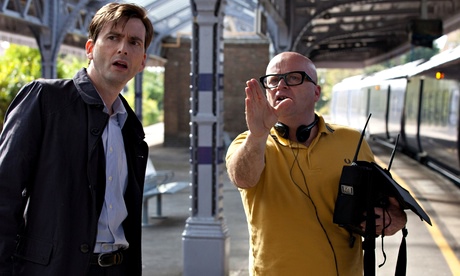
I understood the bar was set very high when making my recent series for BBC1, The Secrets – a series of five films by writers new to television, with provocative moral dilemmas as the central theme. I knew these programmes could not just be interesting and challenging experiments. They had to hold their own in the mainstream – win the audience and keep them. Everything had to be top quality, from the script to the performances via the visual approach and the music.
At its best, British TV drama is now able to rival that of feature films. Think of Peaky Blinders and Top of the Lake, both of which wouldn’t be out of place in cinema. British drama also has to contest with the best of what the Americans have to offer, and they are very good indeed. An American executive at a prominent cable channel told me that they like to make their TV dramas like independent feature films, with that same ethos.
As great and as lavish as Tinker Tailor Soldier Spy and The Jewel in the Crown were, they didn’t have the vision that we now demand. I think that’s important to recognise.
For me, Dennis Potter was the ultimate innovative and original dramatist, but would his work get the same attention today? Would important and brilliant series such as Alan Bleasdale’s Boys from the Blackstuff make the same mark now? There is so much choice and so many other places to turn to as a viewer. Not just multiple channels but Netflix, YouTube, home cinema. There wasn’t the same level of competition back then and appetites were different. Drama has had to evolve to attract attention and meet the demands of audiences, yet still retain a strong voice.
Charles Dance also feels that not enough risks are being taken in TV drama. However, I think there is a risk associated with every drama that is commissioned. Commissioners are at pains to find original ideas that have the potential to really take off and find audiences. But they’re also not averse to enabling work that might not have the same commercial clout. Work that is important, distinctive and challenging.
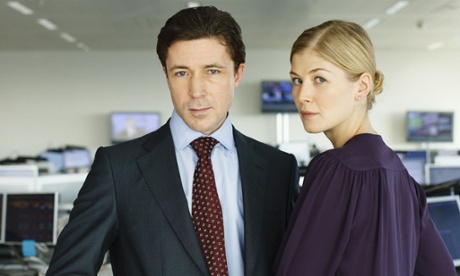
I can talk from direct experience as my dramas have, I feel, been the very definition of this, from Out of Control (a dark and disturbing film about youth and crime) to Born Equal (an essay on inequality set in London starring Colin Firth), to Freefall (a film about greed, money and the credit crisis starring Rosamund Pike and Dominic Cooper). More recently, there was the improvised True Love on BBC1. These are all difficult, bold and risky projects made in a distinctive and highly unconventional way.
What could be more risky than a project being commissioned on the basis of a script that will be improvised? Where no one really knows for sure what it is that we will end up with. Where the tone of the piece is difficult to predict. Where the subject matter is tough and demanding. Where I am given enormous creative freedom to make an authored piece of television, and where a space is created in the schedules for such distinctive work. I enjoy this mandate and will hopefully continue to do so.
That’s risk taking, I think, and proof that brave commissioning is alive and well in this vibrant, diverse new golden age of British TV drama.
Dominic Savage is an award-winning writer and director



.png?w=600)








