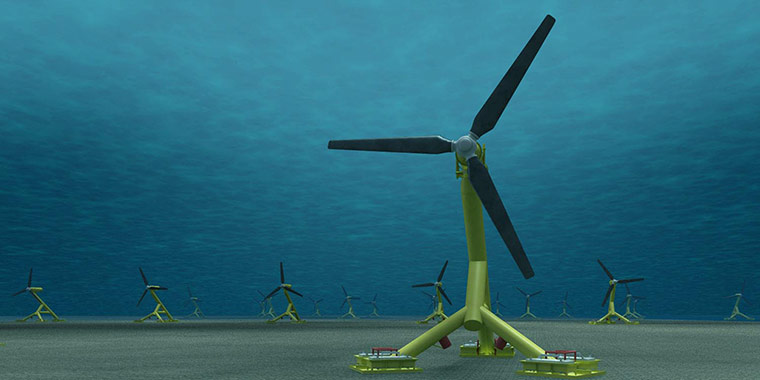
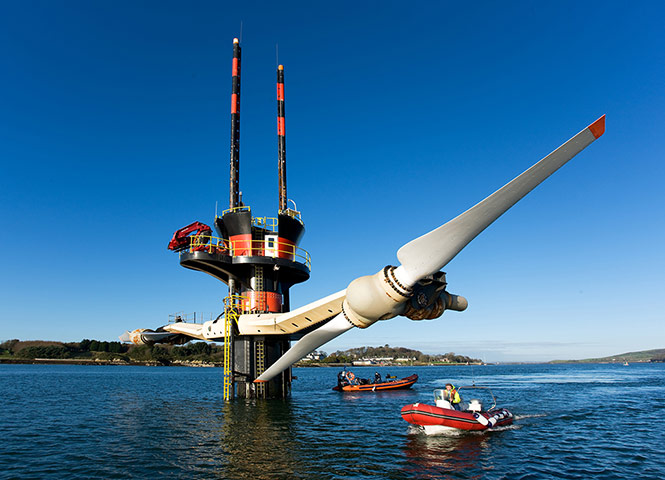
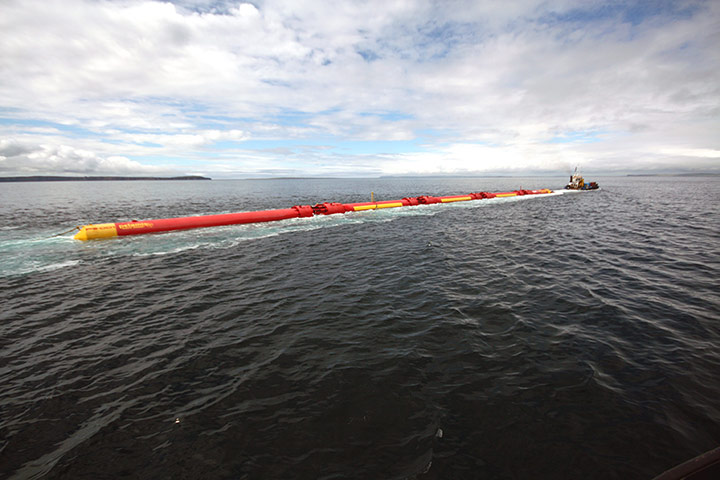
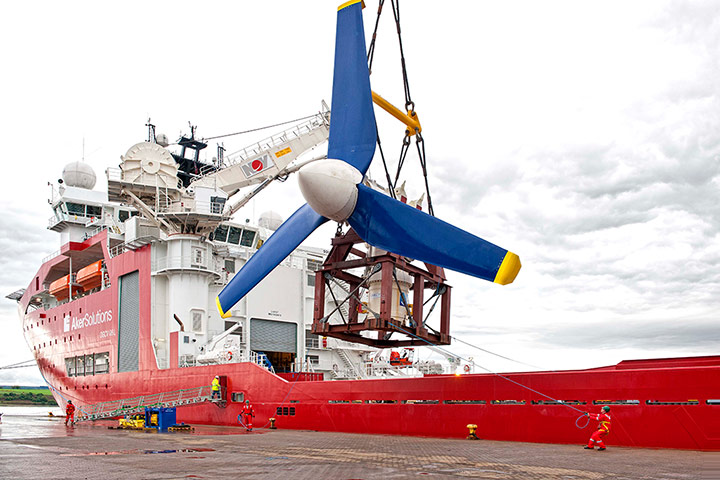
The Hammerfest Strøm HS1000 tidal turbine is based on a mixture of technologies used in onshore wind turbines, subsea oil and gas production and in hydro-power plants. Scottish Power Renewables plans to install up to 10 devices as part of the world’s first tidal turbine array in the Sound of Islay, Scotland.Photograph: AgenciesNow owned by Siemens, Seagen was the world’s first commercial-scale, grid-connected tidal stream energy system. Operating since 2008 in Northern Ireland’s Strangford Lough, SeaGen is still one of the largest projects of its kind today and recently became the first of its kind to generate five gigawatt-hours of power.Photograph: PRNamed after a species of sea snake, Pelamis is a jointed structure which undulates with the waves to absorb energy and convert it into electricity. A second generation 0.75 MW P2 machine, owned by E.ON, is currently being tested at the European Marine Energy Centre (EMEC) in Orkney, becoming the first wave machine sold to a utility for use in the UK.Photograph: PR
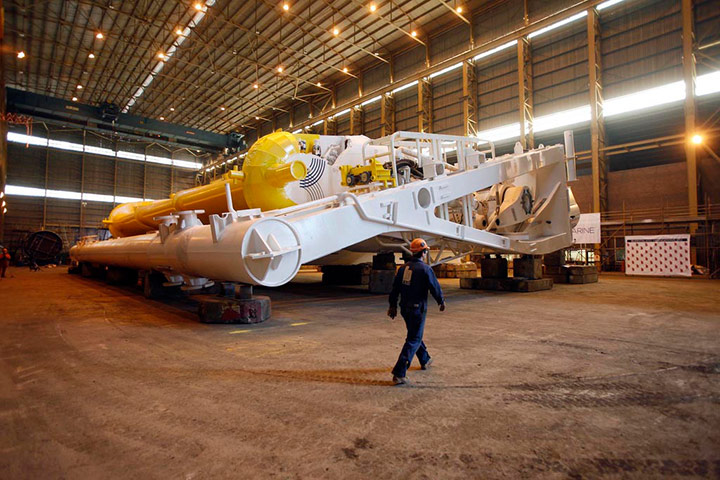
Aquamarine’s Oyster wave energy converter is formed of a hinged flap, which uses the motion of near shore ocean waves to generate electricity. Earlier this year the company started testing a second generation Oyster 800 wave energy machine at EMEC, providing its first power to the grid in tha same month.Photograph: PRStanding 22.5 metres tall and weighing 1,300 tonnes, Atlantis Resources’ AR1000 is one of the largest tidal turbines of its type. The company is currently focused on proving the technology for the MeyGen tidal stream project, which could see hundreds of devices deployed in the Inner Sound, one of the fastest-flowing areas of the Pentland Firth, by 2020.Photograph: PR
Sign up to read this article
Read news from 100’s of titles, curated specifically for you.