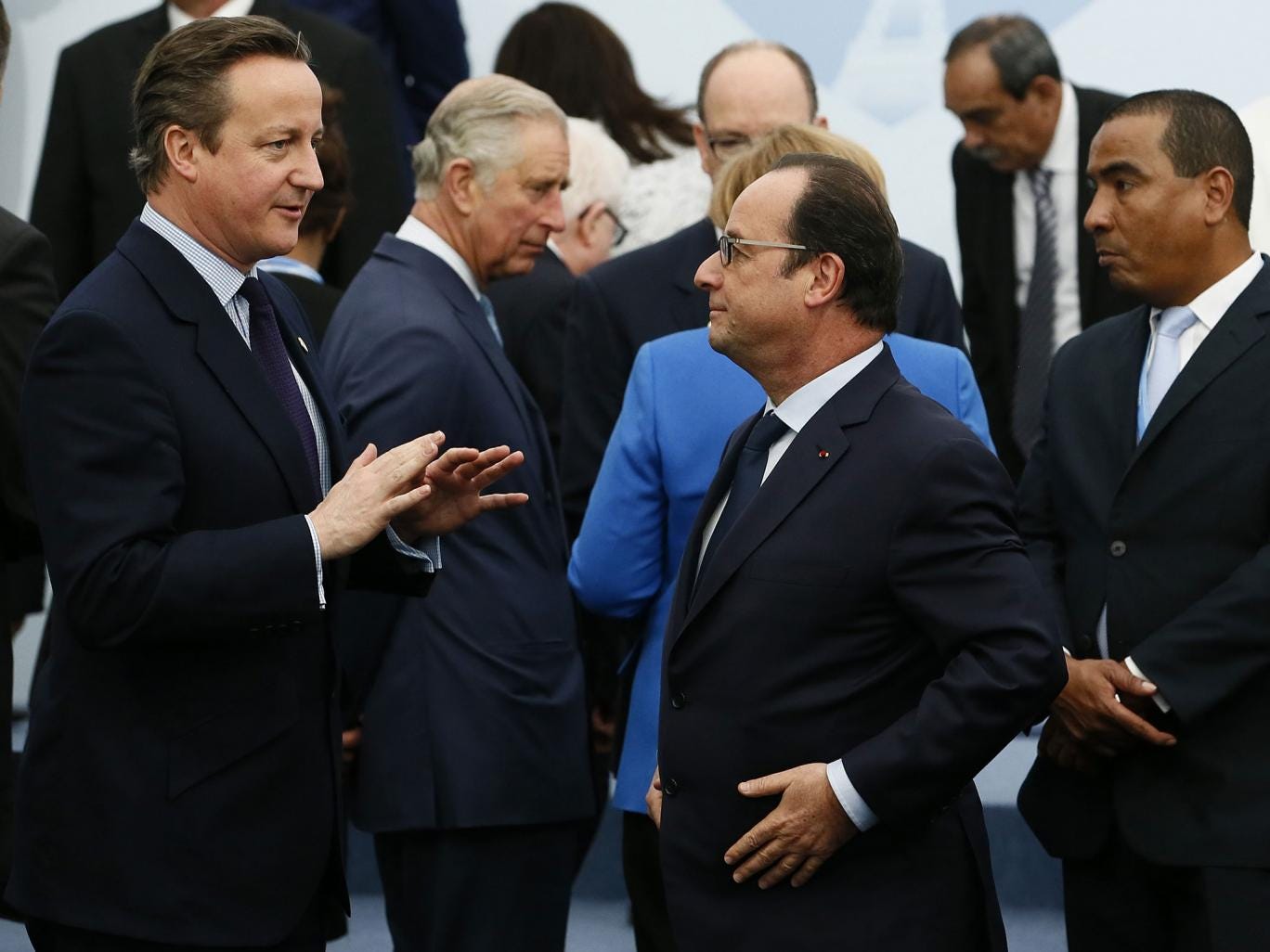
The world’s leaders have descended on Paris in a bid to thrash out a deal defining how mankind will tackle climate change for the next 15 years or more.
But while their leaders spoke with one voice at Monday’s opening of the UN summit to declare that “this is about the future of the planet, the future of life” (that was President Francois Hollande), members of the public are more ambivalent about global warming - and what should be done about it.
According to a YouGov survey released to mark the start of the talks, British people are more likely than other Europeans to refuse to take a leadership role in any international agreement to tackle climate change.
Of eight countries included in the poll, only Americans are more keen than Britons to see their government reject any agreement whatsoever – 16 per cent compared to nine per cent.
And according to a separate analysis of YouGov’s 73,000 “Profiles” completed online, 30 per cent of British people are either fairly (21 per cent) or very (9 per cent) doubtful that man-made climate change even exists – despite the overwhelming scientific evidence.
Asked what their greatest fears were relating to the possible effects of climate change, more Britons said they were concerned about the loss of wildlife “such as bees, insects, birds etc” (39 per cent) than short- and long-term impacts on humans.
YouGov notes that the loss of these pollinators would harm Britain’s ability to produce food – but their decline is more due to use of pesticides than anything else.

Germany takes a more pragmatic approach, with more people concerned about “food and water shortages” than other impacts.
French people are also worried by the impact on wildlife – but cite “pollution levels in general” as their biggest concern.
Similar attitudes were expressed across the Scandinavian countries surveyed, with all taking a long-term view with “the challenge future generations will face” as their biggest fear.

But their opinions were also influenced by their own geography – Denmark, for instance, was especially concerned about rising sea levels.
The people of Denmark are also by far the keenest for their government to take on a leadership role and address climate change “as quickly as possible”, followed by Sweden and Germany. Finland was the only country where a majority preferred “a more moderate approach and gradual action”.
The leaders in Paris have until Friday 11 December to work out how to cut emissions enough to keep global warming within a 2C target. Here’s a quick summary of everything you need to know as the talks begin.