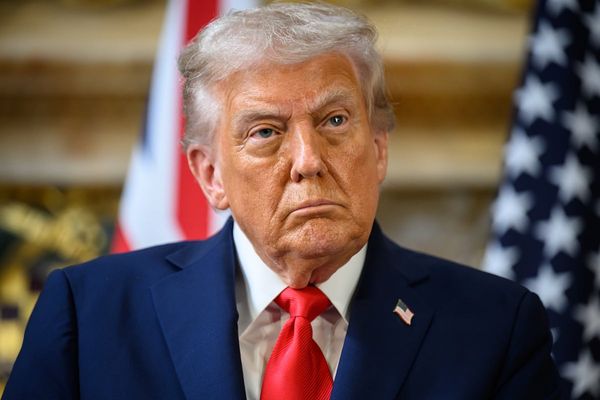
British Prime Minister Boris Johnson warned Iran that time is running out to salvage the 2015 nuclear agreement with major powers.
In a call with Israeli Prime Minister Naftali Bennett, Johnson discussed the ongoing talks in Vienna on the Joint Comprehensive Plan of Action (JCPOA), Reuters reported.
"The prime minister said the UK wants to see the negotiations in Vienna lead to full restoration of the JCPOA, but that we need Iran to engage in good faith," a Downing Street spokesman said. "The diplomatic door is open, but time is running out to reach an agreement."
Western parties fear that Iran is negotiating to buy time to develop its nuclear program, and diplomats say that if no deal is reached by the end of January or early February, the agreement will be of no value.
However, Iran rejects the time limit.
IRGC's Fars News Agency quoted a source close to the Iranian negotiating delegation in Vienna as saying there are no deadlines for reaching an agreement or ending the talks.
Iranian Foreign Ministry spokesman Saeed Khatibzadeh said that his country would not fall into the trap of "factitious deadlines" that could be set by the other parties to the JCPOA.
Meanwhile, the South Korean Foreign Ministry announced that Vice Foreign Minister Choi Jong-kun would hold talks in Vienna this week with Iran and world powers over how to resolve the issue of frozen Iranian assets held in the Asian country.
The Ministry said the delegation "would explore ways to resolve the issue of frozen Iranian assets in Korea" through consultations on the sidelines of the nuclear negotiations with Iran and in coordination with the United States, France, Germany, and Britain.
Korea's Yonhap News Agency said that Seoul hopes that Choi's visit will help find a solution to the issue of frozen Iranian assets in Seoul after the former US administration imposed sanctions on Iran in 2018 following its withdrawal from the nuclear agreement.
Iran has repeatedly demanded the release of its frozen assets in several countries because of US sanctions, including $7 billion in South Korea. Any release would need to be approved by Washington.
Sources told Asharq Al-Awsat that the South Korean delegation will meet with the EU envoy, Enrique Mora and that he also requested a meeting with the Russian ambassador, Mikhail Ulyanov.
The Korean delegation appears to have coordinated its visit with the Iranian party, as indicated by the Ministry's statement.
Ulyanov tweeted that he met the head of the Iranian delegation, Ali Bagheri Kani.
"We discussed the main unresolved issues which need to be settled in the course of the Vienna talks."
He also met with Mora, saying they "exchanged views on the current state of affairs and possible way ahead."
The visit of the South Korean official appears to be an Iranian attempt to increase pressure on Western parties to try to push them to take the first step by unfreezing some of Iran's funds.
In early October, Iranian Foreign Minister Amir Hossein Abdollahian said that the US administration should "show goodwill" and release $10 billion of Iran's frozen assets abroad.
A senior Western diplomat told Politico magazine Tuesday that since the US unilaterally exited the deal, Washington will probably have to take a "meaningful first step" and lift some sanctions before Tehran takes measures to reduce its nuclear program.
Ulyanov said parties to the Vienna talks must focus on the issue of lifting US sanctions, describing them as an "obstacle to negotiations."
"I was surprised that the Western parties have expressed doubts about the seriousness of Iran in the negotiations," noted the senior negotiator, adding that no one says the negotiations will be easy.