Attention seems to shift abruptly in Britain’s national security circles, from Vladimir Putin’s designs on Ukraine to the extreme jihadists committing atrocities in Syria and Iraq.
As pictures of Angela Merkel and François Hollande meeting Putin in the Kremlin last week flashed around the world’s TV screens, former British general Sir Richard Shirreff warned that the crisis in Ukraine could lead to “total war” and that David Cameron risked becoming a “foreign policy irrelevance”.
Then the Commons defence committee lambasted the Cameron government, describing UK actions in Iraq as “strikingly modest”. It added: “UK officials, ministers, and officials have failed to set out a clear military strategy for Iraq, or a clear definition of the UK’s role in the operations”.
The committee added: “We see no evidence of an energised policy debate, reviewing or arguing options for deeper engagement”. It suggested that Britain was lurching from “over-intervention to complete isolation”.
As if stung by the criticism, the Ministry of Defence announced on Monday that RAF Tornado jets had carried out a number of strikes and a Reaper unmanned drone had attacked an Isis checkpoint in western Iraq with a Hellfire missile.
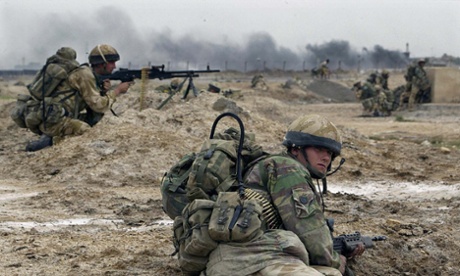
There may also be more than fifty SAS soldiers in northern Iraq. We do not know because the MoD, as I have noted before, does not officially comment on the activities of Britain’s special forces, even though, as the defence committee emphasised “special forces operations will be of great use to the Iraqi government and a counter-terrorism strategy is highly relevant to the UK’s national security”.
The defence committee said there was “considerable scope for special forces operations, provided that they are able to operate within the increasingly stringent legal constraints”.
The proviso was a reference to what the MPs called “the significant legal obstacles to targeted killings” and the absence of detention facilities where the interrogation of terrorist suspects could be monitored. Interestingly, the defence committee added that “a sustained special forces campaign may also undermine the UK government’s ability to influence the process of political reform in Iraq”.
The past role of British and US special forces in Iraq and Afghanistan is exposed in The Kill List to be broadcast on ITV on Wednesday evening, at 10.40 pm.
Despite the official ban on talking out, former British SAS soldiers do so, and in a manner not likely to endear themselves to their defence and security establishment. Richard Williams, a former SAS commander, refers to a bunker called “the Death Star”. He recalls: “It was known as the death star because of the impression of a Star Wars type-technical facility that would… designate those targets for kill or capture missions. Its purpose was obviously the destruction of Al-Qaeda in Iraq and did deliver from it quite a lot of death”.
The SAS was keen to be part of the US Joint Special Operations Command (JSOC).
When it was suggested that it had been described as an industrial scale counter-terrorist killing machine”, Williams replied: “Well it was”.
If targets on the kill list could not be engaged in combat or captured by any other means they would be killed, remotely, by a bomb.
JSOC now has a headquarters in Djibouti near the Horn of Africa, for operations in across Africa and the Middle East.
David Kilcullen, former adviser to the US on countering terrorism, tells the ITV programme: “We’ve seen the emergence of sort of a targeting industrial complex around terrorism, counter-terrorism. One of the key things that I think we need to be thinking about now is the idea that things that you come up with to inflict on enemy populations overseas ultimately get visited on your population at home.”
The British government may be thinking along these lines, as well as wondering what to do about Ukraine. There is no harm in thinking and ignoring Shireff’s impatience. So long as London comes out with a coherent approach and not resort again to dangerous rhetoric