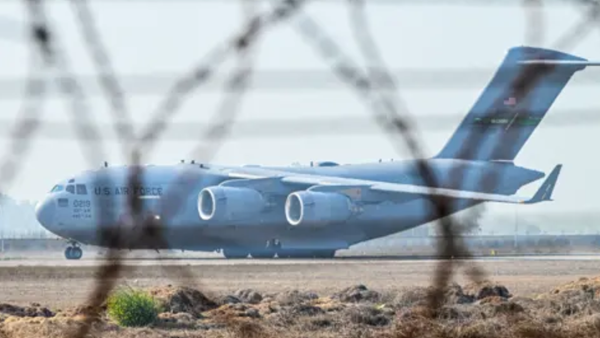
Around 1,600 British Airways flights have been cancelled between late on Sunday 8 September and early on Thursday 12 September. The cause: a two-day strike by the majority of BA’s pilots.
These are the key questions and answers.
What is the dispute about?
Money. The airline is offering pilots a pay increase worth 11.5 per cent over three years, which it describes as “a deal already accepted by members of the Unite and GMB unions, which represent 90 per cent of British Airways’ staff, a deal which we believe is fair.”
The British Airline Pilots’ Association (Balpa) does not think it is good enough, and is demanding captains and first officers should get, on average, an additional £1,150 each year.
The union’s general secretary, Brian Strutton, says: “If the public understood the financial sacrifices that pilots made in BA’s lean years, including pay cuts and loss of terms and conditions, they might recognise that the gap between us, of less than 0.5 per cent of BA’s profit, is not unreasonable.”
What is the effect on passengers?
The vast majority of British Airways’ flights to and from Heathrow and Gatwick airports on 9 and 10 September have been cancelled. This means around 1,600 flights cancelled and 240,000 passengers affected.
Cancellations include all the departures on key long-haul routes such as Heathrow to New York, Boston, Los Angeles, Delhi, Johannesburg and Hong Kong, and Gatwick to Orlando and the Caribbean.
Almost all short-haul flights have been axed during the 48-hour spell.
Some flights on Sunday 8, Wednesday 11 and into Thursday 12 have also been affected. For example, a Wednesday morning flight from Madrid to Heathrow has been grounded, while the cancellation of Wednesday’s Sydney-Singapore-Heathrow service automatically means no Thursday arrival for flight BA16.
What if I am booked on a British Airways flight on Monday or Tuesday and have not been told it is cancelled?
It is likely to operate as scheduled. BA CityFlyer services to and from London City airport are unaffected (except that they will be extremely busy with passengers from cancelled flights).
Some other services, such as a single round-trip between Heathrow and Barcelona, and from Gatwick to New York JFK, will also be operating, using non-striking crew. Other key links, including Miami (important for cruise passengers), are being partially protected.
How much is it costing British Airways?
The lost revenue over the two days is around £75m-£80m. Additional costs, from hotel rooms to parking charges for planes at long-haul destinations, are likely to push the bill to about £100m.
What options and entitlements are there for people whose flights are cancelled?
Affected passengers were contacted two weeks ago to be told about the cancellations (along with thousands who were erroneously informed their flights were grounded).
The European air passengers’ rights rules provide for three choices for travellers whose flight are cancelled:
1. They can cancel for a full refund (covering both legs if a return has been booked). This may suit some passengers whose plans have changed, or who have found a cheaper alternative route.
2. They can be rebooked either on the same airline or, if no flight is available on the first day, on another flight on a different airline. This is the option that is likely to suit most passengers, with nothing more than mild inconvenience.
While BA has rebooked tens of thousands of travellers on dozens of other airlines, it has declined to buy seats on easyJet – which, for many passengers at Gatwick, would be the obvious and appropriate choice.
3. They can travel on a different date. If appropriate – eg someone on holiday in Istanbul extending their trip by two days to await a BA flight home – the airline must pay for accommodation and meals during the wait.
Is there likely to be more disruption on the day?
British Airways has cancelled so many flights that I imagine it is confident that the few that remain will operate as planned. But as with aviation in any circumstances, disruption from many quarters is always a possibility.
My flight on Wednesday 11 September is running, but might I lose my seat to someone stranded on the previous two days?
No, passengers on cancelled flights go to the back of the queue. Travellers already booked on flights that are operating always take priority.
Could the strike be called off?
In theory, and indeed in 1997 a planned two-day cabin crew strike was cancelled at the very last moment.
On Thursday BA’s pilots offered to return to work if discussions could begin on a new set of proposals. British Airways rejected the approach, saying it would talk without preconditions, and pointing out that the damage has largely been done with tens of thousands of passengers making alternative arrangements.
Is there enough room for all the grounded planes?
There will be a squeeze at both Heathrow and Gatwick. It is possible that some empty planes will be “positioned” (ferried) to BA’s long-haul maintenance base at Cardiff.
Long-haul aircraft are being kept on the ground at foreign airports, too.
What is the effect on other airlines?
Positive. Rival carriers are pickling up business from BA. In addition, operations will be much smoother on Monday and Tuesday. With at least half the flights at Heathrow being cancelled, and one-fifth of those at Gatwick also grounded, the local air-traffic congestion will be dramatically eased.
When is the next strike, and when will affected passengers be told about their options?
A 24-hour stoppage is scheduled for Friday 27 September and could affect flights between Thursday 26 and Sunday 29 September.
Normally after an initial strike, things would go quiet for a few days while the parties re-engaged. But I calculate that British Airways will need to send out cancellation notices on Wednesday 12 September in order to avoid the obligation to pay compensation.