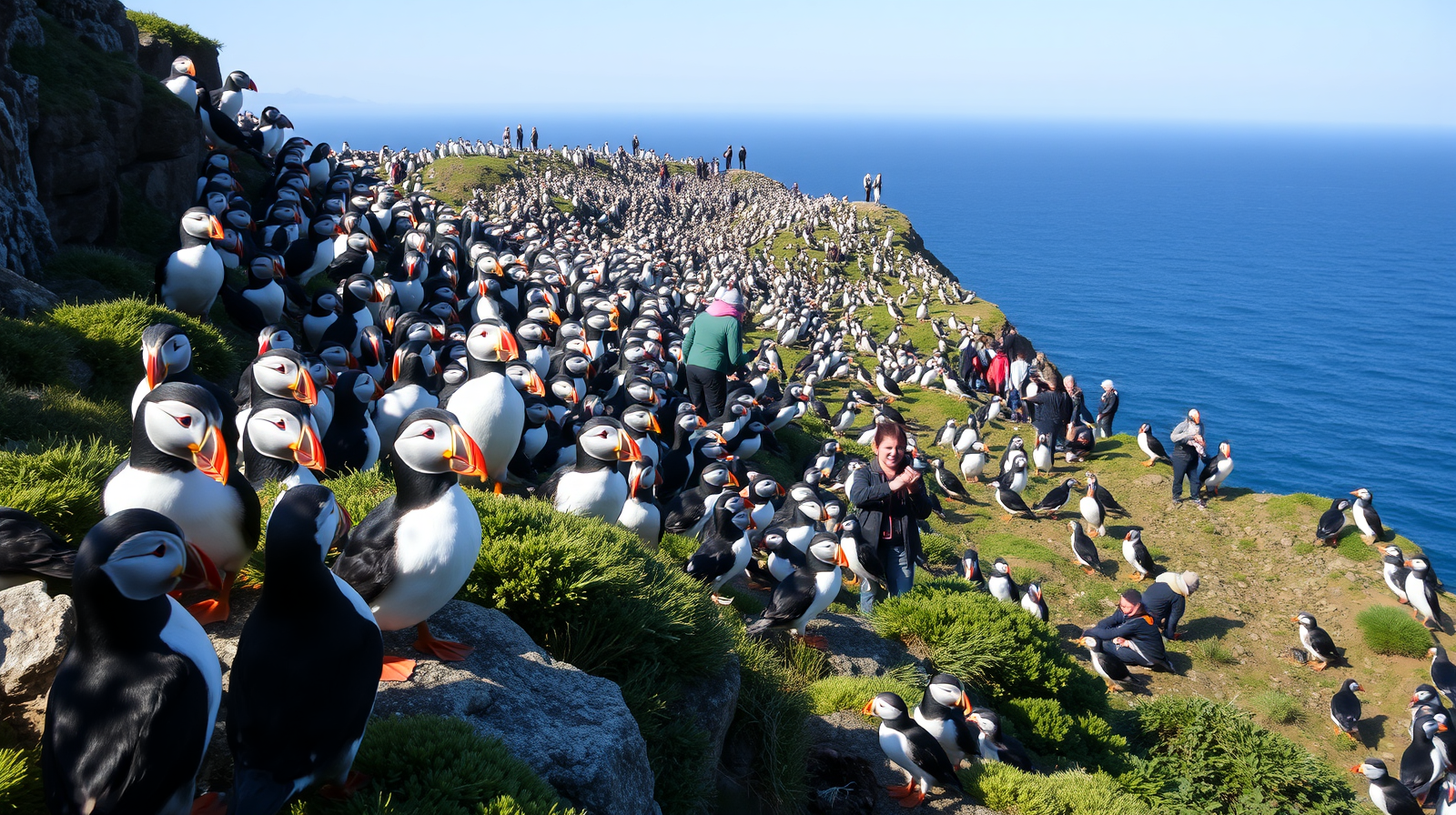
Puffins look like they belong on a postcard, with brightly coloured beaks, comical waddling walks, tucked into dramatic clifftop burrows. Behind that cheerful image, however, puffin colonies across Britain and Ireland have spent decades in serious decline, driven out of their traditional nesting grounds by invasive rats, overgrown vegetation and the general disruption that comes with sharing an island with predators the birds never evolved to handle. Bringing puffins back to these sites has turned out to require a strange mix of solutions, plastic decoy birds, hand-pulled weeds and painstaking predator removal, all carried out largely by volunteers willing to put in years of unglamorous, repetitive work for the payoff of watching a single puffling finally take flight. Many restoration projects have already reported encouraging results, with puffins returning to breed on islands they had abandoned years earlier. Their recovery highlights how carefully planned conservation, long-term habitat management and sustained community involvement can help reverse declines in vulnerable seabird populations.
Get breaking news anytime, anywhere. Download the TOI app now!
Why puffin colonies keep disappearing in the first place
Puffins are highly social birds that strongly prefer nesting in large, established colonies rather than alone, which creates a genuine chicken and egg problem once a colony has been wiped out, since new birds are reluctant to settle somewhere that does not already look like a thriving colony. According to the Scottish Seabird Centre's SOS Puffin project , one of the biggest threats facing puffin nesting islands in the Firth of Forth has been tree mallow, an invasive plant thought to have been introduced to Bass Rock more than three hundred years ago by soldiers who valued its medicinal properties. The plant has spread aggressively in recent years, helped along by milder winters linked to climate change, smothering the ground puffins need to be clear and open in order to dig their nesting burrows and successfully raise chicks.
The volunteers pulling weeds by hand, one work party at a time
Rather than relying on any single dramatic intervention, the SOS Puffin project has depended entirely on the accumulated effort of ordinary volunteers over nearly two decades. According to the Scottish Seabird Centre, more than 360 work parties have made regular trips out to the islands of Craigleith, Fidra and the Lamb over the past 18 years specifically to cut back tree mallow by hand, with more than 1,300 individual volunteers taking part in the project since it began. That sustained effort has paid off, with monitoring now showing that natural vegetation on the islands is recovering and puffins are able to nest without the tree mallow interference that had previously choked out their burrows, a recovery that has also benefited other nesting seabirds including eider ducks and fulmars sharing the same islands.
How rat eradication turned one silent island back into a colony
Elsewhere in Britain, the bigger obstacle facing puffins has not been vegetation but rats, introduced accidentally through shipwrecks and left to devastate ground-nesting seabird colonies for generations. According to the RSPB, a rat eradication project on Lundy Island helped boost puffin numbers there from a meagre five birds to 848 recorded in 2021, while similar work to remove rats and ferrets from Rathlin Island off the coast of County Antrim saw puffin numbers reach 1,719 in 2025, nearly fifty per cent higher than the year before. The RSPB has been clear that removing predators is only half the challenge, since preventing rats from making their way back to these now predator-free islands requires ongoing vigilance and monitoring rather than a single one-time clearance.
Why the Calf of Man needed plastic puffins to bring real ones back
Perhaps the most inventive response to a wiped-out colony has come from the Isle of Man, where puffins disappeared entirely from the Calf of Man by 1987 after rats introduced through a shipwreck decimated the population. According to the Manx Wildlife Trust's own account of its Puffin Project , the charity carried out a rat eradication programme between 2012 and 2013 and then, in 2016, placed a hundred lifelike resin puffin decoys onto rocks and cliff edges at two separate sites, pairing them with speakers playing recorded puffin calls to trick passing young birds into believing an active colony already existed there. Marine Officer Dr Lara Howe predicted the strategy would take at least five years to show results, roughly how long it takes a fledgling puffin to mature and return to breed, and in 2021, volunteers finally spotted a real puffin nestled up against one of the decoys, later seen gathering nesting material of its own.
Why patience remains the single hardest part of this work
What unites all of these separate projects is just how long volunteers and conservationists have had to wait to see any real payoff for their effort. According to the National Trust, marine ornithologist Dr Richard Caldow has spent years monitoring a small, struggling puffin colony in Purbeck, Dorset, working alongside volunteers from the Purbeck Natural History Forum who have combed through tens of thousands of trail camera photographs simply trying to understand why chicks there are not surviving to fledge, without yet finding a clear predator or definitive answer. This kind of patient, often inconclusive monitoring work rarely makes for dramatic headlines, but it represents the genuine bulk of what puffin conservation actually looks like on the ground, year after year of careful observation long before any encouraging result finally appears.
What these small, scattered successes add up to
None of these individual projects alone will reverse the broader decline puffins have faced across their range, but taken together they offer a genuinely hopeful pattern: colonies that were completely wiped out or severely degraded can recover once the specific threat driving that decline, whether invasive plants, rats or simply a lack of other visible puffins, is properly addressed. The Manx Wildlife Trust's Isle of Muck project in Northern Ireland, which combined rat eradication with winter grazing to keep vegetation low, saw puffins nesting there for the first time in 25 years, a milestone that took a dedicated seabird recovery project running since 2017 to finally achieve. For the volunteers behind these efforts, success rarely arrives as a single dramatic moment; it tends to show up quietly, in a single photograph of a real puffin finally settling in beside a plastic one, or a handful of new burrows appearing on an island that had gone silent for decades.