Hundreds of British sailors are currently stationed aboard the RFA Lyme Bay off the coast of Gibraltar, poised for a mine-clearing mission to the Strait of Hormuz, though its deployment remains uncertain. The operation hinges on a peace agreement in the region, a deal which US President Donald Trump claims has been "largely negotiated" but still requires finalisation.
The potential mission comes amidst heightened tensions, with the Strait of Hormuz effectively closed by Iran following the US and Israel’s launch of war on 28 February. This closure has severely impacted international shipping, causing energy prices to soar and crippling global trade, particularly for oil, natural gas, and fertiliser.
Donald Trump has been vocal in his criticism of allies, urging them to do more to support the US effort and secure the vital waterway themselves, even telling NATO allies in March to "go get your own oil". He has previously described Britain’s navy as "toys" and Prime Minister Keir Starmer as "not Winston Churchill".
Britain’s Armed Forces Minister Al Carns recently offered reporters a glimpse of the RFA Lyme Bay’s preparations. The amphibious landing vessel, docked at the gateway to the Mediterranean, was being loaded with ammunition and advanced mine-hunting sea drones equipped with sonar.
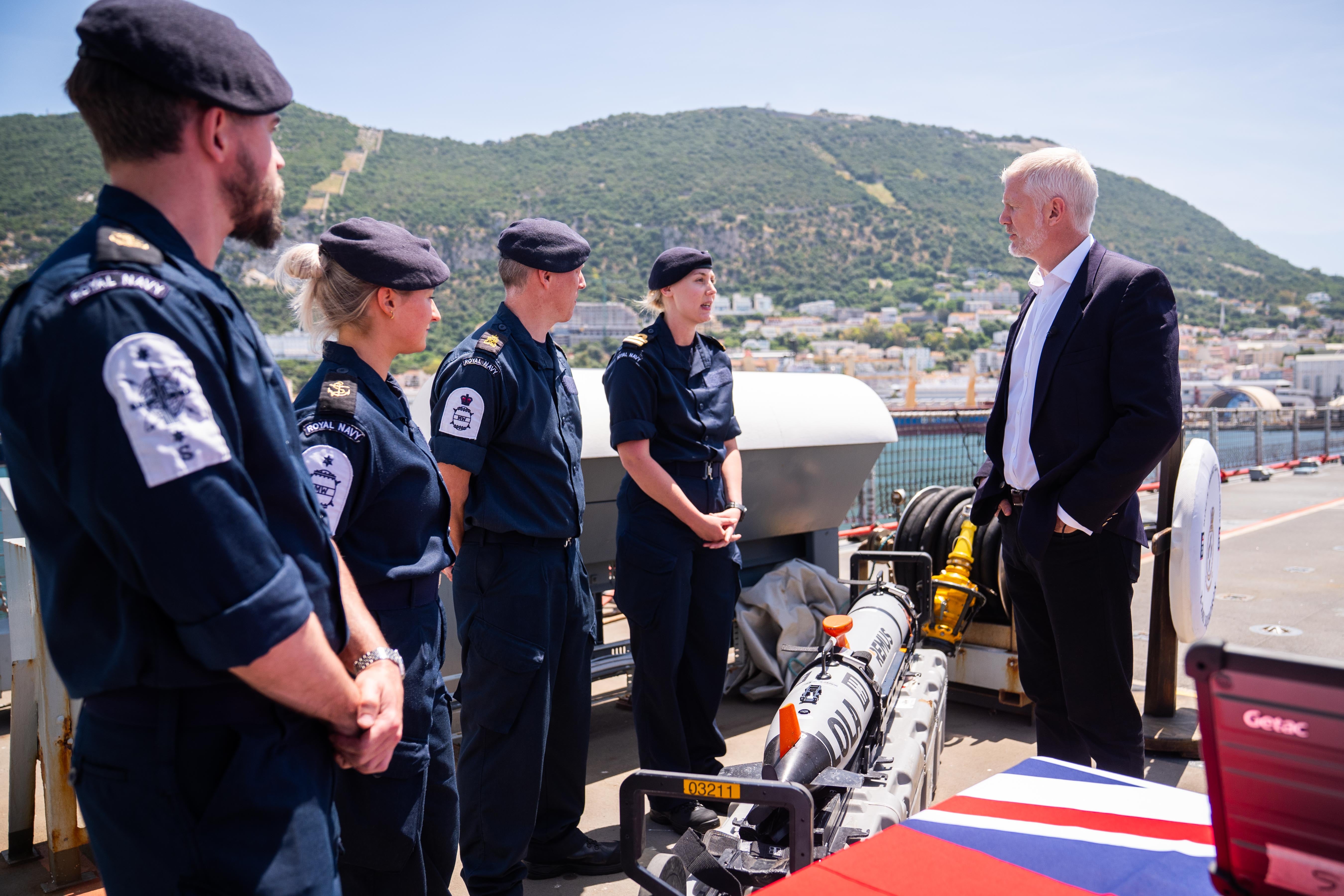
With a crew of several hundred, the RFA Lyme Bay is set to depart Gibraltar, link up with the UK destroyer HMS Dragon and allied ships for air support, before sailing through the Suez Canal to the Persian Gulf. The UK and France are expected to lead this international operation.
Responding to a question from The Associated Press regarding Donald Trump’s expectations of his British ally, Mr Carns stated: "Which other country can pull together 40 nations and come up with a solution to deal with a complex problem that we couldn’t predict because we weren’t involved?"
He highlighted that at least 6,000 ships have been prevented from transiting the strait since the conflict began.
The potential threats from Iran’s mines are extensive, according to Cmdr. Gemma Britton, who leads the Royal Navy’s Mine and Threat Exploitation Group. She explained that Iran could possess a "huge" variety of mines, including rocket-propelled, cabled, or seabed-based devices, triggered by sound, movement, or light.
Reporters were shown autonomous systems capable of scanning the seabed and water with sonar, significantly reducing the time it takes for crewed vessels to map potential dangers. These sea drones produce detailed images of underwater objects, from fishing traps to pipelines, allowing for the identification of mines.
Cmdr. Britton noted that some systems on the RFA Lyme Bay can be deployed from a smaller vessel, piloted autonomously from the mother ship, which remains outside any potential minefield, thereby reducing human risk. While divers traditionally place explosives on mines, the RFA Lyme Bay is trialling a remotely operated vehicle that can drop and detonate a charge.
The immediate priority, Cmdr. Britton explained, would be to clear a transit lane for approximately 700 waiting ships, followed by a lane for incoming vessels. However, she cautioned that clearing the entire strait could take months or even years.
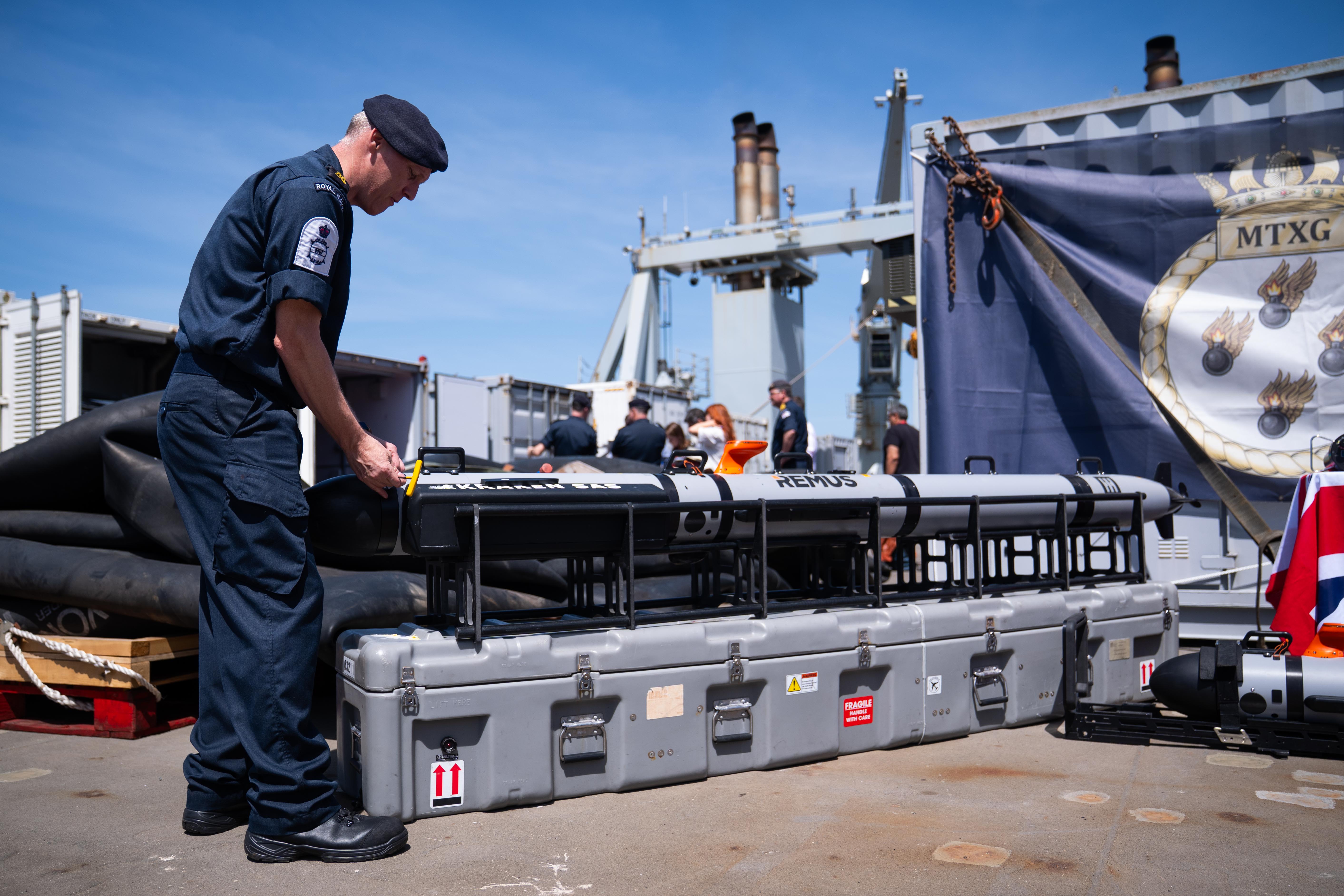
Despite the advanced preparations, the deployment remains conditional. It is still unclear whether mines are present in the strait, or if the UK and its allies will ultimately be deployed to remove them.
When asked if the British effort was partly for show to curry favour with the US, Mr Carns asserted that while some mines might have been destroyed or drifted away, commercial insurance companies require "absolute certainty" before vessels can resume passage. "That’s what this capability will provide," he added.
The international effort to secure the strait will only proceed once hostilities have ceased. Donald Trump reiterated on social media that "Final aspects and details of the Deal are currently being discussed, and will be announced shortly," though without providing a timeline. This is not the first time a deal has been described as imminent in recent weeks.
"We don’t know when the Americans, Iranians and Israelis are going to come up with a suitable solution," Mr Carns admitted. In the interim, the RFA Lyme Bay and its crew will remain on standby, ready to deploy.