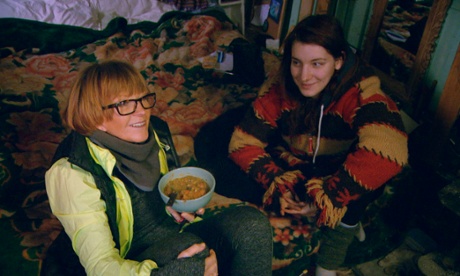
There is an honesty to any endeavour that involves Anne Robinson, and it was apparent early on in last night’s look at the different attitudes we have towards the acquiring, saving and disbursing of money, in Britain’s Spending Secrets (BBC1), when she referred to her first interviewee as “the perfect punchbag.”
The punchbag was Charlotte, a single mother of two-about-to-be-three who has been threatened with eviction twice and run up debts worth £5,000 by furnishing her flat with luxury goods. Charlotte argued: “Just because I’m on benefits, why shouldn’t I have the nice things in life?” While Anne didn’t actually punch her, she let her pay out more than enough verbal rope with which to hang herself before the court of public opinion.
Then she worked the other end of the hate-scale (for the viewer – Anne enjoys all her interviews with the detachment that comes with knowing that you are getting paid either way) with Laura, a 32-year-old entrepreneur with a spectacularly irritating middle class drone-voice who spent £50,000 a year on hotels and umpty-billions on clothes to give her “an edge” in business meetings. Then came a restorative draught of the Addicutts in Malvern, a Normal Family, with two parents bringing up four kids on a joint income of £25,000, making ends meet through constant bargain hunting, charity-shop clothes and working tax credits. They were compared and contrasted with the £100,000-pa Stephens family in Northampton, who long for an extra £50,000 a year so they can put the children through private school without giving up any of their holidays, gadgets or Ocado deliveries. Their father Darren – a singularly unappealing man – spends £150 a month on coffee in Starbucks so he can work there instead of in his man-cave because it is stuffed too full of gym and snooker gear to allow him to concentrate. He is disgusted by the Addicutts’ “struggles” when they have the temerity to be paying £2,500 a year for after-school clubs and classes for their children. “I’d get the house sorted out,” he says with all the warmth and insight of one of his snooker balls. Welcome to the nation’s shitlist, Darren.
A quick trot through the self-made multimillionaire lifestyle with Romany gypsy-turned-property-emperor Alfie Best, who buys only what he can later sell at a profit – his whole life is turnover – and living out of skips with Jedi and Hannah from an eco-village, a brief glance at the frugality of the truly posh, courtesy of Baroness Jenkin, who eats whatever’s been shot on her estate that weekend, strains her marmalade through old tights and wins hearts with the simple exclamation “Aren’t we lucky!” and we’re done. Breathless, exhilarated, all buttons pushed, fear, love and loathing for the array of humanity strung out before us – the whole thing was a masterpiece of manipulation. So much material, so many questions touched upon – what are we really hoping money will buy? What price is morality? If we earn it, do we have a perfect right to spend it? Where does money meet conscience? What happens to the Addicutts if their tax credits are taken away? How much did they edit Darren to make him look that bad? Why did Anne, after previously proclaiming her unblushing profligacy, suddenly hesitate and turn coy when the Baroness asked her how much her clothes cost? – but unanswered. There was more wasted here than in the dustbins Jedi dived in. Maybe it will all be rigorously examined next week. But I have just a tiny suspicion that it might just be more of the same. The worst part of me is greatly looking forward to it.
Horizon: First Britons (BBC2) was a masterpiece of a different kind. Solid, dependable, it manoeuvred us deftly, if uninspiringly, through the evidence that is changing the way people who think about these things are thinking about the Mesolithic people. New discoveries and analytical technologies suggest that our post-ice-age ancestors were a lot more complex, better organised and settled than we thought. Archaeologists stared at preserved pollen grains recovered from seabeds that were dry land 10,000 years ago, auroch bone fragments by ancient springs and hiccups in stalagmite formation in Yorkshire caves like Roy Scheider at Jaws. “We’re gonna need a bigger rethink.”
Experts brushed sediment lovingly away from timbers, extracted teeth from burial cairns and described them as “wonderful archives of information”, took core samples from the middle of moors, read history from the peaty strata and rebuilt their thought. I wondered how much they were paid to add to the sum of human knowledge. Could Baroness Jenkin send them a few pots of her lovely marmalade at least? Both priceless in their own ways.