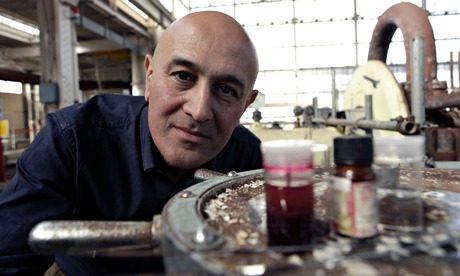
“That’s your dose for the year,” a rod inspector tells Jim Al-Khalili at Sellafield’s Calder Hall reactor. Physicist Jim and the inspector have just opened one of the plugs leading to the reactor’s deactivated core, which supplied the National Grid with cheap electricity in the 1970s. It’s not much to look at, the sort of nondescript hole in the ground that might ordinarily pose a risk to weak ankles and not so much the very fabric of your DNA. “Right. OK,” says Jim nervously next to the open hole. “So. Still… still a lot of radioactivity, then.”
As well as being a disturbing study of the danger boffins will put themselves in for a good doc, Britain’s Nuclear Secrets: Inside Sellafield (Monday, 9pm, BBC4) opens the new BBC Four Goes Nuclear season, marking 70 years since the bombing of Hiroshima. To the relief of science idiots like myself, the first half of Inside Sellafield is given to Jim saying things like “But what is nuclear energy?” while walking around enormous rooms containing vast, sterile equipment. Nuclear energy, it turns out, is fairly fascinating but not very glamorous. What the programme lacks in sexiness, though, it makes up for in bleak, spit-curdling footage of mushroom clouds, houses being blown sideways, barrels of toxic waste casually slung into pits and accounts of potentially catastrophic accidents no one even knew were possible.
In the 1950s, with the rush to develop a nuclear weapon for Britain, scientists apparently got pretty isotope-happy at the new facility. The image Inside Sellafield conveys is of lab-coated men splitting atoms all over the shop, using radioactive debris as paperweights and generally going hell for neutrons. “Professor! Why’s there a pickle behind your ear?” one of them may or may not have asked circa 1952, to which the reply may or may not have been: “Damn, I must have eaten my uranium fuel rod for lunch.” As Jim explains: “In just four years we’d gone from a basic understanding of nuclear fission to a working nuclear reactor.” If this lil’ factoid doesn’t fill you with confidence, you’re more astute than our nuclear scientists. Today, the part of Sellafield that houses its so-called legacy ponds – large, leaking, open bodies of water containing “experimental nuclear fuels, highly radioactive isotopes, hazardous irradiated debris and contaminated leftovers” – boasts the title of the most dangerous building in western Europe.
When a top-secret facility offers a documentary crew unprecedented access to its inner doings, it’s good manners not to dwell too much on past mistakes, so the focus here is on Sellafield’s clean-up efforts. The plan for the legacy ponds is to clear the most toxic junk with the help of an underwater camera and mechanical grabber and – avoiding any abandoned shopping trolleys – drop it in steel containers to think about later. The method of dealing with nuclear waste seems so far to have relied on passing the buck on to successive generations. Jim suggests – and as a professor of theoretical physics at the University of Surrey I trust what he has to say – that if someone finds a way to transmute this stuff, possibly with a high-intensity beam of neutrons, it could be stored safely. Science lads, pull your socks up.
With such existential risks around the place, it’s no wonder some people seek the dissociative comfort of saccharine American TV. Blind, rictus-grinning hope has always been Glee’s (Thursday, 9pm, Sky1) thing and, as sure as night follows day, the finale of its sixth series is bursting at the giddy little seams with er, glee. Dispensing with typical restraints like “plot”, the episode cuts forward to 2020, with Mercedes as the opening act on Beyoncé’s world tour. Kurt and Blaine, meanwhile, are spreading messages of acceptance and equality through their dramatic arts scheme. Doesn’t it just make your heart sing? Well tough, because it’s over. This is the very last episode. Glee Club has packed up and the jazz hands have had their knuckles broken. Reality has returned and all that’s left for us is the legacy of barren nuclear swamps. And Empire.
Monday, 9pm, BBC4