LONDON _ The U.K. will start the clock on two years of negotiations to withdraw from the European Union on Wednesday, a divorce that will redefine the country's relationship with its largest trading partner and bring to an end decades of deepening political integration on the continent.
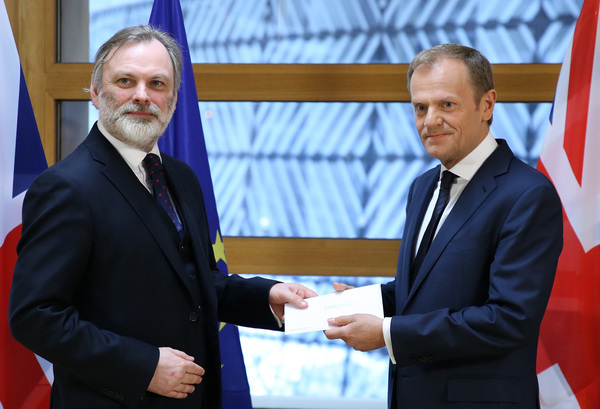
The ties that have bound the U.K. to the EU since 1973 will start to unravel at around 1:30 p.m. in Brussels when Britain's ambassador hands EU President Donald Tusk a hand-signed letter from Prime Minister Theresa May invoking Article 50 of the Lisbon Treaty. No country has ever activated the mechanism. May will address lawmakers in London at about the same time.
Nine months since Britons unexpectedly voted to leave, the phony war of what Brexit might look like will turn into a real battle over the complex terms of a settlement with 27 other governments. Enough lines over money, trade and immigration have been drawn to suggest a tough process with costs to both sides.
"We're moving from a U.K. monologue to a hard negotiation," said Gregor Irwin, chief economist at Global Counsel, a consultancy, and a former official in the U.K. Foreign Office. "There's going to be many upsets along the way."
May is aiming by March 29, 2019, to have won back control of labor-flows and lawmaking, while also landing a new free trade pact with the bloc. The EU is demanding the U.K. first pay a 50 billion-pound ($63 billion) fee, and there is the threat of sweeping tariffs being imposed if a deal isn't struck in time.
"It is my fierce determination to get the right deal for every single person in this country," May will tell Parliament, according to her office. "We all want to live in a truly global Britain that gets out and builds relationships with old friends and new allies around the world."
In the background is London's future as an international financial hub. There's also Britain's commercial relations with the rest of the world and even the potential breakup of the U.K. as Scottish nationalists use Brexit in their push for autonomy. The legislature in Edinburgh voted on Tuesday to pursue another independence referendum.
The talks will test the negotiating mettle of a premier in power for just eight months and her ability to play to a domestic audience, especially the anti-EU wing of her Conservative Party that remembers she voted to stay in the bloc. Britain is divided over a "hard Brexit," where May could walk away with no deal, and "soft Brexit" with continued tariff-free trade, which Scotland and other pro-EU factions want.
May interpreted June's referendum result as a protest against some of the key tenets of globalization, a trend that also swept Donald Trump to power in the U.S. and put National Front leader Marine Le Pen ahead in some polls before French presidential elections next month.
For Europe, it's a question of cohesion. Any deal struck between the U.K. and the EU potentially could decide whether Britain proves to be a trailblazer for other countries to leave, or remain the skeptical outlier it has always been. To ward against encouraging others to eye the exit door, EU officials say Britain will not be allowed to enjoy better terms outside the bloc than inside it.
Both sides talk publicly of the need to avoid hostilities with May on Tuesday speaking of a "new deep and special partnership" with the EU. Still, European Commission President Jean-Claude Juncker has predicted negotiations will be "very, very, very difficult. David Davis, the Brexit czar, is preparing for what "may be the most complicated negotiation of all time."
Investors have viewed the activating of Article 50 as a sideshow with the pound having already fallen 17 percent against the dollar since the referendum on June 23. The currency has been relatively stable since October as traders wait to see what sort of deal May can hammer out.
European officials will bide their time to make a considered response, knowing the British have ceded control of the clock to them. Tusk will speak to reporters on Wednesday afternoon and publish draft guidelines for EU negotiator Michel Barnier by the end of the week, but leaders won't sign off on them until an April 29 summit.
"In the end, the words of the letter won't matter much," said Guntram Wolff, director at the Brussels-based Bruegel think tank. "In such negotiations, it is actions that matter."
In an early blow to May, three people familiar with the matter said Tusk will limit Barnier's remit to the terms of divorce rather than widen it to include a future trade relationship.
May and Barnier agree the terms of the breakup need to be settled in about 18 months to give the British and European parliaments time to rubber stamp them.
May wants to leave the EU's single market to reduce the number of people allowed into Britain to work. She also wants to escape the oversight of the European Court of Justice and cease sending what she calls "vast" sums of money to Brussels.
As for trade, she is requesting the "best possible deal," while at the same time winning the freedom to line up trade accords with countries such as the U.S. and China.
European governments have shown rare unanimity in declining to enter even informal talks before May gave official notice to leave.
An early flashpoint will be money. Barnier says the U.K. must agree to settle financial commitments. Davis questions whether the U.K. is under any legal obligation to pay anything. An impasse might leave the EU refusing to engage on trade and potentially forcing the issue in front of the courts.
That's why May's team wants to discuss the split and new commercial ties in tandem. The British hope the amount of goods and services the EU sends to the U.K. will allow for a compromise.
In a bid to maintain bargaining power, May warns that "no deal is better than a bad deal." That would lead to the imposition of World Trade Organization tariffs on products from cars to strawberries.
Other issues to be discussed early on include the border between the two Irelands, the rights of EU citizens residing in the U.K. as well as Britons living in the bloc and regulatory agencies such as the European Banking Authority. The two sides may also have to line up a transitional phase between leaving the bloc and any new trade rules with banks threatening to shift staff from London if they don't get time to adjust.
The task at hand is daunting. Philip Wood, special global counsel at law firm Allen & Overy's intelligence unit, estimated there are at least 339 negotiating points for Brexit, embracing security, intelligence and even science.
"The most unsatisfactory result would be for the parties not to agree so that the U.K. just exits unilaterally," said Wood. "We believe that this might leave the U.K. and the other nations of Europe embittered and resentful for a generation."