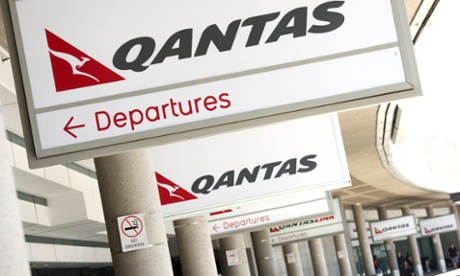
Brisbane Airport has banned another billboard for being “too political” – this time a message from Transparency International urging arriving G20 leaders to support anti-corruption principles at the November meeting.
A Transparency International spokeswoman, Maggie Murphy, said she had information that China was blocking agreement by leaders at the Brisbane meeting on a key anti-corruption measure – principles developed by the G20 on the need to reveal the real beneficial owners who control companies hidden behind front or shell companies, trusts or other legal structures.
TI’s proposed billboard said “Dirty money not welcome here. G20 it’s time to unmaskthecorrupt.com”.
Like the banned climate change billboard proposed by a large group of environmental and development organisations, TI was told by its media buyer, Ooh Media, that Brisbane Airport had refused to accept its sign because it was “too political”.
A Brisbane Airport Corporation spokesman told Guardian Australia that the billboard had been rejected because of a policy not to allow billboards with a political intent.
She said the policy ruled out advertising, whether by political parties, groups or individuals, that was “focused on a particular policy issue that is the subject of political contention”.
“The examples in this particular case were deemed to have political intent as they were targeted at a political audience with the intent of generating response on a specific policy issue,” she said. “There was no value judgement made in relation to the message.”
@GuardianAus We don't accept any political ads, whether from parties, cause based organisations or individuals, regardless of issue/message.
— Brisbane Airport (@BrisbaneAirport) November 2, 2014
Listing anti-corruption on the G20 agenda, the official website says “there are practical steps that all G20 members can take to reduce the costs of corruption for growth and development. The G20 is developing high-level principles on beneficial ownership transparency to improve the transparency of company ownership and control. This will support a stronger investment climate and will also protect developing countries from losing further revenue.”
And opening a workshop on the issue earlier this year Australia’s attorney general, George Brandis, said “It is critical to G20 goals that we ensure the real owners of legal arrangements who are the beneficiaries of corrupt and criminal payments are easily identifiable. I understand that the group is actively pursuing this goal, and the Australian government supports your work in this area.”
According to Murphy the principles have been agreed by the so-called “sherpas” – top level officials preparing the G20 communique for discussion by leaders, but China is refusing to agree.
Transparency International wants beneficial ownership information freely available, but it is understood the principles to be put to the G20 do not go this far.
The Chinese embassy has been contacted for comment.