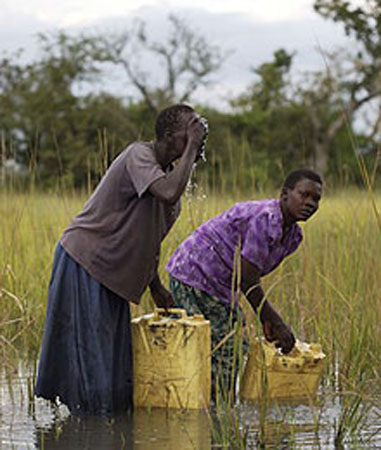
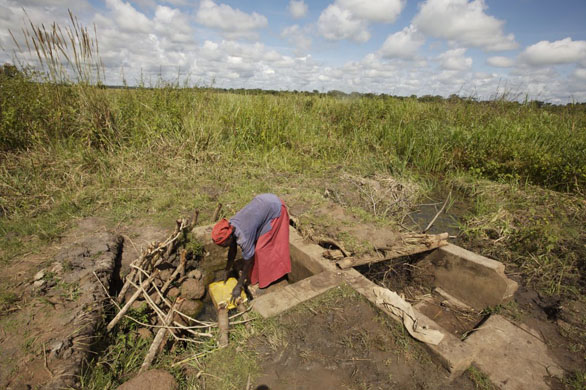
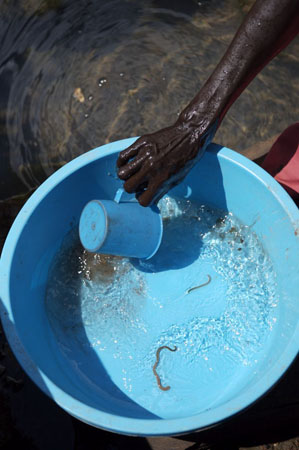
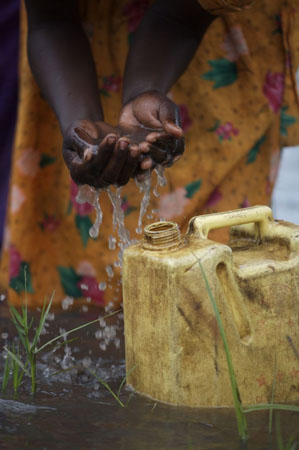
Women drawing water in jerry cans from the Emugogol well in Abia village last year. The well was submerged in flood water, which meant it was contaminated by soil and not suitable for drinking. Despite this many villagers had little choice but to draw the water from the well. Another, cleaner well was 5km away, which was too far to walk for women with a large number of childrenPhotograph: Dan Chung/GuardianCollecting water is usually the job of women. Before the start of the project, women said their most pressing need was to improve the boreholes and wells. Water should be boiled before it is used for drinking or washing or cooking, but this doesn’t always happen. Waterborne diseases are common. Amref’s baseline survey showed that 38% of children under five had suffered diarrhoea the fortnight before their parents were questioned. Diarrhoea is one of the biggest killers of small childrenPhotograph: Dan Chung/guardian.co.ukA bowl of water from the polluted well which had worms in the water, at the village of Abia next to Emuru swamp. The shallow Emuru well was dug by a charity four years ago, but its poor construction and maintenance has meant that soil is washed in and it is surrounded by animal faeces, which have caused disease. Villagers have to try to filter them out using leaves and grass, but this is not always successfulPhotograph: Dan Chung/Guardian
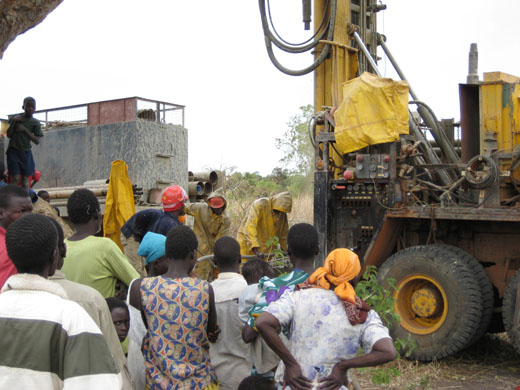
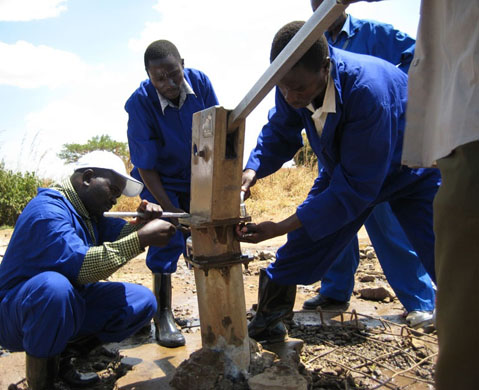
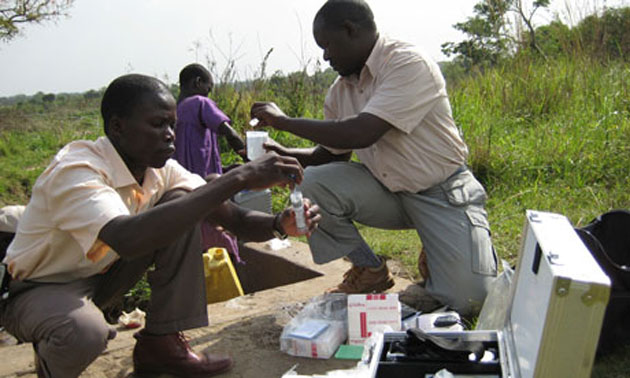
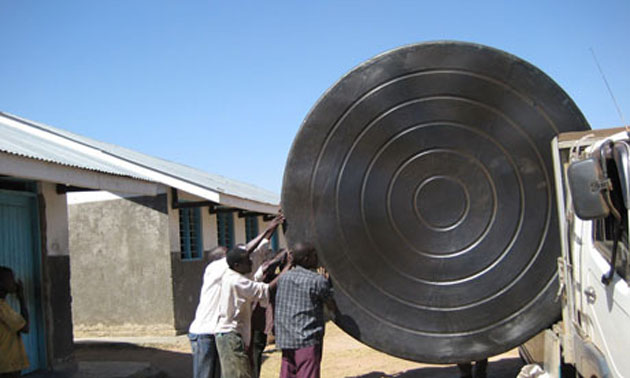
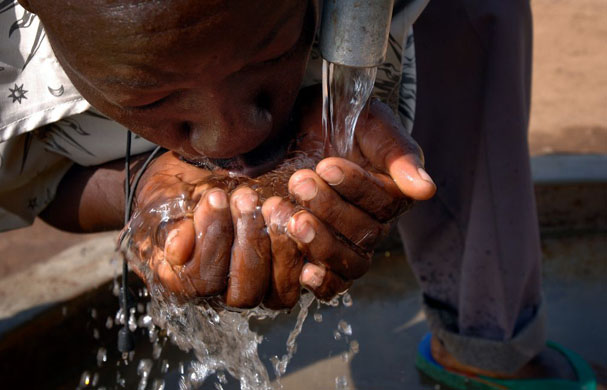
At the start of the project, Amref carried out a survey of the 66 villages in Katine sub-county to identify the areas most in need of access to water. Twelve villages were found to be most in needPhotograph: GuardianIn January, Amref began drilling water boreholes around the sub-county. People from Matali in Katine’s Ojom Parish came out to watch as work began. Matali, home to 500 residents, is one of eight villages with no water source. The cost of the boreholes is around 17.5m Ugandan shillings ($10,000) eachPhotograph: guardian.co.ukLocal communities have been trained in operating and maintaining their watersources. Water source committees have been set up to monitor the boreholes and will contact newly trained hand-pump mechanics if one breaks down. The committees meet regularly with village health teams to discuss needsPhotograph: guardian.co.ukAmref’s water and sanitation team test the water at an open spring for signs of contamination. Using test tubes, reagents and various pieces of equipment, Amref’s water and sanitation officer, Ignatius Epuwat, and Thomas Epeet, from the Soroti District Water Office, took samples from the constantly flowing pipe in Ogworo, Olwelai parish, mixed the water with various chemicals and recorded the resultsPhotograph: guardian.co.ukPart of Amref’s water and sanitation work included the installation of rainwater harvesting tanks at schools to give pupils safe water to drink. Huge plastic water tanks have been installed at five schools facing acute water shortagesPhotograph: guardian.co.ukClean water finally arrives in Katine. Eight new boreholes have been dug and villagers have been taught good sanitation and hygiene practicePhotograph: Guardian
Sign up to read this article
Read news from 100’s of titles, curated specifically for you.