While they were trekking in the jungle, Doaia Lokitiyakul's brother fell sick. The absence of available medical care turned it into a near-death experience.
To make sure history doesn't repeat itself, 17-year-old Doaia initiated the Jungle Box Project, which she co-founded with her three teen siblings Dontr, Keodeo and Doyle Lokitiyakul. The goal is to distribute over-the-counter medicine and basic healthcare equipment to remote jungle villages. As trekkers themselves, the family decided to translate their passion, experience, and hobby into an impactful mission.
"We have a specific criterion in choosing our targeted villages," Doaia said. "They have to be hard-to-reach villages with scarce access to local healthcare centres and the outside world."
Doaia briefly explained that their journeys are a combination of trips made by four-wheel drive vehicles, motorbikes, boats and oftentimes foot. "We can never tell when we suddenly have to jump off the truck and start walking as roads and weather are equally unpredictable. We have waded in knee-deep mud before, and that's why we need to be well prepared."
Getting themselves ready for such rugged trips has taken up to 18 months of design and preparation for the "jungle box". To beat all the odds, they have to make sure that the medicine set is as transportable as possible.
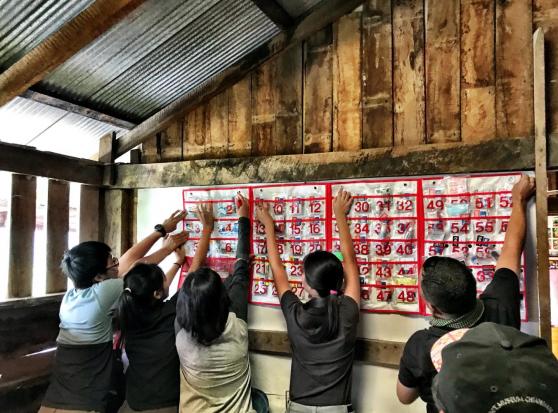
"Everything we take with us has to be portable, flexible, foldable and durable," said Dontr, designer of the project. The jungle box is an expandable pouch in the form of a traditional cabinet, with medicine pockets colour coded and labelled with numbers to make it user-friendly for villagers. The set also comes with a portable water filter, which the teens chose because it is the best rugged and easy-to-use filter they use on their treks.
The Jungle Box team made their first visit to 10 villages in Omkoi district in Chiang Mai, one of the poorest areas in Thailand.
"When I first met the kids, I thought they would just do it once and never return, but I was wrong -- we have now donated the medicine sets to 33 villages together already," said Somsak Paochonkring, head of Mae Laan Luang village and church in Omkoi.
"The Jungle Box team is pretty adventurous and robust. I was surprised, as they are kids from Bangkok, but they did not hold back and went with me as far as the villages and IDP camps in Myanmar."
Doaia said her proudest moment came when a doctor in Lukudu village told her how their project has made a difference in the villagers' lives. "Old people can now monitor their blood pressure daily with our machine, compared to what used to be once or twice a week as they had to walk to the nearest health centre to do so, which is impossible in the rainy season."
The Jungle Box Project started its fundraising in 2018 and has raised a total of 1.2 million baht within one year. Its goal is to reach 100 villages both in Thailand and Myanmar. So far, the team has distributed medicine boxes to 44 villages in Chiang Mai, Chiang Rai, Tak and Mae Hong Son, as well as villages in Myanmar, with an impact on around 28,000 people. Yet their goal does not stop here.
"We have incorporated all our projects into an umbrella project called Halfway Home, which mainly focuses on supporting refugees, IDPs and stateless minorities along the Thailand-Myanmar border, the groups that we have been helping since the beginning," said Doaia.
"We never thought our project would come this far -- we never thought that getting sick in the jungle would have such a profound impact on us and others," added the project leader. "It did, and we are proud to transform our awful experience into something positive and useful for the disadvantaged today."