Footage has emerged appearing to show some of the Chibok schoolgirls alive two years after they were kidnapped by Boko Haram in Nigeria.
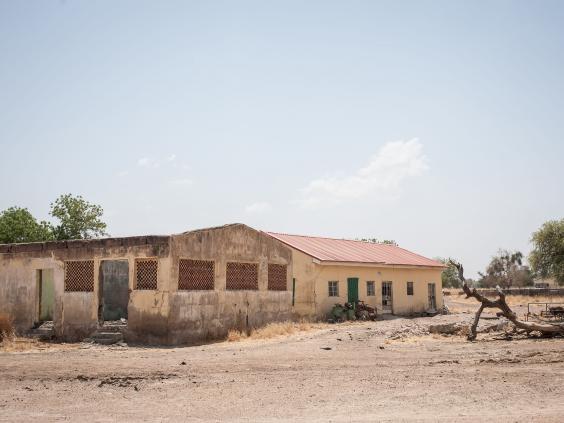
The Islamist group, which has pledged allegiance to Isis, abducted 276 girls from the town’s Government Secondary School overnight on 14 April 2014.
Michelle Obama and David Cameron were among the world leaders and celebrities joining the global “Bring Back Our Girls” campaign but more than 200 of the girls remain missing, with fears some have been killed or forced to become suicide bombers in terror campaigns.
At least 15 of the kidnapped students were shown in a video sent to the Nigerian government as “proof of life”.
The footage, obtained by CNN, shows the girls lined up against a wall wearing headscarves and long robes.
They were each ordered to tell the camera their name and where they were abducted.
All girls said they were from the Chibok school and put the date as 25 December 2015, before one announced that they were “all well” as part of a scripted plea to negotiators.
CNN showed the video to three women whose daughters are among the missing. “My Saratu,” one woman whispered after seeing her daughter, before they managed to name all 15 girls.
One of the mothers broke down in tears as she realised her daughter was not among them.
Nigeria’s information minister, Lai Mohammed, said the government was reviewing and assessing the video.
Around 219 of the girls taken from the Chibok school, in Borno state, are formally unaccounted for.
There's been no word of their welfare since 2014, when Boko Haram leader Abubakar Shekau said they had converted to Islam and threatened to sell them into slavery or forced marriage with his fighters. Many recently freed girls were pregnant.
The failure of Nigerian politicians and armed forces to rescue the girls brought international condemnation and contributed to President Goodluck Jonathan's loss in elections last year.
They are among hundreds of civilians captured by Boko Haram, which is known to force some into combat and take random money for others.
International efforts have been launched to locate the Chibok girls, with American and British drones finding one group of around 80 captives, but no attempt to reach them has been reported.
Andrew Pocock, who was British high commissioner to Nigeria until his retirement last year, told the Sunday Times magazine that it was considered too dangerous to the other girls to attempt a ground or air rescue.
“You might have rescued a few, but many would have been killed,” he said. “You were damned if you do and damned if you don't.”
Nigeria’s military has citied the same fears in the Chibok case but boasted last week of the release of 11,595 civilian hostages since February, following a series of raids on Boko Haram-controlled settlements.
The United Nations has urged the Nigerian government to intensify efforts to free the schoolgirls, as well as providing more information to distraught families.
“In the last two years, despite re-assurances from those at the highest level of the Nigerian Government, the parents have not seen any concrete progress in locating and liberating their daughters,” a report for the Human Rights Commissioner said.
“The lack of access to information increases the suffering of the abductees’ families through false hopes and frustrations.”
Additional reporting by AP