
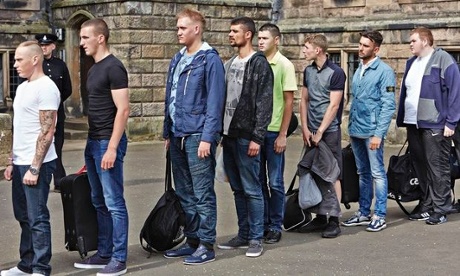
The shocking failure rate of modern young offender institutions is the stated justification for Bring Back Borstal, ITV’s new faux prison reality show that began on Thursday night. And given that almost three-quarters of young people released from custody reoffend within 12 months of release, it’s a timely look at the issue.
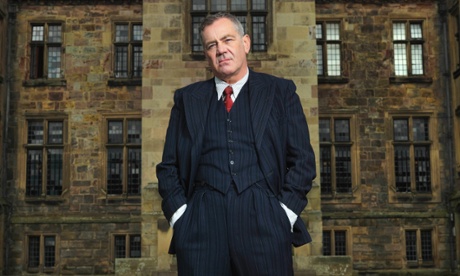
Before the era of YOIs, youngsters were sent down for “borstal training”, and the reoffending rate for released trainees was significantly lower than it currently stands – in the 1930s, the decade in which Bring Back Borstal is set, the figure was as low as 30%. This was because the trainees had to work hard, take part in sports and attend education classes, according to Professor David Wilson, the former prison governor and criminologist acting as governor of ITV’s Borstal. “It has to be tough so they can feel some pride in what they achieve,” he argues.
I guess it depends what he means by tough. As a borstal boy in the 70s, I remember the experience as a mixed bag. The prison criminal subculture dominated: “baroning”, the lending of tobacco at extortionate interest rates, was rife, as was “taxing”, the taking of protection money from the weak; the prisoner hierarchy was like a juvenile delinquent gladiator school. There was plenty of sport, and some education – until the prison officers went on strike and kept us locked in our cells for most of the summer of 1976, two to a cell sharing a bucket for a toilet.
There were some inspiring figures, though. I remember the senior PE officer, a man called Bill Bryce, who motivated us to lift heavy weights and encouraged us like the father most us had never had. And old Stan, the workshop foreman who taught me to weld cell doors.
But the regime was punitive and encouraged social detachment. There was no therapy or counselling; not much kindness or gentleness. Enforced competition in games such as murderball encouraged us to be tough, and any sense of pride instilled in us was, in retrospect, distorted. Any good I got from the experience was undermined by the reinforcement of many of the negative qualities I’d taken into the borstal with me. I know my stay of 13 months left me a lot more dangerous than when I arrived.
As for reoffending, I met a number of my borstal contemporaries later in the adult prison system serving long sentences; one served life for murder alongside me. I wouldn’t blame borstal. But it failed as an intervention.
At least in this television version, the varying levels of dysfunction in the characters of the young men playing borstal boys is authentic. Petulance, aggression and immaturity abound. All are volunteers and the majority have criminal convictions. Many have already seen the inside of prison walls, and clever casting has produced a lineup that is typical of the boys you might find on the landings of young offender institutions all over the country. Typical, too, of the boys I lived with when I was doing my borstal time.
Despite their collective failings, Wilson is optimistic that his regime will make a difference. “I’m angry for what they have done to their victims,” he says, “but I’m hopeful that they are all capable of change.”
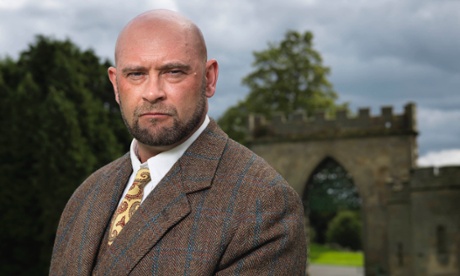
Wilson’s team includes a reformed former young offender as matron and a retired prison governor as housemaster. Like most of the people who work in our prisons, they seem to be good people – hopefully their prior experience will have a positive impact on the young men in their charge. The only fly in the ointment so far is “Chief” Dugan, an ex-soldier who thinks violent bawling and shouting at problematic people is the way to get them to conform.
I met people like him in borstal, and later in prison. If there is one lesson we should learn from this programme, it is that they serve no purpose in the prisoner rehabilitation equation and should be kept well away from the troubled and the troublesome. Other than that, I think this experiment might just work.













