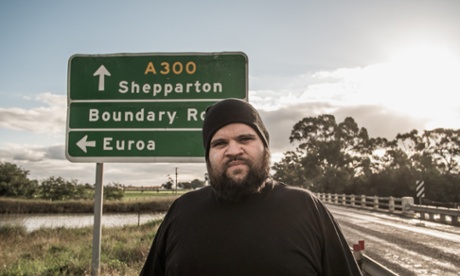
Adam Briggs was driving past his mother’s house when he saw the heroin addict passed out on the corner. Even for Shepparton, a tiny town 180km north of Melbourne, this was unusual. Briggs didn’t know then that the guy was on drugs, but it was a 40 degree day and the man was lying in the blazing sun.
“Ah man, look at that dude,” said Briggs from the passenger seat. “Yup,” said his friend. They kept driving. Briggs kept looking back. “You gotta turn around,” he said. “What?” “Turn around. If somebody drove past me, man, I’d be upset.”
His friend shrugged and did a U-turn. They pulled to a stop at the kerb, and Briggs hopped out of the car. “You all right?” he said to the man, who did nothing but groan in response and begin seizing. Briggs pulled out his phone. “When the paramedics arrived,” he says, “it turns out they knew him on a first-name basis. ‘You again! You’ve had too much heroin! You need to get off that stuff’.”
Briggs laughs as he recalls the incident, which took place last year. He’s a rapper, gifted at telling stories, and this is no exception. “That’s Shepparton,” he says. “It’s like that friend you have, and you don’t really know why you’re friends with him, but you are. You’ve grown up together. If this friend comes around and asks to borrow your stereo, you probably know it’ll be broken when it comes back.”
Most Australian rappers don’t come from small towns. They come from Sydney, Melbourne, Adelaide, Perth. And no matter which way you look at it, Aussie rap is dominated by white males. But Briggs bucks that trend. Shepparton is tiny, with a population of just over 60,000. Among its main employers is the SPC Ardmona canning factory. The town also has a large population of Indigenous Australians and Briggs is one of them, with his tribe Yorta Yorta tattooed on his arm.
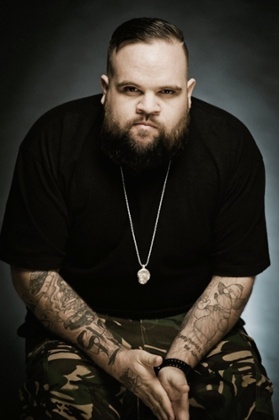
His new album, Sheplife, busts open the myths of small-town Australia, to show that spots like Shepparton have good sides and bad; they can hold drug addicts and people prepared to help them (even if they’ve done it a dozen times before). The fact that the album is so good musically doesn’t hurt either, with its heavy beats and uncompromising verses.
Briggs is now showcasing it on a national tour and it’s no surprise that he’s looking forward to performing in his hometown, even less that he’s more than familiar with the venue, “an alternative little hole in the ground” called the Yahoo bar.
“I’ve been banned from there, been kicked out for being too young,” Briggs says. “I used to work there as a security guard. I think at one stage me and my mates were all banned, which was good, because it’s better to be banned in a group.”
Briggs has toured internationally with his label mates the Hilltop Hoods and collaborated with artists ranging from the local megastar Gurrumul to the hardcore New York rapper Ill Bill. He’s one of only a few Indigenous hip-hop artists, alongside Jimblah, t4he Last Kinection and Philly, who have seen any real success.
When asked why, Briggs chooses his words with care. “A lot of guys can’t get their stuff together, because it’s a lot of work to put in to become an artist,” he says. “I know a lot of Indigenous rappers, but Australian hip-hop isn’t something a lot of them want to enter, because it’s perceived as white, and they don’t feel like it’s a place for their voice.”
Another perspective comes from Toby Finlayson, director of the charitable organisation Desert Pea Media. For the past few years the company has been travelling to remote Indigenous communities, using hip-hop as a tool for them to tell their stories. Desert Pea put out a compilation of songs from these excursions, entitled Song Nation Vol 1, in July.
“It’s only 200 years ago that our government tried to wipe Aboriginal people off the face of the country,” says Finlayson. “We tried to eliminate their culture and language. That’s got repercussions – you have people growing up without a sense of traditional culture, and therefore identity.
“In places like the US, you’ve got quite a big African American population, whereas here, only 3% of the population are Aboriginal. [But] there are some really amazing Indigenous artists coming out now. People are ready for hip-hop with a voice that isn’t middle-class, white Australian.”
While Sheplife might be about his hometown, there’s a deeper purpose to Briggs’ music. “I’m trying to champion the fact that [Aboriginal] voices are relevant everywhere,” he says. “That’s what I’m trying to drive home. It’s not about white rappers or Aboriginal rappers. It’s about good and bad rappers.”
• Briggs is at Mojo’s Fremantle on 10 October, touring nationwide until 3 November
- This article was corrected on Tuesday 14 October. Briggs’ tribe was wrongly cited. The artist Koolism was also wrongly listed as an Indigenous artist.