PITTSBURGH _ Before scheduling a hip or knee replacement procedure, retired orthopedic surgeon Edward Kelly says he often insisted on examining the patient's mouth first.
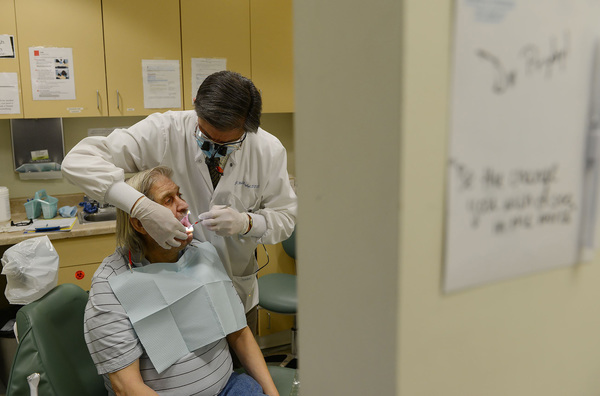
"Many medical problems occur because of infections that might take place in the mouth," said Kelly, who now serves as volunteer medical director for Catholic Charities' Free Health Care Center in downtown Pittsburgh, which provides free dental and medical care for those who can't afford to pay.
An untreated mouth infection could spread through the body and attack the area around the new prosthesis, typically requiring its removal, he explained.
So if he spotted any problems during those exams, he told the patient, "You need to see a dentist first."
Research has linked gum disease to a number of maladies, including heart disease, lung infections, as well as complications for pregnancies and diabetes.
But health care has been slow to move away from traditional thinking that infections in the mouth should be viewed or treated differently than those elsewhere in the body.
"There is no rational reason why they should be separate," said dentist Robert J. Weyant, who chairs the Department of Dental Public Health at the University of Pittsburgh.
Government-sponsored insurance programs have lagged on dental coverage. Pennsylvania reduced its medical assistance dental benefit for adults in 2011 and the federal Affordable Care Act left dental care for adults off its list of required "essential benefits," although coverage for children is included.
With rare exceptions, Medicare does not cover routine checkups or other dental care and only about 12 percent of seniors purchase dental insurance.
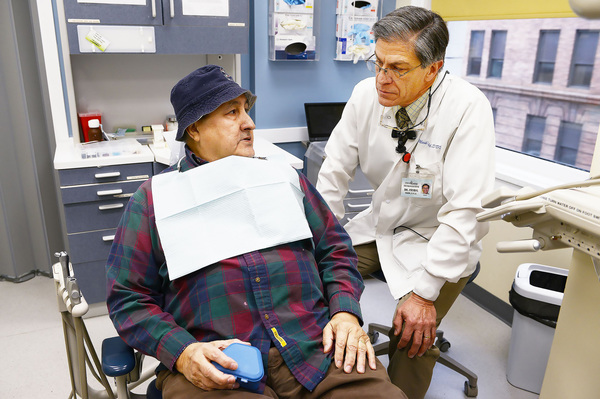
A recent federal Department of Health and Human Services report found that only about 40 percent of those 65 and older had visited a dentist in 2014, leaving them vulnerable to possible infections that could compromise their overall health.
Private insurers and employers may be a catalyst for changing that thinking.
Pittsburgh-based UPMC Health Plan officials say 90 percent of their large employers offer dental coverage, as do 70 percent of employers with 100 or fewer employees. For individuals buying plans through the Affordable Care Act marketplace, only about 4 percent have opted for full dental coverage.
Meanwhile, United Concordia, the dental insurance arm of Pittsburgh insurer Highmark, has been working on what it calls its "medical-dental integration strategy" _ breaking down barriers between the medical and dental sides.
The initiative was launched in 2012 and expanded two years later, following studies done in collaboration with the University of Pennsylvania. Those studies found that regular dental exams reduced annual medical care costs by 40 percent for patients with diabetes or cerebral vascular disease, and more than 70 percent for pregnant women, saving thousands of dollars in each case.
Hospital admissions dropped by nearly 40 percent for patients with type 2 diabetes.
With such convincing evidence, United Concordia Chief Dental Officer Quinn Dufurrena says the ultimate goal is to develop "an integrated health care system, so people can get dental care and see their doctor in one place."
That still may not solve what is typically the biggest barrier for people accessing dental care: the cost of treatment, which Weyant says prevents roughly 40 percent of adults from seeing a dentist any given year.
"People are pretty price sensitive, especially low income people," he said. "If you get a treatment plan that's more than your monthly rent, you're going to think hard about making that appointment."
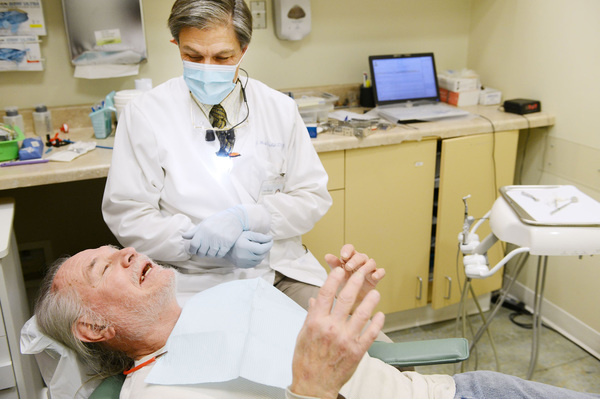
Perhaps no one sees more low income people for dental care than the Catholic Charities clinics. The clinic, funded by grants and donations, does not accept insurance nor does it charge patients. Some who visit the clinic are homeless, but most hold jobs that simply don't offer health benefits or offer some medical coverage but not dental insurance.
When the Catholic Charities dental clinic opened in 2004, hundreds signed up, Kelly recalled, quickly creating a six-month waiting list to sit in one of the four dental chairs.
Many patients "just never had care, or it was 20 years ago when they had a tooth pulled," said Mark Prybyl, the clinic's full-time dentist. "Maybe one or two might have remembered the last time they'd seen a dentist and no one remembered if they'd had their teeth cleaned."
Today people can usually get a spot for a regular checkup in about six weeks, sooner if there's an emergency.
More typically, they wait until they're in pain with bleeding gums, or have severe decay, both preventable problems with regular brushing and checkups. For the 10-25 patients seen each weekday at the clinic, though, basic dental hygiene is not always so simple.
"I tell them, 'I could save your teeth,' but they just say, 'I can't afford toothpaste. I'm not going to brush my teeth. I was hoping you'd pull them,'" said Prybyl.
"People just figure it's easier."
With 20 million people waiting to see what will happen with their Affordable Care Act marketplace medical plans, building a true marriage of medical and dental care may not be close at hand. But proponents say science, and common sense, are on their side.
"Insurance companies are starting to be aware," said Prybyl, "that if you maintain people's dental health maybe you won't have to pay for that heart valve."