Afternoon summary
- Michel Barnier, the EU’s chief Brexit negotiator, has said that businesses will not have absolute certainty about the Brexit transition until the end of the negotiation, probably early next year. (See 4.15pm.) He made the point in a speech 24 hours before Theresa May is due to give details of what the UK will be seeking from a future trade deal with the EU in a long-awaited speech of her own.
- Donald Tusk, the president of the European council, has said that “frictionless trade” with the EU will be impossible for the UK if it leaves the single market and the customs union. (See 10.14am.) He made the argument in a speech in Brussels. A few hours later he met May for lunch in Downing Street, after which Number 10 said the talks between the two had been “positive and constructive”.
- The former Labour prime minister Tony Blair has said he thinks the EU might change immigration rules to help persuade the British not to leave. (See 9.20am, 9.59am and 2.40pm.)
- Boris Johnson, the foreign secretary, has sought to blame his successor as London mayor, Sadiq Khan for the collapse of the Garden Bridge project after coming under pressure over his handling of the scheme. As the Press Association reports, Johnson said he would have continued with the abandoned project if he were still in City Hall and insisted that “not a single penny of taxpayers’ money” was wasted on the bridge while he was in charge. Khan, the current Labour mayor, killed off the controversial plan after a damning report by Dame Margaret Hodge found it could have ended up costing more than £200m. But Johnson claimed her probe was a “gimcrack affair” riddled with “peculiarities”, as he defended his support for the landscaped Thames pedestrian crossing. In what was at times a chaotic hearing, members of the Greater London Assembly oversight committee had to raise their voices in an attempt to guide Johnson back on to the topic of the bridge as he repeatedly digressed into praising his own record in office and criticising Khan. The Tory MP also attacked the current mayor for failing to give the project the political “push” it needed and claimed the Labour politician had spent £9m on it, adding to the £37m previous outlay, before cancelling it. Johnson said:
It was like a bad love affair with Sadiq Khan, you could tell that his heart wasn’t really in it but he didn’t kill it. That was the problem with the whole thing, so they went on raising money and spending money and it was really very sad. Frankly I hope that one day the whole thing is revived and I think it will be.
That’s all from me for today.
I’ll be back tomorrow to cover May’s Brexit speech.
Thanks for the comments.

Updated
Rees-Mogg admits he was wrong to say Corbyn voted against Good Friday agreement
The Tory MP Jacob Rees-Mogg has posted a tweet saying he wrongly claimed that Jeremy Corbyn voted against the Good Friday agreement.
Mea culpa, I was wrong to say that Mr Corbyn voted against the Good Friday Agreement. He did not.
— Jacob Rees-Mogg (@Jacob_Rees_Mogg) March 1, 2018
Rees-Mogg made the error on Channel 4 News when he said:
I am unaware of any Brexiteer who is in favour of abandoning the Good Friday agreement. It’s Jeremy Corbyn, incidentally, who voted against the Good Friday agreement when it came to parliament.
According to the Spectator’s James Forsyth and Sky’s Beth Rigby, the draft of the Theresa May speech shown to cabinet this morning included a reference to the UK making “binding” commitments to regulatory alignment with the EU in some areas.
David Davis asserting himself again. After getting substantial changes made to the Brexit inner Cabinet paper on the future economic partnership, he’s now pushing back against Theresa May making a ‘binding commitment to follow EU rules in certain sectors https://t.co/NNUVIRKwwq
— James Forsyth (@JGForsyth) March 1, 2018
So.... couple of sources on the cabinet meet tell me that quite robust debate around language of May Brexit speech (cabinet got 30 mins to read before 2 hour discussion)....
— Beth Rigby (@BethRigby) March 1, 2018
This ties in with remarks by PM spokesman that the text is a work in progress & more drafting to do. Watch for whether the language changes when May delivers speech tomorrow
— Beth Rigby (@BethRigby) March 1, 2018
MSPs vote to allow SNP's Brexit continuity bill to count as emergency legislation
Nicola Sturgeon’s government has won substantial cross-party backing at Holyrood to designate its Brexit continuity bill as emergency legislation, allowing it to be rushed through the Scottish parliament in three weeks.
MSPs voted by 86 to 27 on Thursday to make it an emergency bill – a rare occurrence at Holyrood, and to back the Scottish government’s plans to fast-track it through the parliament, with opposition only from the Scottish Tories.
Called the UK withdrawal from the European Union (legal continuity) (Scotland) bill, it is designed to dramatically increase pressure on the UK government to make further significant concessions on the EU withdrawal bill at Westminster.
Welsh ministers are tabling similar emergency legislation in Cardiff Bay, with both devolved governments keenly aware that David Lidington, effectively deputy prime minister, only has until 22 March to strike a deal before the House of Lords votes on the key clause in his bill which deals with devolution after Brexit.
Scottish and Welsh ministers want the UK government to drop or heavily dilute its demands that ministers in London can overrule the devolved administrations on key policy areas currently controlled by the EU.
But Sturgeon’s victory today disguises other problems for her government. Firstly, the Welsh are closer to signing a deal with the UK government if there are further concessions, which would leave Sturgeon isolated. If the UK government does offer significant concessions, at what point will she compromise and drop this emergency bill?
Despite backing his emergency bill plans, Labour, Lib Dem and Scottish Green MSPs want further reassurances from Mike Russell, the Scottish Brexit minister, that there will be sufficiently robust scrutiny of the bill. It also remains legally controversial after Holyrood’s presiding officer, Ken Macintosh, ruled earlier this week that the bill was not within Holyrood’s powers. The bill could yet be referred to the UK supreme court.
Barnier tells EU business that absolute certainty about Brexit transition won't come until early next year
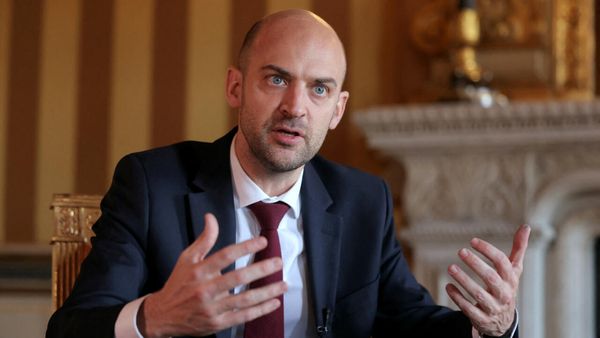
Michel Barnier, the EU’s chief Brexit negotiator, gave a speech in Brussels this afternoon to the same BusinessEurope Day conference addressed by Donald Tusk, the European council president, in the morning. (See 10.14am.) Barnier said that he was looking forward to Theresa May’s speech tomorrow and that he did not want to “prejudge” it. But he nevertheless made several points that will be seen as provocative. Here are the key lines.
- Barnier said absolute certainty about the Brexit transition would only come at the end of the negotiation, probably early next year. He seemed to be encouraging the business figures in his audience to make contingency plans for the possibility of the UK leaving at the end of March next year without a transition deal. He said:
The UK will leave the EU on 29 March 2019. That is the only certainty we have at this stage
It is therefore important that all businesses analyse their exposure to the UK and are ready to adapt their logistics, supply chains and contracts.
Of course, the transition period currently under negotiation would give you more time to adapt.
However, certainty about the transition will only come at the end of the process, with the ratification of the withdrawal agreement by both sides – probably early next year.
- He said the EU would have the final say when it came to deciding whether to recognise British standards when the UK left the single market. There would be no automatic “mutual recognition”. He made the point with particular reference to personal data, but he also said the point applied more widely. He said:
Take the case of personal data: all economic sectors work with personal data, ranging from the financial sector, to the health industry and to the transport sector.
In the single market, we have a modern and very detailed regulatory framework that allows for the “free movement” of personal data. This facilitates the collection and exchange of such data. It also provides for supervisory mechanisms, overseen by the court of justice of the European Union.
The UK is going to leave this regulatory framework. In the future, the transfer of personal data from the EU to the UK will be subject to strict rules. These rules are designed to protect a fundamental right.
Allow me to be precise on this point.
The transfer of personal data to the UK will only be possible if the UK provides adequate safeguards. One example to ensure that adequate safeguards are in place is an “EU adequacy decision”. This is an autonomous EU decision. There can be no system of “mutual recognition” of standards when it comes to the exchange and protection of such data.
The same point applied to goods and services more widely, he said.
In the absence of a common discipline, in the absence of EU law that can override national law, in the absence of common supervision and a common court, there can be no mutual recognition of standards.
- He said that even if the UK stayed in a customs union with the EU, there would still be border checks.
In a customs union, the UK would apply the same external tariffs as the EU.
This would involve fewer border controls between the UK and the EU than outside of a customs union.
For example, we would not have to check the rules of origin between us.
But it should be well understood that – even in a customs union – a country which is outside of the single market always faces border checks to ensure compliance with European standards. This is the case for instance with Turkey.
As President Donald Tusk clearly said this morning, only the combination of the internal market and the customs union makes frictionless trade possible.
This passage will be welcomed by those, like Tony Blair (see 9.59am), who think it is not enough for Labour to commit to staying in a customs union and who want it to commit to staying in the single market too.
- Barnier suggested the UK would have to accept the “European regulatory model” if it wanted an ambitious trade deal. That was because the final trade deal would have to be approved by all EU27 national parliaments. He explained.
For an ambitious economic partnership, we will need to find common ground on the rules that apply to social and environmental matters, to consumer protection and to competition.
Take the aviation sector as an example: what would EU airlines say if UK companies could operate with an EU licence within the single market?
They would ask several questions: are those companies bound by the same rules on CO2 emissions? Do they have the same rules on working time for cabin crew?
The same professional qualifications for pilots?
The same compensation schemes for passengers in the event of delays and cancelations?
The same rules on competition and state aid?
Ladies and Gentlemen,
These questions are not only economic. They are first economic as far as the level playing field is concerned. They are also political. Why? The answers to all of these questions will be key to the ratification of any future deal in each national parliament, and in certain countries in regional parliaments. We need to be careful about the political conditions of the ratification for any future deal. This will be a mixed treaty. It will require not only the ratification of the council and the parliament, but each of the 27 national parliaments by unanimity.

Blair says Brexit would be a 'mistake of destiny' but EU leaders could still stop it
The main thrust of the Tony Blair speech was set out in the extracts released and reported overnight. (See 9.20am.) But there there were some new lines in the full text that are worth flagging up. Here they are:
- Blair confirmed that he was working “passionately” to ensure a second referendum on Brexit and a vote to remain in the EU. He made this clear right at the start of the speech.
Brexit is momentous and life-changing for Britain. The British people should be given a final say on whatever deal is negotiated. If they are allowed that say, then Brexit can be averted.
I and many others will work passionately for that outcome.
- He dismissed those who claimed that trying to overturn Brexit was “hopeless or even delusional”. What was needed was “strong, engaged leadership”, he said.
- He said changes to the global economy in the 21st century would make the case of being in the EU even stronger.
If we look back at the top economies in the year 2000, Europe dominates the top ten. Germany’s was 4x the size of India’s and larger than China’s. Mexico, Brazil and Indonesia were distant specks on the horizon far behind.
By 2016, the situation changes dramatically. India is now almost as large as the UK and France.
By 2030, India’s economy will be larger than those of Germany or Japan. Brazil, Indonesia and Mexico are narrowing the gap. China becomes the largest global economy and 7 or 8 times the size of the UK.
Look ahead to 2050 and India is several times the size of the German economy and no European economy is in the top 6.
With this economic change, will come political change.
The West will no longer dominate. And Europe, to retain the ability to protect its interests and values, will need to form a strong bloc with the power collectively to do what no European nation alone will be able to do individually.
- He said that, outside the EU, the UK would be “a focal point of disunity”.
Britain out of Europe will ultimately be a focal point of disunity, when the requirement for unity is so manifest. No matter how we try, it will create a competitive pole to that of Europe, economically and politically to the detriment of both of us.
(For some Brexiters, of course, being a “competitive pole to that of Europe” is one of the key attractions of the project.)
- He explained what he thought the EU needed to do to help to persuade the UK to stay in.
A comprehensive plan on immigration control, which preserves Europe’s values but is consistent with the concerns of its people and includes sensitivity to the challenges of the freedom of movement principle, together with a roadmap for future European reform which recognises the issues underpinning the turmoil in traditional European politics and is in line with what many European leaders are already advocating, would be right for Europe and timely for the evolving British debate on Brexit.
- He said that Brexit would not just be a relatively minor historic error, but a “mistake of destiny”.
People will say [reversing Brexit] can’t happen.
To which I say in these times in politics anything can happen.
In any event, it depends on what magnitude of decision you think this is.
There are errors in politics of passing significance.
And there are mistakes of destiny.
If we believe and I do, that this is of the latter kind, we cannot afford passive acquiescence.
Those whose vision gave rise to the dream of a Europe unified in peace after centuries of war and whose determination translated that dream into practical endeavour, their ghosts should be our inspiration.
They would not have yielded to fatalism and neither should we.
- He said that, if EU leaders wanted to avert Brexit, they had “months, perhaps weeks, to think, plan and act”.

Here is the BBC’s Iain Watson on Jon Lansman’s chances.
I'm reliably informed that a majority of those regarded on the left of Labour's NEC -the appointing body- aren't supportive incl shad cab members but there are some non unite union votes in play & it's a secret ballot https://t.co/Bp7vTq7jxM
— iain watson (@iainjwatson) March 1, 2018
And this is from the FT’s Jim Pickard.
One Labour MP observes: "The revolution is eating itself." https://t.co/rSb4GeFfIW
— Jim Pickard (@PickardJE) March 1, 2018
Here is my colleague Heather Stewart on Jon Lansman’s decision to put his name forward to be Labour’s next general secretary.
One ally of Lansman's tells me he wants to "blow the doors off" - opening up contest to a third candidate - neither him nor @JennieUnite - who wider membership could endorse.
— Heather Stewart (@GuardianHeather) March 1, 2018
Here is the text of the Tony Blair speech in Brussels.
I will post more from it when I’ve read it in full.
Ken Livingstone's suspension from Labour extended indefinitely
Ken Livingstone’s suspension from Labour over anti-Semitism has been extended indefinitely pending the outcome of a formal internal investigation, the Press Association reports.The former London mayor’s suspension from the party had been due to expire on April 27. But HuffPost UK revealed that outgoing Labour general secretary Iain McNicol in his last official act signed off on an indefinite extension of Livingstone’s suspension. A Labour spokeswoman said:
Ken Livingstone has been administratively suspended from the Labour Party, pending the outcome of an internal party investigation.
That suspension starts on the date that his membership suspension applied by the national constitutional committee ends on 27 April 2018.

Jennie Formby, Unite’s candidate for Labour general secretary, announced her candidature two days ago. She is Unite’s south east regional secretary. For balance, here is the statement that she put out at the time.
I have today decided to apply for the post of general secretary of the Labour party. Before setting out my reasons for doing so let me pay tribute to the work done by Iain McNicol in that role and to join every Party member in thanking him for his service and wishing him well for the future.
Our party is now united as it has not been for years under Jeremy Corbyn’s leadership. The general secretary of the Party needs to be someone who can build on that unity to mobilise and organise the entire party and the wider labour movement behind a Labour victory at the next general election whenever this callous and crumbling government decides to call it.
Labour’s strength rests on three pillars – the support of millions of voters, an individual membership far larger than that in any other British political party, and our link with our affiliated trade unions. I believe I am well-placed to help our party build on all three.
My service as a party member for forty years, as a member of the national executive committee for the last seven, and as a senior official of my union in industrial, political and administrative posts has given me the breadth of experience to lead the whole party in meeting the challenges and seizing the opportunities ahead.
I will work with all parts of the movement to ensure that the Party democracy review empowers the party membership, opens up policy-making, and ensures democratic best-practice throughout. I will ensure our exciting new community organising initiative is developed to help entrench Labour in the communities we serve and win the seats we need at the next general election.
I stand for a tolerant and welcoming party, with no place for antisemitism, racism and misogyny or any form of abuse or intimidation; a party in which complaints are handled both fairly and speedily. I value the commitment and hard work of party staff and will ensure the whole party machine is working in support of our Leader and our policies, embracing the new campaigning tools and methods which we used to such effect in the 2017 election.
I would be proud to be the first woman to serve as Labour party general secretary in a generation and only the second ever. I have fought for gender equality – often the hard way – throughout my lifetime in the labour movement.
Labour has only one objective – to bring to Britain the socialist change it desperately needs. And it has only one means of delivering that – electoral victory at all levels, and above all in a general election. As general secretary, I will devote all my time and energy to ensuring that we grasp the historic opportunity before us.
Jon Lansman announces he is standing to be Labour's next general secretary to 'open up' contest
Jon Lansman, the Momentum founder, has confirmed that he will stand for election as Labour’s next general secretary. As my colleague Jessica Elgot reported yesterday, when Lansman was still mulling over putting his name forward, this paves the way for a contest pitching the grassroots/activist wing of Corbynism against the union wing of Corbynism - although Lansman himself says he just wants to “open up” the contest, implying he hopes other candidates will come forward too.
Here is Lansman’s statement.
There has been much speculation about the appointment of the @UKLabour General Secretary. Here is my statement: pic.twitter.com/oEE0AEc5rt
— Jon Lansman (@jonlansman) March 1, 2018
The new general secretary gets elected by the party’s national executive committee.
MPs will get a 1.8% pay rise for 2018-19, taking their overall salary to
£77,379 from April 1, the Independent Parliamentary Standards Authority (Ipsa) has
confirmed.
Scottish Conservatives cancel conference due to weather
After much deliberation, the Scottish Conservatives have cancelled their planned spring conference in Aberdeen after the amber weather warning for much of the country was extended into Friday.
The conference agenda had already been postponed until later on Friday afternoon to allow delegates from the central belt to travel safely, but the party leader Ruth Davidson said that she had “reluctantly” cancelled the conference because “delegates’ safety comes first”.
The cancelation will be a disappointment for supporters, as the conference was intended to showcase the party’s new and developing policy platform and mark the next chapter in the party’s remarkable reversal of fortunes over the past few years. As Davidson herself set out in an interview in Holyrood magazine earlier this week: “This conference is going to be really important for us because it’s the first time in 30 years, maybe, that you’ve got a group of Scottish Conservatives getting together and saying, how do we form the next government of Scotland?”
Cabinet agrees May's Brexit speech tomorrow will mark 'real step forward', No 10 says
It’s World Book Day, and at the Downing Street lobby briefing we were told that the prime minister’s favourite children’s book is Swallows and Amazons.
That was about the one solid fact we did learn at the briefing. Otherwise, there was a lot of talk about Brexit, but it was not enormously enlightening.
- Cabinet ministers agreed that the prime minister’s Brexit speech tomorrow would be a “real step forward” in the negotiations. Ministers were shown copies and given time to read them at the start of today’s special two-hour cabinet meeting to discuss the speech, the prime minister’s spokesman said, and they held a “detailed and positive” discussion about it. The spokesman refused to say whether anyone proposed any specific changes, but he said the meeting was scheduled to allow ministers to discuss the speech “ahead of the text being finalised”.
- The spokesman reaffirmed the government’s desire for a UK-EU trade deal that would allow trade to be “as frictionless as possible” when asked about Donald Tusk’s comment this morning about “frictionless trade” with the EU being impossible outside the customs union. (See 10.14am.) But he would not elaborate when asked if this meant the government was conceding that some friction would be inevitable.
- The spokesman refused to comment on the European parliament rejecting the government’s latest concession on the rights of EU nationals arriving in the UK during the transition.
Here is the text of Matt Hancock’s statement to MPs about Leveson 2 being abandoned and the Leveson law on newspaper costs being repealed. (See 11am.)
In the Commons Tom Watson, the shadow culture secretary and deputy Labour leader, told Hancock the decision was “a breach of trust and a bitter blow to the victims of press intrusion”. Watson went on:
When every Conservative MP who was then in parliament backed this policy, including the current prime minister and the present secretary of state, they didn’t really mean it.
They were waiting for the wind to change, waiting for the fuss to die down, waiting for a time when they could, as quietly as possible, break their promises. Today, the time has finally come.
He also defended his decision to take money from Max Mosley to help fund his office. Referring to Mosley, and his involvement in the publication of a racist election leaflet in the 1960s, Watson said:
If I thought for one moment [Mosley] held those views contained in that leaflet of 57 years ago, I would not have given him the time of day. He is a man, though, who in the face of great family tragedy and overwhelming media intimidation, chose to use his limited resources to support the weak against the strong.
I’m off to the lobby briefing now. I will post again after 12.15pm.
Threat level to Britain from Northern Ireland-related terrorism reduced, Rudd tells MPs
MI5 has reduced the threat level to Great Britain from Northern Ireland-related terrorism from substantial to moderate, which means that an attack is possible, but not likely, Amber Rudd, the home secretary, has told MPs in a written ministerial statement.
The threat level to the UK from international terrorism remains at severe. And the threat level to Northern Ireland from Northern Ireland-related terrorism also remains severe, Rudd said.
Updated
The European parliament has issued an embarrassing snub to Theresa May’s concessions over EU migrants, rejecting the UK’s offer in a move that casts fresh doubt on the prospect of reaching an agreement on the transition period by March, my colleague Daniel Boffey reports.
Most Scottish parliament business cancelled due to weather
The vast majority of Scottish parliament business has been cancelled today, after the severe weather led to almost complete suspension of rail and bus services to and within Edinburgh.
And the start of the Scottish Conservatives annual conference in Aberdeen tomorrow, due to be addressed by prime minister Theresa May on Saturday, has been pushed back to 2pm on Friday, with a series of speeches and fringe events cancelled.
The only events taking place at Holyrood will be general questions at 11.40am, first minister’s questions at noon, the centre piece of the week, and a ministerial statement on the Scottish government plans for an emergency bill on repatriating EU powers. The sitting will be suspended for the day at 1.45pm, more than three hours earlier than normal.
Ministerial statements on climate change strategy, debate of amendments to a land use and forestry bill, and nearly all committee business have been cancelled.

Government abandons Leveson 2 and promises to repeal Leveson law on newspaper costs
Matt Hancock, the culture secretary, is making his statement on Leveson 2 now. (See 9.38am.)
He says freedom of the press has been an important feature of British life for years.
He says he wants to thank Sir Brian Leveson for his comprehensive work.
There have also been three police inquiries, he says.
He says much of the terms of Leveson 2 have been met.
He says the new regulator, Ipso, largely meets Leveson’s conditions.
Newspapers have improved how they handle complaints. One regulator, Impress, is covered by the Leveson charter.
And the police have improved how they behave.
Hancock says the media landscape has also changed. Since Leveson concluded, newspaper circulations have falled by about 30%. They are finding it hard to replace the revenue from digital growth.
Local papers are finding it particularly hard to keep going, he says.
He says these are the new challenges.
The rise of social media, with clickbait and online abuse, is now threatening journlism.
These threats require urgent attention. That is where we need to focus now, he says, particularly since £48m was spent on the Leveson inquiry and the police inquiries.
He says the consultation showed that only 12% of respondents wanted Leveson 2 to go ahead. Some 66% of respondents were opposed.
Leveson himself thought part 2 should go ahead in a modified form, he says.
But Hancock says the government has decided not to go ahead with Leveson 2.
- Hancock confirms that government has abandoned plans for “Leveson 2” - the proposed inquiry in the specifics of phone hacking.
Hancock also says the government will repeal section 40 of the Crime and Courts Act. This is the provision, introduced after the Leveson inquiry but not yet implemented, saying that newspapers that refuse to sign up to an official Leveson-compliant regulator should have to pay all costs in libel cases, even if they win.
- Hancock says government will repeal section 40 of the Crime and Courts Act “at the earliest opportunity”.
There are more details of the consultation on Leveson 2 and section 40, that was launched in November 2016, here.
And there are more details of section 40 (not to be confused with the Leveson-related section 34, which is in force but which does not get used) here.
Updated
Tusk says regulatory alignment is so far most credible proposal for avoiding hard border in Ireland
Here are three more lines from Donald Tusk’s speech.
- Tusk, president of the European council, said that the plan for Northern Ireland to stay in the custom union after Brexit - which was firmly rejected by Theresa May and by the DUP yesterday - was the more credible solution proposed so far for avoiding a hard border in Ireland. He said:
Recently, London has definitively confirmed its red lines, including “no customs union” and “no single market”. We acknowledge these red lines without enthusiasm and without satisfaction. But we must treat them seriously. With all their consequences. And one of the possible negative consequences of this kind of Brexit is a hard border on the island of Ireland. The EU wants to prevent this scenario. Hence, if no other solution is found, the proposal to “establish a common regulatory area comprising the Union and the United Kingdom in respect of Northern Ireland”. And, until now, no-one has come up with anything wiser than that. In a few hours I will be asking in London whether the UK government has a better idea, that would be as effective in preventing a hard border between Ireland and Northern Ireland.
- He said he was confident that the EU27 (all member states apart from the UK) would accept “all the essential elements” of the draft withdrawal treaty published by the EU yesterday.
- He said Michel Barnier, the EU’s chief Brexit negotiator, “has the full support of both the EU institutions and the EU27”. This was in response to reports in London papers (like this one in the Sun) claiming some EU leaders are unhappy about the hardline negotiating stance Barnier is adopting.
'Frictionless trade' with EU impossible if UK leaves customs union and single market, Tusk tells May
The atmosphere at Donald Tusk’s working lunch with Theresa May at Number 10 later may be even chillier than the air temperature outside. Last week, after reports emerged of what was agreed at the key cabinet sub committee meeting at Chequers, Tusk, president of the European council, said May’s plans were based on “pure illusion”.
This morning, in a speech in Brussels, Tusk was equally blunt. May has repeatedly said that she wants trade with the EU to be “as frictionless as possible”. (Sometimes ministers have talked about wanting it to be “frictionless”, but normally they qualify it by saying they mean as friction-free as possible.) But Tusk said May was not being realistic. He said:
Everyone must be aware that the UK red lines will also determine the shape of our future relationship. Next week I will present the draft guidelines in this respect. Here I want to stress one thing clearly. There can be no frictionless trade outside of the customs union and the single market. Friction is an inevitable side effect of Brexit.

Updated
Tony Blair's Today interview - Summary
Here are the main points from Tony Blair’s Today interview.
- Blair said he thought the EU would be willing to change immigration rules in order to help to persuade the UK not to leave. That was because immigration was a matter of concern in other EU countries too, he said. (See 9.20am.) He said that he did not expect the EU to abandon freedom of movement. But he said the EU could make changes to its external border system. And he said there were controls on immigration that were allowed within freedom of movement rules that had not been tried in the UK. He said:
I was talking to a Belgian politician here in Brussels yesterday who explained to me all the things that Belgium do in order to restrict European immigration to the very specific circumstances allowed by freedom of movement and not more than that. The truth is that there are many things that Britain can do, even within the existing system, to tighten it if we wanted to prioritise tightening immigration over bring people in to do tasks for the British economy.
The problem that she has is that there is no way round the dilemma: what she thinks is that it is possible to get the Europeans to give us access to Europe’s markets without the same obligations that the rest of Europe has in the single market. That is not possible.
It is not a question of a tough negotiation or a weak negotiation. It is literally is not going to happen.
So the dilemma you have is you’re either going to have to stay close to Europe to minimise economic damage, in which case you abide by Europe’s rules, or you’re free from Europe’s rules, in which case you’re going to have economic damage.
- He welcomed the Labour party’s decision to back staying in a customs union with the EU for good, but said the party should go further.
I think the Labour party shift is sensible, although frankly I think they will very soon find we’ve got to move further in order to escape the dilemma ourselves.
- He said it was “sickening” that some Brexiters were no longer committed to maintaining the Good Friday agreement.
I find it not just disappointing but sickening that people should really be prepared to sacrifice peace in Northern Ireland on the altar of Brexit.
Matt Hancock, the culture secretary, will give a statement to MPs later about the consultation into whether or not to go ahead with part two of the Leveson inquiry, according to Labour whips.
There will be one statement today BEFORE Business Questions on: Leveson Inquiry Update from @MattHancock
— Labour Whips (@labourwhips) March 1, 2018
The Conservative election manifesto said the so-called “Leveson 2” - the part originally promised by David Cameron, involving an inquiry into specific newspaper hacking allegations and who was to blame, that was originally postponed because criminal inquiries were ongoing - should be abandoned. Hancock is almost certain to confirm that formally this morning.
Tony Blair says EU might change immigration rules to stop UK leaving
Anti-Brexit campaigners seem to be coordinating their efforts to mobilise opposition to what Theresa May will say in her big speech tomorrow. The former prime minister Sir John Major made a powerful intervention yesterday, and his successor, Tony Blair, is in action today, giving a speech in Brussels which has been trailed in the papers overnight and which Blair discussed in a Today interview this morning.
Major’s speech was primarily aimed at parliamentarians. He was encouraging Tory MPs to vote against May, prompting one backbencher, Nadine Dorries, to indulge in absurd linguistic hyperbole when she was responding on Twitter last night.
Last one. For those yelling at me for calling Major a traitor and telling me to look it up. I have. He is. He’s betraying the PM and the gov mandate from the people - at the very least. He called people who did that when he was PM, ‘bastards.’ pic.twitter.com/RxaV5QKRGA
— Nadine Dorries (@NadineDorries) February 28, 2018
Blair’s speech is primarily aimed at European leaders. He wants them to consider new immigration rules as a means of creating the conditions that would help persuade the UK to remain in the EU.
In extracts from the speech released overnight, he explains his thinking.
There are three legs to the stool upon which could sit a reconsideration of Brexit. The first is to show the British people that what they were told in June 2016 has turned out much more complex and costly than they thought. This leg is looking increasingly robust as time goes on.
The second is to show that there are different and better ways of responding to the genuine underlying grievances beneath the Brexit vote, especially around immigration. This leg is easy to construct but lacks, yet, sufficient willing workers in the opposition forces.
The third is a willingness on the part of Europe to respond to Brexit by treating it as a ‘wake-up’ call to change in Europe and not just an expression of British recalcitrance.
The prospect of getting the EU to amend immigration rules just to appease the Brits seems at first glance even more improbable than the prospect of the PM granting a free vote on Brexit (Major’s big idea) but on the Today programme Blair insisted EU leaders would consider this. He said:
I think they would be prepared to consider it, yes
First of all, there are big debates going on in Europe now about reform. If you see what President Macron has been saying in the last few months, he has set forward a whole series of changes and reform in Europe which are absolutely necessary.
And secondly, if you look at what is happening in the politics of Europe, all over Europe, the most recent Eurobarometer, which is a poll of European opinion, shows you what the issues are for European people. And immigration is the number one issue.
When Sarah Montague pointed out that David Cameron had tried this without any success in 2016 and early 2016, Blair replied:
Sure. But, you know, that’s then and now’s now.
And when she asked him if he had had any conversations with EU leaders that led him to think they would change immigration rules, he replied cryptically.
I’m not going to go into exactly who I have spoken to, but I can assure you I’m not saying this on the basis just of a whim.
I will post more from the interview shortly.
Here is the agenda for the day.
8.30am: Donald Tusk, president of the European council, gives a speech in Brussels.
9.30am: Theresa May chairs a special cabinet meeting where ministers will discuss the Brexit speech she is giving tomorrow.
12.30pm: May meets Tusk in Downing Street.
1.05pm: Tony Blair gives a Brexit speech in Brussels.
2pm: Boris Johnson, the foreign secretary, is questioned by the London assembly about his handling of the garden bridge project during his time a mayor.
2.30pm: Michel Barnier, the EU’s chief Brexit negotiator, gives a speech in Brussels.
At some point today Michael Gove, the environment secretary, is also giving a speech to the Water UK conference
As usual, I will be covering breaking political news as it happens, as well as bringing you the best reaction, comment and analysis from the web. I plan to post a summary at lunchtime and another in the afternoon.
You can read all today’s Guardian politics stories here.
Here is the Politico Europe round-up of this morning’s political news from Jack Blanchard. And here is the PoliticsHome list of today’ top 10 must reads.
If you want to follow me or contact me on Twitter, I’m on @AndrewSparrow.
I try to monitor the comments BTL but normally I find it impossible to read them all. If you have a direct question, do include “Andrew” in it somewhere and I’m more likely to find it. I do try to answer direct questions, although sometimes I miss them or don’t have time.
If you want to attract my attention quickly, it is probably better to use Twitter.
Updated