Afternoon summary
- Theresa May is facing demands from the executive of the Conservative backbench 1922 Committee - the “men in grey suits” of Tory folklore - to explain when she will resign if she fails to pass a Brexit deal. She has already promised to quit if MPs pass the withdrawal agreement, but now senior Tories want a timetable for her departure if the Brexit deadlock continues. Sir Graham Brady, the 1922 Committee chairman, set out his committee’s latest demand (see 5.53pm) as he confirmed that it was rejecting calls for the rules to be changed to allow an early no confidence vote in May. Under current rules MPs cannot trigger a new no confidence ballot until December, 12 months after the last one, but some Tories wanted this rule changed to allow a challenge much sooner.
That’s all from me for today.
Thanks for the comments.
Updated
This is from my colleague Heather Stewart.
No plans for Theresa May to respond tonight to the 1922 committee's calls for her to set out a timetable for her departure if Brexit deal fails, Downing Street sources say.
— Heather Stewart (@GuardianHeather) April 24, 2019
Here is the key quote from Sir Graham Brady (see 5.45pm)
We looked at the fact that the prime minister gave a very firm timetable for her departure as leader a few weeks ago in the eventuality that the withdrawal agreement is passed in parliament. We have resolved to request that she sets a similarly clearly timetable or schedule for her departure as leader in other circumstances. So real clarity for colleagues in parliament and for the Conservative party in general.
ITV’s Robert Peston thinks this is a humiliation for Theresa May.
The 1922 committee of backbench Tory MPs have inflicted yet another humiliation on @theresa_may. Their committee led by Graham Brady have asked her to set out a “schedule and timetable” for her departure in all circumstances, ie whether or not her Brexit deal is...
— Robert Peston (@Peston) April 24, 2019

Updated
Conservative 1922 Committee says May should clarify when she will resign if Brexit deal does not get passed
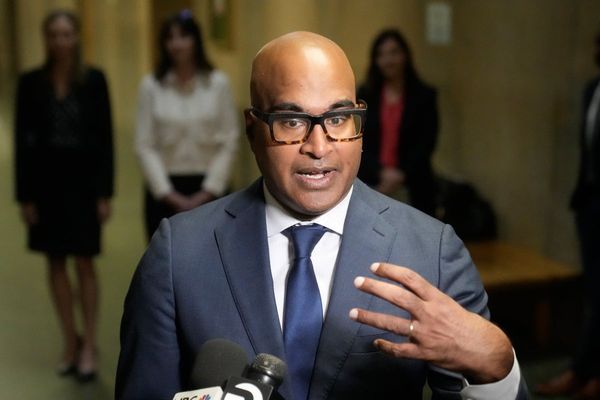
Sir Graham Brady, the chair of the Conservative 1922 Committee, is speaking to Sky News.
He says, after a discussion yesterday and today, the committee has come to a “clear determination” that the rules should not be changed.
But he says it is also reminding Tory MPs that they can write to Brady if they have any concerns. He says he will express any concerns to the PM.
He also says May has already set out a timetable for her departure in the event of MPs passing the withdrawal agreement.
The 1922 Committee will ask May to set out a timetable for when she will go if the deal is not passed, he says.
- Conservative 1922 Committee says May should clarify when she will resign if the Brexit deal does not get passed.
Q: There were some vocal calls for a rule change. Why did the executive rule the idea out?
Brady says the executive’s clear view was that this would not be appropriate. There were many reasons, but the main one was that the rule was in place. It was expected in December, when there was a confidence vote, that the rule would hold.
He says it is open to the 1922 Committee to change its mind. But he says the committee has reached a clear view. The matter is now settled, he says.
Q: What was your view?
Brady says he held back in case he had to cast a casting vote.
Q: How did the vote go?
Brady says it was very clear.
Here is more on the decision by the Conservative backbench 1922 Committee, which is chaired by Sir Graham Brady, not to change the rules to allow an early no confidence vote in Theresa May.
From Politico Europe’s Charlie Cooper
1922 chair Graham Brady has confirmed there will be no rule change allowing confidence vote in Theresa May before Dec, but MPs are seeking “a roadmap” for May’s departure in the event her Brexit deal does NOT pass. PM has already indicated she’ll go if and when her deal passes
— Charlie Cooper (@CharlieCooper8) April 24, 2019
From the FT’s Sebastian Payne
Sir Graham Brady told Theresa May on Tuesday that the present situation is unsustainable. Will he now demand her exit date, in exchange for avoiding leadership rule changes and a messy challenge?
— Sebastian Payne (@SebastianEPayne) April 24, 2019
This is from Stefan Rousseau, the Press Association’s chief political photographer.
Photo du Jour: @Nigel_Farage welcome’s Ann Widdecombe to his Brexit Party in Westminster today. By Stefan Rousseau/PA pic.twitter.com/ZVPbbJcmgx
— Stefan Rousseau (@StefanRousseau) April 24, 2019
Conservative 1922 Committee rejects calls for rules to be changed to allow early no confidence vote in May
This is from Sky’s Beth Rigby.
NEW: Just out from ‘22. Executive have rejected rule change but do want a clearer timetable for departure
— Beth Rigby (@BethRigby) April 24, 2019
Updated
Gérard Araud, the outgoing French ambassador to the US, has said in a newspaper interview that UK influence in Washington is vanishing.
That prompted this response from Jeremy Hunt, the foreign secretary.
Mon cher ami @GerardAraud I am sure you enjoyed making hay with the UK's temporary Brexit travails but until there is a French President's bust in the Oval Office we will not take any lessons in having good relations with Washington 😉https://t.co/niw9EylI0g pic.twitter.com/RlI3ppqNFL
— Jeremy Hunt (@Jeremy_Hunt) April 24, 2019
More United, a cross-party campaigning group set up after the 2016 EU referendum, has launched an MPs’ network. Its supporters include Nicky Morgan, David Lammy, Heidi Allen, Caroline Lucas, Jo Swinson and Stephen Kinnock. In a news release it says:
MPs in the network will be able to lead cross-party campaigns on issues which have been ignored because of Brexit. These include poverty and homelessness, responsible technology, mental health and urgent climate dangers.
And David Lammy, the Labour MP and a More United supporter, said:
A rare silver-lining to come out of the disastrous Brexit process is a new willingness among MPs to cooperate beyond traditional tribal loyalties. MPs have found that there is a special power in cross-party working and by publicly committing to seek out strong alliances that protect shared values we can help create positive changes that benefit the entire country.

This is from Channel 4 News’ Ciaran Jenkins, who has been interviewing Nicola Sturgeon.
Just spoken with Nicola Sturgeon. Three telling points:
— Ciaran Jenkins (@C4Ciaran) April 24, 2019
1. She pointedly calls #indyref2 an ‘option’.
2. She talks about ‘this’ UK government refusing consent. Her bet is on general election and different PM.
3. She ties #indyref2 to Brexit actually happening before 2021. https://t.co/SdVOKhKVCF
Here are some pictures from the Brexit party rally in Clacton earlier.


Here is the full text of Nicola Sturgeon’s speech on Brexit and independence to the Scottish parliament today.
This is what Nicola Sturgeon said in the Scottish parliament earlier when Miles Briggs, a Conservative MSP, asked her whether, in the search for consensus, she would be willing to drop her bid for a second independence referendum. (See 2.45pm.) Sturgeon replied:
I said I’m open minded to people coming forward with proposals for change. If we can have serious and substantial proposals to deliver, perhaps not all of the change that I want to see but the change that will help protect this parliament, then I’m open minded to that. And I say that without precondition. So the onus is really on the Conservatives. Will they come forward in good faith and have that discussion? If they do, they will find me willing to have that in good faith.
No 10 says it will block Sturgeon's plan for second Scottish independence referendum
Downing Street has ruled out allowing another Scottish independence referendum. These are from my colleague Heather Stewart, who has been at the Number 10 afternoon lobby.
Flat rejection of Nicola Sturgeon’s call for another independence vote from Downing Street: “as we have been repeatedly clear, Scotland already had an independence referendum in 2014, and voted decisively to stay. Both sides need to respect the result of that referendum.”
— Heather Stewart (@GuardianHeather) April 24, 2019
On Scottish independence, PM’s spox adds: “Now is not the time: now is the time for the UK to be pulling together”.
— Heather Stewart (@GuardianHeather) April 24, 2019
Downing St also makes clear that no referendum could be held without UK government backing. “The constitution of the UK is rightly reserved to the UK parliament” - and all parties signed up to cross-party Smith Commission in 2015.
— Heather Stewart (@GuardianHeather) April 24, 2019
Updated
These are from the Sun’s Tom Newton Dunn.
The revolution has failed (for now). Multiple sources tell me say the 1922 Executive will refuse to approve any changes to the leadership rules when it meets at 4pm by a comfortable majority. So May to stay.
— Tom Newton Dunn (@tnewtondunn) April 24, 2019
It appears some of the public agitating for leadership rules changes in the last few days has quite badly backfired. It has turned some initially wavering 1922 exec members against.
— Tom Newton Dunn (@tnewtondunn) April 24, 2019
Sir Graham Brady to announce the conclusion of the exec's deliberations to a full meeting of all Tory MPs at 5pm. So this looks like the second Brexiteer coup against May that has failed in four months.
— Tom Newton Dunn (@tnewtondunn) April 24, 2019
Nicola Sturgeon's statement on independence and Brexit - Summary and analysis
Nicola Sturgeon’s statement on Brexit and independence was a long way from full-on Braveheart. It was much more nuanced than the headline announcement - a commitment to push for another referendum on Scottish independence by May 2021, assuming Brexit goes ahead - would suggest. The Brexit debate has ended up being polarised between hard Brexit and soft Brexit. In Scotland before the 2014 the soft Brexit equivalent was “independence lite” and there was a definite strain of independence lite running through what Sturgeon had to say, for anyone listening carefully. She repeatedly stressed her desire to achieve a consensus on the way forward with other parties, and in response to questions (see 2.45pm), she even seemed to be hinting that she might shelve her desire for full independence in exchange for something lighter/softer for which there was more support.
It was very different from the statement Alex Salmond would be making if he were still first minister.
Here are the main points.
- Sturgeon said that her immediate priority was to stop Brexit. She said:
The immediate priority we now have is to stop Brexit for the whole UK and we should seize that opportunity, and my party will seek to do so. If that cannot be achieved, dealing with the consequences of Brexit, and facing up to its challenges, will be unavoidable.
- She said Scotland should get an independence vote by May 2021 if Brexit goes ahead. She said:
There are some who would like to see a very early [independence] referendum, others want that choice to be later. My job as first minister is to reach a judgment, not simply in my party’s interest but in the national interest.
To rush into an immediate decision before a Brexit path has been determined would not allow for an informed choice to be made.
However if we are to safeguard Scotland’s interests we can not wait indefinitely. That is why I consider that a choice between Brexit and a future for Scotland as an independent European nation should be offered in the lifetime of this parliament.
By “this parliament”, she was referring to the Scottish parliament, which is due to carry on sitting until the next election in May 2021.
- She said the Scottish government would try to pass framework legislation by the end of this year paving the way for a second referendum. Under the Scotland Act, for a referendum to be legal, it has to have Westminster approval (a section 30 order). Sturgeon acknowledged that (although slightly cryptically - see the final sentence below). She said:
I can confirm that the Scottish government will act to ensure that the option of giving people a choice on independence later in this parliament is progressed.
We will shortly introduce legislation to set the rules for any referendum that is now, or in the future, within the competence of the Scottish parliament.
We do not need a transfer of power, such as a section 30 order, to pass such a framework bill, though we would need it to put beyond doubt or challenge our ability to apply the bill to an independence referendum.
- She claimed that, even though the UK government is opposed to a second independence referendum, public opinion could force it to agree to one. She quoted Abraham Lincoln who said: “With public sentiment, nothing can fail. Without it, nothing can succeed.” And she went on:
For those of us who support independence, his lesson is obvious. If we are successful in further growing the support and the demand for independence ... then no UK government will be able to stop the will of the people or stop that will being expressed.
In this Sturgeon seemed to be implicitly accepting that a second independence referendum would only go ahead if public support for independence increased substantially. This was the SNP’s position in the immediate aftermath of the 2014 vote, when some in the party took the view that there would have to be 60% backing for independence in polls for a sustained period to justify another referendum. But support for independence has not hit that level. Here is the latest polling, according to What Scotland Thinks.

- Sturgeon said she wanted to build consensus on Scotland’s constitutional future. This is from the Scottish government’s news release about the speech.
Acknowledging and respecting the fact that not all MSPs support independence, the first minister proposed cross-party talks to discuss which powers other parties believe should be transferred to the Scottish parliament to enable it to better protect Scotland’s economic and social interests.
Sturgeon said she would be writing to the other party leaders in the parliament about how such talks could be progressed. She went on:
This should be an exercise, if parties can find it within themselves to do so, that doesn’t start with the fixed position of any of us, but one that considers openly the challenges that Scotland faces and what solutions might help to address them. If serious and substantial proposals emerge, this parliament can then present them to the UK government in a unified and united way.
- She said she would set up a citizens’ assembly to consider Scotland’s future. Saying she had been impressed by the use of a citizens’ assembly in Ireland, where one was used to develop abortion reform plans that were later backed by the public in a referendum, she said:
The Scottish government will establish a citizens’ assembly.
It will bring together a representative cross-section of Scotland with an independent chair and be tasked with considering in broad terms the following issues - what kind of country are we seeking to build, how can we best overcome the challenges we face, including those arising from Brexit, and what further work should be carried out to give people the detail they need to make informed choices about the future of the country.
This is not an approach the Scottish government tried before the 2014 referendum. And it is inherently risky for the SNP, because a citizens’ assembly could end up concluding independence would be a mistake.
- She said Brexit would harm Scotland. She explained:
The Brexit outlook for Scotland is this - a smaller economy, restricted job growth, fewer people, narrowed horizons and greater pressure on our ability to fund the public services and social contract that we value so highly.
Let me put it in simpler language. Brexit and all that flows from Brexit will affect the ability of Scottish governments now and well into the future to do the day job.
To support businesses, combat poverty, fund the NHS and public services and tackle the defining challenges of our time.
- She said she thought devolution would be reversed under Brexit. She explained:
At a time when I think most people in Scotland would want to see this parliament having more influence on the decisions that shape our future, there is a risk of the reverse.
As the UK scrambles to do trade deals with Donald Trump or whoever, the inclination to impose uniformity in devolved areas will lead to more Westminster centralisation.
It is my judgment now, that for the first time in 20 years, there is a risk of devolution going backwards.
- She said a “toxic combination of dishonesty and incompetence” was to blame for the Brexit chaos. She said:
This chaos is not an inevitable consequence of the vote to leave the EU.
It is down to a toxic combination of dishonesty and incompetence.
Those who campaigned for leave in 2016 failed to set out what Brexit is.
The UK government triggered article 50 before it had answered that question.
The prime minister then boxed herself in with a series of self-defeating and contradictory red lines.
- She said Brexit had exposed “the deep democratic deficit” in the way Scotland was governed. Scotland’s interests were “disregarded time and time again” by the Westminster, she said.
- She restated her call for a second referendum on Brexit. She said:
The view of the Scottish government is that the best way to break that deadlock for the UK is to put the issue back to the people with an option to remain in the EU.
- She restated her opposition to a no-deal Brexit, saying the UK government should revoke article 50 if no-deal were the only alternative.

Updated
Scotland should get independence vote by May 2021 if Brexit going ahead, says Sturgeon
Here is the key quote from Sturgeon’s opening statement.
There are some who would like to see a very early referendum, others want that choice to be later.
My job as first minister is to reach a judgment, not simply in my party’s interest but in the national interest.
To rush into an immediate decision before a Brexit path has been determined would not allow for an informed choice to be made.
However if we are to safeguard Scotland’s interests we can not wait indefinitely. That is why I consider that a choice between Brexit and a future for Scotland as an independent European nation should be offered in the lifetime of this parliament.
I have changed the headline at the top of the blog to make it clear that Sturgeon is saying she will push for a second referendum by May 2021 only if Brexit is going ahead.
Updated
Asked if she is willing to drop her demand for an independence referendum, Sturgeon says she is genuinely open-minded. If other parties can come forward with another mechanism that will protect Scotland’s interests in the event of Brexit, she will consider that, she says. She stresses that she is “open minded”.
UPDATE: See 4.28pm for the full quote.
Updated
Sturgeon says, if Boris Johnson were to become prime minister, the negative consequences for Scotland she outlined earlier would get even worse.
She says she has read reports that, if Johnson were to become Tory leader, the Scottish Conservatives were split from the UK party. So their position would be that independence would be good enough for the Tories, but not good enough for Scotland, she says.
This is from the Financial Times editor Lionel Barber.
Sturgeon pledges #indyref2 by May 2021 - if UK leaves EU. Caveat important. No majority for Scottish independence right now, but #Brexit changes everything. Do Nigel Farage and @Jacob_Rees_Mogg care about territorial integrity of UK?
— Lionel Barber (@lionelbarber) April 24, 2019
Here is the Scottish government’s news release about Sturgeon’s announcement.
These, from the BBC’s Lynsey Bews, give some background on today’s announcement from Sturgeon.
1/2 @NicolaSturgeon to give update on plans for poss indyref2 later. We'll have the story on @BBCScotNine tonight, inc. reaction from voters. Here's (briefly) how we got here:
— Lynsey Bews (@lynseybews) April 24, 2019
- June 2016 - after Brexit vote, FM says Scot Gov will prepare new indyref legislation.
2/2
— Lynsey Bews (@lynseybews) April 24, 2019
- March 2017 - Holyrood backs asking for ref between Autumn 2018/Spring 2019. FM sends request, PM says "now is not the time".
- June 2017 - SNP loses 21 seats in GE, FM delays indyref leg. til at least Autumn 2018.
- Nov 2018 - FM: Brexit clarity needed before any updates.
Richard Leonard, the Scottish Labour leader, says he will work with Sturgeon to stop a no-deal Brexit.
But leadership involves listening to people’s concerns. He says a second referendum would be a distraction from the real problems facing people, live poverty.
And there is no evidence that the Scottish people want a second referendum, he says. He says this is all about the SNP’s self-interest.
Jackson Carlaw, the Scottish Conservative deputy leader, says a second independence referendum will be divisive. Sturgeon is only announcing this now because there is an SNP conference at the weekend, he says. The SNP can only prosper by promoting divisions, he says.
He says, before the 2014 referendum, all parties in the Scottish parliament agreed on the need for a section 30 order, the secondary legislation passed in London authorising a second referendum. They all wanted to see the issue settled. But this time there is no consensus in favour of a referendum, he says.

Sturgeon says she thinks Scotland should be independent.
But she knows other people disagree. So over the next few months she will strive to find areas where people agree.
Brexit has shown what happens when people adopt inflexible positions, she says.
She says she will try to ensure that Scotland takes different approach. This parliament was set up to adopt a different approach to politics, she says.
She says, if the opposition parties are prepared to work with her, they will find her a “willing partner”.
But if they just dig in, they will represent the failed past, she says.
And that’s it. Sturgeon’s statement is over.
Scottish government to set up citizens' assembly to consider Scotland's future, Sturgeon says
Sturgeon says she has been impressed by what a citizens’ assembly achieved in Ireland, ahead of the referendum on abortion law.
- Sturgeon says she will set up a citizens’ assembly to consider what sort of future Scotland should have.
Sturgeon is turning to the issue of when the Scots should get a new choice on independence.
She says the SNP was elected with a mandate for another referendum. And there is a majority for it in the Scottish parliament, she says.
She says it is also important “to learn the lessons of Brexit”.
Rushing into a second referendum would not be in Scotland’s interest, she says.
- Sturgeon says a second independence referendum should be held “in the lifetime of this parliament”. That means before May 2021, when the next Scottish parliament elections are due.
Sturgeon says the Scottish government will bring forward framework legislation for a referendum. It wants to pass this before the end of this year.
She says the Scottish government does not need UK government approval for this legislation. It does need UK approval for the referendum to go ahead without doubts about its legality, she says.
She says the UK government currently says it will not allow a second referendum. But she says the current government may not last for long, and she says, in the face of pressure from Scotland, the UK government will agree to a second referendum.
Updated
Sturgeon says independence would allow Scotland to nurture its place in Europe.
Sturgeon says MSPs have a duty to act in the national interest.
No one is asking them to abandon key beliefs, she says.
She says she still believes in independence. And she thinks Scotland’s best interests would be protected by the EU.
Of the EU27 that decided the UK’s fate two weeks ago, around a dozen were the same size as smaller than Scotland, she says.
Sturgeon says for first time in 20 years there is risk of devolution 'going backwards'
Sturgeon says the Tory, “and I am sorry to say UK Labour”, obsession with ending free movement will be bad for Scotland.
It will send Scotland’s working age population into decline, she says.
She says he is proud of the Scottish parliament’s approach to this issue. MSPs understand that immigration restrictions pose an existential threat to Scotland, she says.
She says, at a time when Scots want the parliament in Edinburgh to have more powers, it is likely that more power will be centralised at Wesminster.
- Sturgeon says for the first time in 20 years there is a risk of devolution “going backwards”.
Sturgeon says Brexit shows “the Westminster system of government does not serve Scotland’s interests”.
The status quo is broken, she says.
She says Scotland’s voice is only listened to only if it chimes with the majority at Westminster.
She says cross-party votes in Edinburgh have been ignored.
And vital powers were taken from the Scottish parliament without its consent, she says.
Brexit has exposed “a deep, democratic deficit” at the heart of how Scotland is governed, she says.
Sturgeon says the Brexit mess has been caused by “a toxic combination of dishonesty and incompetence”.
Sturgeon turns to Brexit.
Brexit has been extended until 31 October, with the UK having the right to leave earlier, she says.
- Sturgeon says the Scottish government has “scaled down” its no-deal planning.
But she says she regrets the amount of money that has had to be spent on something the UK government should have ruled out.
Nicola Sturgeon's statement on Brexit and independence
Nicola Sturgeon starts with a tribute to Lyra McKee.
She says she did not know Lyra, but everything she has read about her makes her wish she had.
She also expresses her condolences to the relatives of those killed in Sri Lanka. Killing on this scale is hard to comprehend, she says.
There is a live feed here.
Nicola Sturgeon, Scotland’s first minister, is about to make a statement to the Scottish parliament about Brexit and Scottish independence. My colleague Severin Carrell previewed it yesterday.
This is from the Scottish Daily Mail’s Michael Blackley.
NEW: Nicola Sturgeon will say there should be an independence referendum "later in the lifetime of this parliament" when she updates MSPs at 1.30pm.
— Michael Blackley (@Mike_Blackley) April 24, 2019
This is from the BBC’s Emma Vardy.
Somber applause from hundreds of mourners outside as Lyra McKee’s coffin is carried into St Anne’s Cathedral in Belfast pic.twitter.com/rZlpOE6iwE
— Emma Vardy (@EmmaVardyTV) April 24, 2019
Theresa May was among the last of the mourners to arrive at Lyra McKee’s funeral.

The Conservatives cannot even say whether they will have a campaign launch for the European election, HuffPost’s Paul Waugh reports.
Asked if Tory party will actually have a campaign launch if the Euro elections go ahead, no10 spokesman:"If we have one we will let you know about it." Cue laughter from hacks.
— Paul Waugh (@paulwaugh) April 24, 2019
Lyra McKee’s funeral is starting now. Here are some pictures from the service.


Photograph: Brian Lawless/AP


Nigel Dodds, the DUP leader at Westminster, says violence in Northern Ireland is never acceptable. He says the New IRA statement saying the murder of a police officer would be acceptable was “utterly repulsive”. An attack on any one of them is an attack on us all, he says.
Lidington says he agrees with every word. He says the best response to what the New IRA said was that the DUP leader and the Sinn Fein leader could visit Derry together to reject terrorism. Both communities in Derry have rejected terrorism. That has been the most moving and compelling riposte. They spoke for the people of Northern Ireland, he says.
Kevin Hollinrake, a Conservative, says in the recent indicative votes, Labour backed a customs arrangement with the EU, not a customs union. Isn’t now the time for a deal, he says.
Lidington says this is an important point. He says the government wants to retain the benefits of a customs union. He says he hopes it will be possible to bring all MPs together in support of a customs arrangement.
Stephen Kerr, a Scottish Conservative, asks if EU funding going to Scottish universities for dementia research will continue after Brexit.
Lidington says it will continue during the transition. After that the government will have to take new decisions, but the government is committed to funding dementia research, he says.
Julian Lewis, the Conservative chair of the defence committee, asks Lidington if he agrees Huawei is intimately linked with the Chinese state and its hostile network.
Lidington says the government wants diversity in the supply chains for 5G. He says, when the government has taken its final decisions about the network and cybersecurity, it will announce them.
Alberto Costa, the Conservative MP, asks what the government is doing about the request for the citizens’ rights part of the withdrawal agreement to be agreed as stand-alone deal in the event of the whole agreement not being passed.
Lidington says he thinks there are legal problems trying to carve out the citizens’ rights part of the agreement, but he says he will look at this again.
Labour’s John Mann asks about the growth of racism in football. He says the football authorities need more help. Will the government set up a forum where this can be discussed?
Lidington says racism should be completely beyond the boundaries of acceptability. The sports minister will be willing to meet Mann to discuss what more can be done, he says.
Richard Graham, a Conservative, says Commonwealth servicemen and women have to pay large sums for indefinite leave to remain in the UK. He urges the government to drop these visa fees.
Lidington says the government values the contribution of Commonwealth soldiers. The home secretary will consider this, he says.
Sammy Wilson, the DUP MP, says hundreds of people in Sri Lanka are burying their loved ones, just as Lyra McKee’s family is. He says Christians are now the most persecuted group in the world. How is the government helping people persecuted just because they believe in Jesus Christ?
Lidington says the Foreign Office human rights budget is being used to protect religious freedom. The government is working to protect Christians under threat.
PMQs - Snap verdict
PMQs - Snap verdict: It is not often that the spin-off is better than the original series, but that is certainly the case at PMQs where the David Lidington/Emily Thornberry exchanges, if not exactly unmissable, at least tend to be less glib and more substantial than the May/Corbyn ones. The two understudies actually listen to each other and engage, instead of talking across each other. Thornberry can also be much funnier than Corbyn, although understandably she parked the jokes today. Her segue from Lyra McKee’s death to Brexit and the backstop was a tiny bit contrived - Lidington was probably right in arguing that the border controversy wasn’t a significant factor in explaining the events that led to McKee’s death last week - but once Thornberry was on Brexit, she set out the flaws in the government’s position, and the case for a customs union, almost perfectly. In private Lidington probably agrees with almost everything she said and his rebuttal was half-hearted at best. His best comeback involved a jibe about Thornberry’s leadership ambitions, although Thornberry squashed that quite easily. In his final response Lidington ended up echoing what May told MPs before the Easter recess, when she said MPs should consider their “national duty” to find a solution to Brexit. His comments implied that such a solution is no closer than it was then, and that the cross-party talks are going nowhere.
Thornberry says last week Nancy Pelosi, speaker of the House of Representatives in the US, said there would be no trade deal with the US without a solution to the Irish border problem. And this government does not have a solution, she says.
Lidington says only two years ago Thornberry said the UK should welcome President Trump and work with him. Has something changed about Trump? Or has something changed about Thornberry’s leadership ambitions? He says Labour says it wants no tariffs and no border checks in Ireland. But it votes against those things. It should put the national interest above party advantage.
Thornberry says there is only one party in the Commons interested in a leadership contest.
She says, in a week like this, conscious of the threat posed by terrorism, MPs should accept the need to keep the Irish border open. Will Lidington get serious about the talks, and put a customs union on the table.
Lidington says Thornberry has not been in the room for the Labour/government talks. He says she is in “the outer inner circle”, he says. He says the talks have been constructive. But both sides need a solution that will get through the Commons. He says MPs have rejected a whole series of options. Now they need to take their responsibilities seriously, and find a way forward.
Thornberry says the DUP will not accept the backstop. The only way to avoid that is to have an invisible border. But last week a leaked Home Office report said it would take at least 10 years to find a way of having an invisible border in Ireland.
Lidington says he will not comment on leaked reports. But he says the government is investing in ways of modernising borders.
Thornberry says the Home Office leak identified six problems with the invisible border plan. The real solution is obvious - a customs union. She says Lidington himself said this three years ago. Why won’t the government wake up to this?
Lidington says £20m has already been earmarked for this work. He says the PM’s deal offers a solution. Labour should vote for it, he says.
Thornberry says the statement from the New IRA, with its reference to enemy forces and its apology for McKee’s death, was a sickening throwback to the time of the Troubles. Does Lidington agree why this is so important that a solution to the backstop is found?
Lidington says he agrees both issues are important. But he does not think McKee’s murderers were influenced by a concern about the border.
He agrees with what Thornberry said about how the reference in the New IRA statement to police officers being legitimate targets was sickening.
Emily Thornberry starts by saying she usually enjoys trading jokes at these sessions. But this is not a time for jokes, she says.
She also expresses her horror at the attacks in Sri Lanka. She says 45 children were among those killed.
And she condemns the killing of Lyra McKee.
Lidington says he hopes that anyone who has information about McKee’s killing will come forward.
David Lidington says he is taking PMQs because Theresa May is in Belfast for Lyra McKee’s funeral. Those who killed her have nothing to offer Northern Ireland, he says.
He says her family have asked him to say we stand with Lyra.
He says May spoke to the prime minister of Sri Lanka yesterday to send her condolences to those who lost relatives in the terror attacks and to offer any help the UK can provide.
He says this should be a time for people of all faiths, and none, to come together and stand up for the values of tolerance and mutual respect.
PMQs
PMQs is starting soon.
With Theresa May and Jeremy Corbyn in Belfast for Lyra McKee’s funeral, we’ve got the B-team: David Lidington and Emily Thornberry.
Here is the list of MPs down to ask a question.

Labour is not a remain party, says John Healey
As the Daily Mirror reports, Labour is today announcing plans to scrap changes to planning rules announced by the coalition government that allow offices to be turned into homes without planning permission. Speaking on the Today programme this morning John Healey, the shadow housing secretary, said the current rule was “a get-out clause the Conservatives introduced for developers that allows them to dodge any social housing obligations and allows them to build slum-like housing.”
In his interview Healey also rejected the suggestion that Labour was the remain party. Andrew Adonis, the Labour peer, arch anti-Brexiter and MEP candidate in the South West, made this claim in a Guardian article this week in which he wrote: “Labour is the party for remainers.” But Healey said he did not accept this description of the party’s position. He told the programme:
No, the way to characterise our party is as it has been since the referendum and general election, as respecting the result of the referendum.
The Labour position has not changed - we want a better Brexit than the government has been able to negotiate, one that can command support across Parliament and be negotiated with the EU.
Mike Gapes, the former Labour MP who now represents Change UK (the Independent Group), said Healey’s response was telling.
Once again confirmation that Corbyn Labour is a pro Brexit party. This time from John Healey on @BBCr4today. If you support Remain then Don’t vote Corbyn Labour in the European Elections. #RemainAlliance Change UK @TheIndGroup
— Mike Gapes (@MikeGapes) April 24, 2019

Updated
Matt Hancock, the health secretary, said this morning that changing the prime minister would not resolve the deadlock over Brexit. Speaking at a TaxPayers’ Alliance event in London, he said:
Changing the prime minister will not change what we need to do to deliver Brexit, I think we should get on and deliver Brexit and I voted for that many times.
I hope the House of Commons will come to a majority to be able to deliver the result on the referendum.
Ann Widdecombe quits Tories to stand as Brexit party candidate
The Brexit party has announced a new recruit today; Ann Widdecombe, the former Conservative prisons minister who stood down as an MP in 2010 before an appearance on Strictly opened up a new career for her as a TV celebrity, has used an article in the Daily Express to announce that she will be a Brexit party candidate at the European elections in the South West.
She says she expects to be thrown out of the Conservative party as a result.
Here is an excerpt from her article.
Britain is an international laughing stock. Parliament is beyond parody. Both major parties are busy breaking the promises of the manifestos on which they stood and there is a huge disengagement between people and parliament, which could lead to record numbers of people just not bothering to vote ...
I was one of those who voted leave because I wanted Britain to be a sovereign state, able to control our own borders, make our own laws, trade with whom we please, be ruled by our own democratically elected government.
If I had any doubts about just how much control the EU exerts over our affairs, seven years as a government minister dispelled them ...
Alas, a hopelessly inadequate prime minister, a gloating and determined EU and a parliament ready to dismiss the people as ignorant have combined to thwart our escape from foreign domination.
The job is far from done and the argument goes on.
And on.
Yet we can end it decisively on May 23 by sending out a very simple message – we meant what we said in 2016.
We can oblige Juncker to see nothing except Brexiteers whenever he looks at the British contingent in the European parliament and to know that we will never surrender.
So I urge all those fed up with the current stalemate to vote for the Brexit party, which I am honoured to represent in this European election, which we would not even be having if parliament had done its job and implemented the clearly expressed will of the people.

Updated
Senior Tory MPs have expressed alarm about Theresa May’s decision to give the Chinese telecoms firm Huawei a limited role in supplying the future 5G mobile phone network against the advice of some cabinet ministers, security chiefs and the US, my colleague Matthew Weaver reports.
Antoinette Sandbach, a Conservative pro-European and a member of the executive of the backbench 1922 Committee, was on Sky’s All Out Politics this morning. She refused to comment in detail on what happened at the executive’s meeting yesterday, where MPs discussed calls for the party’s rules to be changed to allow an early no confidence vote in Theresa May (under the current rules May is safe until December, 12 months after the last one), but she did suggest that advance briefing to the effect that the 1922 executive would definitely agree to change the rules was wrong.
Instead members were “sent away to go away and think on things”, she said, effectively admitting that yesterday’s talks were inconclusive. There would be a further discussion when the executive met later today. “I’m sure that matters will become clearer later,” she said.
But Sandbach also made it clear that she was opposed to rewriting the rules. She told the programme:
I would say to colleagues that when the no confidence vote was triggered in December, you knew what the rules were, you chose to trigger the vote, and I think you have to live with the result.

Speaking on the Today programme this morning, the Sinn Fein leader Mary Lou McDonald condemned the New IRA, who have admitted responsibility for the killing of Lyra McKee, “unreservedly”. McDonald went on:
The war in Ireland is over, the conflict is over, the IRA arms have been destroyed or put beyond use. We have a new democratic dispensation and it is so important we make that work, that institutions of government work ...
[The New IRA] are a tiny, unrepresentative group that have no plan, that have no strategy. If their alibi [for the killing of journalist McKee] is they are seeking to advance the cause of republicanism, they are very far off the mark.
Jeremy Corbyn will also be attending Lyra McKee’s funeral, Sky’s Amber de Botton reports.
Jeremy Corbyn will also attend Lyra McKee's funeral today.
— Amber de Botton (@amberdebotton) April 24, 2019
Emily Thornberry, the shadow foreign secretary, will be standing in for Corbyn at PMQs, as normal when he is away.
Here is the statement that Lyra McKee’s family issued yesterday ahead of her funeral. It includes this:
We would ask that Lyra’s life and her personal philosophy are used as an example to us all as we face this tragedy together. Lyra’s answer would have been simple, the only way to overcome hatred and intolerance is with love, understanding and kindness.
“Lyra’s answer would have been simple, the only way to overcome hatred and intolerance is with love, understanding and kindness.” (Family of Lyra McKee) pic.twitter.com/PkvaNG75Xx
— David Blevins (@skydavidblevins) April 23, 2019
Updated
Theresa May to fly to Belfast to attend Lyra McKee's funeral
I’ll need to change the agenda for the day, because Theresa May is now not taking PMQs. Number 10 has just announced she will be travelling to Belfast for the funeral of the murdered writer and journalist Lyra McKee.
Number 10 put out this statement.
The PM will travel to Belfast today where she will attend the funeral of Lyra McKee.
Questions in the House of Commons at noon will be taken by the chancellor of the Duchy of Lancaster [David Lidington].
Theresa May's approval ratings with Tory members hit record low, survey suggests
Theresa May was due to be holding her first PMQs today since the Easter recess. Before the break she told MPs that they should use the holiday to consider their “national duty” and reflect on how they might find a solution to the Brexit impasse. That wish does not seem to have been fulfilled, but Tory MPs have been reflecting on what they can do to get rid of May herself.
And a new survey of Conservative party members by the ConservativeHome website illustrates quite how little support May now has in her party. According to Conservative Home, May’s approval ratings amongst members have hit a record low.
Here are the key figures.

And here is an extract from the analysis from ConservativeHome’s Mark Wallace. He says:
For obvious reasons, the prime minister is bearing particular blame from party members – both, one suspects, for her Brexit failure in particular and for the more general problems her continued leadership brings with it. Her rating wasn’t fantastic in February, when it sat at -40.8, but the prospect of postponement pushed it down to -51.2 in March, and the reality of that broken promise has pushed her numbers off a cliff, plummeting to -73.5 in April. I’ve searched our archives and so far as I can see this is the worst rating awarded to any Conservative ever in this question. The only cabinet league table numbers I can find which were worse were Vince Cable and Chris Huhne at their respective nadirs during the coalition years, which are not people a Tory prime minister would want to rival in the grassroots popularity stakes.
Here is the agenda for the day.
9.15am: Philip Hammond, the chancellor, gives evidence to the Commons Treasury committee about the spring statement. My colleague Graeme Wearden will be covering it on his business live blog.
10am: Facebook, Twitter and YouTube give evidence to the Commons home affairs committee on hate crime.
11am: The National Institute of Economic and Social Research publishes new economic forecasts at a press conference on the “economic outlook beyond the parliamentary Brexit impasse”.
11am: Nigel Farage, the Brexit party leader, visits Clacton. He is staging a walkabout, followed by a rally.
12pm: David Lidington, the Cabinet Office minister, will take PMQs.
1pm: The funeral of the writer and journalist Lyra McKee takes place in Belfast. Theresa May will be among those attending.
1.30pm: Nicola Sturgeon, Scotland’s first minister, makes a statement to the Scottish parliament about Brexit and independence.
2.30pm: Simon Stevens, the NHS England chief executive, gives evidence to the Commons public accounts committee about cancer waiting times.
Afternoon: The executive of the Conservative backbench 1922 Committee is expected to meet to resume its discussion on whether the rules should be changed to allow an early no confidence vote in May. Later there will be a full meeting of the 1922 Committee.
As usual, I will be covering breaking political news as it happens, as well as bringing you the best reaction, comment and analysis from the web, although I expect to be focusing largely on Brexit-related developments. I plan to post a summary when I wrap up.
You can read all the latest Guardian politics articles here. Here is the Politico Europe round-up of this morning’s political news. And here is the PoliticsHome list of today’s top 10 must-reads.
If you want to follow me or contact me on Twitter, I’m on @AndrewSparrow.
I try to monitor the comments BTL but it is impossible to read them all. If you have a direct question, do include “Andrew” in it somewhere and I’m more likely to find it. I do try to answer questions, and if they are of general interest, I will post the question and reply ATL, although I can’t promise to do this for everyone.
If you want to attract my attention quickly, it is probably better to use Twitter.
UPDATE: I have amended this post to reflect the fact that Number 10 has now said May will not be taking PMQs because she will be going to Belfast instead.
Updated