Afternoon summary
- Justine Greening, the Conservative former education secretary and a supporter of a second referendum on Brexit, has said that there is time to organise one to take place on 30 May. Speaking at a People’s Vote event she said:
I’ve worked out that you could plan and hold a referendum in 22 weeks. We could actually, after this vote on December 11, hold a referendum, potentially, on May 30 next year. We could, alongside that, choose to extend article 50, I’ve suggested, by four months to July 29.
She also restated her preference for a referendum with three options, using the same supplementary vote system used in mayoral elections.
- Nicola Sturgeon, the SNP leader and Scottish first minister, has said a Brexit debate featuring just Theresa May and Jeremy Corbyn would be “an absolute travesty of democracy”.
If this or any Brexit TV debate goes ahead without all options - including that of remaining in the EU - being included and given a voice, it will be an absolute travesty of democracy. @BBCNewsPR https://t.co/Na7A01CQQk
— Nicola Sturgeon (@NicolaSturgeon) November 29, 2018
The Lib Dems have also written to the BBC, ITV and Sky to complain about the possibility of being excluded. Sir Vince Cable, the Lib Dem leader, said:
May is running scared of the real opposition. A debate shouldn’t take place between two cosy Brexiters.
The public demand the full facts and figures on the cost of Brexit. They also deserve to hear all the options. A people’s vote, including the option to remain, is the only real alternative. I will make that case anytime, anywhere.
That’s all from me for today.
Comments should be open until 6pm. Thanks for your contributions so far.
Not much news emerged from the afternoon briefing for journalists - but the prime minister’s spokeswoman did reveal an eye-opening statistic: Theresa May has spent 18 hours at the despatch box defending her Brexit deal, since parliament returned from recess last month - nine and a half of those in the past two weeks. She might not have won over many in her own party, let alone Labour or the DUP; but her stamina is beyond doubt.
Here’s a transcript (pdf) of the whole of Theresa May’s evidence to the Commons liaison committee this morning. It runs to 36 pages.
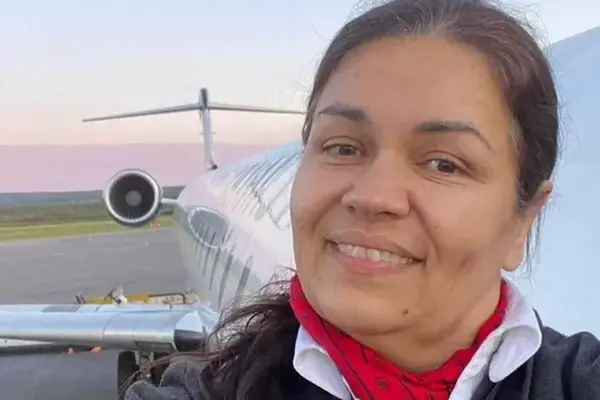
My colleague Jim Waterson has been looking into theories swirling around Twitter about a guest on Newsnight who turned up to defend Theresa May’s Brexit deal.
There is a theory that is blowing up anti-Brexit Twitter right now: A female vicar called "Lynn" who appeared on Newsnight as a MASSIVE support of Theresa May is actually an actor called "Marina" who specialises in playing ugly women and appeared as an extra in Star Wars Ep VII. pic.twitter.com/CciajJhjqo
— Jim Waterson (@jimwaterson) November 29, 2018
Her unusual appearance, massive support for Brexit, and use of two names has raised quite a few theories that in some way she's being paid by the government or other forces to sell Theresa May's deal to the public. (I'm not sure I'd choose her as my front woman, but OK!) pic.twitter.com/kpH5tAfkuR
— Jim Waterson (@jimwaterson) November 29, 2018
I'll be honest: I'm not entirely sure of the size of her church. It largely seems to consist of her preaching to an unknown audience about how to get rich, while being blessed by a self-declared bishop from Hickory, North Carolina. But you know, each to their own. pic.twitter.com/fzHCRjOg4P
— Jim Waterson (@jimwaterson) November 29, 2018
Newsnight has now issued a statement, essentially defending the programme's right to put legitimately weird people on air to represent the public and insisting she has not been paid. https://t.co/KCMbxEDnIl
— Jim Waterson (@jimwaterson) November 29, 2018
This is from my colleague Heather Stewart.
Brexit telly debate standoff latest: Labour sources insist they still prefer the “head to head debate with a large and diverse audience” offered by ITV, to the “messy and confusing” format suggested by the BBC (and which Downing St prefers).
— Heather Stewart (@GuardianHeather) November 29, 2018
In the Commons Lloyd Russell-Moyle has just finished his speech. (See 3.30pm.) He received a standing ovation from Labour MPs in the chamber - something which is very rare, given that applause is against the rules. Lindsay Hoyle, the deputy speaker who is in the charge, then praised him for a brave speech which he said would give hope to people around the world.

Labour MP Lloyd Russell-Moyle tells Commons he is HIV positive
The Labour MP Lloyd Russell-Moyle is speaking in a Commons adjournment debate now, which he has initiated, about HIV and world aids day. He has used it to announce that he is HIV positive. Here is an extract from his statement.
This Saturday 1st December will mark the 30th anniversary of world AIDS day, and next year it will be ten years since I became HIV positive. I was 22 years old, and diagnosed early. Since then I have been on world-class treatment provided by the NHS – so I have not only survived, I’ve prospered, and any partner I have is safe and protected.
I am leading this debate today because we are in many ways at a juncture in the fight against HIV and AIDS. We could be more vocal, more ambitious, more determined to eradicate the disease in the UK. Or, we could go in the direction of the government, which is putting our hard fought progress at risk.
Their reluctance to make the HIV prevention drug PrEP available on the NHS is disgraceful. We now know of cases of young men who have tried to gain access to PrEP, who have been turned away and who have subsequently contracted HIV. These men’s HIV statuses were entirely avoidable. The government must now act to prevent this from happening again.
The disease is still deeply misunderstood. Etched into much of the public’s memory as a death sentence, HIV conjures images of gravestones and a life marked by tragedy. The reality is that today, the prognosis is wildly different to what it was when it was bought to the public’s attention. If treated, someone who is HIV positive, like myself, can expect to live a long and full life with little to no side-effects from the drugs regime.
I hope that my coming out serves to defy the stigma around the disease. I hope that more people will understand that effective treatment keeps people who are HIV positive healthy, and it protects their partners. That my story might encourage others to get tested and ultimately begin their treatment earlier on.
Those who have HIV or who have recently been diagnosed should know that they are free to pursue every aspect of public life without hindrance.

SNP, Scottish Labour, Lib Dems and Scottish Greens unite to oppose May's Brexit deal
While talks are ongoing as regards cross-party collaboration on the Brexit deal at Westminster, all four parties bar the Scottish Conservatives have agreed to table a motion opposing the prime minister’s proposals at Holyrood.
The SNP, Scottish Labour, the Liberal Democrats and the Scottish Greens have confirmed this afternoon that they will table a single agreed motion for next week’s debate in the Scottish parliament opposing the withdrawal agreement and political declaration, as well as a no deal scenario. Such a vote will, of course, have only symbolic value – as with Holyrood’s continuity bill (which the supreme court has yet to rule on) there is no capacity to veto or amend Westminster legislation.
The spokespeople for the four parties (Michael Russell, Neil Findlay, Tavish Scott and Ross Greer) said in a joint statement that they hoped the motion would represent “the overwhelming view of the Scottish parliament”. They said:
The day after the prime minister’s stage-managed visit to Scotland, during which she failed to engage with any politicians or individuals who oppose her proposals, this unique and positive cooperation between four of the five parties at Holyrood indicates Scotland’s strength of feeling on Brexit and the prime minister’s untenable position, as well as illustrating the isolation of the Tories on this matter.

Jo Johnson says May's Brexit deal could lead to 1997-style electoral defeat for Tories
Theresa May’s Brexit deal would risk the destruction of the union, transfer powers from Westminster to Europe and lead to electoral armageddon for the Conservative Party, three leading Tory rebel MPs have warned as they threw their weight behind a so-called ‘Peoples Vote’.
In his first major speech since resigning as transport minister earlier this month, Jo Johnson joined David Willetts and another former minister, Justine Greening, to sketch out a future in which their part faced an existential crisis and having its brand thrashed by the economic fallout from Brexit.
The package which their party leader had agreed with the EU was described by Johnson as a “botched deal” that would put British firms at a competitive disadvantage and fail the services sector, which he said had been “scandalously” neglected during negotiations on Brexit. Voicing fears for the future of his party, he added:
Brexit is seen as a project driven by the Conservative party and this half-baked, worst of all worlds Brexit could trigger an electoral defeat on the scale of 1997, or worse, with this ‘Tory Brexit’ label an albatross around our necks for years to come.
Such an outcome would “roll out the red carpet for Jeremy Corbyn” and lead to what he described as “communist ideologues” coming to power in Britain.
Johnson also sounded a warning about potential break-up of the UK by expressing concern that the current deal treated Northern Ireland in a different way from Britain, heralding a huge extension of regulatory checks in the Irish Sea that could shift trade patterns and block British goods out of the Northern Ireland.
“Unionists across our four nations are right to be worried,” he said, adding that Scottish nationalists would use the different treatment of Northern Ireland as a grievance and push for independence.
Name checking his brother and other senior Brexiteers such as Dominic Raab who he said were warning that Theresa May’s deal was “worse” for the UK than actually staying in the EU, Johnson said that he could understand their anger. To laughter, he added:
When we were told that Brexit would mean taking back control, none of us in our wildest imaginations thought it would mean powers being taken [from Westminster] to other European parliaments and the European Parliament.
Johnson was introduced by the veteran former minister, David Willetts, who said that the trio were seriously concerned about the threat which Brexit posed to their party and, in particular, its reputation as one of economic competence and a guardian of living standards.
The three appeared at an event at the Southbank organised by the People’s Vote campaign – which brings together remain-supporting MPs from parties including Labour, the Tories and others – where Willetts said that they were presenting the “Conservative case” for such a poll. He said:
When we came into government in 1979 and again 2010 we came in and we sorted out a mess.
Now we are in danger of imposing declining living standards on the British people and the Conservative party will have to take responsibility for that.
Addressing an audience of journalists and young activists associated with the campaign for a second vote on Brexit, he added: “The future of the party depends on the votes of younger people. Brexit jeopardises that.”

Lunchtime summary
- Theresa May has suggested that, if MPs vote down her Brexit deal, she will activate full planning for a no deal Brexit. (See 11.41am.)
- The SNP, Labour, the Scottish Greens and the Lib Dems in the Scottish parliament have confirmed that they will all back a joint motion in a debate at Holyrood next week opposing May’s Brexit agreement.
- Michael Gove, the Brexiter environment secretary, has told MPs that they should celebrate French president Emmanuel Macron being angry about the Brexit deal and what it means for fishing. During environment questions Gove said Macron, who he termed the “Jupiterian president”, was “speechless with rage on Sunday when he discovered that this withdrawal agreement and future political declaration would mean that France would not have access to our waters save on our terms”. Gove went on:
His anger should be a cause for celebration across this House.
At one point Gove also tried speaking in French in his reply, until told to revert to English.
Michael Gove attempts to answer a question on Macron's fishing comments in French, gives up and settles for just an accent. pic.twitter.com/Kzp7STQUas
— Robbie Hawkins (@R_Hawkins93) November 29, 2018
- Mark Carney, governor of the Bank of England, has said that “less than half of businesses” are ready for a no deal Brexit. My colleague Graeme Wearden has more on his business live blog.
The European Scrutiny committee has confirmed that it will hold an inquiry into how the Brexit negotiations have been conducted. Announcing the move, Sir Bill Cash, the Tory Brexiter and committee chair, said:
Given the present state of negotiations regarding the UK’s exit from the European Union, I and my committee consider this inquiry’s purpose to be one of vital importance. We are looking forward to taking evidence from key figures involved in the negotiations, to bring as much clarity as possible to the wider Brexit process.
Brexit has yet again dominated first minister’s questions at Holyrood, with the Scottish Conservative deputy Jackson Carlaw challenging Nicola Sturgeon on the Scottish government’s approach to post-Brexit fishing arrangements.
Carlaw argued that, by pledging her SNP MPs to vote against Theresa May’s Brexit deal and by her continued support for EU membership, it was Sturgeon herself who was threatening the future of Scotland’s fishing industry and who wanted to keep it within the despised common fisheries policy [CFP].
Sturgeon described the question as “an early Christmas present”, and that’s a fair summation given that it allowed her ample opportunity to set out why she believes that May’s deal sells out Scottish fishermen. She said that, as well as failing to secure annual negotiations or break the link between market access and trade, “it takes just one country” to block May’s plans on fishing and that the EU has made it clear that they still want to build on the CFP.
She was probably referring to France: Emmanuel Macron pledges over the weekend to use fishing rights for French fleets as ‘leverage’ in future negotiations.
The irony is that fishing makes up a tiny proportion of Scotland’s economic output. But, as I reported yesterday, it’s a totemic issue in Scottish politics and looks set to remain a flashpoint for some time to come.

Updated
Corbyn says he feels sympathy for May
Jeremy Corbyn was on ITV’s This Morning today. Asked if he felt sympathy for Theresa May, he replied:
Yes, at a human level, because leadership is a lonely place, and that can be difficult.
I think that people working very hard and doing their best should be respected for that.
I personally never indulge of abuse of an individual, I don’t do that, it’s not my style of politics.
When asked whether, given that, he would like to be PM himself, Corbyn replied: “Of course I would, otherwise I wouldn’t be here today.”

A hard Brexit will lead to a disruptive environment for British businesses, the head of the Central Bank of Ireland has warned. Speaking to the Institute of Bankers in Dublin, Philip Lane said:
In one direction, the ratification of the withdrawal agreement would provide some guidance to firms as to the general trajectory of the future UK-EU27 relationship, even if much will remain uncertain until the negotiations about the post-transition environment are concluded.
It follows that the passing of the withdrawal agreement could unlock business investment in the UK through a reduction in uncertainty.
In the other direction, a hard Brexit would constitute a much more disruptive environment, in view of the lack of clarity about the future UK-EU27 relationship under a hard Brexit and the absence of a road map as to how this future relationship will be negotiated.
The Financial Conduct Authority (FCA) has said the risks of a Brexit deal with a transition period are “preferable” to those of a no deal as it warned over a cliff-edge hit to markets and consumers. As the Press Association reports, in its Brexit scenario analysis (pdf), the FCA said it would be “difficult” for financial companies to mitigate fully the risks of disruption to households and businesses without action from UK and EU regulators. It said consumers could potentially be affected if firms are unable to continue providing services or as a result of wider economic or market disruption. The regulator added that while the UK financial system is judged to be resilient to even the worst case cliff-edge withdrawal, “some market volatility is to be expected in this scenario, but this should not affect the ability of markets to function effectively”.
Updated
Ben Wallace, the security minister, suggested that Britain could be at greater risk of terror attacks if it leaves the EU without a deal. In a speech this morning, he said the “UK’s security is bound up with Europe’s security” and that the deal secured by Theresa May struck the right balance to keep everyone safe. In a speech to law enforcement and security leaders at the International Security Expo in London, he said:
A mere 20-mile stretch of water cannot protect the UK from 21st century terrorism, serious organised crime and cyber attacks.
These are threats that know no borders. We and our European partners need to tackle them together if we are to keep our citizens safe.
Wallace said that terror campaigns spanning the decades from the 1980s to the 2000s had taught us all “that partnership working is the key to any successful counter-terrorism strategy”. He went on:
If we reject the current deal and go back to square one, this will open the door for greater uncertainty, increased risk and the prospect of downgrading our ability to protect the public.

The Channel 4 News presenter Krishnan Guru-Murthy says Channel 4 wants to hold its own Brexit debate.
Whatever happens Channel 4 will want to do The Real Brexit Debate - with the likes of Boris Johnson, Nicola Sturgeon, Chuka Umunna debating the actual options
— Krishnan Guru-Murthy (@krishgm) November 29, 2018
MEPs held a debate on Brexit this morning. As Bloomberg’s Ian Wishart reports, Michel Barnier, the EU’s chief Brexit negotiator, told the chamber how much he admired the UK.
The United Kingdom -- because of her culture, her history, her total solidarity, particularly during the great tragedies that Europe has faced in the 20th century, her economy, the quality of her diplomacy -- is a great country and my respect for it is absolute.
And Nigel Farage, the former Ukip leader, told Barnier that he had won. “It’s game, set and match to you,” he told Barnier. “I wish you were on our side.”
Barnier speaks to a near-empty European Parliament chamber. For the EU, Brexit is over. pic.twitter.com/4sVLEHMXuH
— Ian Wishart (@IanWishart) November 29, 2018
Farage also said he thought there was a good chance the UK would now leave the EU with no deal.
I just told @MichelBarnier British Parliament will reject the worst deal in history. There is a strong chance now of the UK leaving with a WTO No Deal. pic.twitter.com/js1HZ379UD
— Nigel Farage (@Nigel_Farage) November 29, 2018
Updated
Angry MPs led by Labour’s Sir Keir Starmer demanded to know why ministers are refusing to publish the government’s full legal advice relating to Theresa May’s Brexit deal in an emergency Commons debate on Thursday morning.
Labour’s shadow Brexit spokesman accused the government of “showing contempt for this house” and said the government’s counter offer of sending attorney general Geoffrey Cox to answer questions on Monday was “not good enough”.
Robert Buckland, the solicitor general and Cox’s deputy, said that the attorney general would answer questions “in the fullest possible way” and accused Starmer and other critics of manufacturing “a wholly confected controversy”.
Labour will consider its next steps as ministers continue to defy a resolution by the Commons on November 13 to publish the full legal advice on the Brexit deal negotiated by Theresa May.
The government was defeated in the chamber that day after DUP made clear it would vote with Labour to demand full publication, prompting the Tory whips to tell their party’s MPs to abstain.
Some cabinet sources say that the full legal advice is frank and uncompromising in places, and in particular makes clear the mutual exit mechanism negotiated by May to the controversial Northern Irish backstop is a figleaf, and that in reality the European Union has an effective veto on whether the UK can abandon it. No10, however, denies that is the case.
A reader has been in touch to say that the migration figures quoted at 10.56am don’t seem to add up. That’s true, but that’s because the PA copy quoted does not include the 49,000 net emigration by Britons. Here is a table with the full figures. The full ONS report is here.

It’s interesting to note that Theresa May’s trip to Scotland yesterday - which lasted three hours by my calculations - doesn’t make many front pages across the country this morning. They are more concerned with the Bank of England’s stark warnings about the consequences of a no-deal Brexit.
That’s aside from the pro-independence newspaper the National, who were banned from her press conference in Bridge of Weir yesterday, “for reasons of space’ according to Downing Street. The National have done a pretty nifty front page this morning, making their point about the ban, which has gained already support on Twitter overnight from journalists and politicians across the political spectrum.
Tomorrow's front page: This is where we would have reported on Theresa May's visit to Scotland. We were barred from her press conference with the other newspapers, so we have refused to cover it. pic.twitter.com/vKyWcYrZr5
— The National (@ScotNational) November 28, 2018
May's evidence to liaison committee - Summary
As is often the case in any parliamentary gathering these days, it was Yvette Cooper who asked the best question. What everyone at Westminster wants to know is what will happen if Theresa May loses the vote on her Brexit deal? Specifically, does she have a plan B? Or is she willing to see the UK leave the EU without a deal? Cooper put this to May in personal terms. Saying that she knew May was someone who “cared immensely” about the economic and security damage this would cause to the country, Cooper asked:
So, knowing you from 20 years, I just don’t believe that if your deal goes down, you are the kind of person who would contemplate taking this country into a no deal situation. Am I wrong?
May just said that her deal was a good one and that this was a matter for parliament. Cooper tried again:
I don’t believe you are the kind of person who could contemplate no deal even if you don’t get this deal, I don’t think you will do it. I think you will take action to avert it. Am I wrong in my judgment about you?
And, again, May just refused to engage at all. Instead she just waffled on about getting her deal passed.
So, is Cooper right? Perhaps, but no one can be sure, and if anything, in so far as May did address this question, during the session, she implied that Cooper was wrong. The other top news line involved May saying something herself that was transparent nonsense. It was that sort of session; devoid of clear answers, but nevertheless quite interesting. Sometime you learn things from what they don’t say.
Here are the main points.
- May suggested that, if MPs vote down her Brexit deal, she will activate full planning for a no deal Brexit. This came in response to questions from the Labour MP Rachel Reeves, who repeatedly asked May to rule out a no deal Brexit. May would not give that assurance. Instead she said:
If the House votes down that deal at that point, then there will be some steps that will be necessary. Obviously we have been doing no deal planning as a government - we have made certain information available to businesses.
If the House were to vote down the deal that has been agreed - given that the European Union has been clear that this is the deal that has been agreed and this is the deal that is on the table - then obviously decisions would need to be taken in relation the action that would need to be taken.
There is then a process in the legislation for length time given for the government to come back and make a statement about the next steps, but the timetable is such that actually some people would need to take some practical steps in relation to no deal if the parliament were to vote down the deal on December 11.
But May also refused to say explicitly that, if she lost the vote, the UK would definitely leave the EU with no deal. And when Yvette Cooper put it to her that she was not the kind of person who would sanction such a damaging course of action, May did not contradict her.
- May claimed that suspending article 50 to allow time for a second referendum would involve re-opening the Brexit negotiation. Asked about a second referendum by Sarah Wollaston, May restated her belief that not honouring the 2016 referendum result would undermine trust in politics. But than she deployed a second, novel argument against the idea. She said:
“Any second referendum that would be held, if that were the case, would not be able to be held by March 29 next year. You would have to extend article 50.
There’s a paradox here. If you extend article 50, actually you are then in the business of renegotiating the deal ... At that point the deal could go, frankly, in any direction.
But a few minutes later May went on to say that the EU had made it clear that this is the deal on offer. May’s argument at this point seemed particularly weak, but her need to find fresh arguments against a second referendum may show how worried she is about the prospect. This is from Barney Pell Scholes from the People’s Vote campaign.
Theresa May all over the place on @sarahwollaston 's question about an Article 50 extension and putting her deal to a #PeoplesVote...claims doing so would mean 're-opening the negotiations'. This is complete nonsense.
— Barney Pell Scholes (@B_PellScholes) November 29, 2018
- May acknowledged that she had been unable to persuade the EU that “absolutely frictionless trade” should continue after Brexit. She said:
We haven’t persuaded everybody in Europe yet about absolutely frictionless trade. The ambition is there in the political declaration to be as near frictionless as possible.
- She rejected the suggestion that passing her Brexit plan without the support of the DUP would lead to the end of the partnership between the party and the Conservatives. When this was put to her, she said:
Actually, the DUP have themselves said that the confidence-and-supply agreement remains in place.
- She refused to confirm that the immigration white paper would be published before the vote on the Brexit deal.

Updated
The Sun’s Tom Newton Dunn is now clarifying his earlier TV debate tweet. (See 9.51am.)
BUT hang on: This is still dependent on Labour agreeing. Corbyn said to prefer ITV's pitch - not least because of its 7pm start time, avoiding a clash with I'm A Celebrity. All still in play, I'm told.
— Tom Newton Dunn (@tnewtondunn) November 29, 2018
Net migration from EU falls to lowest level for nearly six years
Net migration from the European Union to the UK has fallen to the lowest level in nearly six years, the Press Association reports. Official statistics show an estimated 74,000 more EU nationals came to live in the country for at least 12 months than left in the year to June. The figure is the lowest since the year ending September 2012, when it stood at 65,000. Non-EU net migration was at its highest since 2004, with 248,000 more non-EU citizens arriving than departing, the Office for National Statistics said. Overall, net long-term international migration was 273,000.
This is from the Sun’s Tom Newton Dunn.
Breaking - BBC wins broadcasters race to host Brexit deal debate on Sunday December 9, at 8pm.
— Tom Newton Dunn (@tnewtondunn) November 29, 2018
Labour accuses government of showing 'contempt' for parliament by not publishing full Brexit legal advice
Here are some lines from the UQ on the government’s refusal to publish its full Brexit legal advice. These are from my colleague Dan Sabbagh, ITV’s Carl Dinnen and the Telegraph’s Jack Maidment.
Testy exchanges in the Commons on the Govt's refusal to publish the full Brexit legal advice. Sol Gen Robert Buckland promised that the AG would come to the house on Monday, but the full advice would not be published. "Not good enough," Sir Keir Starmer responds.
— Dan Sabbagh (@dansabbagh) November 29, 2018
Starmer
— Carl Dinnen (@carldinnen) November 29, 2018
"It is wholly unacceptable and shows contempt for this house"
to pretend the Commons only wanted a summary of the legal advice.
Robert Buckland, the Solicitor General, tells MPs they should wait for the Attorney General's statement in the Commons on Monday before they decide whether the Govt has complied with the Brexit legal advice motion.
— Jack Maidment (@jrmaidment) November 29, 2018
“Will meet the spirit and intention of the motion passed”
Big moment: Tom Brake, Lib Dem MP, says "I and probably others" have sent letters to John Bercow asking if the Government is in contempt of Parliament.
— Jack Maidment (@jrmaidment) November 29, 2018
That’s it.
Wollaston says she hopes, if May loses the vote, she will return to the committee to discuss what will happen next.
Not for the first time today, May ducks giving a commitment. She just says there is an agreement on how many times she attends the committee every year.
I’ll post a summary soon.
Sir Bill Cash, the chair of the European scrutiny committee, goes next.
He says Sir Keir Starmer, the shadow Brexit secretary, is asking an urgent question in the Commons about the Brexit legal advice the government is supposed to be publishing. May says the government does not publish full legal advice.
He says May’s agreement is inconsistent with the repeal of the European Communities Act in the EU Withdrawal Act.
May says, if her deal gets passed, parliament will pass legislating putting it into effect (amending the EU Withdrawal Act).
Q: Dominic Raab, the former Brexit secretary, said he only found out about the form of words in the political declaration saying the future relationship would be based on the customs arrangement in the withdrawal agreement.
May says the text was changing all the time.
She says this bit of text is assumed to mean something it does not mean.
Q: The ministerial code says ministers should be consulted on matters relevant to them. So why wasn’t the DExEu secretary consulted on a regular basis.
May says he was consulted.
Jenkin says he thinks this was a breach of the ministerial code.
Bernard Jenkin, the Conservative chair of the public administration and constitutional affairs committee, goes next.
Q: Are you willing to leave without a deal on 29 March?
May says the UK will be leaving on 29 March.
Q: It is quite something when our chancellor and Bank of England trash the economy as part of a propaganda exercise.
May says that is not what is happening.
May claims suspending article 50 would involve re-opening Brexit negotiation
Q: In your letter to the nation you said Brexit would free up money for the NHS? Will the NHS still get the money if Brexit does not take place?
May says the government has made a commitment to the NHS.
She says the decision on 11 December will be about whether to deliver on the referendum in a way that protects jobs.
Q: You are travelling around the country trying to get support for your plan. So why won’t you give the public a vote?
May says honouring the result of that referendum is matter of trust. Some people came to the democratic process for the first time in that vote. If they felt politicians were ignoring them, that would undermine trust in democracy.
And, secondly, May says, you would have to extend article 50. If you did that, you would be re-opening the negotiation.
Q: But article 50 could be extended to allow a vote on the deal?
May says her point about democracy still stands.
Any extension to article 50 re-opens negotiations, re-opens the deal.
- May claims suspending article 50 would involve re-opening the Brexit negotiation.
Q: Have you been told that by the EU?
May says what has been made clear is that this is the deal offered by the EU.
She returns to the democracy point.
Wollaston, a GP, says in her view this would be like operating on a patient on the basis of a consent form signed two years ago.
Q: Do you accept there would be serious consequences for patients if there were no deal? And could you allow that to happen?
May says the Department for Health is ensuring that people will be able to get medicines.
Q: But do you accept that not everyone will be able to get those.
May says the work is happening to make sure medicines are available.
Q: If you were told that medical supplies could not be guaranteed, would you stop a no deal.
May says MPs will have to decide on 11 December. The withdrawal agreement includes the transition.
Sarah Wollaston, the liaison committee chair and chair of the health committee, goes next.
Q: Are you worried about the scale of the problems facing the NHS if there is a no deal Brexit?
May says she is presenting a good deal to parliament.
Q: Why is the Department for Transport not ready for a no deal Brexit?
May says it has been doing a lot of work, and it has been passing legislation.
Q: Some of my constituents want Brexit over and done with. But isn’t it the case that we will have at least two more years of negotiations.
May says there will be ongoing negotiations. But the UK will no longer be in the EU.
Lilian Greenwood, the Labour chair of the transport committee, goes next.
Q: You originally said that the UK would continue as a member of the European Aviation Safety Agency (EASA). But the political declaration just talks about cooperation.
May says the exact relationship has to be negotiated.
She says in some areas you can maintain capabilities, but without the same structures.
Q: So do you still want the UK to be a full member of EASA, as everyone in the industry recommends.
May says she wants the closest possible relationship. That would be full membership.
But there may be some areas, and this is not necessarily one, where you can get the same capabilities through different structures.
Q: Jeremy Hunt, when he was health secretary, said the UK would continue to be part of the European Medicines Agency after Brexit. But the political declaration just says we will explore the possibility of participating in it.
May says the EMA does not have third country membership. So this would have to be negotiated.
Q: So there is complete uncertainty.
May says it was always going to be the case that there would not be a legal text until after the UK left.
Q: Will we be part of Horizon Europe after Brexit?
May says it is possible for a third country to be part of it.
Q: This is a vital funding system for science. Will we be part of it?
May says the government needs to see what the terms would be.
May refuses to confirm that immigration white paper will be published before Brexit deal vote
Norman Lamb, the Lib Dem chair of the science committee, goes next.
Q: Will the immigration white paper be published before the vote on 11 December?
May says the timing of its publication has yet to be decided.
She says that is a separate policy issue.
- May refuses to confirm that immigration white paper will be published before Brexit deal vote.
May says she is not sure that “marriage” is going to be the best analogy for the relationship with the EU after Brexit. “We are going to be very good friends,” says May.
“Friends with benefits?” Tugendhat asks.
May doesn’t seem to get the joke.
Updated
Q: Some moments have left me surprised. For example, Salzburg. You were surprised by what happened. Were you not getting the right advice? Why were you surprised by how EU leaders treated you?
May says she has no complaints about the advice she got from the Foreign Office, or others. But there are moments when decisions are taken. The other side has to react. She thought it was right to act as she did.
Q: DExEU now has a different role. Will you get different civil servants involved - ones with domestic policy expertise, not diplomatic expertise.
May says DExEU has brought in officials from other departments.
Tom Tugendhat, the Conservative chair of the foreign affairs committee, goes next.
Q: What have you learnt from these negotiations, given that we are only half way through?
May says from this, and other EU negotiations, she has learnt that if you are “rigorous and robust”, you can get the EU to move.
Q: But there are some things you would do differently?
May says some people look at this as theatre. But the important think is to focus on rigorous argument.
Q: But some things could have been done differently. David Davis was only in Brussels for a few days. Wouldn’t it have been better to have left the Foreign Office, or your office, in charge?
May says she thinks it was right to set up DExEU.
May accused of 'not being straight with people'
Q: You are trying to say to some people you want to be pretty close to Norway. To other people you are saying you will be close to Canada. And in your head you are resting on Chequers, which has been rejected. “You’re not being straight with people”. You are not able to build up trust.
May says the political declaration says the UK will have an independent trade policy.
- May accused of “not being straight with people”.
Cooper interrupts May towards the end of her time slot, saying May is not adding anything.
Updated
Yvette Cooper, the Labour chair of the home affairs committee, goes next.
Q: I have known you for 20 years. I don’t think you are the kind of person who would be willing to allow the UK to leave the EU with no deal. Am I right?
May says she is focusing on getting her deal passed.
- May refuses to say whether or not she is the sort of leader who would be willing to see the UK leave the EU with no deal.
Q: The deal does not ensure access to SIS II and ECRIS.
May says they may not be mentioned in the political declaration, but the government wants to negotiate access.
Cooper says access to other programmes is included in the political declaration.
Q: If someone insisted on there being a hard border, who would build it? The UK? Ireland? The EU?
May says she can only speak for the UK government. She has said she would do everything to avoid a hard border.
Q: Unless the EU sent in the EU army, it would never be built. So the whole thing is just an excuse to keep us entangled in the EU.
May says she does not accept that.
She says there is a claim that this issue has been pushed on the UK government by the Irish or the EU. But that’s not right, she says. She says the UK wants to ensure that people in Northern Ireland can carry on as now.
Lewis ends by saying he notes that May has not said who would put up a hard border.
Julian Lewis, the Conservative chair of the defence committee, goes next.
Q: Under what circumstances could a hard border be erected between Northern Ireland and the Republic?
May says the UK does not want one. But it cannot control what the Irish Republic would do. And it would be bound by EU rules.
Q: But in what circumstances would a border go up?
May says it would be a decision for the Republic of Ireland and the EU. They would need to protect their border.
Q: Do you share my worry the backstop is like a post-war pre-fab? It is supposed to be temporary, is built to last, and will outlive us all.
May laughs, and says she disagrees.
Neither side “thinks the backstop is a good place to be in”, she says.
Q: What did you think of President Macron’s comments?
May says it would be good for Macron to remember that, if the backstop is in place, the EU will have no access to UK waters.
Q: If you lose on 11 December, will you consider going back to Brussels and asking for a time limit to be included in the backstop? That might get it over the line with colleagues.
May says at no stage was it proposed to put a set time limit in the backstop.
The EU has made it clear that, without a backstop, there will be no deal.
And the taoiseach has said a hard border cannot just be avoided by goodwill and wishful thinking.
Q: Can you name another trade agreement that does not allow one party to withdraw unilaterally?
May says the backstop plan will ensure there are always arrangements in place for Northern Ireland.
Q: We cannot unilaterally withdraw.
May says we cannot unilaterally withdraw. But this is a guarantee to the people of Northern Ireland.
Andrew Murrison, the Conservative chair of the Northern Ireland committee, goes next.
Q: What will you do in future if the DUP leave the confidence and supply agreement?
May says the DUP have said that deal remains in place. She met Arlene Foster, the DUP leader, on Tuesday.
Q: If you win, you expect the DUP to continue as now?
May says the DUP have said the deal remains in place.
Q: You boast about ending freedom of movement. But Scotland needs immigrants. Is it right that anyone earning less than about £30,000 won’t be allowed to come.
May says the people voted to end free movement. The new system will have common rules for EU nationals and non-EU nationals.
The migration advisory committee advised moving to a skills-based system.
Q: But this is reciprocal. So does this mean people with low skills, young people at the start of their careers, will not be allowed into the EU.
May says Wishart is making an assumption about how the EU will respond.
Q: So you think the EU will still let young workers in?
May says she wants to keep the Erasmus programme.
She says the political declaration will include a deal on mobility.
Q: So the rights that you and I had as young people won’t be available to young people now.
May does not accept that.
The SNP’s Pete Wishart, who chairs the Scottish affairs committee, goes next.
Q: Yesterday you went to Scotland, in what seemed like an attempt to drum up opposition to your deal. Some 70% of Scots oppose Brexit.
May says her deal will be good for jobs and good for the UK economy. Employers in Scotland back that.
Q: Why did you reject every attempt by the Scottish government to soften Brexit?
May says she does not accept the premise of that question.
Q: The public accounts committee has produced nine reports on Brexit planning. There is a very real concern that the best outcome will be sub-optimal. Government departments aren’t ready.
May says the government has allocated money for this.
Q: We know the money is there. But civil servants say departments aren’t ready.
May says Hillier is asking about no deal planning. Depending on the outcome of the vote, there will be “some key decisions to be taken”.
Q: Will you model the impact of the government’s preferred trade outcome? That was not in the document out yesterday.
May says the political declaration implies a spectrum of outcomes.
Q: Given that the spending review could be the first post-Brexit one, how will you end austerity? Or will there just be more cuts?
May says she is not going to announce the spending review now.
Q: You will either have to raise taxes or cut spending.
May says there is more to it than that.
She says she announced more money for the NHS. At the time it was assumed she would have to raise taxes. But she has announced plans to fund the increases without higher taxes.
Q: There will be less money coming in as a result of Brexit. So what’s the plan?
You will see in the public spending review, says May.
Meg Hillier, the Labour chair of the public accounts committee, goes next.
Q: How are you going to end austerity when Brexit will hit the public finances.
May says the government is getting borrowing down.
She says the government will publish its review of public spending next year.
Q: Can you confirm that under all scenarios we will be poorer in the future than under the current relationship?
May says, if you tell members of the public they will be poorer outside the EU, they will assume you mean poorer than today.
That is not what the government analysis shows, she says.
She says staying in the EU is not an option.
She also says there are many variables that affect what happens to the economy.
But 2002, 90% of world growth will be from outside the EU, she says.
(It is interesting that she cites this statistics, because it is one that is very popular with Brexiters.)
May suggests she will prepare for no deal Brexit if MPs vote down her plan
Rachel Reeves, the Labour chair of the business committee, goes next.
Q: Will you rule out leaving with no deal?
May says the vote will take place on 11 December. She is promoting a good deal.
Q: But will you rule out leaving on 29 March with no deal? It would be catastrophic.
May says the decision will be whether or not to support her deal. If the House votes down that deal, there will be “some steps” that will be necessary.
She says the government has been planning for no deal.
Decisions would have to be taken.
Q: So would you contemplate taking the UK out without a deal?
May says, if parliament votes down the deal, there is a timetable for what happens next. But the timetable is such the government would have to act.
- May suggests she will prepare for a no deal Brexit if MPs vote down her deal.
Q: Are you planning for a Norway plus option?
May says she is focused on the vote.
Q: Is there planning for a different approach if the deal is defeated?
May says the EU has been very clear that this is the deal on the table.
Q: The chancellor says there will be costs to leaving the EU. He’s right, isn’t he.
May says various bits of analysis have been provided.
Q: It is clear that no deal would be the worst option?
May says this analysis shows that the deal negotiated is the best deal for jobs and the economy that honours the referendum.
Q: Is there a worse deal than no deal?
May says hers is the best deal.
Q: But is there are a worse deal than a no deal?
May says there is no such deal on the table.
Theresa May is at the committee.
Hilary Benn, the Labour chair of the Brexit committee, goes first.
Q: You said a vote against your deal could lead to a no deal Brexit, or or Brexit at all. Why did you say that?
May says some MPs want to frustrate Brexit.
Q: Do you think another referendum is the only way Brexit could be stopped.
May says some people want that. Some people want to extend article 50.
She wants to deliver on the result of the referendum, she says.
She says, if you listen to MPs, you will hear a variety of views as to what should happen.
She says a referendum and extending article 50 would be both attempts to frustrate Brexit.
This is from Tom Tugendhat, the Conservative chair of the foreign affairs committee.
Awaiting @theresa_may for the #LiaisonCommittee pic.twitter.com/j9kQ41i9ID
— Tom Tugendhat (@TomTugendhat) November 29, 2018
Later this morning Theresa May will fly to the G20 summit in Argentina but first, at 9am, she has a 90-minute session with the Commons liaison committee (which comprises all the Commons select committee chairs) where she will be questioned about Brexit.
In theory these sessions should be highly illuminating. In practice, as Jack Blanchard writes in his Politico Europe London Playbook briefing, “these hearings have a reputation in Westminster for being dull as ditchwater”. Why? There are at least three reasons.
1 - The questions are too predictable. During committee hearings MPs can ask whatever they want, but these hearings almost inevitably end up with select committee chair X asking the PM why she has not accepted all the recommendations in the excellent report his/her committee published last month. It is not hard for the PM to have an answer up her sleeve.
2 - The format does not encourage follow-ups. At select committee hearings the most incisive questions normally come after the witness has given a series of waffly answers to an MP, and then the chair, or another MP, asks forensic follow-up questions exploring the weaknesses in what was said. But at these hearings the liaison committee chair, Sarah Wollaston, does not perform that role. Each MP gets around seven minutes to ask questions, and then the questioning is handed over to another MP, who normally shows no interest in pursuing issues raised earlier.
3 - May is very good at dodging questions.
So, don’t expect too much. But we live in hope ....
Here is the list of MPs taking part.
Here is the agenda for the day.
9am: Theresa May gives evidence to the Commons liaison committee on Brexit.
10.30am: Ben Wallace, the security minister, gives a speech on post-Brexit security arrangements.
10.30m: Andrea Leadsom, the leader of the Commons, takes business questions in the Commons.
12pm: Jo Johnson, who resigned as a transport minister over Brexit, gives a speech at a People’s Vote event. Fellow Conservatives Lord Willetts and Justine Greening are also speaking.
As usual, I will also be covering breaking political news as it happens, as well as bringing you the best reaction, comment and analysis from the web. I plan to post a summary at lunchtime and another when I finish, at around 5pm.
Here is the Politico Europe round-up of this morning’s political news. And here is the PoliticsHome list of today’s top 10 must-reads.
If you want to follow me or contact me on Twitter, I’m on @AndrewSparrow.
I try to monitor the comments BTL but normally I find it impossible to read them all. If you have a direct question, do include “Andrew” in it somewhere and I’m more likely to find it. I do try to answer direct questions, although sometimes I miss them or don’t have time.
If you want to attract my attention quickly, it is probably better to use Twitter.
Updated