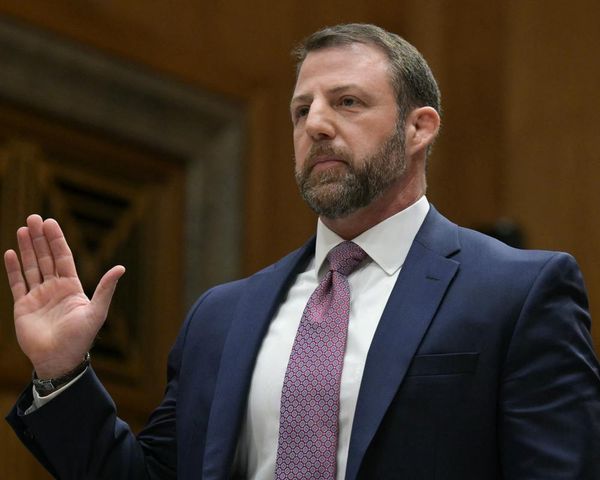
David Davis's Brexit speech and Q&A - Summary
Here are the main points from David Davis’s speech and Q&A.
- Davis said that Brexit would make British citizens less safe if the EU refuses to offer a security agreement that matches what is in place now. This was implicit in the speech, but Davis was explicit in the Q&A. Asked if the British citizens would be less safe outside the EU than they are now if the EU refused to relax its opposition to the UK remaining a full security partner, he replied:
Well, the whole point of security policy is to make citizens of both our country and the 27 other member states safer. So clearly if we don’t have a security policy, they will less safe now than they otherwise would be. The aim, remember, is to save lives, to maintain peace, to maintain security.
And in his speech he said all EU citizens, not just British ones, could be at risk without a deal on security on the UK’s terms. He said:
The first duty of government is to keep its citizens safe.
And it’s in the pursuit of that safety that Britain made an unconditional offer to the European Union.
Any move by others to place conditions on our offer will only serve to put the safety of everybody’s citizens at risk.
Because when terrorists set off bombs or fire guns — be in it on the streets of Paris, or London, or Manchester or Brussels — they don’t check the passports of their victims first.
- He accused the EU of putting ‘legal precedents’ ahead of international security. (See 4.30pm.)
- He said the claim that the UK does not know what it wants from Brexit is a “myth”. Referring to the white paper on Brexit that appears to have been delayed, he said:
[The white paper] will tackle, once and for all, this heavily propagated myth that the UK doesn’t know what it wants.
By building on the prime minister’s speeches, our existing White Papers, our 17 summer papers and countless presentations made directly to the EU about the partnership we want.
- He effectively confirmed reports that he and Theresa May disagree over when the white paper should be published. On Sunday the Sunday Times (paywall) claimed that Davis wanted it published by June 14, but that May wants to wait until after the EU summit at the end of the month. This claim has been repeated, including in a story in today’s Sun saying Davis is “furious” that the white paper is being rewritten for a fifth time. Asked about these reports, Davis said in his Q&A that there were a lot of stories doing the rounds. He went on:
My general response to this is, in debates in Whitehall between fast and slow, I normally vote for fast. That’s probably a given.
But what [Theresa May] said today is exactly right; the white paper will be published when it’s ready, it’s up to quality, and it’s exactly what we need to say in the public domain.
- He claimed that the delay in publication in the white paper “will not delay the progress of negotiations.”
- He said the Brexit talks could collapse by accident. (See 4.34pm.)
- He said the cabinet has not yet agreed what the government’s backstop proposal will be. (See 2.11pm.) Asked about this in the Q&A, he said:
The detail of this is being discussed at the moment. It has been through one cabinet committee, it is going to another one, and it would be improper of me to pre-empt the negotiation there. But I suspect it will be fairly decisive.
He refused to confirm that the backstop plan would definitely be published tomorrow. Asked about this, he said it would depend on whether the cabinet committee reached a conclusion. According to the BBC’s Laura Kuenssberg, this contradicts Number 10 claims that the matter is settled. (See 4.47pm.)
- He claimed that the backstop would contain a time limit. When asked about reports that it will contain “a time limit not limited by time”, he replied:
I think the prime minister has already made public the fact that we expect to put a time limit on the backstop proposal.
- He played down, but did not deny, suggestions he could resign over the backstop issue. When asked about his future in his job, he said: “That’s a question I think for the prime minister.”
- He dismissed reports that the Dutch government is warning manufacturers not to rely on British parts as a response to EU contingency planning. Asked about this in the Q&A, he said:
Contingency planning always looks a bit bleak, particularly because we don’t intend to arrive at that contingency.
- He said the UK was not expecting to settle the Irish border issue in the Brexit talks until October. Some, including the Irish government, want to see substantial progress on this by the June EU summit.
That’s all from me for today.
Thanks for the comments.

Updated
This is from HuffPost’s Owen Bennett.
Break: EU Withdrawal Bill will now be debated over two days - Tuesday and Wednesday - but still only 12 hours set aside, Tory chief whip Julian Smith has told Tory MPS
— Owen Bennett (@owenjbennett) June 6, 2018
British officials have continued to turn a blind eye to a massive customs scam that has allowed criminal gangs to flood European markets with cheap clothes and shoes, the EU’s anti-fraud office has said.
Outlining its annual report , the European anti-fraud office, known by its French acronym Olaf, said that the “scarily” simple customs fraud was probably continuing on the same scale, although the problem had partly shifted from the UK to Hungary and Greece.
The commission announced in March it was starting legal action against the UK for €2.7bn (£2.4bn) it said had been lost to the EU budget.
While the issue is unrelated to Brexit, it helps explain why member states are so hostile to Theresa May’s preferred option for solving the Irish border conundrum, an unprecedented “customs partnership” that would see the UK taking charge of collecting EU customs revenues.
The EU investigators’ announcement that the fraud has continued is likely to deepen distrust. The initial investigation, uncovered a €1.98bn loss to the EU budget between 2013-16, as well as a €3.2bn loss in VAT revenues to France, Germany, Spain and Italy - the EU’s largest states that will have a crucial final say on post-Brexit customs arrangements.
Todaay Olaf said that fraud had continued in 2017, although the tonnage of undervalued clothes and shoes entering the UK had fallen by 15% on the previous year, with an increase in Hungary and Greece.
Ernesto Bianchi, a director of investigations at Olaf, said the simplicity of the fraud was “scary”, explaining that the fraudsters under-declared the value of of low-cost, everyday goods, such as t-shirts and jeans.
Olaf’s report concluded that fraudsters usually brought their goods in to Hamburg, but drove them in lorries to other EU ports where they thought they could get away with under-declaring the value.
The British government has said it does not recognise the figures and citied HMRC’s “excellent record in tackling fraud and rule-breaking of all kinds”.
Here is some comment on what Davis said in his Q&A.
David Davis says backstop proposal is still subject to discussions by Cabinet committee - that is NOT a number ten position - they believe it can be published before cttee meets
— Laura Kuenssberg (@bbclaurak) June 6, 2018
Blimey. @DavidDavisMP doing nothing to hose down reports that senior ministers totally split on Ireland backstop. Says will be published tomorrow if there is agreement!
— Robert Peston (@Peston) June 6, 2018
Davis says the whole point of a security agreement is to keep people safe. If there is no agreement on security, the public will be less safe than otherwise, he says.
And that’s it. The Q&A is over.
I will post a summary shorty.
Q: When will we see the white paper?
Davis says the negotiations are under way.
He says in Whitehall debates, given a choice between fast and slow, he normally opts for fast.
But the PM was right to say that the white paper will be published when it is ready.
Q: If Tory MPs vote for the Lords amendments on the EU withdrawal bill, can they stay in the party.
That is one for the chief whip, he says.
Davis says he is not expecting to settle the Northern Ireland issue until October.
A cabinet committee is looking at the backstop plan. If that reaches a conclusion, the document will be seen tomorrow.
Davis's Q&A
Q: Have you signed off on the backstop plan being published tomorrow. And if you are unhappy about it, can you stay in your job?
Davis says it has been to one cabinet committee and is going to another one. It is up to the PM what happens to him.
Q: Is it true the backstop will have a time limit not limited by time?
Davis says the PM has already said it will be time limited.
Q: What is your reaction to the Dutch government’s warning to manufacturers not to rely on British parts?
Davis says the Dutch warnings were part of contingency planning.
Davis says Brexit talks could collapse by accident
Davis says is is optimistic about Brexit.
When I look at the relationship between the UK and the twenty seven remaining members of the EU, there are reasons to be optimistic.
And I make no apologies for being so.
Our interests are so aligned that the only threats come not from deliberate action, but from what we fail to do.
But he says the Brexit talks could fail by accident.
The primary risk in these negotiations is now one of accident.
That due to a lack of ambition — by resting on third country precedents — we miscalculate somehow.
And the cost of that miscalculation is a deal that is unacceptable to both sides.
That lets down the citizens we are so keen to protect.
Now is the time to redouble our efforts, and open our minds once again.
To build an enduring new partnership between the closest of friends and allies.
Updated
Davis says the UK wants Brexit to be “as smooth and orderly as possible”.
He goes on:
We have chosen right from the beginning to recognise the specific responsibilities that lie with us, as the party choosing to leave.
And that is why we are putting forward practical solutions to the obstacles that might otherwise undermine the long-lasting, deep and special partnership we want with the EU.
One that respects the institutional architecture of the European Union, and the constitutional and economic integrity of the United Kingdom.
Davis accuses EU of putting 'legal precedents' ahead of international security
Here is the key quote so far.
It’s sometimes said that the limits of our cooperation have been set by the United Kingdom.
That on leaving the European Union — and not being under the jurisdiction of the ECJ — there will be an automatic drop in security cooperation.
That we are the only one with a choice.
I don’t agree.
The European Union does have choices.
And when I see the positions proposed by the Commission, I see choices being taken there.
Ones which lean towards the protection of legal precedents, above operational capability.
Davis says the UK wants a comprehensive, deep partnership with the EU on a whole range of matters relating to security.
He says the UK has always seen the EU differently. That is why people voted to leave, but confident in the knowledge that they would be able to carry on cooperating afterwards.
This is from ITV’s Robert Peston.
.@DavidDavisMP says UK’s offer of security cooperation is now unconditional. Not what PM signaled in months after Brexit vote - when she seemed to want better trading terms as condition of helping to keep Europe safe. French truculence seems to have made us supplicants (again)
— Robert Peston (@Peston) June 6, 2018
Davis is now speaking about Galileo.
The UK has been instrumental in its design.
But now the EU is claiming that UK involvement, as a third country, would put the scheme at risk - even though shutting out the UK could delay the project by three years, he says.
He says this amounts to shooting oneself if the foot just to prove the gun works.
He says relying on “dogmatic precedents” does not help anyone.
The UK is proposing a collaborative approach, he says.
Europe’s security is the UK’ security, he says.
Davis says ‘uk has avoided tit for tat briefings’ from the negotiations - a cynic might say they have been busy enough briefing against each other
— Laura Kuenssberg (@bbclaurak) June 6, 2018
Davis accuses EU of putting its institutional interests ahead of international security
Davis says the UK and the EU must act quickly to avoid there being a gap in operational capability after Brexit.
The UK has offered to maintain current levels of cooperation.
But if that is not accepted, safety will be put at risk.
He says the UK made a choice; it would not do anything to undermine European security, he says.
He says the UK has put forward serious options for the future security partnership.
He says it is sometimes said there will be an automatic drop in security cooperation after Brexit. He does not accept that, he says. He says the EU has chosen to prioritise legal integrity over the benefits of cooperation.
- Davis accuses EU of putting its institutional interests ahead of international security.
Davis calls for relationship of trust between UK and EU after Brexit
David Davis is speaking now.
He says he wants to concentrate on one aspect of the new partnership the UK wants with the EU after Brexit - that is, the need for the partnership to stand the test of time.
That is why they UK has avoided briefing against the EU, he says. It wants to ensure the two sides can have a relationship of trust after Brexit.
He says the new relationship should not ignore the decades of trust and collaboration that has existed for years.
Cooperation has kept the peace and kept people secure.
He says the UK does not need to be in the EU for that cooperation to continue.
But it does need trust, he says.
Anyone who doubts that does not know their British history, he says.
- Davis says there must be a relationship of trust between UK and EU after Brexit. He seems to be implying that the EU is acting in a way that damages that trust.
These are from the Times’ Sam Coates.
The sea-saw soundtrack of my life: some in gvt saying DD thinking of resigning; others saying not. He’s up at a public event at 4pm
— Sam Coates Times (@SamCoatesTimes) June 6, 2018
Temperatures rising outside the venue for David Davis event: tho Gary Gibbon has brought his coat just in case pic.twitter.com/Q7Zl7bALC2
— Sam Coates Times (@SamCoatesTimes) June 6, 2018
David Davis is doing his public event at Rusi: where Theresa May launched her leadership campaign just as Michael Gove was stabbing Boris Johnson in the front.
— Sam Coates Times (@SamCoatesTimes) June 6, 2018
A perfect backdrop
These are from the BBC’s Laura Kuenssberg.
It is absolutely boiling in RUSI library where Davis about to speak, where May launched her leadership campaign
— Laura Kuenssberg (@bbclaurak) June 6, 2018
One of those days in SW1 where it feels like everything could suddenly and v quickly get v v messy + dramatic, or by this time tmrw the fever will have passed and we’ll wonder what the fuss was about
— Laura Kuenssberg (@bbclaurak) June 6, 2018
And this is from my colleague Pippa Crerar.
Overheard in the RUSI library where David Davis is about to make a speech on post-Brexit security: “Duke of Wellington, have you met the Portuguese ambassador?” #otherworld
— Pippa Crerar (@PippaCrerar) June 6, 2018
David Davis delivers speech on Brexit and security
David Davis, the Brexit secretary, is about to give his speech on Brexit and security.
There is a live feed here.
Updated
Bruce asks Javid what he thinks of these stories.
Javid starts by quoting the note Paulette Wilson wrote on a paper on one of her files: “Please help me, this is my home.”
He says he can look at this with “a new set of eyes” as someone new to the job. He goes on:
Obviously something massively went wrong.
He says the system put the entire burden of proof on the individual.
And it is not set up for those with deemed leave to be in the country, he says.
No one with deemed leave would have had a reason to keep documentation proving they had the right to be here, he says.
He says the Home Office is doing a full “lessons learnt” review.
He says there are now more than 150 people in various locations working to help people from the Windrush generation.
And a “Windrush scheme” has been set up, he says. That means individuals just have to fill in one form. Previously people had to use a specific application, depending on what route they were using to get approval to remain in the UK. They might have applied via the wrong route, he says. Now they will just use the one form, and a case worker will then decide what procedure applies best, he says.
Fiona Bruce asks about Paulette Wilson. Wilson came to the UK as a 10-year-old. She spent some time in a children’ s home. There were 35 years of national insurance records. And medical records too. Yet she was detained. Why?
Williams says Wilson first applied to the Home Office in 2003.
He says the Home Office took the view that she was not entitled to be in the UK. That was wrong, he says. She was entitled to be here because of the 1971 Immigration Act.
He says, because Wilson did not apply on a NTL (no time limit) form, the Home Office did not get to see all the evidence she had to back up her case. That is where it went wrong. She must have felt she was being asked to comply with legalistic and bureaucratic requirements.
Here is the story my colleague Amelia Gentelman wrote about Wilson in November last year.
Turning away from the committee hearing for a moment, this is from the BBC’s Laura Kuenssberg.
Govt to publish backstop paper tomorrow morning- before Brexit committee
— Laura Kuenssberg (@bbclaurak) June 6, 2018
Glyn Williams, a Home Office director general, is answering questions alongside Javid. He says he is charge of immigration policy, and is coordinating the response to “the Windrush scandal” (his phrase, not mine.)
Williams says he only saw the Bryan case file yesterday.
Bryan applied for the right to remain. Williams says officials took the view that he had not proved that he had been in the country for 20 years to their satisfaction.
The Conservative MP Fiona Bruce asks about Anthony Bryan. With all the information available to the Home Office about how long he had been in the country, how did he end up being detained?
My colleague Amelia Gentleman told Bryan’s story in this article published in December.
Harriet Harman, the Labour MP who chairs the committee, starts by saying the committee takes the view that the right not to be detained without cause is a very important one.
She also thanks Sajid Javid for releasing to the committee the case files belonging to Anthony Bryan and Paulette Wilson, two members of the Windrush generation who were wrongly detained.
Javid says he was “appalled” by what happened to these two. He repeats the point he made when he was appointed home secretary - that as the son of migrants he feels strongly about what happened to the Windrush migrants, because the same thing could have happened to members of his family.
According to the committee, these are some of the issues they want to ask about.
How is the Government protecting fundamental human rights, including the right to liberty and security, within the UK’s immigration detention system?
Are current processes and legal and policy safeguards sufficient in preventing people being wrongfully detained?
Whether detainees have easy access to legal advice: are they able to challenge their detention “speedily,” as required by Article 5 (4) of the ECHR?
Sajid Javid gives evidence to human rights committee on Windrush
Sajid Javid, the home secretary, is about to give evidence to the joint committee on human rights about the Windrush-era migrants.
You can watch it here.
Scottish government accuses May of creating 'very dangerous' situation for devolution with Brexit bill
The Scottish government has said that the UK government will put the devolution settlement in a “very difficult and very dangerous” situation if it does not withdraw the part of the EU withdrawal bill affecting powers devolved to the Scottish parliament. Speaking at Holyrood’s rural environment and connectivity committee, Mike Russell, the Scottish government’s Brexit minister, said:
The constitutional position is very clear. If the Scottish parliament resolves not to grant an LCM [legislative consent motion] which has been requested, then the UK government must withdraw the part of the bill for which it has requested it.
I would expect and hope that the UK government will now withdraw clause 11 from the bill as they are required to by the constitutional settlement under which we live.
If they refuse to do so, then we are going into very difficult and very dangerous times.
Russell has also made the same point in an open letter to David Lidington, the Cabinet Office minister. Pointing out that the Scottish parliament has refused to give the EU withdrawal bill legislative consent, Russell said:
The UK government must now explain how - not if - it proposes to reflect the views of the Scottish parliament.
If no alternative approach is proposed by the UK government to respond to the Scottish parliament’s views, the correct constitutional position is for the UK government to remove clause 15 (formerly 11) as it relates to Scotland from the bill ...
A failure on the UK government’s part to act in line with the refusal of the Scottish parliament to consent to the bill would wilfully undermine the devolution settlement and the confidence of the Scottish parliament in the UK government’s respect for devolution.
The Commons culture committee is taking evidence this afternoon, for the second time, from Alexander Nix, the former head of Cambridge Analytica. Members of the committee suspect he did not tell them the truth about the company’s use of Facebook data when he appeared in March. My colleague Alex Hern is covering the hearing on a separate live blog here.
On the World at One John Neill, chief executive officer of Unipart, which supplies car manufacturers with components and spare parts, was asked about the possibility that European manufacturers may stop using British parts after Brexit. (See 2.48pm.) He confirmed this was a problem.
The reality is if we can’t count European parts as local content then it is going to be very difficult for our car manufacturers to export to these markets where we already have free trade deals ...
Discussions are being held continuously by the big global component manufacturers who are worried about investing in the UK because they feel there is so much uncertainty ...
Self-evidently, if we can’t take advantage of the free trade deals we already have as part of a customs union and the EU and we can’t be competitive, the inevitable consequence is that less vehicles get sold and lots of jobs disappear.
Theresa May has been meeting her Israeli counterpart, Benjamin Netanyahu, in Downing Street.

And pro-Palestinian campaigners have been protesting against Netanyahu outside.

Downing Street said that the government’s proposals for a “backstop” solution for the Irish border (see 2.11pm) would be published “shortly”. As the Press Association reports, Theresa May’s official spokesman confirmed that the proposal would include a time limit on any interim arrangement to keep the border open in the absence of a more permanent solution, but declined to give further details. He stressed that the government does not believe that the backstop option will have to be put into effect, as ministers think that a better customs arrangement can be agreed before the UK’s withdrawal from the EU.
The government has said it is treating a warning by the Dutch government to its country’s manufacturers to avoid British components as an “extremely high priority”, the Press Association reports. The Dutch are reported to have told their businesses they risk losing free trade access to the EU after Brexit if they source too many parts from the UK. Under EU “rules of origin”, at least 55% of a products components must come from within the EU if it is to qualify for free trade access.
Speaking on the World at One, Treasury minister Mel Stride said the issue had been raised at the highest levels of government and that they were “confident” of resolving the issue as part of the ongoing Brexit negotiations. He said:
We’ve certainly had in-depth conversations with a number of businesses around this issue of rules of origin. This is very high on our agenda.
It is an extremely high priority. It is one that I, the chancellor, the prime minister and others are very much engaged with.
Stride said that ministers had until the end of the transition period in December to “bottom out” the issues.
But Barry Gardiner, the shadow international trade secretary, told the same programme that British firms were being affected now. He said:
This is happening now. Companies are going to - on the advice of the Dutch government - stop using UK parts in their manufacture. That is a problem for our country and a problem for our manufacturers. The government don’t have a plan to deal with this.
The BBC’s Laura Kuenssberg has written a good blog about the paper circulating within government with details (or otherwise - see below) of the government’s new proposal for Brexit backstop. In Brexitology, the “backstop” is the plan to ensure no hard border in Ireland if the government’s preferred ways of achieving this (a trade deal, or a clever technological wheeze) don’t work.
May promised this at her press conference in Macedonia last month.
Here is an extract from Kuenssberg’s blog.
Sources who have seen the four page document tell me that it is “anodyne”, that it is like Hotel California, where the UK checks out and never leaves - essentially, it’s not up to snuff.
The specific objections are that while the document says that there should be a time limit on closer ties to the EU, it doesn’t say either what that time limit should be, or whose decisions it will be to say when time is up.
The document merely says that the backstop will “only be in place until the future customs arrangement can be introduced”.
For Brexiteers, the lack of a firm deadline is hard to swallow. Secondly, there is what has, guess what, been described as a fudge on the European court.
Gary Gibbon, the Channel 4 News political editor, has more details in his own blog about the story. Here’s an extract.
David Davis is believed to be very angry that the document implies Britain could be, post transition, in a purgatory of perpetual rule-taking with no time limit on the post-transition state (which under itself looks a lot like the transition).
This is technically all about the “backstop” position that the UK is advancing to replace the one the Irish put in to guarantee no hard border in Northern Ireland in the event of no other agreed way forward. But it has a significance way beyond any “safety net” plan because everyone thinks the safety net being worked on is the government policy.
Updated
Jeremy Corbyn’s spokesman has signalled that Labour will vote against the third runway at Heathrow, the FT’s Jim Pickard reports.
Corbyn's spokesman has confirmed that Labour leadership believes Heathrow plan doesn't pass his "four tests" and will therefore probably vote against it - meaning May will need SNP and Labour rebels to get it through.
— Jim Pickard (@PickardJE) June 6, 2018
'We're leaving EU', says Corbyn when asked about second referendum
At PMQs Theresa May did not get an answer when she asked Jeremy Corbyn about Labour’s policy on a second Brexit referendum. But Corbyn has given an interview to the Greek paper Ta Nea (the leading centre-left daily - the Greek version of the Guardian, in other words) and in that he did address the question.
Asked if there should be a second referendum given growing assertions that voters had changed their minds about Brexit, the Labour leader said:
Labour respects the result of the referendum, we are leaving the European Union.
In the interview, published at the weekend, Corbyn was also asked whether Labour would back the idea of a ‘soft Brexit. He said Labour’s main concern was the protection of jobs and workers’ rights.
What we are doing is fighting for a Brexit deal that protects jobs, our economy and rights for workers, consumers and our environment.
Brexit negotiations are being watched closely in Greece, which only narrowly escaped euro ejection at the height of the country’s debt crisis in 2015.
PMQs - Verdict from the Twitter commentariat
This is what political journalists and commentators are saying about PMQs on Twitter.
They are unanimous; it was a Corbyn win, with some people saying it was one of his bst PMQs ever.
From the New Statesman’s George Eaton
My #PMQs review: Jeremy Corbyn deftly exposes Theresa May's Brexit paralysis. https://t.co/ZOrTle4eNA
— George Eaton (@georgeeaton) June 6, 2018
From the Daily Mirror’s Jason Beattie
My snap verdict on #PMQs
— Jason Beattie (@JBeattieMirror) June 6, 2018
Jeremy Corbyn delivers a Brexit bashing to a leaden Theresa Mayhttps://t.co/a2VgSg66IZ pic.twitter.com/kgYLdUaJ6i
From the BBC’s Vicki Young
Labour may be split on #Brexit but Corbyn is right - the Prime Minister is leading UK negotiations and at the moment she can’t answer many of his questions #pmqs
— Vicki Young (@BBCVickiYoung) June 6, 2018
From the Guardian’s Heather Stewart
Another grim #PMQs for Theresa May: she looks tired and tetchy; *still* has no answer to the straightforward question of what
— Heather Stewart (@GuardianHeather) June 6, 2018
cabinet's position is on customs (because they can't agree one).
From the Sun’s Tom Newton Dunn
Corbyn’s best #PMQs in months, May’s worst. His questions were precision targeted, and he followed them up. Her answers were vague, and she sounded rattled. https://t.co/x2yNQ8uReO
— Tom Newton Dunn (@tnewtondunn) June 6, 2018
From Sky’s Adam Boulton
COMMENT JC getting better at #PMQs than TM. TM playing hard to the Brexiteer gallery. Is that the right tactic ahead of next week's votes?
— Adam Boulton (@adamboultonSKY) June 6, 2018
From the Guardian’s Peter Walker
That #PMQs really showed how Corbyn can profit by focusing narrowly on government's disarray over Brexit. Dreadful performance by PM, worst I can recall. Barely even attempted to answer most questions.
— Peter Walker (@peterwalker99) June 6, 2018
From the Times’ Patrick Kidd
Corbyn’s having a rather good time of it in PMQs. Third time in a row that he’s won when going on Brexit, purely by pointing out government dithering
— Patrick Kidd (@patrick_kidd) June 6, 2018
From the Spectator’s James Forsyth
This is one of Corbyn’s better PMWd performance: short, pithy questions that are pushing Theresa May back in her crease
— James Forsyth (@JGForsyth) June 6, 2018
From the Guardian’s Gaby Hinsliff
Corbyn is basically wiping the floor with May at #PMQs despite Labour's position on Brexit being currently a puzzle even to much of the Labour party
— Gaby Hinsliff (@gabyhinsliff) June 6, 2018
From HuffPost’s Owen Bennett
Theresa May is floundering. Can't answer when the Brexit white paper will come forward, when the future customs plan will be agreed. All she can do is ask if Corbyn backs a second referendum #pmqs
— Owen Bennett (@owenjbennett) June 6, 2018
From the Sun’s Steve Hawkes
Jeremy Corbyn won that PMQs by a country mile
— steve hawkes (@steve_hawkes) June 6, 2018
From the Guardian’s Jessica Elgot
That #pmqs was far too easy for Corbyn. Just stand there and ask a question about when the white paper is coming. And sit back...
— Jessica Elgot (@jessicaelgot) June 6, 2018
From the Daily Mirror’s Kevin Maguire
Corbyn usually wins #PMQs these days and just wiped the floor with May over Brexit despite Labour's own confusion/splits. He's got the hang of opposition. Goal is to gain power
— Kevin Maguire (@Kevin_Maguire) June 6, 2018
From Guido Fawkes’ Ross Kempsell
All things considered - given the background in govt and on backbenches - that might be come to be seen as one of Corbyn's best ever #PMQs performances.
— Ross Kempsell (@rosskempsell) June 6, 2018
From Sky’s Lewis Goodall
Corbyn often going on Brexit at #PMQs these days. Labour thinks it's easier than it once was because they can attack govt on Brexit execution. 12 months ago public weren't convinced that govt's handling was incompetent, with time running out, Lab now thinks that's changing.
— Lewis Goodall (@lewis_goodall) June 6, 2018
Hugh Bennett, deputy editor of the pro-Brexit BrexitCentral website, says even Brexiters will have to admit that Jeremy Corbyn had a point at PMQs.
Many Brexit-supporting MPs will have found themselves in uncomfortable agreement with Corbyn's Brexit questions at #PMQs today. When is the white paper going to be published? When is the government going to make a decision on customs? Will the transition end on time in 2020?
— Hugh Bennett (@HughRBennett) June 6, 2018
May refuses to say when government's Brexit white paper will be published
Here is the Press Association story about the May/Corbyn exchanges at PMQs.
Jeremy Corbyn warned Theresa May’s Brexit strategy is more chaotic than the rail timetable after he was pressed to rule out a second referendum.
The Labour leader likened the government’s European Union withdrawal approach to Northern trains, telling MPs the Prime Minister has “delivered more delays and more cancellations” than the franchise.
He also claimed government “incompetence” threatens businesses and jobs as he sought to exploit Tory divisions over Brexit, against a backdrop of splits in his own party.
May simply replied “yes” when asked if she remains committed to leading the UK out of the EU by March 2019 and completing the transition period by December 2020.
Speaking at PMQs she declined to be drawn on when the government would publish its detailed post-Brexit vision in a white paper, but pressed Corbyn on whether he wants a second referendum.
May also accused Labour of trying to “frustrate the Brexit process at every stage”.
Corbyn said: “When it comes to Brexit, this government has delivered more delays and more cancellations than Northern rail.
“The government’s white paper is delayed, its customs proposals have been cancelled and it has ripped up its own timetable - just like our shambolic privatised railways. This government’s incompetence threatens our economy, businesses, jobs and our communities.
“So, my question to the prime minister is this: which will last longer, the Northern rail franchise or her premiership?”
May replied: “Labour voted for a referendum, they voted to trigger article 50 and since then they have tried to frustrate the Brexit process at every stage.”
She added: “Today we saw again they’re refusing to rule out a second referendum.
“The British people voted to leave the European Union and it is this government that is delivering on the vote of the British people.”
MPs to debate motion tomorrow saying Vote Leave's Dominic Cummings should give evidence to culture committee
In the Commons John Bercow, the speaker, says he is going to allow Damian Collins, the chair of the Commons culture committee, to table a motion saying Dominic Cummings, the former Vote Leave campaign director, should give evidence to the committee. It will be debated tomorrow.
Collins is doing this not because he thinks Cummings will comply - Cummings has repeatedly said he won’t turn up - but because this is a precondition for the Commons being able to subsequently declare Cummings in contempt of parliament.
(One of the delicious ironies of this, of course, is that part of the Vote Leave pitch was that they wanted the UK to leave the EU so that they could restore the authority of parliament!)
Ian Blackford, the SNP leader at Westminster, used his two questions at PMQs to ask about Brexit. Here is how PoliticsHome wrote it up.
SNP Westminster leader Ian Blackford launches an attack over reports the government is contingency planning for a no-Brexit deal that could hit medicines and food imports.
The PM insists the government has set out its plans for a trade deal and launches a mini-blow on the SNP over its hopes for independence.
Blackford says jobs, the Irish border and the economy are afterthoughts in the Brexit negotiations. He calls on May to back the EEA amendment to the EU Withdrawal Bill.
The PM insists jobs, the Irish border and the economy are at the forefront of her concerns.
Sandy Martin, the Labour MP, asks about the murder of a teenager in his constituency, Ipswich.
May says she wants to see every effort being taken to address serious violence like this. She says a Home Office minister will meet Martin to discuss this.
Labour’s Laura Pidcock says the schools funding formula discriminates against smaller, rural schools. Sixth forms will collapse under the current funding situation. Will May intervene to help sixth forms?
May recalls that she was once a candidate in the seat Pidcock represents (North West Durham) and remembers the school she mentioned. She says the school in question was losing numbers.
Andrea Jenkyns, a Conservative, says May should reiterate that no deal is better than a bad deal in the Brexit talks.
May says she has always said that. She says she wants to get a good deal. But the government is preparing for all contingencies, including the possibility of a no deal.
Labour’s Jim Cunningham says the government has cut money from education. What will May do about that?
May says she does not recognise Cunningham’s description. More money is being made available for schools.
Liz Saville Roberts, the Plaid Cymru MP, says families are already £900 a year worse off because of Brexit. How much poorer will families get as the government and the opposition engage in fantasy politics?
May says Saville Roberts should speak to the people of Wales, who voted to leave the EU.
May agrees to sponsor a pigeon in the Commons/Lords pigeon race next week. She says it is raising money for a good cause - Combat Stress.
Labour’s Christian Matheson asks if the hostile environment immigration policy has been a success or a failure.
May says the government has taken action against people who are here illegally. She says some Labour figures have not been able to say that they would do the same.
Mark Francois, a Conservative, says there is growing concern about servicemen being scapegoated over historic offences. Will May consider the case for a statute of limitations?
May says we don’t just call our servicemen and women heroes. They are heroes. She says the government doesn’t want to see them being the sole subject of investigations, as is happening now. She wants terrorists to be investigated now. That is why the government has a consultation on legacy issues in Northern Ireland. These offences should be investigated in a proportionate way.
Labour’s Jo Platt asks about what is being done for people with ADHD (attention deficit hyperactivity disorder).
May says this is an important issue. On the issue of data, she says the government is looking at what can be done to improve the data about people with this condition.
Theresa Villiers, a Conservative, asks May to do everything she can to ensure that Network Rail and the rail companies “get a grip” to sort out the timetable problem.
May says the transport department is doing this.
Labour’s Thelma Walker asks if May will celebrate the anniversary of the election. She says the social mobility commission resigned because of lack of confidence in the government. Does the fact that key roles were unfilled show how little support there is in government for social mobility?
May says she congratulates everyone who won a seat in the election last year. The government does take social mobility seriously, she says.
Adam Afriye, a Conservative, thanks May for meeting the war horse memorial group. Does May agree support for animals that serve in war can unite people in the Commonwealth?
May says a model of the new memorial is in Downing Street.
Henry Smith, a Conservative, says his constituents want to see trains arrive without delay and Brexit arrive without delay.
The SNP’s Martyn Day asks about the Grangemouth renewable energy project.
May says the Scottish secretary will discuss that with him.
PMQs - Snap verdict
PMQs - Snap verdict: It is hard to believe now that May called a general election last year because she thought her stance on Brexit would help her win a thumping victory over Jeremy Corbyn and Labour. What was supposedly a key May issue has now turned toxic, to the extent that Corbyn has yet again notched up a solid PMQs win on the topic, seemingly quite effortlessly. He did so by the simple expedient of asking when the government’s Brexit white paper will be published. May was able to give a clear, straight answer to Corbyn’s question about the end of the transition (although it probably won’t turn out to be an accurate answer - many people think there will eventually be a post-transition transition), and she could probably have answered the 10-mile buffer zone question (sources says it’s a non-starter). But she was flailing on the white paper, and it matters because her failure to say when it will be published illustrates the government’s inability to answer crucial questions about its negotiating stance. May fought back by challenging Corbyn to rule out a second Brexit referendum, and by taunting him over what Keir Starmer said about Labour party divisions. But today these felt like second-order and largely irrelevant issues, and she could not disguise the fact that Corbyn’s criticisms were spot-on.
Corbyn says May has given no answer on the white paper and no answer on the buffer zone. But that plan has united people in Ireland. They say it is bonkers.
Is it her plan to complete the transition by December 2020.
Yes, says May.
Corbyn says Damian Green, the former first secretary of state, said there would be a transition after the transition. He says the government has delivered more delays and cancellations on Brexit than Northern Rail. He says the government’s incompetence threatens communities. What will last longer - the Northern Rail franchise or her premiership?
May says if Corbyn won’t speak about his Brexit policy, she will. Keir Starmer said Labour was not united on this. She says Labour has sought to frustrate Brexit on every stage. Labour are refusing to deliver Brexit. This government is delivering on it, she says.
Corbyn says the last time he looked it said prime minister’s questions. He says the government said this white paper would set out the government’s vision. Yet it is nowhere to be seen.
He asks which of the sub committees looking at the “max fac” and custom parternships plans have met, and when people will find out what they have decided.
May says she did not ask a question. She just challenged him to stand up and say what Labour policy is on a second referendum. She urges him to rule it out.
Corbyn says it is not the opposition that is conducting the negotiation. And it is not the government doing it either. He asks if a 10-mile buffer zone in Northern Ireland is now government policy.
May says the government wants to ensure there is no hard border between Britain and Northern Ireland. It continues to negotiate with the EU. She says the debate next week is important. It will show the sincerity of this House on leaving the EU.
Updated
Jeremy Corbyn says, like May, he attended the London Bridge service. He thanks the emergency services too, and he says he said so in person to the fire brigades union yesterday.
He asks if the government’s Brexit white paper will be published before the debate next week.
May says the government wants to publish a white paper, going beyond speeches and papers published so far. It will go into more detail. When it is published, the government will be able to negotiate on that on the basis that it’s an ambitious offer.
Corbyn says his question was simple; when will it be published? Next week we will debate the most important legislation for a long time. He asks if the white paper will be published ahead of the June EU summit.
May says next week’s votes will be important. They will be about implementing Brexit. She says, if Corbyn talks about clarity, he should stand up and rule out a second referendum.
Alex Chalk, a Conservative, says the number of children growing up in workless households has fallen to a record low.
May says children should be able to go as far as their talents will take them. If you want to lift children out of poverty, getting parents into work is the most important thing you can do.
Theresa May starts by talking about the anniversary of the London Bridge terror attack, and she pays tribute to the “extraordinary bravery” that the emergency services and others showed that night.
This might come up. The tweet is from the pro-European Labour MP Chris Leslie.
Wow. A dozen Tory MPs who support #EEA Single Market have just tabled this pro EEA amendment to Trade Bill- they’re sending you a signal @jeremycorbyn @Keir_Starmer !!
— Chris Leslie (@ChrisLeslieMP) June 6, 2018
Are Labour frontbench really going to miss next week’s historic chance to defeat PM & prevent #Brexitausterity? pic.twitter.com/FiVyaC3AEr
This is from the Press Association’s Richard Wheeler.
Plenty of empty seats on both sides of the Commons chamber ahead of PMQs... late rush to fill the gaps?
— Richard Wheeler (@richard_kaputt) June 6, 2018
#PMQs coming up pic.twitter.com/vnB7gv9f4L
— John Rentoul (@JohnRentoul) June 6, 2018
PMQs
PMQs is starting soon.
In the light of the new rail timetable fiasco (there is a reason why “making the trains run on time” has survived as a baseline definition of government competence), you would think Jeremy Corbyn has an easy job.
But, as Ayesha Hazarika and Tom Hamilton point out in their very good new book about PMQs, Punch and Judy Politics (more on it here), expectations can be treacherous. They include this quote from David Cameron making that point. He told them:
My general rule [for PMQs] was that if you went in thinking you were going to do well you did badly, and if you went in thinking you would do badly you’d do well. And that’s partly expectations and partly how you respond. And I found that as leader of the opposition, if you thought, ‘Oh my God, today we are just going to nail this,’ that was always a disaster.
Updated
'Crony capitalists have rigged the system in their favour,' says Gove
It is common for politicians on the left to argue that capitalism isn’t working and that the system has been “rigged” against the interests of ordinary people. But that was also the argument at the heart of the speech that Michael Gove, the environment secretary, gave to the Policy Exchange thinktank this morning. Some paragraphs could have been written by Jeremy Corbyn. Gove said:
Economic power has been concentrated in the hands of a few and crony capitalists have rigged the system in their favour and against the rest of us. Over recent decades, debt has fuelled growth in an unsustainable fashion - indeed growth has been built not just on irresponsible levels of borrowing but an unsustainable approach towards natural resources.
Our politics, culture and regulatory models have worked against innovation, indeed have been pushed in that direction by powerful incumbents. Many of our fellow citizens, especially those without the qualifications and connections to work the existing system, have seen less and less value placed on their work and themselves ...
Since 2008, the outlook has grown darker for most. With productivity stalling, so unemployment has increased in many advanced economies, particularly among the young and those with fewer skills.
Wage growth has stagnated and expectations of future security have eroded as occupational pension schemes have been plundered or dissipated in value
These unfortunate trends have gone hand in hand with an increased concentration of wealth, and power, in the hands of the already wealthy and powerful.
It’s not just that members of the cognitive elite, the well-educated and well-connected, have the networks and mobility to insulate themselves from economic shocks, it’s also the case that deliberate policy decisions have rewarded those who’re already asset-rich.
But Gove was not arguing for the replacement of capitalism. Instead, he said the system had to be made to work for everyone.
It is imperative we address that failure honestly and unsparingly, determined to identify where, and how, we have gone wrong, because, unless we rescue and re-invigorate capitalism, then we will find the engine which has generated so much of mankind’s progress either stalls or moves into reverse.

These are from the Times’ Sam Coates.
There’s a developing Brexit situation
— Sam Coates Times (@SamCoatesTimes) June 6, 2018
Hard to gauge how serious, but it has potential
On Friday, Olly Robbins is due to discuss “backstop” proposal in Brussels. This needs to be signed off by Brexit “war cabinet” within hours.
Last night papers hadn’t gone round to S and N
A note has now gone round this morning
— Sam Coates Times (@SamCoatesTimes) June 6, 2018
It is a short outline of the “backstop” which - critically - fudges the two key elements, on ECJ and time limiting
& suggests it will be published tomorrow
Why does it matter?
— Sam Coates Times (@SamCoatesTimes) June 6, 2018
There’s big disagreement in the war cabinet over whether and how the time limit might work (ie whether it is legally enforceable in EU Withdrawal Treaty. Brexiteer fear it won’t be and the whole of the UK will be stuck in customs union/hi alignment forever)
I’m told the note to S and N fudges the “time limiting” issue
— Sam Coates Times (@SamCoatesTimes) June 6, 2018
I’m told the note say BOTH that it will be time limited AND that it will last until a new system is in place.
These two contradict one another, obviously.
Furthermore nothing, apparently, is said in the note whether time limit will be legally binding / for UK to unlaterally decide
— Sam Coates Times (@SamCoatesTimes) June 6, 2018
There’s a S and N cabinet subcommittee tomorrow - but potentially AFTER the proposal published.
Well that had been the plan....
Javid further distances himself from May's 'hostile environment' migration policy language
Sajid Javid appears keen to make his own mark on the Home Office, and particularly when it comes to tone and language over immigration.
In his first appearance as home secretary in the Commons he said he would not use the term “hostile environment” - a term used by Theresa May when she was home secretary (“the aim is to create ... a really hostile environment for illegal migration,” she told the Telegraph in 2012) but more recently dropped by the Home Office in place of the phrase “compliant environment”. Javid reiterated the point on the Andrew Marr show on Sunday.
But it seems he wants to go further. Late last night, in response to a query about a letter sent by 20 MPs seeking action over scheme by which landlords are obliged to check the immigration status of prospective tenants, the Home Office sent a reply which repudiated the hostile environment idea in particularly strong terms. It read:
The term ‘hostile environment’ as a description of Home Office immigration policy is incorrect, unhelpful and does not represent our values as a country.
Of course, critics will say it is easy to change language – and the rest of the statement defends the actual policy concerned. But as a change in tone it is striking.

Starmer says Labour would include free movement in talks with EU on single market access
Those Labour MPs who are opposed to staying fully in the single market after Brexit generally argue that this would not respect the result of the referendum, especially because being in the single market would mean the UK having to accept freedom of movement, and the government not being able to limit EU immigration.
In an interview with BBC News, Sir Keir Starmer said that freedom of movement was something that Labour would be willing to negotiate with the EU as part of its plan to maintain full access to the single market. He said:
Full access to the internal market means the benefits of the internal market, which has always been the Labour party position. Obviously that comes with obligations, and that’s why we’ve said it has to be underpinned by shared institutions and shared regulations.
Free movement will have to be negotiated. Obviously we will have to set out what it is that we seek to achieve. The EU is obviously looking at free movement itself and it will be part the negotiation.
Gordon Brown, the Labour former prime minister, gave a speech yesterday suggesting a series of measures that could be introduced to curb EU immigration which he said were compatible with EU freedom of movement rules.

The Norwegian prime minister Erna Solberg was also on the Today programme this morning. Norway is in the EEA (European Economic Area) but not in the EU. Solberg, like other members of the Norwegian political class, is in favour of joining the EU, but the country has voted against the idea twice in referendums.
She said that EEA membership was not ideal, because “the rules are still made in Brussels”, but she said that if a country had to be out of the EU, it was “difficult to find a better deal” than the EEA for businesses.

Here are two comments from journalist on Labour’s position.
This one, from my colleague Rafael Behr, has been retweeted by the Scottish first minister Nicola Sturgeon (who doesn’t say “retweets are not endorsements” on her Twitter page.)
Labour does not have a new position on Brexit, still less a plan. It has a new tortured verbal convolution to avoid having a position or a plan.
— Rafael Behr (@rafaelbehr) June 6, 2018
And this is from Sky’s Lewis Goodall, who has a more positive take on Labour’s tactics.
Corbyn/Starmer have moved to the Wilson/Cameron position: We can get what we have at the moment but at a lower cost. That worked for Wilson though ultimately not for Cameron. But even for him it worked for a while, up to and including an election. That's all Labour needs for now.
— Lewis Goodall (@lewis_goodall) June 6, 2018
Labour MP Wes Streeting suggests Starmer overstating Labour opposition to staying in EEA
The Labour MP Wes Streeting suggests Keir Starmer is overstating the Labour opposition to staying in the EEA.
If there are Labour MPs who would rebel against a whip in favour of the EEA, they should speak up and explain why. The numbers being floated are completely phoney. As it stands, I will vote for the Alli amendment come what may and hope our front bench do the same (10)
— Wes Streeting MP (@wesstreeting) June 6, 2018
Streeting has set out his arguments as to why Labour should back the EEA amendment in a Twitter thread starting here.
However worthy or well-intentioned the amendment put forward by @Keir_Starmer is, it has no chance of passing. Zero. None whatsoever. This is because potential Tory rebels are either concerned by its substance, or don’t want to be seen to be backing a JC amendment, or both. (1)
— Wes Streeting MP (@wesstreeting) June 6, 2018
But PoliticsHome’s Kevin Schofield quotes a Labour source backing Starmer’s analysis.
Labour source hits back at critics of leadership's anti-EEA stance: "There's been two discussions at the PLP on this in recent weeks and it was clear from the debate that a significant number would not support the EEA amendment."https://t.co/HJD6BDNSJS
— Kevin Schofield (@PolhomeEditor) June 6, 2018
Keir Starmer's Today interview on Labour's Brexit position - Summary
Here is a summary of the main points from Sir Keir Starmer’s Today interview.
- Starmer, the shadow Brexit secretary, said Labour would not be ordering its MPs to vote for the UK to stay in the EEA (European Economic Area) because the party was split on this issue. (See 9.12am.) This was one of the 15 amendments added to the EU withdrawal bill in the House of Lords as a result of government defeats. The government will seek to take out this amendment, and some or all of the other 15, when MPs debate the bill on Tuesday next week. Some Labour MPs want the party to vote for staying in the EEA, and believe that if Labour imposed a whip and if enough Tories rebelled, the government could lose. But Starmer said the parliamentary Labour party as a whole would not support the EEA amendment. Referring to the Labour MP Chuka Umunna, who has said the party should back it, Starmer said:
He knows, and others who are critical on this know, that this amendment does not command that support in their own party. I’ve been talking to colleagues for the last two or three weeks to gauge the views across our party. I wish I could report that we had complete unity on all amendments but we are not in that position.
[Umunna and others] know as well as I do that their own colleagues in the party are indicating they are not prepared to vote for this. The only way we can win a vote is if Labour is united and we all vote together in the same way at the same time. That’s how we can defeat the government ...
The pretence that somehow everybody in the Labour party is in the same place on this [the EEA amendment] and therefore it is winnable is a pretence. And it really doesn’t help.
- He said that Labour could achieve “a whole catalogue of victories” over the government in the debate on the EU withdrawal bill on Tuesday next week. The government was defeated on 15 votes (full list here) and will seek to overturn some or all of those defeats. Starmer suggested Labour would at least three of those votes.
The only way we can win a vote is if Labour is united and we all vote together in the same way at the same time. That’s how we can defeat the government .
I’m determined that we are going to do that on the customs union, on the meaningful vote, on the Northern Ireland no hard border amendments last week, and I hope that we can have a whole catalogue of victories against the government. I actually think the government is going to have to concede in the face of the challenge.
The customs union amendment only obliges the government to make a statement to parliament about the steps it has taken to keep the UK in the customs union (easy - “none”) and there is increasing speculation that the government will decide to accept this, on the grounds that it won’t change policy, rather than lose the vote. It could conceivably accept the Northern Ireland amendment too, which just says Brexit should not lead to a hard border with Ireland or undermine the Good Friday agreement, something the government says is policy already, although ministers fear having this written down could constrain their options. But the ‘meaningful vote’ amendment is genuinely significant; it would ensure that a vote against the withdrawal agreement in the autumn would not automatically lead to the UK leaving the EU with no deal.
- He said that his private talks with EU negotiators led him to believe that Brussels was willing to offer the UK a deal that would allow it keep many of the benefits of being in the single market without being in the EEA. When it was put to him that what Labour was proposing in its amendment amounted to “cakeism” (wanting to have one’s cake and eat it), he replied:
What the EU negotiators have said time and time again is, if the red lines change, the prime minister’s red lines, there’s a different negotiation to be had. In my discussions with them, obviously in confidence, and I’m not going to betray that confidence, it is clear that what they mean by that is that, if we signal that we want a close economic relationship with the EU going forward, there is a conversation and negotiation to be had and it will involve some of the tools in the Norway-style toolbox.
He also insisted that the ‘have cake and eat it’ criticism had been wrongly made of Labour policy before.
When I first announced that we should have transitional measures on the same terms as now, which I did last summer, everybody said that’s just ‘cake and eat it’. It is now accepted as the only sensible basis for transition. When we set out our position on the customs union three or four months ago, everyone said, ‘Well, that’s cake and eat it.’ Now the government knows that if that proposition is going to be put to a vote, it’s going to lose it. So we will take this a little bit with a pinch of salt.
Updated
Starmer says Labour won't back staying in EEA because party too divided
Last night the Labour party announced that it was tabling amendments to three pieces of Brexit legislation (the EU withdrawal bill, the trade bill and the so-called customs bill) saying the government should seek to get full access to the EU single market after Brexit. Some saw this as the party moving closer towards making soft Brexit (in the sense of staying in the single market) an explicit aim. But other saw this as the Eurosceptic Jeremy Corbyn trying to buy off the pro-European majority in his party, and create a bit of cover ahead of a decision next week not to order Labour MPs to vote in favour of an amendment to the EU withdrawal bill committing the government to keeping the UK in the European Economic Area (EEA) - which would amount to proper single market membership.
Here is our overnight story.
And here are tweets from two of Labour’s most vocal pro-Europeans last night criticising the Labour move - partly on the grounds that Labour is not proposing full EEA membership, and partly on the grounds that Tory rebels are more likely to support the EEA amendment (a cross-party one from the Lords) than an amendment tabled in the name of Corbyn.
While this is getting close to #EEA Single Market, the Conservative rebel MPs are unlikely to support Labour frontbench in any way. In which case we need to put country first and vote together on Lords EEA amendment. To miss opportunity to win on this would be unforgivable. https://t.co/zKmZfCLtkr
— Chris Leslie (@ChrisLeslieMP) June 5, 2018
We have got to ditch our addiction to constructive ambiguity on Brexit. If you want the benefits of the EEA, you have to back being part of the EEA. End of story. The UK will have far more influence on EEA rules if we are part of it than if we have 'access' through an FTA.
— Chuka Umunna (@ChukaUmunna) June 5, 2018
Sir Keir Starmer, the shadow Brexit secretary, was on the Today programme this morning defending Labour’s move. His key argument was that, if Corbyn did order his MPs to back the EEA amendment, the party would split. Asked why the party was not backing it, he said:
The difficulty with that, and I think everybody recognises this, is that there are very strong and very different views across the PLP on that particular amendment. So, whilst there’s unity on all the others and we will all be voting together, on that amendment there are very divided views.
Asked if he was putting party unity before his beliefs about what is right for the country, he replied:
I’m injecting some honesty about where we are in the Labour party.
I will post more from the interview shortly.
Here is the agenda for the day.
8.45am: Michael Gove, the environment secretary, gives a speech at the Policy Exchange thinktank.
10.30am: Sir Vince Cable, the Lib Dem leader, Labour’s Chuka Umunna and the Conservative Anna Soubry speak at the launch of an Open Britain report on post-Brexit trade.
12pm: Theresa May faces Jeremy Corbyn at PMQs.
1.30pm: May meets the Israeli prime minister Benjamin Netanyahu at Downing Street.
3pm: Alexander Nix, the former head of Cambridge Analytica, gives evidence to the Commons culture committee as part of its inquiry into fake news.
3.15pm: Sajid Javid, the home secretary, gives evidence to the joint committee on human rights on the Windrush-era migrants.
4pm: David Davis, the Brexit secretary, gives a speech on the UK’s vision for a security relationship with the EU after Brexit.
As usual, I will be covering breaking political news as it happens, as well as bringing you the best reaction, comment and analysis from the web. I plan to post a summary at lunchtime and another at the end of the day.
You can read all today’s Guardian politics stories here.
Here is the Politico Europe round-up of this morning’s political news from Jack Blanchard. And here is the PoliticsHome list of today’ top 10 must reads.
If you want to follow me or contact me on Twitter, I’m on @AndrewSparrow.
I try to monitor the comments BTL but normally I find it impossible to read them all. If you have a direct question, do include “Andrew” in it somewhere and I’m more likely to find it. I do try to answer direct questions, although sometimes I miss them or don’t have time.
If you want to attract my attention quickly, it is probably better to use Twitter.
Updated