
Closing summary
We’re going to close down this blog now. Here’s a summary of the day’s events:
- The prime minister acted unlawfully when he advised the Queen to suspend parliament, the supreme court has ruled. In one of the most dramatic judicial decisions in recent history, the 11 justices unanimously declared Boris Johnson’s prorogation of parliament “null and of no effect”.
- Johnson faced widespread calls to resign over the historic ruling. The prime minister was forced to call the monarch from UN general assembly, in New York, and to bat away suggestions he should step down.
- Pressure also mounted on the attorney general and on the prime minister’s senior aides. Those who advised Johnson that the lengthy suspension of parliament would be both lawful and wise came under intense scrutiny themselves, including from hard Brexit supporters.
-
Johnson agreed to respect the supreme court’s decision, while saying he disagreed with it. Johnson also indicated that he wanted to go ahead with a Queen’s speech, which would require another prorogation.
-
But a No 10 source criticised the judges and there were reports a government minister had accused them of mounting a “coup”. A Downing Street source said the supreme court had made “a serious mistake in extending its reach to these political matters”, before an aide travelling with Johnson in the US was forced to distance the prime minister from those comments. It was reported later that the Commons leader had made similarly combative comments to the cabinet.
- The Labour leader, Jeremy Corbyn, addressed the party’s annual conference. He attacked the prime minister and committed Labour to – among other things – setting up a publicly owned drugs company to supply cheap versions of drugs for the NHS.
- Parliament is due to reconvene on Wednesday after the Speaker called MPs back. Rees-Mogg is due to set out the business of the house in the morning and MPs are queuing up to have their voices heard.
If you’d like to read yet more, my colleagues Heather Stewart, Peter Walker and Rowena Mason have the full story:
The Commons leader, Jacob Rees-Mogg, told fellow government ministers that the supreme court judgment amounts to a “constitutional coup”, according to media reports.
The BBC, the Financial Times and the Daily Mail all report that Rees-Mogg made the comments during a conference call with cabinet colleagues this evening.
1. Several Cabinet ministers say mood of the conference call was just to move on, to get back to sorting out the political problems -official line and the PM's line is to respectfully disagree with the judgement but get on with trying to get over the next enormous hurdle
— Laura Kuenssberg (@bbclaurak) September 24, 2019
2. But some expressed more frustration with the court in line with No 10 source earlier - one Cab minister says “interesting for justices to be giving political direction"
— Laura Kuenssberg (@bbclaurak) September 24, 2019
3. Another source says Jacob Rees-Mogg described what happened as 'constitutional coup' - his team not denying tonight, but won't comment
— Laura Kuenssberg (@bbclaurak) September 24, 2019
Updated
Prime minister speaks to the Queen, following supreme court ruling
Boris Johnson spoke to the Queen after today’s court ruling, a government official has said, declining to give any no more details.
Johnson is due to arrive in London at around lunchtime tomorrow, following an overnight flight. However, a government official with the prime minister in New has said it was impossible to say whether the prime minister would appear before the Commons.
I would anticipate there would be statements to the house, I’m just not in a position to say what they will be on.
Amid a continued backlash over the verdict, the official said Johnson still had full confidence in the attorney general, Geoffrey Cox, and the senior No 10 aide, Dominic Cummings.
Officials with Johnson in New York are distancing the PM from these sentiments, seemingly being briefed in London.
— Peter Walker (@peterwalker99) September 24, 2019
"He said, very clearly, that he fully respects the independence of the judiciary. I think you have to take him on his word.” https://t.co/aEyDucK53d
Asked if Johnson would use words like that, the official in New York said: “I haven’t. And nor has the prime minister.”
After a conference call of the full cabinet, chaired by Johnson in New York ahead of his speech to the UN general assembly later in the evening, Downing Street gave no indications over what the prime minister would do next.
They said the leader of the Commons, Jacob Rees-Mogg, would set out the planned government business first thing tomorrow.
Another official said that, while it was confirmed the Conservative party conference would take place next week as planned, it had not been decided whether it was necessary to pass a motion seeking a recess for the period, as is traditional.
It has not been ruled out, but nor has it been ruled in.
Updated
A Labour government will work towards a net-zero carbon emissions target by 2030. Delegates have backed a motion at the party conference, despite opposition from some trade unions.
They have voted in favour of the “Labour’s Socialist Green New Deal” motion and have backed a separate motion calling for a “Green New Deal” that does not make reference to any dates for decarbonisation.
Speaking after the motion passed, Laura Parker, a spokeswoman for Momentum, said the plan would create “tens of thousands of good, green jobs across the country”.
It will usher in a new era of public luxury for all and welcome climate refugees who have been forced from their homes. In the face of a monumental crisis, we must be bold and ambitious.
We are the last generation who can stop climate breakdown and build a society that works for the many. And now Labour has a plan to do just that.
The US congresswoman, Alexandria Ocasio-Cortez, praised the move.
This is a huge deal: one of the first major political party adoptions of a #GreenNewDeal as an official policy plank.
— Alexandria Ocasio-Cortez (@AOC) September 24, 2019
Our future relies on whether our leaders choose to act now.
Thank you @UKLabour and all people in the movement for leading the world with ACTION. 🌹🌎 https://t.co/XhhfZzxwpv
Responding for the government, the business secretary Andrea Leadsom said:
With even Labour-backing unions admitting this plan is completely unworkable and would threaten jobs, it’s clear Labour aren’t serious about tackling climate change.
Labour’s plans to renationalise huge swathes of the energy system would scare away the investment that is so vital for reducing emissions while leaving the taxpayer to pick up the huge cost.
While Labour talk, Conservatives have been taking action. We have a realistic target to end our contribution to global warming by 2050 and we’re making good progress towards achieving it - reducing emissions by a quarter since 2010 and increasing the use of renewables to record levels.
Here’s a little more on the comments from the Irish taoiseach, who has said he and Boris Johnson reached “no agreements by any means” after their meeting in New York. Leo Varadkar said he “got into some more details” with Johnson during the meeting on Tuesday, but stressed nothing concrete had been agreed.
We are very keen that there be a deal, that the UK should be able to leave the European Union in an orderly fashion. That’s in Ireland’s interest, it’s in Britain’s interest too.
But there are certain guarantees that we expect to be honoured; that there won’t be a hard border between North and South.... that North-South cooperation will continue as envisaged by the Good Friday Agreement, that what was given to us by the British government back in December 2017.
Johnson added: “It certainly will.” Later, a Downing Street spokesperson said:
The prime minister met with Taoiseach Leo Varadkar at the UN General Assembly today. They discussed the Brexit talks and the ideas that the UK has been putting forward, including on the issue of consent.
The prime minister was clear that the UK would be leaving on 31 October and said that he was cautiously optimistic that we would be able to do so through negotiating a deal which is acceptable to both sides.
The prime minister underlined his steadfast commitment to the Belfast (Good Friday) Agreement and said that we will never place infrastructure, checks or controls at the border.
They agreed on the vital importance of ensuring the peace, prosperity and security of Northern Ireland. The leaders agreed to stay in close contact in coming days.
Updated
Trump urges Johnson to shrug off 'just another day in the office' court defeat
In New York Boris Johnson has held a bilateral meeting with Donald Trump at the UN meeting in New York.
Asked if he would resign for misleading the Queen in the first media question of the meeting, Johnson replied:
As I said earlier on, let’s be absolutely clear. We respect the judiciary in our country, we respect the court. I disagree profoundly with what they had to say. I think it was entirely right to go ahead with a plan for a Queen’s speech. Frankly we need to get on with Brexit.
After the PM was questioned about resigning, Trump said:
I’ll tell you, I know him well, he’s not going anywhere.
Johnson added: “No, no, no.”
Trump also rebuked the reporter who asked whether the PM would resign, saying: “That was a very nasty question from a great American reporter.” But Johnson added: “I think he was asking a question, to be fair, that a lot of British reporters would’ve asked.”
Trump said his reaction to the supreme court judgment was to tell the PM “it’s just another day in the office”. Trump also cited victories of his own in the US supreme court in an effort to reassure the PM. He said:
We won the wall, we won asylum, we’ve won some of the biggest ones, we’ve had a great streak going. We’ve won a lot of decisions and I’m sure that will happen to you.
Johnson added:
Well we are not counting our chickens and we’re full of respect, as I say, to the justice system ... We’re going to respect what the court had to say but we’re going to get on and deliver Brexit.
Trump also said that Johnson was “doing a really good job” and that he was going to make “really great progress in October and November”.
“October,” Johnson insisted, referring to his Brexit deadline.
That’s all from me for tonight.
My colleague Kevin Rawlinson is taking over now.
Updated
Jeremy Corbyn will return to London on Tuesday evening and and on Wednesday Labour will use “whatever mechanisms there are to try and hold the prime minister to account” in parliament, Corbyn’s spokesman said.

Boris Johnson has been meeting Leo Varadkar, the Irish taoiseach (prime minister), in New York, my colleague Lisa O’Carroll reports.
Varadkar and Johnson meeting over
— lisa o'carroll (@lisaocarroll) September 24, 2019
Johnson: Cautiously optimistic about a deal
Varadkar: No agreement reached, but we went into some detail
Varadkar says he had a "good meeting" with Johnson.
— lisa o'carroll (@lisaocarroll) September 24, 2019
No agreement but 'we got into more details' on Brexit
Downing Street’s private comments about the supreme court are a lot more critical than anything that Boris Johnson (see 1.41pm) or the government (see 6.25pm) have been saying in public. These are from the BBC’s Laura Kuenssberg.
1. No 10 source: “We think the Supreme Court is wrong and has made a serious mistake in extending its reach to these political matters."
— Laura Kuenssberg (@bbclaurak) September 24, 2019
2. Source goes on... "Further, the Supreme Court has made it clear that its reasons are connected to the Parliamentary disputes over, and timetable for, leaving the European Union. We think this is a further serious mistake. "
— Laura Kuenssberg (@bbclaurak) September 24, 2019
3. No 10 - "We think this is a further serious mistake. We will study the judgement carefully to consider how we can best respond in these unique circumstances. As always the government will respect the law and comply with the courts.”
— Laura Kuenssberg (@bbclaurak) September 24, 2019
David Gauke, the former Tory lord chancellor, who had the whip removed after rebelling over Brexit earlier this month, has condemned this briefing.
This is not on. A clear attempt to undermine respect for the judiciary, questioning the motives of the judges, encouraging others to pile in. Not how a Government should behave. https://t.co/96leSxXCUi
— David Gauke (@DavidGauke) September 24, 2019
Jeremy Corbyn’s spokesman said Labour would use every mechanism to bring about an early general election - but that a poll would be conditional on the government not using it to force a no-deal Brexit. The spokesman said:
We will use every mechanism we can to bring about an early election and the only condition being that we need to ensure that they can’t use that to force a crash-out of the European Union without a deal.
Labour says Geoffrey Cox should 'consider his position' after summary of his legal advice published
Sky News has seen an unredacted version of the cabinet minute that was released to court during the prorogation hearing in Scotland saying Geoffrey Cox, the attorney general, advised Boris Johnson that his five-week prorogation would be lawful. As Sky reports, the version released to court, the reference to the legal advice was redacted, but the unredacted version says:
The attorney general said that his advice on the question of the law is that this was lawful and within the constitution.Any accusations of unlawfulness or constitutional outrage were motivated by political considerations. The proposal was compatible with the provisions of the NIEF [Northern Ireland Executive Formation] Act 2019.
Sir Keir Starmer, the shadow Brexit secretary, has suggested that Cox needs to “consider his position” in the event of his advice turning out to be wrong. At the very least, Cox should make a statement to MPs and release the full legal advice, he said.
In a statement the attorney general’s office said:
The government acted in good faith and in the belief that its approach was both lawful and constitutional. These are complex matters on which senior and distinguished lawyers have disagreed. The divisional court led by the lord chief justice agreed unanimously with the government’s legal position, as did the outer house in Scotland. We are disappointed that in the end the supreme court took a different view. We respect the judgment of the supreme court.
Labour sources are saying that the plans for the pharmaceutical industry announced by Jeremy Corbyn (see 5.01pm), involving making research funding conditional on firms providing cheaper drugs and the establishment of a publicly-run firm to produce generic medicines, will save the NHS money. They do not have costings.
Here is an extract from Labour’s Medicines for the Many policy document (pdf).
Few injustices are as stark as the knowledge that a medicine exists to treat or cure a family member, but that the unaccountable greed of a corporation means they are denied it. With drug prices leaping from tens to hundreds of thousands of pounds per patient, these injustices are only going to become more common globally. Here in the UK this situation is placing the egalitarian, collective ethos of the NHS under unbearable strain ...
The current market incentives used in drug development are a socially constructed tool, designed to serve the world’s citizens. If they are no longer serving the greater good in their current form – indeed, if they are leading to patients dying without access to lifesaving treatments – then it is incumbent on us to rethink the current model. We need a pharmaceutical innovation system that catalyses the scientific capacity to achieve the status of an innovation nation here in the UK while supporting the kinds of south–south technology transfers that will bring economic sustainability and opportunity. Most importantly, we need a health innovation model that safeguards our NHS, that protects patients, and underpins effective public services around the world to ensure they are able to deliver healthcare for all.
Corbyn's speech - Snap verdict
That might not have been Jeremy Corbyn’s best conference speech, but it may have been his most self-confident and best received. In 2015 he addressed the party still not quite believing he had been elected leader, and with MPs horrified by what had happened. In 2017 he was giddy with success, having done well in a general election that was expected to finish him off. But this year he addressed a party more Corbynite than ever before, as yesterday’s vote showed, with a policy offer more leftwing and radical than ever before, and facing a Tory party looking more divided and chaotic than ever before. The obstacles to Corbyn becoming prime minister are still formidable - read John Curtice on the subject at 9.25am - but the Labour leader could be forgiven for wallowing in the positives for 45 minutes.
This was reportedly a shorter speech than planned, and it did feel as if some newsy chunks with announcements had been cut out at the last minute and saved for another day. But that was obviously the right thing to do in the light of the supreme court announcements. Corbyn’s attack on Johnson was robust, but did not shed much light on the parliamentary tactics that Labour will adopt in the coming days. His account of how he would govern for the 99% was fine as far as it went, but he did not say anything about his approach to government that he has not said before. The most interesting passage was the one that contained the one announcement in the speech, plans for a quasi-socialisation of the pharmaceutical industry. Labour has just released a detailed 52-page document (pdf) with full details. Corbyn himself is not one of parliament’s great policy experts, but if you look, you will find that in many areas his party now has a detailed blueprint for transformative change. What voters will make of it, of course, remains to be seen.
Updated
The Labour conference is now singing the Red Flag and Jerusalem, as is traditional at the end of conference.
Corbyn is now on his peroration.
Together, we can go beyond defending the gains made by previous generations. It’s time we started building a country fit for the next generation. Where young people don’t fear the future but look forward with confidence and hope.
The tide is turning. The years of retreat and defeat are coming to an end. Together, we’ll take on the privileged, and put the people in power. Thank you.
Updated
Corbyn promises to be 'different kind of PM'
Corbyn thanks his party for their support, his constituents (he says how much he has learned from them) and his wider family.
He has a different view of leadership from others, he says.
I have what might be considered a different view of leadership from the one people are used to. I do believe leaders should have strong principles that people can trust. But leaders must also listen and trust others to play their part. Because there are leaders in every community driving change. Many of them would never dream of calling themselves leaders, but they are.
As an example, he cites a woman campaigning against damp in a block of flats. She may not think of herself as a leader, but she is.
If the British people elect a Labour government in the coming election, I will be proud to be your prime minister. Because I will be a different kind of prime minister. Not there from a sense of born-to-rule entitlement. Certainly not there for some personal power trip. There because I want to put government on your side. To put power and wealth into your hands.There because I believe government should work for you.
Updated
Corbyn says Labour stands for the 99%, while the Tories promote division.
This Conservative government. as well as the far right. has fuelled division in our society. They’ll blame people’s problems on the migrant worker trying to make a better life. They’ll blame it on the mum who’s struggling on universal credit. They’ll blame it on Muslims, on young people, on anyone but themselves and their backers, who benefit from a grossly unequal and rigged system.
Labour will do the opposite. We will bring people together. A Labour government will transform our economy and communities. We stand not just for the 52% or the 48% but for the 99%.
Updated
And he accuses Boris Johnson of racism.
Dangerous and wrong-headed international interventions have also exacerbated community tensions at home. When Boris Johnson compared Muslim women to letterboxes or bank robbers, it wasn’t a flippant comment, it was calculated to play on people’s fears. Displays of racism, Islamophobia or antisemitism are not signs of strength, but of weakness.
Corbyn criticises Boris Johnson for raising the prospect of British troops being sent to Saudi Arabia.
So it really beggars belief that this week Boris Johnson is openly talking about sending troops to Saudi Arabia as part of the increasingly dangerous confrontation between Saudi Arabia and Iran, in an apparent bid to appease Donald Trump. Have we learned nothing?
Time and again over the last two decades the British political and military establishment has made the wrong call on military intervention in the wider Middle East, spreading conflicts rather than settling them.
We must not make those mistakes again. Under a Labour government, Britain will be a force for peace and international justice.
Updated
Corbyn turns to the climate emergency.
Bringing our emissions down to net zero won’t happen by itself. It will only be possible with massive public investment in renewable energy and green technology.
That’s not a burden. It’s an opportunity to kickstart a Green Industrial Revolution that will create hundreds of thousands of high-skill, high-wage unionised jobs as we triple solar power, double onshore wind and bring about a seven-fold increase in offshore wind projects.
And that’s why we announced today that the next Labour government will build three new battery plants in South Wales, in Stoke-on-Trent and Swindon.
And he branches out to talk about the climate crisis in an international context.
The climate and environmental emergency we all face is an issue of global security. We’re seeing ice caps melting, coral reefs dissolving, wildfires in the Arctic Circle and Brazil’s far-right leader, President Bolsonaro, fiddles while the Amazon burns.
Real security doesn’t come from belligerent posturing or reckless military interventions. It comes from international cooperation and diplomacy, and addressing the root causes of the threats we all face. Our foreign policy will be defined by our commitment to human rights and international justice, not enthusiasm for foreign wars that fuel – rather than combat – terrorism and insecurity.
Updated
Labour would treat economy as 'tool in our hands', says Corbyn
Corbyn says Labour would invest in Crossrail for the north, link up northern cities and restore bus services. Government should not adopt a passive approach to the economy, he says.
For decades we’ve been told the economy is beyond our control, an irresistible force that can lay waste to entire communities while we can only watch on, passive.
But it’s not true.
With a serious industrial strategy and a radical Labour government, the economy can be a tool in our hands rather than the master of our fate. And with a government that’s prepared to intervene we can prioritise the things that matter most.
Updated
Corbyn says there is “no more tinkering around the edges” in Labour’s ambition.
Labour will get our economy working in every town city and region with a record investment blitz, and we’ll boost the devolved budgets in Wales and Scotland. We’ll upgrade our transport energy and broadband infrastructure with £250bn pounds of investment. And breathe new life into every community, with a further £250bn of capital for businesses and co-ops. Investment on a scale our country has never known, bringing good new jobs and fresh growth to where you live.
Updated
Corbyn is explaining how Labour would pay for its plans.
And when it comes to paying for our public services Labour will raise tax but only for the top five per cent. The Tories will cut taxes for highest paid. Labour will make the big corporations pay the tax they owe. The Tories will give them tax breaks.
How can it be right that the largest companies and wealthiest individuals are being given tax cuts while at the other end mums are dads are missing meals so they can feed their kids? Shouldn’t it be a source of shame that the United Nations - the United Nations - had to take our government to task this year over the shocking fact that 14 million people are living in poverty in the fifth richest country in the world? Let me quote directly from the UN report. It said:
“Much of the glue that has held British society together since the Second World War has been deliberately removed and replaced with a harsh and uncaring ethos.”
Doesn’t that sum up the Tories: a harsh and uncaring ethos?
Corbyn turns to health.
Government should provide a platform that allows everyone to reach their full potential. That’s the principle behind the National Education Service that the next Labour government will create. Free education for everyone throughout life as a right not a privilege. No more university tuition fees. Free childcare and a new Sure Start programme. Free vocational and technical education. And free training for adults.
Corbyn says Labour would create publicly owned drugs company to supply cheap versions of drugs for NHS
Corbyn turns from generalities to a story about an individual.
Yesterday I met Luis Walker, a wonderful nine-year-old boy. Luis is living with cystic fibrosis. Every day he needs at least four hours of treatment and is often in hospital keeping him from school and his friends. Luis’s life could be very different with the aid of a medicine called Orkambi. But Luis is denied the medicine he needs because its manufacturer refuses to sell the drug to the NHS for an affordable price.
Luis, and tens of thousands of others suffering from illnesses such as cystic fibrosis, hepatitis C and breast cancer are being denied life-saving medicines by a system that puts profits for shareholders before people’s lives.
Labour will tackle this. We will redesign the system to serve public health – not private wealth – using compulsory licensing to secure generic versions of patented medicines. We’ll tell the drugs companies that if they want public research funding then they’ll have to make their drugs affordable for all. And we will create a new publicly owned generic drugs manufacturer to supply cheaper medicines to our NHS, saving our health service money and saving lives. We are the party that created the NHS. Only Labour can be trusted with its future.
- Corbyn says Labour would create publicly owned drugs company to supply cheap versions of drugs for NHS.
Updated
Corbyn says Labour will scrap the Tory Trade Union Act within its first 100 days in office. That gets a standing ovation. (Many of the delegates are trade unionists.)
And he confirms plans to bring rail, mail, water and the national grid into public ownership, “so the essential services that we all rely on are run by and for the public not for profit”.
Updated
Corbyn turns to pay and inequality.
We live in a country where top chief executives now pocket in just two-and-a-half days what the average worker earns in a whole year, where Thomas Cook bosses were able to fill their pockets with unearned bonuses while their workers face redundancy and 150,000 holidaymakers are stranded because of their failure.
We’ve had the greatest slump in wages since the first steam trains were built. To share wealth, we need to share power. And that’s what we’ll do in government, with bold, radical measures such as giving the workforce a 10% stake in large companies, paying a dividend of up to £500 a year to every employee.
We’ll bring about the biggest extension of rights for workers our country has ever seen. We’ll scrap zero-hours contracts; introduce a £10 living wage – including for young people from the age of 16; give all workers equal rights from their first day in the job; take action on the gender, disability and ethnicity pay gaps; and introduce flexible working time for workers experiencing the menopause.
It’s Labour that will get more money into your pocket, rather than line the pockets of multimillionaires. And we will give people a democratic voice at work, allowing them to secure better terms and pay for themselves.
The various policy statements all get loud cheers and rounds of applause.
Updated
Corbyn says Boris Johnson and his allies are the establishment.
In a shameless bid to turn reality on its head, Boris Johnson’s born-to-rule Tories are now claiming to be the voice of the people. A political party that exists to protect the establishment is pretending to be anti-establishment. Johnson and his wealthy friends are not only on the side of the establishment; they are the establishment. They will never be on the side of the people when supporting the people might hit them and their super-rich sponsors where it hurts – in their wallets and offshore bank accounts.
Corbyn promises “the biggest people-powered campaign” the UK has ever seen.
Let me send this message to Boris Johnson: if you still lead your party into an election we know your campaign will be swimming in cash. But we’ve got something you haven’t – people in their hundreds of thousands rooted in all communities and all age groups across Britain and we’ll meet you head on with the biggest people-powered campaign this country has ever seen. And if we win, it will be the people who win.
Updated
Corbyn turns to domestic policy.
The coming election will be a once-in-a-generation chance for real change. A chance to kick out Boris Johnson’s government of the privileged few and put wealth and power in the hands of the many.
A chance to give our NHS, schools and police the money they need by asking those at the top to pay their fair share. A chance to take urgent action on the environment before it’s too late for our children.
Corbyn says only Labour is offering a second referendum on Brexit
Addressing the charge that Labour’s Brexit deal is hard to explain, Corbyn says it is not complicated.
Labour will end the Brexit crisis by taking the decision back to the people with the choice of a credible leave deal alongside remain. That’s not complicated. Labour is a democratic party that trusts the people. After three and a half years of Tory Brexit failure and division, the only way we can settle this issue and bring people back together is by taking the decision out of the hands of politicians and letting the people decide.
So, within three months of coming to power, a Labour government will secure a sensible deal based on the terms we have long advocated and discussed with the EU trade unions and businesses: a new customs union, a close single market relationship and guarantees of rights and protections. And, within six months of being elected, we will put that deal to a public vote alongside remain. And as a Labour prime minister I pledge to carry out whatever the people decide.
Corbyn says only Labour is offering a referendum.
Only a vote for Labour will deliver a public vote on Brexit. Only a Labour government will put the power back into the hands of the people. We can bring our country and our people together. Let’s stop a no-deal Brexit and let the people decide.
Updated
Corbyn says Johnson has no mandate for a no-deal Brexit.
The prime minister has no mandate for a no-deal crash-out, which is opposed by a majority of the public. It would force up food prices, cause shortages of medicines and threaten peace in Northern Ireland, thus destroying the work of the Good Friday agreement.
The battle over no deal isn’t a struggle between those who want to leave the EU and those who want to remain. It’s about a small rightwing group who are trying to hijack the referendum result to rip up our rights and protections to shift even more power and wealth to those at the top.
No deal would mean a Trump deal, Corbyn says.
Under the cover of no deal they want to sell off what’s left of our public services, strip away the regulations that keep us safe while slashing corporate taxes even further. That would mean a race to the bottom in standards and workers’ rights to create an offshore tax haven for the super-rich. And they want all of this locked in with a one-sided free trade deal that would put our country at the mercy of Donald Trump.
That’s why a no-deal Brexit is really a Trump-deal Brexit. That would be the opposite of taking back control. It would be handing our country’s future to the US president and his America First policy. Of course, Trump is delighted to have a compliant British prime minister in his back pocket. A Trump-deal Brexit would mean US corporations getting the green light for a comprehensive takeover of our public services
I am not prepared to stand by while our NHS is sacrificed on the altar of US big business or any other country’s big business.
Corbyn gets a huge round of applause when he says the NHS is not for sale.
Updated
Corbyn says an election should take place as soon as no deal has been taken off the table.
This crisis can only be settled with a general election. That election needs to take place as soon as this government’s threat of a disastrous no deal is taken off the table. That condition is what MPs passed into law before Boris Johnson illegally closed down parliament.
Corbyn continues his attack on Johnson.
[Resigning] would make him the shortest serving British prime minister in history and rightly so. His is a born-to-rule government of the entitled who believe that the rules they set for everyone else don’t apply to them.
That’s what today’s supreme court judgment spells out with brutal clarity. There was no reason – “let alone a good reason”, the judges concluded – for the prime minister to have shut down parliament. conference. He thought he could do whatever he liked just as he always does. He thinks he’s above us all. He is part of an elite that disdains democracy. He is not fit to be prime minister. Let me quote the supreme court’s conclusion: “Unlawful, null and of no effect and should be quashed” – they’ve got the prime minister down to a tee.
Updated
Jeremy Corbyn says Boris Johnson should resign
Jeremy Corbyn says Boris Johnson tried to shut down parliament. But he failed.
The prime minister acted illegally when he tried to shut down opposition to his reckless and disastrous plan to crash out of the European Union without a deal. But he has failed. He will never shut down our democracy or silence the voices of the people.
The democracy that Boris Johnson describes as a “rigmarole” will not be stifled and the people will have their say.
Tomorrow, parliament will return. The government will be held to account for what it has done. Boris Johnson has been found to have misled the country. This unelected prime minister should now resign.
Updated
Jeremy Corbyn's speech
Jeremy Corbyn is now starting his speech at the Labour conference. He was due to speak tomorrow at lunchtime, at the end of the conference, but he is speaking now because parliament is being reconvened tomorrow.
David Howarth, a former Lib Dem MP and a professor of law at Cambridge University, has been in touch to say he thinks I was wrong to dismiss the prospects of a humble address being used by MPs to get rid of the prime minister. (See 3.37pm.) He writes:
A humble address to ask the monarch to dismiss the prime minister is far from impossible. Fox’s supporters moved similar motions against Pitt in 1784 for example. On that occasion, before the modern idea of confidence had firmed up, the King refused to dismiss Pitt and Pitt refused to resign, but it is difficult to see how a modern prime minister, at least one with a shred of honour, could stay on.
Ian Blackford, the SNP’s leader at Wesminster, has said that parliament “must remove” Boris Johnson as PM if he does not resign. He told PA Media:
The fact that we’ve passed a law that stops the UK crashing out of the European Union and all that Boris has done is stop parliament doing its job.
He’s been thwarted in that, he must resign and if he doesn’t resign then parliament has got to do that for him. Parliament must remove Boris Johnson as prime minister.
Blackford said parliament had to be satisfied that the act designed to stop a no-deal Brexit on 31 October would be effective. He continued:
Once we’re satisfied that that is the case, then we need to have that motion of no confidence. But it has to come quickly.
Updated
Dominic Cummings, Boris Johnson’s chief of staff, reportedly believes that if the courts find against the government in cases like this, that only boosts the opportunities for Johnson to campaign on a pro-Brexit “people v the establishment” platform - with the establishment being parliament and the courts.
But, if this YouGov poll is anything to go by (and it might not be – it is only a snap poll, before people have had time to consider the implications in full) – on this one the public are siding with the supreme court, not Johnson.
The Supreme Court have said that Prime Minister Boris Johnson acted unlawfully in proroguing Parliament. Do you agree or disagree with the ruling?
— YouGov (@YouGov) September 24, 2019
Agree - 49%
Disagree - 30%https://t.co/MUEKclvlUK pic.twitter.com/6XZuJ1rHIU
Updated
Tory conference definitely going ahead, says Cleverly
James Cleverly, the Conservative party chairman, has said his party’s conference will go ahead regardless of the decision to reconvene parliament.
Lib Dems used their conference to say they would revoke article 50
— James Cleverly MP (@JamesCleverly) September 24, 2019
Lab used theirs to decide not to decide their view on Brexit
We’ll use ours to set out our positive vision for the country outside the EU
Of course #CPC19 is going ahead - look forward to seeing you all in MCR
Updated
David Gauke, one of the 21 Tory MPs who had the whip removed after voting against the government on Brexit earlier this month, has said he would not back a no-confidence vote in the government “at this point”.
‘We’re not going to be able to land a deal and legislate for it before the 31st October…we need to obtain the extension to article 50.’@DavidGauke told @TherealNihal why he wouldn’t support a vote of no confidence at this point.
— BBC Radio 5 Live (@bbc5live) September 24, 2019
🎧 Listen via @BBCSounds pic.twitter.com/tfvM4gCtp7
Updated
Here are some more questions from readers.
Isn’t a no-confidence vote now inevitable?
No. Only the leader of the opposition can table a no confidence motion that has to be put to a vote, but other opposition parties, independent MPs and rebel Tories would only vote for one if they knew it would lead to a new government led by a PM they would find acceptable. The Lib Dems don’t want to make Jeremy Corbyn PM, and there is no support at the moment for anyone else to lead an interim government.
Under the Fixed-term Parliaments Act, there would be 14 days after a vote of no confidence to allow time for another government to win a confidence vote. During that period Johnson would remain as PM. Assuming no other PM emerged, after 9 October parliament would be dissolved pending an election. Under electoral law there would have to be 25 working days before polling day which would mean an election in November.
Theoretically the Benn Act means that, if the UK is heading for a no-deal Brexit on 31 October, Boris Johnson would have to request an extension. But Johnson has signalled that he wants to find a way around this, and even if he puts in a request, it is not certain that the EU will say yes.
In short, if the opposition passed a vote of no confidence now, there would be some risk of a no-deal Brexit on 31 October.
Why hasn’t Boris Johnson resigned already?

Andrew
Can someone please explain why Johnson has a choice in whether to resign or stay?
Looking back on some of the reasons senior ministers or PMs have gone are relatively trivial compared to the way Johnson has behaved, and yet he refuses to resign and intends to plough on.
Is there no way one of the men in dark suits could approach him and tell him to b*gg*r off?
It is not that unusual for the courts to decide that ministers have acted unlawfully – under judicial review, it happens all the time – but it is rare to read a court judgment as damning as today’s. You are right to say that some ministers have resigned over matters that are far more trivial. But ministers go when they have lost the confidence of the prime minister. The PM only goes if he or she loses the confidence of the electorate (in a general election), their party or the House of Commons. Tory MPs still support Johnson (and, even if they didn’t, the 1922 Committee quietly agreed a new rule recently ruling out a leadership challenge until Johnson has been in post for a year). And, as for losing the confidence of the Commons, see the answer above.
Who would be Tory leader if Johnson resigned?

ANDREW: Is it feasible for Parliament to make a Humble Petition to the Queen to request that Johnson step down from his office? Or would the result of that simply be that Dominic Raab (Heaven help us) took over?
MPs cannot get rid of Johnson using a humble address. If they wanted to remove him, a no-confidence vote is the mechanism available.
But your question does raise the question of who might take over if Johnson were to resign (which he says he won’t). There is no deputy Tory leader, or deputy prime minister. Dominic Raab is first secretary of state as well as foreign secretary, which makes him Johnson’s de facto deputy. But, unlike other first secretaries of state, he is outranked by the chancellor, Sajid Javid, in the cabinet’s pecking order. (Ministers are ranked in the official list in order of seniority.) In practice, if Johnson were to go, he and colleagues would have to agree who to recommend go the Queen as interim PM, pending a Conservative leadership election. Given that the Conservative party is now a firmly pro-Brexit party, and Javid voted remain, it probably would be Raab.
UPDATE: See 4.32pm for an alternative view.
Updated
Jeremy Corbyn’s speech is now scheduled to start at 4.30pm.
From Sky’s Beth Rigby
And in case you’re wondering, I hear that the prime minister is absolutely furious about all of this. This prorogation plan couldn’t have gone worse. Awful own goal that has triggered a series of mini-crises for Johnson culminating with a rebuke from the highest court in the land
— Beth Rigby (@BethRigby) September 24, 2019
Gina Miller, who launched the legal challenge against prorogation in England, has said Boris Johnson should apologise to the Queen for asking her to agree to an unlawful prorogation of parliament.
From Sky’s Rob Powell
Labour still seeming luke warm on calling a vote of no confidence. Shadow Att Gen says that focus needs to be on making sure that no deal on Oct 31 is taken off the table... in reality, they still may not have the numbers #Lab19
— Rob Powell (@robpowellnews) September 24, 2019
These are from Sky’s Beth Rigby.
So what happens now?
— Beth Rigby (@BethRigby) September 24, 2019
- short motion from govt to try & get 3-day recess 4 Tory conf
- They’ll need to prorogue 4 Queens Speech. So perhaps a very short prorogation (one/two days) b4 Oct 14
- VONC. rebel & govt sources think unlikely as too many MPs not prepared to have Corbyn in
Oh and the fourth element: Senior source tells me Johnson could also ask again for an election to try to break deadlock. After all, this is a battle between the govt & parliament rather than the govt & courts https://t.co/SCX6YxuFYi
— Beth Rigby (@BethRigby) September 24, 2019
These are from my colleague Jennifer Rankin in Brussels, who is sceptical of Boris Johnson’s claim that the supreme court ruling will make it harder for him to get a Brexit deal. (See 1.41pm.) Johnson thinks that if the EU believes there is any chance of parliament delaying Brexit, they will not offer the compromises needed for a Brexit deal to happen.
Boris Johnson: Getting a Brexit deal "not made much easier by this kind of stuff in parliament, or in the courts".
— Jennifer Rankin (@JenniferMerode) September 24, 2019
Is that true? Focusing purely on Brussels negotiations - I would say no.
Of course may be other reasons why SC decision makes it harder for gov - loss of gov time, energy and political capital.
— Jennifer Rankin (@JenniferMerode) September 24, 2019
But on substance of negotiations nothing has changed.
EU thinks UK has failed to come up with adequate replacement for Irish backstop. That was EU view before judgement and (unsurprisingly) is view now.
— Jennifer Rankin (@JenniferMerode) September 24, 2019
That was why Michel Barnier told Stephen Barclay on Friday that talks had gone backwards - Theresa May had agreed to “legally operative” plan i.e. backstop, but Boris Johnson has not come up with anything EU deems credible.
— Jennifer Rankin (@JenniferMerode) September 24, 2019
EU reaction to Supreme Court (paraphrased): 'it’s another mindblowing moment, but the pathway to a deal remains as before'
— Jennifer Rankin (@JenniferMerode) September 24, 2019
The chances of an extension request now seem higher than ever.
Questions in minds of EU officials: 1. Will technical talks with David Frost still take place on Wednesday ? as were expected
— Jennifer Rankin (@JenniferMerode) September 24, 2019
2. Much bigger - will Boris Johnson move towards NI-only backstop with some extras on consent for NI ? (extras that would fall short of an NI veto).
General mood: Brussels is a city of lawyers and politicians, so people welcome clear verdict.
— Jennifer Rankin (@JenniferMerode) September 24, 2019
Also seen as very much a domestic episode in the fascinating and wearying Brexit story.
ends
Updated
These are from the Mirror’s Dan Bloom.
Understand Jeremy Corbyn's Labour conference speech will last just 20 minutes or so - down from about an hour. Labour aides are stripping out carefully-planned policy announcements and will be saving them for another time when they'll actually be able to get some press coverage.
— Dan Bloom (@danbloom1) September 24, 2019
This means the week-long rumours that Corbyn would confirm Labour will scrap Universal Credit.... may not turn out to be true.
— Dan Bloom (@danbloom1) September 24, 2019
Boris Johnson should be impeached if he breaks law, says Plaid Cymru
Plaid Cymru’s Westminster Leader, Liz Saville Roberts, said opposition party leaders should be ready to impeach Boris Johnson if he failed to request an extension to article 50 to avoid a no-deal Brexit. She said:
Boris Johnson has already driven a bulldozer through the constitution, so no longer are ideas like impeachment far-fetched. I will tell other opposition party leaders, we need to be ready to impeach Boris Johnson if he breaks the law.
In 2004, Boris Johnson supported an attempt to impeach Tony Blair over the Iraq war, co-signing a motion tabled by current Plaid Cymru leader, Adam Price.
Writing in a column for The Telegraph at the time, Johnson said that Blair deserved to be impeached because he had “treated parliament and the public with contempt”. Saville Roberts said:
Impeachment was a process backed by Boris Johnson not so long ago. A man sacked for serially lying backed the impeachment of Blair for the same reason – lying. If the prime minister becomes a law-breaker, we have an even stronger case for impeachment than the very cause he advocated back in 2004.
A spokesman for Plaid Cymru said the party’s priority was to deliver a people’s vote, not a general election, and that they would vote against any motion of no confidence. “Parliament must be sitting whilst the extension [to article 50] is secured, which means beyond the European council meeting scheduled between the 14th to the 19th October,” he said.

Updated
Mark Drakeford, the Welsh first minister, has joined those saying Boris Johnson should resign. He said:
When a prime minister is found to have acted unlawfully and undemocratically, I don’t see how that person thinks that he can legitimately continue in office.
And he tweeted this earlier.
Any normal Prime Minister would – as a matter of honour – tender their resignation after such a unanimous verdict from the UK’s highest court. It is the final straw in a pitiful episode for the country.
— Mark Drakeford (@fmwales) September 24, 2019
Updated
These are from the BBC’s Laura Kuenssberg.
1. Cabinet call at about 6pm tonight before PM flies back from NY to face the music in Parliament tomorrow
— Laura Kuenssberg (@bbclaurak) September 24, 2019
2. Different views in govt over what to do next - one Cabinet minister says nothing changes with strategy, unless Labour force confidence vote tomorrow - another says govt needs now to 'kill of no deal' - 'PM has lost complete control of the process'
— Laura Kuenssberg (@bbclaurak) September 24, 2019
3. Johnson statement signals displeasure but doesn't really change v much - will a more radical response emerge later on?
— Laura Kuenssberg (@bbclaurak) September 24, 2019
3. Meanwhile rebel alliance + opposition leaders talking + wondering what to do next - as ever, sticking point for them is they agree leaving without a deal is madness, beyond they don't agree on that much - so while they are likely to take control in Parliament tmrw, to do what?
— Laura Kuenssberg (@bbclaurak) September 24, 2019
I’ve taken down an earlier post about a tweet from @OdysseanProject, which used to be Dominic Cummings’ Twitter feed, because I’ve been told that account is now run by someone else.
From the Telegraph’s Steven Swinford
The Government is tomorrow expected to table a motion paving the way for a short conference recess
— Steven Swinford (@Steven_Swinford) September 24, 2019
Cabinet ministers are working on the assumption that it will pass and Tory conference will still go ahead
It does not seem obvious to me that such a motion would pass. Boris Johnson no longer has a majority and, if opposition MPs have spent the last three weeks complaining about prorogation, it is hard to see why, as soon as they got back, the first thing they would do would be vote for another recess for the benefit of the Conservative party.
It would be inconvenient, but not impossible, for the Conservative conference (which starts on Sunday, and is due to run until the following Wednesday) to go ahead with the Commons actually sitting. The Commons does not schedule recesses while the SNP are holding their conference. Boris Johnson could deliver his leader’s speech on the Sunday, instead of on the Wednesday morning as planned. And Commons business could be scheduled to minimise the chances of key votes on the Monday or Tuesday.
Boris Johnson has just delivered a speech at a business event in New York. He started with some comments on the supreme court ruling that echoed what he said in his TV interviews. (See 1.41pm). These are from my colleague Peter Walker who was there.
Speaking in NY Johnson says he respects the court judgement - but strongly disagrees with it. Says he will “not be deterred” in delivering Brexit by 31 Oct. Met with polite indifference by watching US businesspeople. pic.twitter.com/o9Our7iCqX
— Peter Walker (@peterwalker99) September 24, 2019
Us travelling reporters were allowed to watch the speech on the condition we didn’t shout questions afterwards. Plan had always been for speech only, but No 10 staff really didn’t want chaotic scenes, it would appear.
— Peter Walker (@peterwalker99) September 24, 2019
Rest of the speech is the pre-planned and pre-briefed Johnson speech on post-Brexit Britain as a place to invest in. He seems fairly chipper and gets a few laughs from the audience.
— Peter Walker (@peterwalker99) September 24, 2019
Updated
Boris Johnson signals he wants fresh prorogation ahead of Queen's speech
Here are the main points from the interviews that Boris Johnson has been giving in New York.
- Johnson said the supreme court ruling would make getting a Brexit deal harder. Asked if he was running out of options, he said “on the contrary”. He went on:
As the law currently stands the UK leaves the EU on 31 October, come what may.
But the interesting thing, the exciting thing for us now, is to get a good deal. And that’s what we’re working on.
I’ll be honest with you, it’s not made much easier by this kind of stuff in parliament, or in the courts. Obviously getting a deal is not made much easier against this background. But we’re going to get on and do it.
- He said he would respect the supreme court ruling - even though he strongly disagreed with it. He said:
Obviously this is a verdict that we will respect and we respect the judicial process. I have to say that I strongly disagree with what the justices have found. I don’t think that it’s right but we will go ahead and of course parliament will come back ...
I don’t think this was the right decision, I think that the prorogation has been used for centuries without this kind of challenge.
- He said he still wanted to go ahead with a Queen’s speech – which would require a fresh prorogation. He said:
I do think there’s a good case for getting on with a Queen’s speech anyway and we will do that ...
I don’t think the justices remotely excluded the possibility of having a Queen’s speech but what we will certainly do is ensure parliament has plenty of time to debate Brexit.
The supreme court ruling does not stop Johnson having a second prorogation, ahead of a Queen’s speech. But it would have to be a normal length one to be lawful – ie, lasting a few days, not weeks.
- He claimed some MPs were trying to frustrate Brexit. He said:
More importantly, let’s be in no doubt that there are a lot of people who want to frustrate Brexit. There are a lot of people who basically want to stop this country from coming out of the EU. And we have a parliament that is unable to be prorogued, it doesn’t want to have an election, and I think it’s time we took this forward.
- He refused to accept that the Benn Act made a no-deal Brexit on 31 October impossible. When it was put to him that the law would not allow a no-deal Brexit on 31 October, he replied:
As the law stands, we leave on October 31. And I’m very hopeful that we will get a deal. I think what the people of the country want is to see parliamentarians coming together in the national interest to get this thing done.

Updated
From ITV’s Robert Peston
The PM is expected to fly home overnight tonight, a few hours earlier than planned, so that he can be in Parliament tomorrow
— Robert Peston (@Peston) September 24, 2019
Boris Johnson says supreme court decision has made getting Brexit deal harder
Boris Johnson is speaking on Sky News now.
He says he disagrees with the court’s decision.
He says it is usual to have a Queen’s speech now.
Parliament won’t allow an election, but it does not want prorogation either, he says.
Q: Have you run out of options?
On the contrary, Johnson says.
He says he is trying to get a deal.
He says this case has not made his task any easier.
UPDATE: See 1.41pm for the full quotes.
Updated
Tom Watson, the deputy Labour leader, was due to address the conference this afternoon. Having to decide to give this slot to Jeremy Corbyn instead, the party offered Watson the chance to address conference tomorrow. But he has turned it down.
It’s right that Jeremy’s speech has been moved to this afternoon. I will be with all Labour colleagues in Parliament tomorrow. I’ll have to save the speech until the next conference.
— Tom Watson (@tom_watson) September 24, 2019
Watson’s reference to saving the speech for the next conference is a bit particular. Is that a hint that he still expects to be in post this time next year, unlike perhaps his leader?
Watson does not have much luck with his conference speeches. In 2017 he was given a speaking slot so late that by the time he started many delegates had left. Last year he was not invited to address the main conference at all.
Updated
Jeremy Corbyn is going to give his Labour party conference speech at 4pm, we’ve been told.
What happens next?
A lot of you are asking questions below the line about what happens next. At this point it is hard to know, but here is my attempt to answer some of your questions.
Can Boris Johnson prorogue again?

Question to Andrew: Does this judgement leave Boris Johnson the option to prorogue parliament again immediately? And if not, what restrictions are there as a result of this verdict?
The court judgment has not taken away the PM’s power to prorogue parliament, but it has curtailed it. Boris Johnson could not try to prorogue parliament again for a lengthy period without effectively being in contempt of court. It is also possible that, faced with such a transparently illegal request, the Queen could say no – or at least threaten to (although this would involve the crown getting involved in politics in a way that has not happened for a century or more). But the judgment does allow a normal prorogation – one, at this time of year, that would last a few days ahead of a Queen’s speech. Dominic Grieve has explained this well - see 11.50am.
Did Boris Johnson lie to the Queen?

Andrew
Am I right in interpreting the judgement as saying Johnson has done wrong but they have neatly avoided saying whether he lied to the Monarch or not?
The supreme court did not accept the government’s claim that prorogation had nothing to do with limiting the ability of MPs to scrutinise Brexit. But it did not accuse him of lying to the Queen.
Johnson himself has denied lying to the Queen about prorogation. But we don’t know what he said to her in private about his plans – and of course she won’t say anything about that either. The Queen has got more inside knowledge of British politics than anyone alive, and it is safe to assume that she knew exactly what he was up to when he was requesting this prorogation. She may feel that the royal prerogative has been abused (it has). But that does not necessarily mean that she feels personally misled.
Could Boris Johnson be impeached?

Hi Andrew
What are Parliaments possible actions now regarding the PM (and the Privy Councillors who advised the Queen) ?
Is impeachment a possibility ?
Are there other sanctions/punishments Parliament can impose on the Executive that has been unanimously found by the Supreme Court to have committed an 'unlawful act' ?
Almost certainly not. As a process impeachment is now considered obsolete.
What is less clear, however, is what will happen if Boris Johnson does try to defy the spirit or the letter of the law. Some of the briefing from Number 10 suggests he already wants to bypass the Benn Act intended to force him to request a Brexit delay if no deal has been passed by 19 October, and now there may be some in Downing Street considering how he can sidestep this judgment. We don’t know what would happen if he did, although a former DPP has said Johnson could ultimately be jailed for contempt of court.
What is more likely is that, if Johnson were to try to defy the law, parts of government and the civil service would go on strike. Some ministers, particularly the law officers, might resign, and Johnson has been told civil servants would not work for a minister acting illegally.
Updated
Some Tory MPs feel much the same way about Dominic Cummings as Nigel Farage (see 11.17am), according to the Telegraph’s Steven Swinford.
Knives out among Tory MPs for Dominic Cummings in wake of prorogation decision
— Steven Swinford (@Steven_Swinford) September 24, 2019
'If there's one thing that is 100% clear after this it is that Cummings must go and go now.
'It is entirely his failure and he must pay the price now'
Bercow hints he may allow MPs to use SO24 motion again to free up time for legislation
Perhaps the most significant part of John Bercow’s statement (see 12.14pm) was his comment about being open to SO24 applications for emergency debates. He seemed to be encouraging MPs to start tabling them now.
In the past SO24 motions were just used to hold three-hour debates of no consequence. But earlier this month Bercow allowed Sir Oliver Letwin to use an SO24 motion to take control of the Commons order paper for a day or more, allowing MPs to pass the Benn bill designed to rule out a no-deal Brexit on 31 October.
Opposition MPs are likely to try the same trick again, to pass motions or laws preventing Boris Johnson from trying to prorogue parliament again.

Updated
Jeremy Corbyn brings forward speech to Labour conference to this afternoon
Jeremy Corbyn’s speech to Labour conference will take place this afternoon, Labour officials have announced. It was due to take place tomorrow.
We don’t have the time yet.
Updated
Bercow says Commons will sit at 11.30am tomorrow
Bercow says the citizens of the UK are entitled to expect that parliament performs its function.
He says he has instructed his officials to prepare for the resumption of the work of the Commons. It is not a recall of parliament, he says, because parliament was not properly prorogued.
He says he wants it to sit tomorrow at 11.30am.
He has contacted party leaders, or senior representatives of parties where that is not possible, he says.
He says it will not be possible for there to be PMQs tomorrow because of notification requirements.
But he says it will be possible for MPs to table urgent questions, for ministers to make statements and for MPs to table SO24 (standing order 24) motions calling for emergency debates.
UPDATE: Here is the full text of what Bercow said:
I welcome the judgement this morning of the supreme court. That judgment is unanimous, that judgment is unambiguous and that judgment is unqualified.
As you all now know that judgment is that the prorogation of parliament was unlawful, unlawful because it prevented or frustrated parliament in the discharge in its core duties and it did so at a crucial time for our country.
The citizens of the UK are entitled to expect that parliament does discharge its core functions, that it is in a position to scrutinise the executive, to hold ministers to account and to legislate if it chooses.
In the light of that explicit judgement I have instructed the house authorities to prepare, not for the recall – the prorogation was unlawful and is void – to prepare for the resumption of the business of the House of Commons.
Specifically I’ve instructed the house authorities to undertake such lengths as are necessary to ensure that the House of Commons sits tomorrow and that it does so at 11.30am.
I have contacted party leaders and where that has not been possible senior representatives of political parties in order to inform them of my thinking and prepare a way for the House of Commons to do its work.
Owning to notification requirements, with which I am sure you are all closely familiar, it will not be possible for there to be a Prime Minister’s Questions tomorrow. However, for the avoidance of doubt, there will be full scope for urgent questions, for ministerial statements and for applications for emergency debates under standing order number 24.
Colleagues I thank you for your interest and I hope you will agree that the position is clear and unmistakable.
Updated
John Bercow's statement about recalling parliament.
John Bercow, the Speaker, is making a statement outside the Houses of Parliament now.
He says he welcomes the judgment from the supreme court. It is unanimous and unambiguous and unqualified, he says.
He says the judgment is that the prorogation of parliament was unlawful.
Updated
Boris Johnson taking time to decide how to respond to ruling, No 10 aides say
In New York City, where Boris Johnson is attending the UN general assembly (UNGA) – and where the verdict was delivered at 5.30am – the PM and his aides had a series of instant and tricky decisions to make.
Officials with Johnson had said that it would take time to digest what they called an “extraordinary” ruling and provide a response, and there was no indication when or how this would come.
The PM was scheduled to make what had been billed as the major Brexit-related speech of the two-day trip at about 8am (1pm BST), telling US business leader and investors about how the country would change after departure.
Johnson was also set to have a series of bilateral talks, including with President Trump and Ireland’s Leo Varadkar, and to make his speech to the general assembly.
Johnson and his team face a difficult decision on whether to keep to this, or to head to London.
One option could be to take the prime ministerial plane back to London late on Tuesday rather than, as currently expected, first thing Wednesday. If the current schedule is maintained he would not be back in No 10 until late on Wednesday night – a long delay amid calls for his resignation.
Speaking to reporters on the flight over, Johnson had said he would not resign if the case went against him.
Updated
From Sky’s Sam Coates
Tories not panicking at all 🥶 pic.twitter.com/H6IkobtYnW
— Sam Coates Sky (@SamCoatesSky) September 24, 2019
Elaine Motion, the senior solicitor with the Edinburgh law firm Balfour+Manson who represented Joanna Cherry MP and the 75 other petitioners in the Scottish case, said the supreme court’s ruling upheld the “critical importance” of the sovereignty of parliament. In a statement, Motion said:
The unanimous decision of the UK supreme court today, to cut down the prorogation, essentially reconfirms the position taken by the court of session inner house. That means that the clock is rewound to 27 August and parliament is not suspended. It is as if the suspension never occurred.
It is a huge vindication for the parliamentarians who led the way with the challenge in Scotland and an even more significant reinforcement of the critical importance of the rule of law and the sovereignty of parliament. Hopefully parliament can now get back to its essential work.
Labour whips are telling MPs to prepare for a return to parliament on Wednesday. At the parliamentary Labour party office at Labour’s annual conference whips, including Thangam Debbonaire, are telling MPs that they may be back in the house within hours. Liz McInnes, the shadow Foreign Office minister, said: “The present mood is that we will try and rearrange something for tomorrow.”
Updated
Dominic Grieve, the former Conservative attorney general who now sits as an independent, having had the whip withdrawn over Brexit, has said that this judgment should make it impossible for Boris Johnson to respond with a second prorogation – other than a short one before a Queen’s speech. Grieve explained:
I would have thought that any attempt in proroguing parliament following this judgment for anything other than the four or five days to go between one session and another will immediately attract another court application, and this time in view of the supreme court judgment, there will be an immediate order that it is unlawful.
It is a constitutional change, but it’s one, it seems to me, that came logically from the role parliament plays in a parliamentary free democracy.
The idea that you can play fast and loose with parliament, just to nudge it to one side when it’s convenient for the executive to do so, is dead and buried for good.
Updated
Here is the Evening Standard splash. George Osborne, the former Tory chancellor who edits the paper, backed Boris Johnson for party leader.
Today’s @EveningStandard: Supreme Court rules prorogation of Parliament was unlawful pic.twitter.com/Wd1e7oBKpb
— George Osborne (@George_Osborne) September 24, 2019
Guy Verhofstadt, the European parliament’s lead spokesman on Brexit, has welcomed the result.
At least one big relief in the Brexit saga: the rule of law in the UK is alive & kicking. Parliaments should never be silenced in a real democracy.
— Guy Verhofstadt (@guyverhofstadt) September 24, 2019
I never want to hear Boris Johnson or any other Brexiteer say again that the European Union is undemocratic.
This is what Shami Chakrabarti, the shadow attorney general, told BBC News about the ruling.
[Boris Johnson] has behaved like a tin-pot dictator and he’s been called out today by the supreme court, the highest court in these islands.
He should be ashamed of himself, thoroughly ashamed of himself, he knows better, he knows better.
He had an elite education, every opportunity in life and he has behaved in the most appalling way and he has been called out.
How will we set an example to our country if the prime minister does not now reflect on being called out by the highest court in the land?
Updated
This is from Amber Rudd, who resigned as work and pensions secretary after concluding that Boris Johnson was not serious about avoiding a no-deal Brexit.
Despite personal assurances from the PM, the Cabinet was not shown the legal advice around this prorogation.
— Amber Rudd MP (@AmberRuddHR) September 24, 2019
This is an astonishing moment and I regret that the PM, who entered office with such goodwill, went down this route. I urge him to work with Parliament to pass a Deal.
Lib Dems say judgment shows Boris Johnson 'not fit to be prime minister'
Jo Swinson, the Lib Dem leader, says the judgment shows that Boris Johnson is “not fit to be prime minister”. In a statement she said:
The court have found what we all knew all along, Boris Johnson has again proven he is not fit to be prime minister.
This shutdown was an unlawful act designed to stop parliament doing its job and holding the government to account. Given this verdict, parliament should be sitting so that we can continue to question the Conservative government on their disastrous Brexit plans.
This verdict has been unanimously agreed by experienced judges who have considered the case on its merits, acting as impartial guardians of our democratic system. The rule of law is an important pillar of our democracy, and those looking to use this opportunity as an excuse to attack these judges would be not only attacking them, but also the entire principle of our legal system.
It remains the Liberal Democrats’ priority to stop no-deal Brexit and to stop Brexit altogether.
The fact that all the main opposition parties are now either directly calling for Boris Johnson’s resignation (Labour, the SNP and Plaid Cymru) or saying he is not fit to be PM (the Lib Dems - but effectively it means the same thing) will make it harder for them to explain why they are not tabling a motion of no confidence.
But Jeremy Corbyn would not want to hold a vote without being sure that it would lead to MPs voting for an alternative government (preferably one led by him), and there is no guarantee of that at the moment. And without a viable alternative government, a successful vote of no confidence would lead to an election – and possibly a no-deal Brexit on 31 October in the meantime.
Updated
We have not had an official response from Number 10 yet - Boris Johnson is in New York, where people are just getting up - but Sky’s Sam Coates, who is there, says Downing Street sources are describing this as an “extraordinary” judgment. They will say more later.
And here is the full text of what Jeremy Corbyn told the Labour conference in Brighton after the supreme court decision was announced. He said:
The supreme court has just announced its decision. And it shows that the prime minister has acted wrongly in shutting down parliament.
It demonstrates, it demonstrates a contempt for democracy and an abuse of power by him.
And the supreme court therefore passes the baton to the Speaker to recall parliament.
I will be in touch immediately to demand that parliament is recalled so that we can question the prime minister, demand that he obeys the law that’s been passed by parliament, and recognise that our parliament is elected by our people to hold our government to account. A Labour government would want to be held to account. We wouldn’t bypass democracy.
And I invite Boris Johnson, in the historic words, to consider his position. And become the shortest-serving prime minister there’s ever been.
So, obey the law, take no deal off the table, and have an election to elect a government that respects democracy, that respects the rule of law and brings power back to the people, not usurps it in the way Boris Johnson has done.
Updated
Here is the full text of John Bercow’s statement quoted earlier. (See 10.54am.)
I welcome the supreme court’s judgment that the prorogation of parliament was unlawful. The judges have rejected the government’s claim that closing down parliament for five weeks was merely standard practice to allow for a new Queen’s speech. In reaching their conclusion, they have vindicated the right and duty of parliament to meet at this crucial time to scrutinise the executive and hold ministers to account. As the embodiment of our parliamentary democracy, the House of Commons must convene without delay. To this end, I will now consult the party leaders as a matter of urgency.

Updated
Farage says Cummings should quit because prorogation 'worst political decision ever'
Nigel Farage, the Brexit party leader, is also calling for someone to resign. But he wants Dominic Cummings, the PM’s chief of staff, to quit. Cummings is widely seen as the person encouraging Boris Johnson to adopt an ultra-confrontational approach with parliament.
The calling of a Queen's Speech and prorogation is the worst political decision ever. Dominic Cummings must go.
— Nigel Farage (@Nigel_Farage) September 24, 2019
Farage’s comment suggests he is worried Johnson’s tactics could be jeopardising the whole Brexit project.
Updated
Here’s another call for Boris Johnson’s resignation, from Plaid Cymru, the Welsh nationalist party. This is from its leader at Westminster, Liz Saville Roberts.
The supreme court has delivered a damning and unanimous verdict. Boris Johnson has broken the law for undermining the basic principles of democracy. The prime minister has shown himself to be no better than a tin-pot dictator, shutting down democracy to avoid scrutiny.
There is no question, the prime minister must resign immediately and a crash-out Brexit stopped once and for all.
In his short time in office Boris Johnson has proven himself to be a deeply dangerous and anti-democratic leader, with no respect for the rule of law. It would be a complete affront to civilised society if the prime minister did not resign after this historic ruling.
Updated
SNP also calls for Boris Johnson's resignation
The SNP’s Joanna Cherry has also called for Boris Johnson to resign.
Updated
Jeremy Corbyn says Boris Johnson should 'consider his position' as he demands recall of parliament
At the Labour conference Jeremy Corbyn has taken to the stage.
He says the supreme court judgment demonstrates Boris Johnson’s contempt for parliament.
He says he will write to the Speaker demanding an urgent recall of parliament.
He says a Labour government would want to be held to account. It would not bypass democracy.
And he says Boris Johnson should “in the historic words, consider his position”.
That means he thinks Johnson should resign.
And that would make him “the shortest serving prime minister there has ever been”, he says.
Updated
Speaker John Bercow says parliament must reconvene 'without delay'
Here is the John Bercow statement in full.
Bercow says Commons must "convene without delay" pic.twitter.com/1jdDSuCNgr
— John Stevens (@johnestevens) September 24, 2019
Updated
From the BBC’s Laura Kuenssberg
Bercow statement says Parliament must convene as a matter of urgency - he will consult party leaders ASAP
— Laura Kuenssberg (@bbclaurak) September 24, 2019
Updated
Summary of judgment - Key extracts
Here is an extract from the summary of the judgment (pdf).
This prolonged suspension of parliamentary democracy took place in quite exceptional circumstances: the fundamental change which was due to take place in the constitution of the United Kingdom on 31 October. Parliament, and in particular the House of Commons as the elected representatives of the people, has a right to a voice in how that change comes about. The effect upon the fundamentals of our democracy was extreme.
No justification for taking action with such an extreme effect has been put before the court. The only evidence of why it was taken is the memorandum from Nikki da Costa of 15 August. This explains why holding the Queen’s speech to open a new session of parliament on 14th October would be desirable. It does not explain why it was necessary to bring parliamentary business to a halt for five weeks before that, when the normal period necessary to prepare for the Queen’s speech is four to six days. It does not discuss the difference between prorogation and recess. It does not discuss the impact of prorogation on the special procedures for scrutinising the delegated legislation necessary to achieve an orderly withdrawal from the European Union, with or without a withdrawal agreement, on 31 October. It does not discuss what parliamentary time would be needed to secure parliamentary approval for any new withdrawal agreement, as required by section 13 of the European Union (Withdrawal) Act 2018.
The court is bound to conclude, therefore, that the decision to advise Her Majesty to prorogue parliament was unlawful because it had the effect of frustrating or preventing the ability of parliament to carry out its constitutional functions without reasonable justification.
The next and final question, therefore, is what the legal effect of that finding is and therefore what remedies the court should grant. The court can certainly declare that the advice was unlawful. The Inner House went further and declared that any prorogation resulting from it was null and of no effect. The government argues that the Inner House could not do that because the prorogation was a “proceeding in parliament” which, under the Bill of Rights of 1688 cannot be impugned or questioned in any court. But it is quite clear that the prorogation is not a proceeding in parliament. It takes place in the House of Lords chamber in the presence of members of both houses, but it is not their decision. It is something which has been imposed upon them from outside. It is not something on which members can speak or vote. It is not the core or essential business of parliament which the Bill of Rights protects. Quite the reverse: it brings that core or essential business to an end.
This court has already concluded that the prime minister’s advice to Her Majesty was unlawful, void and of no effect. This means that the order in council to which it led was also unlawful, void and of no effect and should be quashed. This means that when the royal commissioners walked into the House of Lords it was as if they walked in with a blank sheet of paper. The prorogation was also void and of no effect. Parliament has not been prorogued. This is the unanimous judgment of all 11 justices.
It is for parliament, and in particular the Speaker and the Lord Speaker to decide what to do next. Unless there is some parliamentary rule of which we are unaware, they can take immediate steps to enable each house to meet as soon as possible. It is not clear to us that any step is needed from the prime minister, but if it is, the court is pleased that his counsel have told the court that he will take all necessary steps to comply with the terms of any declaration made by this court.
It follows that the advocate general’s appeal in the case of Cherry is dismissed and Mrs Miller’s appeal is allowed. The same declarations and orders should be made in each case.
Updated
Here is a summary of the judgment (pdf).
And here is the full text (pdf).
Hale says prorogation 'unlawful, void and of no effect'
Hale says prorogation is not a proceeding in parliament.
Although it takes place in parliament, it is not their decision. It is something that has been imposed on them from outside.
The PM’s advice to Her Majesty was “unlawful, void and of no effect”.
That means the order in council was also “unlawful, void and of no effect”.
That means the prorogation had no effect. She says it is as if the royal commission had no effect.
Parliament has not been prorogued, she says.
She says it is for the Speaker to decide what happens next.
Updated
Supreme court rules Boris Johnson's prorogation was 'unlawful'
Hale says the court is “bound to conclude that the decision to advise Her Majesty to prorogue parliament was unlawful”.
Updated
Hale says this prorogation had 'extreme' impact on parliament
Hale says the prorogation did impede parliament.
The effect on the fundamentals of democracy was extreme.
She says the government has not justified such a long prorogation.
Updated
Hale says this 'prolonged' prorogation was not normal
Hale says, once that principle is established, the next question is whether this prorogation stopped parliament carrying out its usual functions.
This “prolonged” prorogation was unusual, she says.
Hale says using prorogation to prevent parliament carrying out its role would be unlawful
Hale says there are two issues with a prerogative power.
First, does the power exist?
Second, is it subject to judicial review?
Hale says there is no doubt that the courts can review a prerogative power. All the parties accept that. What is at issue is what are the limits of this power.
Hale says parliament must be able to make laws everyone can obey.
This principle would be undermined if the government could close parliament, she says.
She says parliament must also be able to hold the executive to account.
She says at the moment prorogation will be unlawful if it has the effect of preventing parliament form being able to carry out its constitutional functions.
Updated
Supreme court has decided unanimously that prorogation is justiciable
Hale says 11 justices heard the appeal.
The judgment is unanimous, she says.
She says the matter is justiciable.
Updated
Hale says, after prorogation was announced, when parliament returned, MPs passed an act designed to stop a no-deal Brexit on 31 October.
She says the high court in England threw out the legal challenge, saying this matter was not justiciable. But the Scottish court of session said this was justiciable.
Hale says a cabinet meeting was held by conference call soon afterwards to bring the cabinet up to speed. Soon after that the decision was announced, and Boris Johnson wrote to MPs about it.
Hale says Gina Miller then launched a legal challenge.
Hale is explaining the facts of the case.
She describes the visit of three privy counsellors to the Queen at Balmoral.
An order in council was made for parliament to be prorogued.
Supreme court gives judgment
Lady Hale is giving her judgment now.
(But the sound quality from the feed we are watching is very poor.)
From the SNP MP Joanna Cherry, who brought the legal challenge against prorogation in Scotland.
The @UKSupremeCourt will go live here https://t.co/uTeNiizKJJ shortly. Lady Hale will read a statement then the judgment & a press summary will be available immediately at https://t.co/YbCHPCX3zz #Cherrycase #Miller2 #Prorogation #Brexit
— Joanna Cherry QC MP (@joannaccherry) September 24, 2019
From my colleague Ben Quinn
prorogation ruling expected shortly at Supreme Court
— Ben Quinn (@BenQuinn75) September 24, 2019
A few dozen Remain supporters outside .. handful of Brexit supporters with Far Right For Britain flags pic.twitter.com/DWB5k6WmZr
And this is from the FT’s David Allen Green on what might happen.
Outcomes ranked
— David Allen Green (@davidallengreen) September 24, 2019
Non-justiciable - government win
Justiciable but lawful - government win (though court may say "careful now")
Justiciable and declaration of unlawfulness - government defeat
Above, with coercive order and/or finding of improper motive - bad government defeat
And the legal commentator Joshua Rozenberg has a good guide as to what to expect.
Good morning from the @UKSupremeCourt. Lady Hale is expected to deliver a summary of the court’s judgment in the Miller/Cherry prorogation appeals at 1030. This will be live-streamed and televised. I’m in the court media room and plan to live-tweet (threaded) what’s said in court
— Joshua Rozenberg (@JoshuaRozenberg) September 24, 2019
The oral summary of the judgment normally lasts for only a few minutes. Written copies of the full judgment will then be posted online. There are no advance copies for the media (or, we are told, the parties) so the first anyone knows the result will be when Lady Hale gives it.
— Joshua Rozenberg (@JoshuaRozenberg) September 24, 2019
If the court is divided then a simple majority will decide the case. In that event, I would expect Lady Hale to tell us which of the judges are in the majority and which are in the minority. There can be no further appeal.
— Joshua Rozenberg (@JoshuaRozenberg) September 24, 2019
Lady Hale is bound to repeat that this case is not about the merits or the form of Brexit. The first question is whether the case is “justiciable”. If not, the PM wins. If it is, the next question is whether he acted unlawfully. If he did, the big question is what happens next.
— Joshua Rozenberg (@JoshuaRozenberg) September 24, 2019
Lady Hale is good at explaining these things in plain language. But, just to remind you, Gina Miller is the appellant in the English case. Joanna Cherry is the respondent in the Scottish case. The PM wants the court to uphold the English decision and overturn the Scottish one.
— Joshua Rozenberg (@JoshuaRozenberg) September 24, 2019
Catherine Haddon from the Institute for Government has quite a useful Twitter thread on what to look out for in the supreme court judgment starting here.
What to look out for from Supreme Court case at 10.30- a thread
— Dr Catherine Haddon (@cath_haddon) September 24, 2019
See *plenty* lawyers on here for detailed commentary on the judgment. But first effect will be political: what will govt and opposition(s) be worrying about this morning? What does it mean for what happens next...
Turning back to Labour and the climate change emergency, Rebecca Long-Bailey, the shadow business secretary, told the Today programme this morning that she was “happy” with both the motions being debated by conference – including the one setting 2030 as a target for achieving net zero carbon emissions. (See 10.01am.) But she said her support for the target was conditional on it being accompanied by a “credible plan” to achieve it, put together with trade unions and industry.
Updated
From my colleague Ben Quinn, who is at the supreme court
At the Supreme Court for ruling on prorogation
— Ben Quinn (@BenQuinn75) September 24, 2019
Bet there won’t be a word in the MSM pic.twitter.com/LPCB81Xiq2
GMB says plan to achieve net zero carbon emissions by 2030 'not credible'
When Jeremy Corbyn was elected Labour leader he said he wanted to give party members more say over policy. Obviously he does not quite see eye to eye with many members on Brexit, but at this conference delegates have been given more say to debate policy than in the past and, just as yesterday they debated two rival motions on Brexit, today they will debate two rival ones on climate change.
Composite 16 (green new deal) says a Labour government should work towards net zero carbon emissions, but it does not set a deadline. Composite 17 (Labour’s socialist green new deal) says Labour should “work towards a path to net zero carbon emissions by 2030” and make this a legal target if it can be achieved alongside a “just transition for workers”.
On the Today programme this morning Tim Roache, general secretary of the GMB union, said this proposals would be impossible to achieve. He said:
The proposal to do it by 2030 threatens whole communities, threatens jobs, and frankly GMB members in communities right up and down the UK have heard it all before. We heard it before about a just transition. What does a just transition mean?
Roache said the plan would have a drastic impact on families.
This will mean that within a decade people’s petrol cars being confiscated. This will mean families can only take one flight every five years ...
Net zero carbon emissions by 2030 is utterly unachievable. We can’t go to the country with a plan that is, frankly, not credible, is not deliverable.

Updated

National Crime Agency drops investigation into Arron Banks and Leave.EU
The National Crime Agency said it has found no evidence of criminality after investigating a series of claims against Brexit campaign group Leave.EU and the businessman Arron Banks. As the Press Association reports, investigators interviewed Banks and the Leave.EU campaign’s chief executive, Liz Bilney, as they looked at potential offences concerning 8 million of EU referendum campaign funding. This morning the NCA said that no evidence of crime had been found and that no further action would be taken against the pair, or campaign groups Better for the Country Ltd or Leave.EU. The NCA said:
In carrying out its complex investigation the NCA analysed information, including banking information, which had not formed part of the Electoral Commission’s investigation. It also interviewed Mr Banks and Ms Bilney.
In reaching its decision, the NCA obtained advice from the Crown Prosecution Service and expert independent counsel due to the technical nature of Political Parties, Elections and Referendums Act (PPERA) offences and the company structures involved.
The NCA has found no evidence that any criminal offences have been committed under PPERA or company law by any of the individuals or organisations referred to it by the Electoral Commission.
It will therefore take no further action against Mr Banks, Ms Bilney, Better for the Country Ltd or Leave.EU in respect of this specific matter.
Updated
Supporters of Jeremy Corbyn’s Brexit stance argue for it partly on the grounds that the party has to be ambivalent because otherwise it might lose support from leave voters at the general election. But on the Today programme this morning the leading elections expert Prof Sir John Curtice said it was hard to see how a compromise strategy would succeed. He said:
There is no doubt that the Labour party faces the challenge: how does it keep the coalition [of remain voters and leave voters] it has together. But at the end of the day the arithmetic doesn’t lie. For every one voter who voted Labour and leave, there were two in 2017 who voted remain.
And the difficulty about believing that Labour’s latest variation of its compromise designed to appeal to both groups is going to work is that the party has lost ground heavily among remainers and among leavers. It lost that ground such that by the end of May it was only running at about 25% in the polls across the electorate as a whole. There is no evidence at all of any recovery in that figure. And so therefore it is not clear why yet another compromise – a compromise that looks unlikely to appeal to either Labour remainers or Labour leavers - is actually going to succeed in repairing the damage.
Remember, around two-thirds of those people who are Labour leavers say that actually their preferred policy is Boris Johnson’s policy of just: let’s get out by 31 October. Meanwhile Labour remain voters are, if anything, closer to Jo Swinson’s view, let’s just revoke article 50 and wanting another referendum. So how either of these groups is going to get attracted back by the policy is not immediately obvious.
Curtice said that it was generally assumed that politicians need to be in the centre ground to win, and that Corbyn is often seen as extreme. But on Brexit, Curtice said, Corbyn was in the centre – when, on this issue, the extreme views were more popular.
On a subject where the centre ground is very thinly populated - the two most popular options are either leaving without a deal or let’s just revoke article 50 - on this issue where actually being one of the extreme positions seems to be more electorally popular, Jeremy Corbyn, the supposed radical of British politics, has chosen to be the last compromiser.
Curtice said that support for Labour fell heavily in the spring, when its compromise Brexit position was facing strong criticism. He admitted that it was possible for the party to win back the support it had lost. But he said that it was not easy to see how it would win back support from the Lib Dems and the Greens given its Brexit policy. And he said that Corbyn’s general approval ratings were a problem too.
The risk with [Corbyn’s Brexit policy] is that, as a result, he gives the impression of being a ditherer and lacking leadership. Whether it’s what people think about Jeremy Corbyn in general, or about how he’s been handling Brexit in particular, the numbers are very poor indeed.
In fact Ipsos Mori, in their most recent poll, actually recorded last week, in terms of the level of satisfaction with Jeremy Corbyn in general, the worst figure for any opposition leader since Ipsos Mori started polling in 1977. The days when Jeremy Corbyn was popular ... for the time being at least are very much behind us.
Updated
Starmer says it is 'obvious' Labour will back remain despite conference vote
Yesterday the Labour party voted to postpone any decision about how it might campaign in a second referendum on Brexit until after the general election, and after the renegotiation planned by Jeremy Corbyn if he wins. But if anyone thought that was the last word on the matter, they were mistaken. Shortly afterwards, speaking at a fringe event organised by Politico Europe, Sir Keir Starmer, the shadow Brexit secretary, implied that the vote did not matter much because it was “obvious” where Labour would end up. He said:
I have got a pretty clear idea of where the members are on this and therefore I think it is very likely that the members will want us to campaign for remain. We campaigned for remain in 2016, we are currently campaigning for remain against any Tory outcome, and it seems to me obvious where the membership is on this.
Starmer also said he had “mixed feelings” about the hints from Jeremy Corbyn that he might remain neutral in a second referendum.
Today the Labour conference is focusing on the climate emergency. As my colleague Fiona Harvey reports, the party has announced plans to build dozens of new state-owned offshore windfarms ahead of a debate on a proposal for the UK to have a target of cutting net carbon emissions to zero by 2030 - an idea dismissed as impossible by trade unions. Here is Fiona’s story.
But events at the Labour conference will probably be overshadowed by an announcement from the supreme court in London, which will declare whether or not Boris Johnson’s decision to suspend (prorogue) parliament for five weeks was lawful. The government effectively argued that this was a political decision and that it none of the court’s business. Perhaps the court will accept this argument, but many legal observers think it won’t, and so the judgment could have a lasting effect on the constitution, constraining an important power currently available to the PM. (Johnson was able to prorogue using the royal prerogative - a process that allows the PM to take decisions alone, without consulting parliament.) More immediately, the judgment could lead to parliament being reconvened this week (although lawyers are divided on how this would or could happen). Jeremy Corbyn has already said that, if MPs go back early, the first thing the opposition parties will do will be try to pass a move to stop Johnson proroguing again.
Here is the agenda for the day.
10.10am: Rebecca Long-Bailey, the shadow business secretary, speaks at the Labour conference at the start of a debate covering the green new deal and corporate governance.
10.30am: The supreme court delivers its judgment on whether Boris Johnson’s decision to prorogue (suspend) parliament for five weeks was lawful.
12.25pm: Sue Hayman, the shadow environment secretary, speaks at the Labour conference.
2.15pm: Tom Watson, Labour’s deputy leader, speaks at the conference.
As usual, I will be covering breaking political news as it happens, as well as bringing you the best reaction, comment and analysis from the web. I will be covering the supreme court judgment in detail, but also covering events at the Labour conference. I plan to publish a summary when I wrap up.
You can read all the latest Guardian politics articles here. Here is the Politico Europe roundup of this morning’s political news. And here is the PoliticsHome list of today’s top 10 must-reads.
You can read all the latest Guardian politics articles here.
If you want to follow me or contact me on Twitter, I’m on @AndrewSparrow.
I try to monitor the comments below the line (BTL) but it is impossible to read them all. If you have a direct question, do include “Andrew” in it somewhere and I’m more likely to find it. I do try to answer questions, and if they are of general interest, I will post the question and reply above the line (ATL), although I can’t promise to do this for everyone.
If you want to attract my attention quickly, it is probably better to use Twitter.

Updated
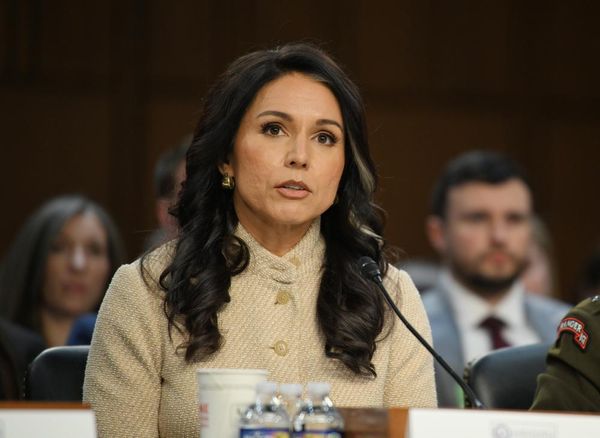











@Andrew
Is it not incumbent on Corbyn to move a vote of no confidence in the government tomorrow? It would look particularly craven if he shies away from it this time, as it would be virtually guaranteed to pass.