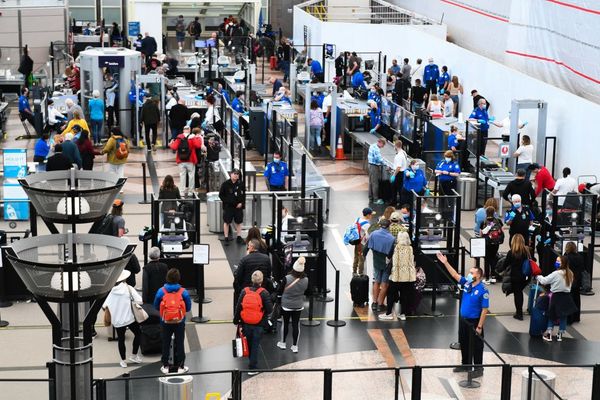
Philip Hammond has become the first Cabinet minister to admit crashing out of the EU without an agreement could ground all flights from the UK to Europe.
Giving evidence to MPs on the Commons Treasury Committee, the Chancellor said the eventuality was “theoretically possible” that a failure to reach agreement with the bloc would halt air traffic between Britain and the 27 member states on March 29, 2019.
But Mr Hammond insisted he did not think “anybody seriously believes that it where we will get to”, saying an air travel deal would be struck regardless.
He said "mutual interest" would ensure an arrangement would be put in place to prevent such an impasse.
"There will be points where it will be necessary to make go to no-go decisions around future programmes to be ready on day one," he said.
"I am clear we have to be prepared for a no deal scenario unless and until we have clear evidence that is not where we will end up.
"What I am not proposing to do is allocate funds to departments in advance of the need to spend it. We should look at each area for the last point when spending can."
It came as Mr Hammond refused to budget for a 'no deal' Brexit scenario, just days after Prime Minister Theresa May announced emergency plans to avoid border meltdown for businesses and travellers.
All flights within the EU for the last 25 years have been governed by the governed by the “EU Internal Market for Aviation” - more crisply known as "open skies".
It allows any EU airline to fly between any two EU airports, subject to slots being available.
Since 1992, open skies has allowed the development of low-cost airlines, starting in the UK and Ireland with easyJet and Ryanair. In a quarter-century, the number of passengers flying within Europe each year has almost tripled to nearly one billion annually.
Once the UK leaves the EU, there are no World Trade Organisation rules to fall back on. The UK would need to negotiate an entirely new treaty with the EU for any flights to take off.
Similarly, all flights from the UK to the US are governed by the Air Transport Agreement between the EU and Washington DC.
Another treaty will be needed, and it is unclear what will happen to the dozens of flights on Norwegian to the US from Gatwick, Edinburgh and Belfast.
A large majority of the holidays sold by tour operators and travel agents involve flying people to the EU, and inbound passengers from Europe are the most numerous inbound tourists to Britain.
Mark Tanzer, chief executive of Abta, the travel association, told The Independent the grounding of flights is a “theoretical and technical possibility", but said: "I’m very confident that through the negotiations another structure will be put in place before that ever happens."
“Clearly there are benefits on both sides to be able to fly to and from the UK.”
Paul Carter, chief executive of Hotelplan — which includes tour operators such as Inghams, Explore and Inntravel — said: “This is a negotiating tactic between our Government and Brussels, and the public will be in uproar if this doesn’t go through. So I don’t think it will happen.”