Almost one in four small businesses which export goods have temporarily stopped shipping to the EU since the end of the Brexit transition period, a survey has found.
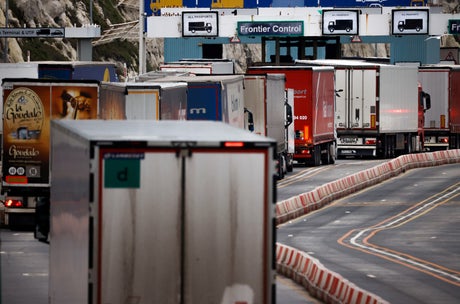
Close to a third (32 per cent) have lost goods in transit, and an even greater proportion (34 per cent) have had goods held indefinitely at EU border crossings. Of those that have experienced delays, 36 per cent have suffered hold-ups that lasted more than two weeks.
The Federation of Small Businesses surveyed 1,483 firms between 1 and 15 March. It found that seven in 10 importers and exporters suffered shipment delays when moving goods around the EU in recent weeks.
Around one in 25 have decided to stop selling into the EU permanently after new trading rules came into force at the start of this year, the poll suggested. And some 23 per cent have temporarily stopped sending goods to the trading bloc.
The Federation of Small Businesses (FSB) said some exporters have established, or are considering setting up a presence within an EU country to ease their exporting processes.
Read more:
- Brexit news live: EU countries to stop extraditing criminals to UK
- British expats leaving Spain to avoid illegal immigrant status after Brexit
- Jennifer Arcuri tells of ‘four-year affair’ with Boris Johnson
- At least 10 EU countries will not extradite criminals to UK because of Brexit
One in 10 are thinking about securing warehousing space in the EU or Northern Ireland, said the report.
Most importers and/or exporters have suffered shipment delays when moving goods around the EU in recent weeks, said the FSB, with one in three losing goods in transit or having goods held indefinitely at EU border crossings.
FSB chairman Mike Cherry said: "At a moment when small firms are doing all we can to return to growth and get our economy firing on all cylinders again, those that do business internationally are being hit with some incredibly demanding, unfamiliar paperwork.
"Three months on from the end of the transition period, what we hoped would prove to be teething problems are in danger of becoming permanent, systemic ones.
"While larger firms have the resources and bandwidth to overcome them regardless, smaller traders are struggling, and considering whether exports are worth the effort any more.
"Unless more is done to ease the admin burden on those that do business overseas, and increase access to markets outside the EU, it will weigh heavy on our efforts to recover from the most severe downturn on record."