The big picture
As parliament heads into its summer recess, there’s still a fair bit to keep politics-watchers happy, not least the launch today of Jeremy Corbyn’s campaign for the Labour leadership (again).
And so the official Corbyn fightback begins, with more than 180,000 new supporters signed up to vote in the leadership contest, in addition to those who already met the six-month membership rule. The 48-hour sprint for those £25 registered supporters has, if nothing else, raised £4,588,525 for Labour. Internal strife has to have some upsides.
In a speech in London today, Corbyn will hit back at jibes by challenger Owen Smith that he offers questions but not answers by spelling out some fresh policies (and keep an eye out for that mention of “the next Labour government”).
With more than a nod to William Beveridge’s “five evils”, the Labour leader will say:
The injustices that scar society today are not those of 1945: want, squalor, idleness, disease and ignorance. And they have changed since I first entered parliament in 1983. Today what is holding people back above all are inequality, neglect, insecurity, prejudice and discrimination.
In my campaign I want to confront all five of those ills head-on … setting out not only how Labour will campaign against these injustices in opposition, but also spelling out some of the measures the next Labour government will take to overcome them and move decisively towards a society in which opportunity and prosperity is truly shared.

In an interview with the Guardian, Corbyn’s opponent, Owen Smith, adds another to the list of ills: fury. With Corbyn, that is, and his performance as Theresa May stepped up for her first PMQs yesterday:
I was more than frustrated: I was furious that we were sitting there with a Tory government that has imposed swingeing cuts on public services, on tax credits, on universal credit, that have smashed women and public sector workers the length and breadth of Britain, and we are taking lectures from them about social justice and economic fairness.
It makes my blood boil to see us so useless at saying to them: ‘How dare you have the temerity to make these claims, to make these arguments.’ Jeremy is just not up to the job of taking them on at the dispatch box. I don’t think he enjoys it; I don’t think he’s robust enough at arguing Labour’s case.
Robustness will certainly be required for politics-watchers, who have two months of leadership campaigning ahead of them before the winner is lifted aloft at the party conference in September.
It’s still not as long as we’ve been waiting for universal credit, the new benefits system that suffered yet another timetable slip yesterday. In the seventh new launch date since 2013, the year 2022 has now been dangled – I’m not going to say set – as the completion date. That’s five years behind its original projected finish date.
In more “what’s the hurry” news, May has hinted that the government pledge/aim/Post-it note saying that net migration would be brought down below 100,000 by 2020 might not be met. Questioned at PMQs, she said “it will take some time” to swipe down the current 333,000 figure to the tens of thousands.
Later on Wednesday, however, May’s spokeswoman insisted: “The manifesto stands.” Which is handy, as that manifesto has been liberally cited as a reason for May not needing to call a general election before 2020.
Does anyone have a Brexit plan yet?
Sssshh now. There’s no rush. Or at least that appears to be what May and Angela Merkel agreed in their meeting yesterday. It was “absolutely understandable”, the German chancellor said, that the new British government would need to “take a moment first and try to seek to identify its interests”.
May – who’s off to Paris today to talk Brexit with the French president, François Hollande – reiterated her determination that there was no need for article 50 to be triggered this year (let’s not use up all the news before 2017 starts, right?):
The United Kingdom will not invoke article 50 until our objectives are clear … I understand this timescale will not please everyone but I think it is important to provide clarity on that now.
Veiled compliment of the day – there’s bound to be a German word for that – goes to Merkel, when quizzed about the promotion of Boris Johnson to UK foreign secretary:
Negotiations with Britain have always been exhausting, interesting and tactically clever negotiations.
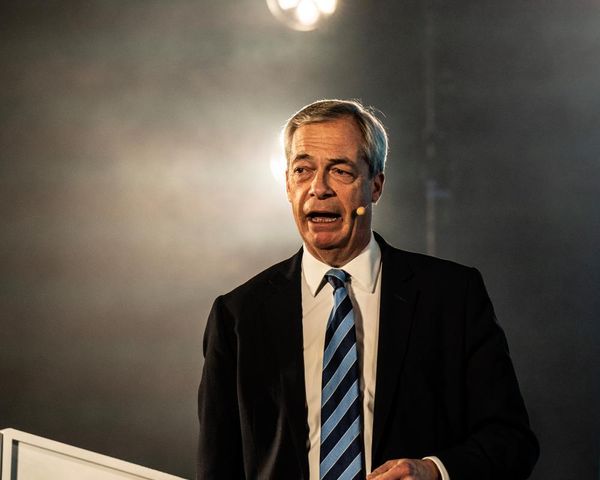
Nigel Farage had a try at sarcasm, too, telling Republicans at the national convention in Cleveland that the US president’s plea for Britain to stay in the EU had been a tremendous boon:
I’m a huge fan of Barack Obama. Without him we wouldn’t have won the referendum. He was very helpful.
But unveiled non-compliment of the day goes to MPs on the foreign affairs committee whose report on the absence of contingency planning for a Brexit vote concludes that David Cameron’s decision
not to instruct key departments including the foreign office to plan for the possibility that the electorate would vote to leave the EU amounted to gross negligence.
You should also know:
- Files on Mark Thatcher’s dealings in Oman will remain secret for now – a decision the Mirror reports was made by former culture secretary John Whittingdale.
- A crowd-funding campaign that raised £14,000 for people who could not afford the £25 to become a registered Labour supporter has been closed down for breaching party rules, and the money will be returned.
- Speaker John Bercow is likely to accept a recommendation in a report on modernising the Commons that MPs should be allowed to breastfeed in the chamber, the Telegraph reports.
- Shami Chakrabarti, asked if she’s been offered a peerage by Labour, says “I’m going to evade” the question.

Poll position
As Labour reeled from the Brexit vote and the leadership turmoil, the Guardian surveyed 101 constituency parties. As Ewen MacAskill reports:
Enthusiasm for Jeremy Corbyn has waned since the start of the year among Labour supporters … The Guardian exercise found many local party officers blaming the softening of support on the Labour leader’s performance in the EU referendum campaign.
Six months ago the Guardian conducted a similar survey against a backdrop of euphoria over huge rises in membership after Corbyn’s election in September. While support is more muted by comparison, party officers report that he remains ahead and likely to win.
One stark finding in the survey is that there is no evidence of support for an alternative candidate – with barely a mention of either Owen Smith, relatively unknown until he launched his challenge to Corbyn, or Angela Eagle, who dropped out shortly after the survey was completed.
You can read the full survey here.

Diary
- The Today programme hears from Labour Vote Leave champion Gisela Stuart at 7.50am, with shadow health secretary Diane Abbott on at 8.20am.
- At 10am, Jeremy Corbyn launches his leadership campaign with a speech in London.
- At 10:30 the high court hears a claim by a group of junior doctors challenging the imposition of new contracts by health secretary Jeremy Hunt.
- Theresa May is in Paris to meet French president François Hollande; there’ll be a news conference at around 5.30pm ahead of their working dinner.
- At 5pm, London mayor Sadiq Khan is on LBC for his Speak to Sadiq phone-in.
- Boris Johnson is in Washington with defence secretary Michael Fallon to discuss international efforts to defeat Isis.
-
Lisa Nandy, one of Owen Smith’s campaign co-chairs, makes a speech about the future for Labour post-Brexit.
Read these
Jenni Russell in the Times says Theresa May’s new cabinet could help shift perceptions about older workers:
When David Cameron became prime minister, the average age of the holders of the four great offices of state was 46. Under Theresa May it is just under 56. That decade’s difference will send a strong subliminal message about the power and potential of older people. And that message has a remarkable effect on our bodies, our health and our own longevity.
When Tony Blair became PM at 43, I knew a whole raft of people a little older who were grief-stricken. His success left them feeling that they were over the hill and that if they weren’t at the top of their professions by their early forties they’d had it … We internalise society’s beliefs about ageing many decades before we get old ourselves. Whether those are positive or negative has a dramatic effect on how well we age and how long we live.
And do read Zadie Smith’s essay in the New York Review of Books on the Brexit fallout:
While we loudly and rightly condemn the misguided racial attitudes that led to millions asking ‘them’ to leave ‘us’, to get out of our jobs and public housing and hospitals and schools and country, we might also take a look at the last thirty years and ask ourselves what kind of attitudes have allowed a different class of people to discreetly manoeuvre, behind the scenes, to ensure that ‘them’ and ‘us’ never actually meet anywhere but in symbol. Wealthy London, whether red or blue, has always been able to pick and choose the nature of its multicultural and cross-class relations, to lecture the rest of the country on its narrow-mindedness while simultaneously fencing off its own discreet advantages. We may walk past ‘them’ very often in the street and get into their cabs and eat their food in their ethnic restaurants, but the truth is that more often than not they are not in our schools, or in our social circles, and they very rarely enter our houses – unless they’ve come to work on our endlessly remodelled kitchens.
Elsewhere in Britain people really do live cheek-by-jowl with the recently migrated, and experience the undercutting of their wages by newcomers. They really do have to fight for resources under an austerity government that makes it all too easy to blame your unavailable hospital bed on the migrant family next door, or on an oblique bureaucracy across the Channel, which the nitwit demagogues on the TV keep telling you is the reason there’s not enough money in the NHS. In this atmosphere of hypocrisy and outright deceit, should the working-class poor have shown themselves to be the ‘better man’ when all around them is corruption and venality?
Crafty scheme of the day
Strictly speaking, that day was in 1983, but we’ve only just discovered it via newly released Downing Street files: Margaret Thatcher’s press secretary, Bernard Ingham, came up with a plan to keep CND protests out of the headlines by suggesting the release of video footage of royal baby Prince William pootling about with his parents.
Nice try. Luckily we readers are more sophisticated these days. Oh hello, Thursday’s Daily Mail!

Celebrity endorsement of the day
At the Republican National Congress, disappointed former presidential candidate Ted Cruz won a resounding huzzah when he praised the UK’s vote for Brexit, saying voters had showed their dislike of the political establishment and “big government”.
Cruz was later booed off the stage after failing to endorse Donald Trump in his speech.
The day in a tweet
A former shadow cabinet minister calls for calm:

If today were a seemingly endless film franchise
It would be the Fast and the (really very) Furious.
And another thing
Would you like to wake up to this briefing in your inbox? Sign up here.