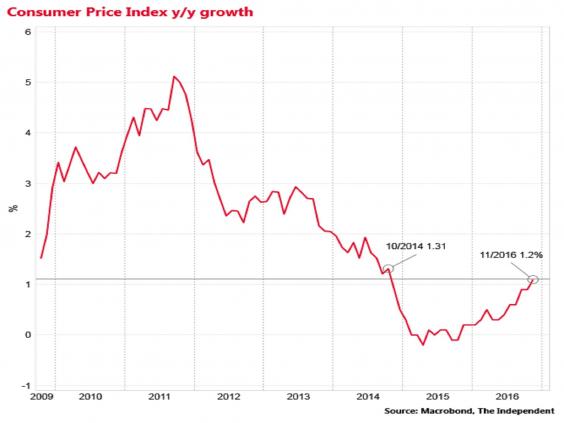
Inflation has hit its highest level in more than two years thanks to the sharp depreciation of the pound since the Brexit vote, according to the latest prices report from the Office for National Statistics.
The Consumer Prices Index rose 1.2 per cent in the year to November, up from 0.9 per cent in October and more than the 1.1 per cent increase City of London analysts had expected.
That was the fastest rate of increase since October 2014.
Core inflation, which strips out volatile food and fuel prices, was 1.4 per cent, up from 1.2 per cent in the previous month.
The ONS said two of the main contributors to the increase in the headline rate since October were rises in clothing and motor fuel prices.
The Bank of England expects inflation to rise above its 2 per cent target next year and the National Institute of Economic and Social Research has predicted it will jump as high as 4 per cent in 2017.
There were also further signs of inflationary pressures building in the system, with the ONS reporting that factory input prices rose 12.9 per cent in the year to November, reflecting a major increase in firms' import costs.
Factory output (or factory gate) prices rose 2.3 per cent, also the highest since 2012.
Economists expect the 10 per cent depreciation of trade-weighted sterling since the 23 June Brexit vote to feed through to higher prices in the shops over the next two years, which will, in turn, reduce real household disposable incomes and help slow the economy sharply in 2017.
"It looks inevitable that consumer purchasing power will deteriorate markedly over the coming months as inflation moves appreciably higher and earnings growth is limited," said Howard Archer of IHS Global Insight.
John Wraith of UBS said the slowdown could prompt the Bank of England to cut interest rates again next year, despite the inflation overshoot of its 2 per cent target.
"We remain pessimistic about both consumption and investment as the UK economy heads into 2017, and reiterate our view that further monetary easing during the course of next year is likely to be required to ensure the loss of economic momentum is cushioned," he said.