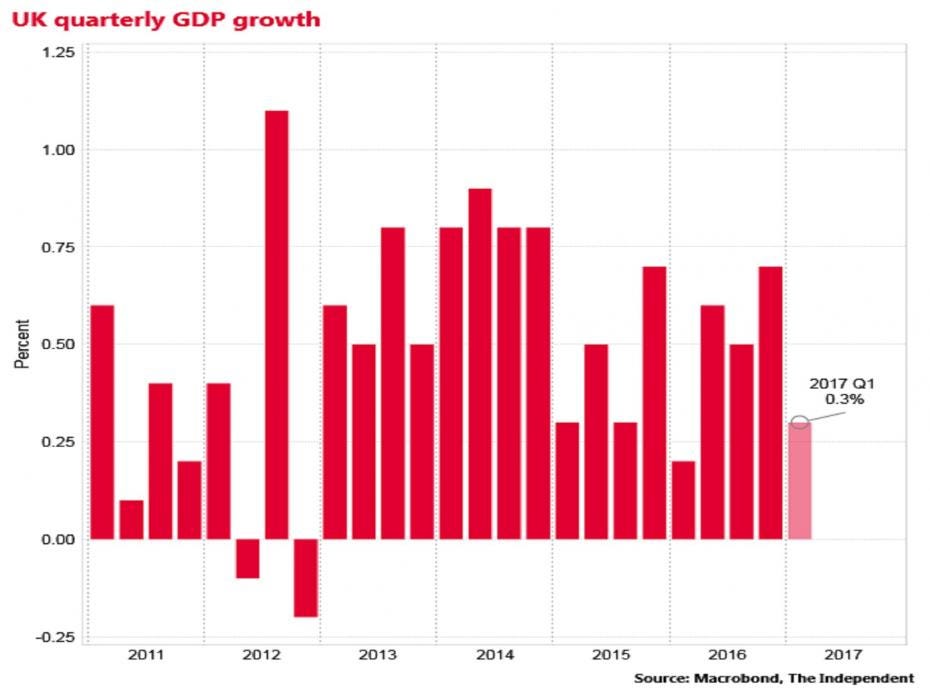
The UK's GDP growth unexpectedly fell to 0.3 per cent in the first quarter of 2017, confirming fears of a post-Brexit vote slowdown beginning to take effect.
The Office for National Statistics reported in its preliminary estimate that growth more than halved from the 0.7 per cent expansion rate seen in the final quarter of 2016.
City of London economists had pencilled in a fall in the growth rate to between 0.4 per cent and 0.5 per cent.
Slowdown hits
Growth in services, which accounts for around three quarters of the economy, dropped to 0.3 per cent, a significant deceleration from the 0.8 per cent expansion in the previous three months.
The ONS highlighted falls in the output of some large consumer-facing service sectors such as retail and accommodation.
There were also falls in renting and motor vehicle repair.
Manufacturing output, around 10 per cent of the economy. expanded by 0.5 per cent on the previous quarter, down from its 1.2 per cent surge in Q4 2016.
Construction, around 6 per cent of total output, grew by 0.2 per cent, down from a previous 1 per cent expansion.
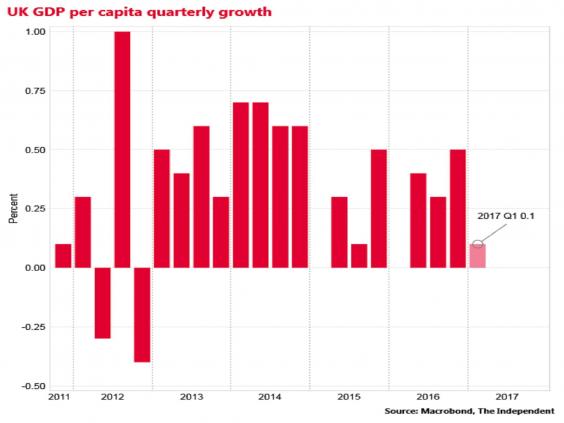
Factoring in estimated UK population growth of 0.2 per cent in the three months, the ONS said GDP per capita expanded by just 0.1 per cent.
Per head growth almost wiped out
Analysts said that the services slowdown reflected the spike in inflation following the slump in the pound in the wake of last June's vote crimping people's disposable incomes.
"This weakness is likely to be blamed on Brexit. That is probably fair, albeit in an indirect sense," said Alan Clarke, an economist at Scotiabank.
"The fears leading up to Brexit were that growth would stall due to a dive in confidence, hiring and investment. That hasn’t happened. What did happen is the pound dived, pushing inflation sharply higher and that is causing consumer spending and hence overall growth to slow."
Most economists expect the slowdown to continue over the rest of the year.
"This household squeeze is likely to be compounded by the effect of Brexit uncertainty, which may increasingly deter firms from hiring and investing. Whilst trade should perform better thanks to the weaker pound, we don’t expect this to be enough to prevent growth gradually slowing through this year," said James Smith of ING.
The GDP estimate from the ONS is just half of the 0.6 per cent expansion the Bank of England had expected at the time of its March rate-setting meeting, when one member, Kristin Forbes, voted for a rate rise and some others were reported to be on the verge of considering it if there were more "upside news" on the economy.
That would seem to suggest that a rate rise from the central bank is now less likely.
Nevertheless, the pound strengthened in the wake of the figures climbing around 0.24 per cent to $1.2947.
The ONS's first GDP estimate is based on around 44 per cent of the final survey data and will be revised in subsequent months as the remainder comes in.