Spending on infrastructure in the UK has declined sharply since the country voted to leave the EU, new figures have shown.
The first full month following the Brexit vote saw a decline in the infrastructure sector, with the value of construction contracts for July falling by 20 per cent to £1.5 billion, according to consultancy group Barbour ABI, which also provides figures to the Office for National Statistics.
The figure was 23 per cent lower than in June and represents a 23 per cent drop compared to the same period last year. Housebuilding also fell sharpely with some 2000 fewer houses started in the UK in July, compared to the previous month.
The figures will offer little comfort to prospective homeowners after a damning report from the Resolution Foundation earlier this month revealed that home ownership has fallen to its lowest level for 30 years. The research shows supply has failed to keep pace with demand in the UK, shutting buyers out of the market.
Michael Dall, lead economist at Barbour ABI, said that the economic uncertainty following UK’s vote to leave the EU could be discouraging investors from spending on infrastructure projects.
“In the first full month since the vote to leave the European Union, the value of construction projects reaching contract award stage declined in July. This is unsurprising given the uncertainty in the economy,” Dall said.
“However, it is the infrastructure sector which has performed particularly poorly this month, and with the change in narrative from the current government, it puts more emphasis on any fiscal stimulus that they may be planning to make,” he added.
Still, the value of contracts for commercial office construction in July, increased by 22 per cent compared with June, according to Barbour ABI.
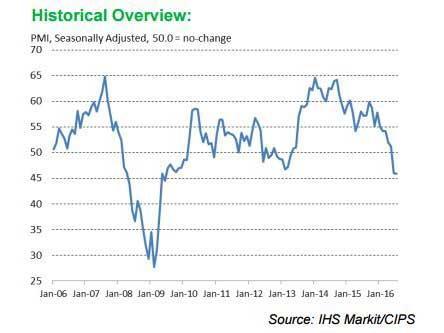
The infrastructure construction sector UK shrank at its fastest pace since 2009 after the UK voted to Leave the EU, according to the monthly Markit/CIP survey for July.
The index measures new orders, deliveries and employment, among other things, and is considered a key indicator in the confidence of the construction sector.
Construction accounts for around 7 per cent of UK GDP and civil construction companies such as Balfour Beatty and Carillion have seen double digit falls in their share price in the week following the EU referendum.
An industry source previously warned the Independent that the UK construction industry will slam into a “brick wall” early next year due to the massive uncertainty created by the Brexit vote.
“Construction projects that are underway are going to continue. It’s six to seven months down the line where a lot of projects are going on to ice,” said the source. “What you’ll find is the construction industry potentially running into a brick wall.”
“There’s a danger of a huge drop off. And if this is the situation for two years [the assumed time for the UK-EU divorce terms to be negotiated] that’s an awful long time for construction companies.”
In July, new Chancellor Philip Hammond hinted that the Government was prepared to increase borrowing to boost infrastructure spending.