Afternoon summary
- Michel Barnier, the EU’s chief Brexit negotiator, has said that the backstop is “the only operational solution” to the Irish border issue. (See 5.50pm.) Other senior EU officials have also played down the prospect of Theresa May being offered significant changes to the backstop plan. Barnier’s deputy, Sabine Weyand, said accepting an alternative to the backstop would be a “dereliction of duty” (see 9.20am) and Martin Selmayr, the European commission’s secretary general, said that even if the EU were to offer the UK new assurances on the backstop, he did not think that would be enough to persuade MPs to back the deal. (See 1.26pm.)
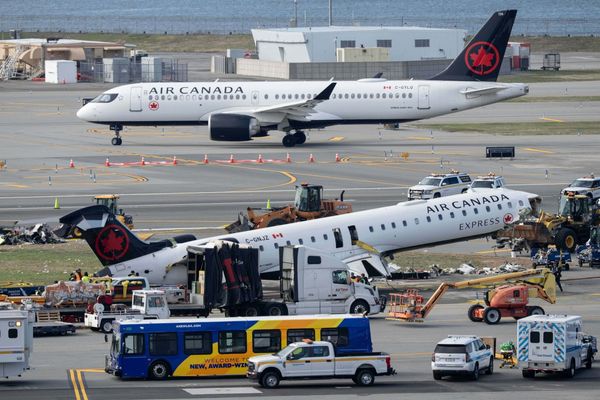
- Greg Clark, the business secretary, has told MPs that Nissan will have to reapply for financial help it was promised in return for building Qashqai and X-Trail models at its Sunderland plant. He published correspondence saying the firm had been promised £61m on that basis. But, in an oral statement to MPs, following Nissan’s announcement that the X-Trail will not be built at the factory, he said:
So, given yesterday’s announcement, if the company seeks to participate in these industry funding schemes, as I hope and expect that it will, the company will submit new applications in the standard way and undergo a process of independent assessment.
In response to a question from the Lib Dem leader Sir Vince Cable, Clark revealed that just £2.6m of the £61m promised has already been paid.
That’s all from me for today.
Thanks for the comments.
Barnier says backstop is 'only operational solution' to Irish border issue
And this is from Michel Barnier, the EU’s chief Brexit negotiator, after his meeting with the Dutch PM, Mark Rutte.
Dialogue @EU27 continues #Brexit. Today in The Hague with @MinPres Mark Rutte: full agreement that Withdrawal Agreement cannot be reopened. Backstop = only operational solution to address Irish border issue today. EU ready to work on alternative solutions during transition. pic.twitter.com/YsCNI10K71
— Michel Barnier (@MichelBarnier) February 4, 2019
Rebecca Long-Bailey, the shadow business secretary, says the decision not to build the X-Trail in Sunderland is a disappointment.
She says the Clark letter to Nissan promised that the car industry would not be “adversely affected” by Brexit.
But the company clearly does not believe those assurances any more, she says.
She challenges Clark to rule out a no-deal Brexit.
She says the Nissan announcement came just days after the EU’s trade deal with Japan came into force. She says over time this will lead to tariffs on cars from Japan falling to zero.
She suggests that “managed decline” is now the government’s plan for the car industry.
Clark says he is disappointed that the new jobs associated with the X-Trail will not come to Sunderland. But he is pleased the rest of the investment is going ahead.
Greg Clark's Nissan statement
Greg Clark, the business secretary, is making his Nissan statement now.
He says in July 2016 Nissan was about to announce that the Qashquai would be built elsewhere in Europe.
He says, knowing what this would do to the Sunderland plant’s long-term future, the government set out to persuade the company to change its mind.
First, it stressed the measures in place to support the car in industry generally. The government eventually offered £61m to help.
Second, the government said it would help with the supply chain.
Third, it offered to help with R&D. In particularly, it is promoting self-drive cars.
And, fourth, it said it would prioritise the needs to the automative industry in the Brexit talks.
Clark says these offers were persuasive.
Towards the end of the process Nissan said it would start producing the X-Trail at the plant too.
He says that at the end of last week Nissan said that, while the rest of its planned investment would go ahead, the X-Trail would not be built there. That meant 714 extra jobs that could have been created have been lost.
This is from Mark Rutte, the Dutch prime minister.
Just spoke with @MichelBarnier about #Brexit. The Withdrawal Agreement remains the only way to ensure an orderly withdrawal of the UK from the European Union. We continue to urge the UK Government to clarify its intentions with respect to its next steps. pic.twitter.com/wbGHSz8wUY
— Mark Rutte (@MinPres) February 4, 2019
The BBC’s business editor, Simon Jack, has more evidence of the government making comments in 2016 about Nissan not being paid for its Sunderland investment which are hard to square with what we know now. (See 4.11pm.)
"no question of financial compensation" - Greg Clark Oct 2016 publicly on Nissan decision to build Qashqai and X-Trail in Sunderland.
— Simon Jack (@BBCSimonJack) February 4, 2019
"As a demonstration of the UK Government’s commitment... a package of support...could amount to..up to £80m" same month in letter to Nissan.
This is from Matthew O’Toole, who used to work on communications in Downing Street in the David Cameron era, on the David Trimble story. (See 4.38pm.)
Important top trumps rules when understanding how NI is covered from London:
— Matthew O'Toole (@MatthewOToole2) February 4, 2019
10 DUP MPs beats the majority of people in Northern Ireland.
1 David Trimble beats the majority of people in Northern Ireland.
O’Toole is right. In an essay in Britain and Public Opinion 2019 (pdf), published by the UK in a Changing Europe project last month, Jamie Pow points out that even DUP supporters in Northern Ireland don’t support DUP policy on Brexit. A majority of them want a soft Brexit, even though the DUP has made it clear that it would be happy to see the UK leave both the single market and the customs union (ie, a hard Brexit, for the purposes of this survey).

Turning back to Marin Selmayr for a moment, Mina Andreeva, the European commission’s deputy chief spokeswoman has posted a tweet that seems intended to mollify Brexiters upset by the tone of his intervention earlier. She was responding to Fraser Nelson, editor of the pro-Brexit Spectator.
For the sake of completeness:
— Mina Andreeva (@Mina_Andreeva) February 4, 2019
1/ @MartinSelmayr made clear that @MichelBarnier is @EU_Commission’s chief negotiator. https://t.co/AILUEJwCit
2/ @EU_Commission always open to listen - in full respect of national parliaments. Our position is expressed here: https://t.co/GKRKYR7pfM
Lord Trimble, the former Ulster Unionist party leader who won a Nobel peace prize for his role in the Good Friday agreement, has announced that he and others “are planning to take the government to court over the protocol on Northern Ireland - which includes the so-called “backstop” - as it breaches the terms of the Good Friday agreement.”
The announcement came in a three sentence press statement from Global Britain, a pro-Brexit thinktank. It said:
The Nobel peace prize winner and architect of the Good Friday agreement plans to initiate judicial review proceedings to ensure that the protocol is removed from the withdrawal agreement.
Lord Trimble says that alternative arrangements - as outlined in A Better Deal And A Better Future - should be put in place instead.
A Better Deal and a Better Future is an alternative Brexit plan published last month by Steve Baker, the deputy chairman of the European Research Group.
Global Britain has not given any more detail about Trimble’s legal argument, and it is highly possible that this will turn out to be one of those legal challenges that will die an early death on its first encounter with a judge.
UPDATE: It is also worth pointing out that Global Britain is one of the most doctrinaire of the pro-Brexit thinktanks. One of its founders was Lord Pearson of Rannoch, who was the Ukip leader who admitted during the 2010 election campaign that he had not read the party’s manifesto. ITV’s Carl Dinnen sums up the Trimble legal argument quite well here.
Meanwhile Lord Trimble is suing the Government.
— Carl Dinnen (@carldinnen) February 4, 2019
He says the Irish backstop designed to protect the Good Friday Agreement within the Withdrawal Agreement (which hasn’t been agreed) actually breaches the Good Friday Agreement.
Got that?
Updated
We now know that the government offered up to £80m to Nissan in 2016 in the form of support, in return for a decision to build the Qashqhai and X-Trail models at Sunderland. Subsequently that got revised down to £61m. (See 3.45pm.)
But at the time Downing Street denied offering the company a special deal. Here is an extract from the story my colleague Rowena Mason wrote in October 2016.
No 10 is refusing to disclose what state support has been given to Nissan to convince the car manufacturer to boost production at its Sunderland plant despite its worries about Brexit. Downing Street insisted there was no “sweetheart deal” with the Japanese company, but acknowledged that Theresa May had given some assurances to the wider industry that it would be protected from the impact of the UK’s withdrawal from the EU ...
No 10 refused to say what has been promised to the car industry or to say whether any public money was involved, although it signalled that it had not made any declaration to the EU about a proposal to offer state aid. “The assurances are that we will get the best possible deal from leaving the EU,” May’s deputy official spokesman said. “There was no special deal for Nissan.”
Thanks to ID499187 in the comments for prompting this line of enquiry.
No doubt Greg Clark, the business secretary, will be pressed on this when he makes his Commons statement, probably at around 5pm.
Updated
Treasury committee demands to know why £61m payment to Nissan was not disclosed earlier
In 2016 the Commons Treasury committee, which was then chaired by the Conservative Andrew Tyrie, repeatedly tried to find out from the government whether the Greg Clark letter to Nissan, which at that point was confidential, contained any financial promises. The government repeatedly refused to say.
(At the time there was speculation that there might have been a promise to ensure Nissan would not lose out if the UK left the customs union, leading to a loss in exports.)
In a letter to Clark, Nicky Morgan, the current chair of the committee, has asked why the £61m eventually offered to Nissan (see 3.45pm) was not disclosed at the time. She also calls for the publication of the full text of the letter, although that request is now redundant because the business department were publishing the text around the time Morgan was releasing her letter.

Greg Clark, the business secretary, has released his letter to Nissan (pdf) partly in response to a long-standing request from the Commons business committee. He has published it today alongside a letter to Rachel Reeves, the committee chair.
In his letter to Nissan in October 2016 Clark promised the company “a package of support in areas such as skills, R&D and innovation” worth up to £80m. That was contingent on the Qashqai and the X-Trail being built at Sunderland.
But in his letter to Reeves Clark says that the company was actually offered £61m in June 2018.
The original link to the Greg Clark Nissan letter that I posted at 3.15pm was faulty, but I have now fixed it.
Merkel says Brexit deal can be agreed if people are 'creative'
Here is the full quote from Angela Merkel on Brexit today. (See 1.38pm.) She was speaking on a visit to Tokyo.
We want to do everything to ensure that a no deal doesn’t happen, because that would only heighten insecurity. We’re happy that a majority in the British parliament feels the same. Now we have to figure out what to do. We’re saying that the exit treaty took a long time to negotiate, so we don’t want to re-open the exit treaty. That’s not on the agenda.
But we’re still discussing the future mechanism. And in the future relationship, you can also address issues that are still being discussed - for example with the management of the border between Northern Ireland, which belongs to the UK, and the Republic of Ireland and by extension the European Union.
There are certainly possibilities to resolve this point - that is, guaranteeing the integrity of the single market, the unity of the single market, even if Northern Ireland isn’t part of that, and on the other hand the desire to have as far as possible no controls at the Irish border. You have to be creative and listen to each other - such discussions can and must take place. We can now use the time to reach an agreement where beforehand agreement wasn’t possible, if there’s enough good will. But we have to hear from the UK - this is the decisive point - how they view this.
- Merkel says a Brexit deal can be agreed if people are “creative” and if “there’s enough good will”.
- But she says the EU has to hear what the UK wants.
- She says the withdrawal treaty will not be re-opened.

The business department has now published the full text (pdf) of the letter that Greg Clark, the business secretary, sent to Nissan in 2016 promising financial support in return for the X-Trail being built at Sunderland.
Updated
Here is Jeremy Cliffe, the Economist’s Charelemagne columnist, on the Martin Selmayr tweet quoted earlier. (See 1.26pm.)
This exchange is such a good illustration of the trait that has most marked the Brexit talks: mutual misunderstanding, and especially British misunderstanding of EU positions. https://t.co/qdvCWH359D
— Jeremy Cliffe (@JeremyCliffe) February 4, 2019
Government £80m for Nissan was contingent on X-Trail being built at Sunderland, Clark letter reveals
In 2016, after the Brexit vote, Nissan announced that it would be building Qashqai and X-Trail models at its factory in Sunderland. At the time it was revealed that the company had received assurances from the government, in the form of a letter from Greg Clark, the business secretary, but the precise nature of those assurances was never revealed because the letter was not published.
The Nissan announcement at the weekend reversed part of what was promised by the company in 2016.
And the Financial Times has now got hold of the Clark letter. As Peter Campbell reports (paywall), the government promised Nissan that its operations would not be “adversely affected” by Brexit.
The government also promised the firm £80m towards investment at the site, but the letter said that money was “contingent too on a positive decision by the Nissan board to allocate production of the Qashqai and X-Trail models to the Sunderland plant”, the FT reports.
The government made no specific promise on the UK’s future trading relationship with the EU — such as remaining in the bloc’s customs union — but vowed to protect car manufacturers in the UK. They would be a “critical priority of our negotiations” with the EU, the letter said.
“The government fully recognises the significance of the EU markets to your presence in Sunderland,” the letter stated. “It will be a critical priority of our negotiations to support UK car manufacturers, and ensure their ability to export to and from the EU is not adversely affected by the UK’s future relationship with the EU.”
On the World at One John Whittingdale, the Brexiter former culture secretary and a member of the Commons Brexit committee, said that after the committee met Martin Selmayr, the European commission’s secretary general, he came away with the impression that the PM woud not secure meaningful change to the Brexit deal. He explained:
Selmaryr told us what we have heard from others in the commission, that basically they regard the deal as having been finalised ... and they don’t wish to reopen it.
They did say that the political declaration is open for discussion in the future. But they said that they could not reopen the withdrawal agreement.
They did talk about legal assurances, in the form of the letter that we have already had from Jean-Claude Juncker and Donald Tusk. I have to say that, for those of us who couldn’t support the withdrawal agreement, I certainly didn’t hear anything that gave me great hope that the prime minister would come back with a change to the withdrawal agreement.
I think what we have also made plain to [Selmayr is that] unless that happens, it is very unlikely that the House of Commons will agree to it.
Whittingdale also said that he gave Selmayr a copy of the so-called Malthouse compromise and told him he thought it was the one version of the deal that might get through the Commons. Asked how Selmayr responded, Whittingdale said: “He is still of a view that the deal has been done and it is now up to the British parliament to ratify it.”
Whittingdale also said Selmayr was sceptical about extending article 50 if it was not clear what purpose extension would serve. He said:
[Selmayr] made the fair point that there was no point extending article 50 if one did not know what we were seeking to do in the period of the extension.
Whittingdale also said that the committee met Selmayr because, although Michel Barnier was the EU’s chief Brexit negotiator, if the deal that Barnier negotiated fell through, Selmayr would then become the key person to deal with.

But Angela Merkel, the German chancellor, has said that “with creativity” a solution to the backstop problem could still be found.
"We can use the remaining time to perhaps remove all the obstacles that have so far stood in the way and find an agreement - if everybody is willing."
— DW Europe (@dw_europe) February 4, 2019
👉 Chancellor Merkel this morning said that 'with creativity' Northern Ireland solution might be possible. 🤞 #Brexit pic.twitter.com/AgSsEwCcr3
Top EU official casts doubt on whether backstop assurances would be enough to get Brexit deal through Commons
This is from Martin Selmayr, the European commission’s secretary general.
On the EU side, nobody is considering this. Asked whether any assurance would help to get the Withdrawal Agreement through the Commons, the answers of MPs were ... inconclusive .... The meeting confirmed that the EU did well to start its no deal preparations in December 2017.
— Martin Selmayr (@MartinSelmayr) February 4, 2019
Updated
Sinn Fein welcomes Labour's commitment to backstop
Michelle O’Neill, the Sinn Fein leader in Northern Ireland, has welcomed Labour’s commitment to the backstop. (See 1.11pm.) Speaking after meeting Sir Keir Starmer, the shadow Brexit secretary, at the Europa Hotel in Belfast, O’Neill said:
It was important today to put to Keir Starmer that we need to see clarity from the Labour party on the backstop. He did say in the meeting that the backstop is inevitable and that is the Labour position. It’s their position because they understand the need to ensure there’s no hard border on this island.
O’Neill said that it was important to hear from Starmer on this because in the past Labour had not been clear and consistent on the backstop. The party has argued in the past that there would be no need for one under its plan for Brexit because it would keep the UK in the customs union (even though that alone would not obviate the need for the backstop if Northern Ireland were outside the single market). O’Neill said:
The words [Starmer] used to ourselves in the meeting today were clearly that a backstop is inevitable - that is the Labour position in order to protect, or guard against a hard border and I can only say that that’s what he’s relayed to us.

Starmer says nobody realistically expects May to come up with alternative to backstop
And Sir Keir Starmer, the shadow Brexit secretary, has also said that attempts to find an alternative to the backstop will fail. Speaking on a visit to Northern Ireland, he said:
The prime minister and her team have spent over 12 months trying to find an alternative to the backstop.
We have only got the backstop because they couldn’t find an alternative.
So, for her to go back now saying ‘I don’t want the backstop, I want an alternative’ is to stand the last 12 months on its head.
And I think that’s what is causing the anxiety because nobody realistically thinks she’s going to succeed in that objective.
Starmer also said that Labour had “concerns” about the backstop, but that it accepted there had to be one.

Hilary Benn says alternative backstop plan in Malthouse compromise won't work
And this is what Hilary Benn, the chair of the Commons Brexit committee, told reporters after his committee’s meeings with Martin Selmayr. (See 12.57pm.) He said the proposals in the so-called Malthouse compromise for alternatives to the backstop (see 9.20am) would not work. He explained:
A lot of it to me, I have to say, personally, looks very familiar if you go back to last summer when people looked at technology and trusted traders and all of that, and a great deal of effort was put into examining those as a possible way forward.
The conclusion that was reached I think on behalf of the British government and the European Union was that well, it’s not going to work.
And I personally, but others will have a different view, personally I don’t see how it can work particularly in the very short amount of time that there is left.

These are from the BBC’s Adam Fleming on the meeting the Commons Brexit committee had this morning with Martin Selmayr, the European commission’s secretary general.
After a 90-minute meeting with @MartinSelmayr in Brussels this morning MPs from @CommonsEUexit say the EU would consider legally-binding assurances on the Withdrawal Agreement if it helped get the deal through Parliament., (1)
— Adam Fleming (@adamfleming) February 4, 2019
One idea floated in the meeting was turning the letter to the PM in January from Presidents Tusk and Juncker into a legally-binding attachment to the Withdrawal Agreement. (2)
— Adam Fleming (@adamfleming) February 4, 2019
The chair @hilarybennmp made a personal suggestion that Article 50 be extended to allow details of the future UK/EU relationship to be negotiated so that the backstop was less likely to be needed. (3)
— Adam Fleming (@adamfleming) February 4, 2019
There are two urgent questions in the Commons today. That means the Greg Clark Nissa statement won’t start until about 5pm.
There are two urgent questions in the Commons today.
— UK House of Commons (@HouseofCommons) February 4, 2019
1. @Vernon_Coaker - Knife Crime Prevention Orders
2. @FabianLeedsNE - US withdrawal from nuclear treaties
One oral ministerial statement@GregClarkMP - Nissan in Sunderland pic.twitter.com/vGUvVrmIAT
Downing Street lobby briefing - Summary
Here are the main points from the Number 10 lobby briefing.
- Theresa May will visit Northern Ireland tomorrow where she will give a speech stressing the government’s commitment to avoiding a hard border, the prime minister’s spokesman said.
- Greg Clark, the business secretary, will make a statement to MPs about Nissan after 3.30pm this afternoon. The spokesman refused to comment on a report in today’s Times (paywall) saying the government is “considering withdrawing a £60 million package of support for Nissan after it broke a pledge to build the latest version of one of its sports utility vehicles in Britain”. Clark would take questions on this during his statement, the spokesman said.
TIMES SCOTLAND Front #tomorrowspaperstoday pic.twitter.com/kbn24mqnWQ
— Helen Miller (@MsHelicat) February 3, 2019
- May will hold a conference call today with business leaders from the European round table of industrialists. She will stress the importance of reaching a deal with the EU on Brexit, the spokesman said.
- The spokesman would not say if May would be travelling to Brussels later this week for talks with the EU about Brexit.
- The spokesman said that the alternative arrangements working group announced by Number 10 yesterday (see 9.20am), to consider alternatives to the backstop, would be looking at the issue “as a matter of urgency”. The government was taking the work seriously, he insisted, in response to questions about why five MPs in three days would be able to come up with a solution to the backstop issue that had eluded the best civil servants in London and Brussels for the last two years. The spokesman also said that, although the group’s talks are only scheduled to last until Wednesday, they could go on beyond that.
- The spokesman refused to say whether May saw Wednesday 13 February, when she is due to make a statement to MPs about Brexit, as a deadline for the government to reach a new deal on the backstop. Asked what deadline the government was working to, the spokesman replied “as soon as possible”. These questions were partly triggered by what Greg Clark, the business secretary, told the Times at the end of last week. Clark said mid February as the effective deadline. He told the paper (paywall):
An engineering employer said to me yesterday, ‘Actually D-Day is much closer for us — it’s the middle to the end of February if you are shipping to the Far East.’ The reason for that is if you are sending a consignment of goods to Japan or South Korea, it’s going to take six weeks for it to arrive. Both countries have free-trade agreements with the EU, which will fall if we have no deal. So you don’t know whether the goods that you’ve had to embark on the ocean, when they arrive there will be admitted and if so what tariffs are going to be paid. People say ‘Things are always decided at the 59th minute of the 11th hour’. But it’s important to understand where ‘the wire’ is. The wire is not the 29th of March.
- The spokesman said that claims in the Sunday newspapers that the government was drawing up plans to evacuate the Queen from London in the event of disorder after a no-deal Brexit were “simply not true”.
SUNDAY TIMES: Brexit plan to evacuate the Queen #tomorrowspaperstoday pic.twitter.com/BqGYo6cyK6
— Neil Henderson (@hendopolis) February 2, 2019
- The spokesman also said that reports in the Sunday papers claiming that the government was drawing up plans for a general election on 6 June were “categorically untrue”.
In tomorrow’s EXPLOSIVE Mail on Sunday...
— Harry Cole (@MrHarryCole) February 2, 2019
💥D-DAY FOR MAY - Downing Street eye June 6 election.
💥CCHQ go on war footing with tripling if online add spend and deselection strategy meeting.
💥 Gavin B channels Jeb Bartlett as Gavin W goes full Nelson... pic.twitter.com/0deDdUJ3l9
- The spokesman said the government was considering using sanctions against Venezuela to try to bring down the Maduro regime. May spoke about Venezuela to Pedro Sanchez, her Spanish opposite number, about this on Sunday, the spokesman said. He went on:
Venezuelan people deserve a better future. They have suffered enough and the Maduro regime must end. It is time for free and fair elections.
As the foreign secretary said this morning [see 9.51am], those who continue to violate the human rights of ordinary Venezuelans under an illegitimate regime will be called to account.
We are looking at what further steps we can take to ensure peace and democracy in Venezuela, including through sanctions.
The spokesman declined to say what form any sanctions might take. While the UK remains a member of the European Union any such actions would be implemented at an EU level.

Theresa May to visit Northern Ireland on Tuesday to stress government's commitment to avoiding hard border
I’m just back from the Number 10 lobby briefing. And there was one announcement.
- Theresa May will visit Northern Ireland tomorrow where she will give a speech stressing the government’s commitment to avoiding a hard border, the prime minister’s spokesman said.
I will post more from the briefing soon.
This is from the Conservative MP Anna Soubry. She seems to be encouraging pro-European ministers to resign if Theresa May does not soon rule out a no-deal Brexit.
4 days out of Westminster bubble & I’ve no doubt vast majority of people are demanding leadership & clarity on #Brexit Instead there’s confusion & can kicking from both main parties. Sensible Ministers must show courage or will be complicit in a diasterous no deal #Brexit
— Anna Soubry MP (@Anna_Soubry) February 4, 2019
I’m off to the Number 10 lobby briefing now. I will post again after 11.30am.
Rees-Mogg says he wants to reduce chances of no deal, because that might lead to MPs blocking Brexit
And while we’re on the subject of Jacob Rees-Mogg (but not to the delight of everyone BTL, I see), it is worth pointing out that he was more interesting in what he said in an article in the Sun on Sunday yesterday than he was on LBC.
Rees-Mogg and his ERG colleagues are normally seen as hardline absolutists. But in his article, explaining his support for the so-called Malthouse compromise, Rees-Mogg said that Brexiters had to be willing to give a little because otherwise there was a risk of remainers blocking Brexit. He said:
In my view, an extra 33 months of vassalage after 46 years is an unwelcome but not unaffordable price to pay. Critics may ask why Brexiteers want to lessen the chance of a no deal departure — and the reason is simple.
Regardless of the folly of project fear, which becomes more preposterous by the day, the parliamentary arithmetic means we must either lessen the prospect by compromise or it will be done by sharp practice in the House of Commons.
This could lead to delay or even no Brexit at all. This would destroy any remaining trust of politicians in our constitutional settlement, it would show reckless contempt for voters, yet the Brexit-denying amendment put forward by Yvette Cooper last week was only defeated by 23 votes.
So Rees-Mogg is now saying he would prefer to avoid a no-deal Brexit, because he thinks the prospect of that could lead to MPs voting to delay Brexit. That is quite a shift. Only two weeks ago, in his Bruges Group speech, he suggested he was quite happy with the prospect of no deal.
Rees-Mogg plays down claims business needs certainty, saying 'business is all about uncertainty'
Here are some lines from Jacob Rees-Mogg’s LBC phone-on.
- Rees-Mogg, the Conservative MP and chair of the European Research Group, which is pushing for a harder Brexit, dismissed claims that the Nissan decision to abandon plans to produce its new X-Trail SUV at its Sunderland factory reflected badly on Brexit. He told the programme:
As far as one can tell, Brexit is far from being the primary reason Nissan has made this decision.
Rees-Mogg said that various reasons specific to the car industry explained the decision, including falling demand for diesel. He went on:
So Brexit is one of those what I might call BBC answers; all bad news is because of Brexit, and all good news is in spite of Brexit. All Nissan has said is that the uncertainty around Brexit and the future hasn’t helped. That is not the main reason why they’ve done this.
- He played down claims that businesses need certainty - a key argument made at the moment by business leaders and MPs arguing for a softer Brexit. When it was put to him that uncertainty about the UK’s future after Brexit was bad for business, he replied:
The truth is, business is all about uncertainty ...
There is no certainty in business. The whole art of business is trying to manage uncertainty. Investment decisions aren’t made for certain facts. You can’t be certain that anyone will buy your car when you have built it. All business is based on uncertainty, and managing uncertainty.
- He said he was opposed to using investment in leave-voting, Labour-supporting deprived areas as a possible means of getting Labour MPs to back Theresa May’s Brexit deal. The government has been talking to Labour MPs about possible investment in their communities, although it has dismissed claims that these payments would amount to bribes. Asked about the tactic, Rees-Mogg said:
I don’t think pork barrel politics has a place in the UK ... I was a bit surprised by these stories. It is not how British government normally works ...
I think to start giving lots of money in individual constituencies, as happens in the United States - it is commonplace in the United States; a congressman who didn’t get some pork for his constituency would not be thought of as a very good congressman - is something we are best without in this country.
When it was put to him that the government has bought the support of the DUP with a commitment to spend £1bn in Northern Ireland, Rees-Mogg said that “the DUP money was actually slightly less than it had got in the previous five years”.
In this context, it is worth pointing that government plans to increase spending in deprived areas after Brexit seem to be little more than a restatement of what was in the Conservative party’s 2017 manifesto (pdf). It said:
We will use the structural fund money that comes back to the UK following Brexit to create a United Kingdom shared prosperity fund, specifically designed to reduce inequalities between communities across our four nations. The money that is spent will help deliver sustainable, inclusive growth based on our modern industrial strategy. We will consult widely on the design of the fund, including with the devolved administrations, local authorities, businesses and public bodies. The UK shared prosperity fund will be cheap to administer, low in bureaucracy and targeted where it is needed most.
- Rees-Mogg said that most Conservative MPs did not want an early election. They would be happy to wait until 2022, he said.

Britain and other European allies have recognised opposition leader Juan Guaido as the interim president of Venezuela, Jeremy Hunt, the foreign secretary, has said.
Nicolas Maduro has not called Presidential elections within 8 day limit we have set. So UK alongside European allies now recognises @jguaido as interim constitutional president until credible elections can be held. Let’s hope this takes us closer to ending humanitarian crisis
— Jeremy Hunt (@Jeremy_Hunt) February 4, 2019
EU says agreeing alternative backstop plan floated by Tories would be 'dereliction of duty'
With 53 days to go until Brexit, and the EU and the UK still unable to agree a deal that will avoid the return of a hard border in Ireland, today a new body starts work charged with coming up with a solution. It is the alternative arrangements working group, announced by Downing Street last night. Number 10 has named five Conservatives who will take part - the hardline Brexiters Steve Baker, Marcus Fysh and Owen Paterson, and the compromise-minded remainers Damian Green and Nicky Morgan - who will hold meetings today, tomorrow and Wednesday with Stephen Barclay, the Brexit secretary, at the Cabinet Office.
The group will focus on trying to establish the viability of plans to use technology as means of avoiding a hard border in Ireland, as an alternative to the backstop. It will develop ideas set out in the so-called Malthouse compromise. That in turn was based on ideas for the border set out in a paper published in September last year by the European Research Group, The Border between Northern Ireland and the Republic of Ireland post-Brexit (pdf).
There are two problems with this.
First, we’ve have been here before. The alternative arrangements working group initiative sounds remarkably similar to one announced by Theresa May in May last year, when she set up two cabinet working groups to look at alternative, post-Brexit customs plans. One of the ideas on the table, “max fac” or maximum facilitation, was quite similar to what the ERG is proposing. The cabinet working group failed to come up with ideas that would impress the EU.
Second, the EU has restated its belief that new technology won’t solve the problem. Yesterday afternoon Sabine Weyand, the EU’s deputy chief Brexit negotiator, retweeted a BBC Reality Check article saying no technological solution would be available in the next few years.
Fact-checking « alternative arrangements » re #Brexit backstop: Can technology solve the Irish border problem? Short answer: not in the next few years. https://t.co/9xBhSGhntr
— Sabine Weyand (@WeyandSabine) February 3, 2019
And here is an extract from the BBC article she commended.
So could a future technological solution to the backstop work?
“Theoretically, I believe it could be done,” said David Hening, director of the UK Trade Policy Project think tank.
“However, it would require huge amounts of trust and money. What happens if a lorry driver doesn’t register? And in any event, it certainly couldn’t be delivered in the next few years.”
This solution also doesn’t get round the fact that EU law requires physical inspections of some products.
So what about another “alternative” - simply time limiting the backstop so that it automatically ends?
This would defeat the whole purpose of the backstop, according to Katy Hayward, an expert in border studies, at Queen’s University Belfast.
“What happens when that time limit expires? Time limiting the backstop pretty much kicks the can down the road and doesn’t face up to the reality of what to do about the Irish border after the transition period,” she said.
And yesterday, on the Andrew Marr Show, the home secretary, Sajid Javid, also claimed that technology offered a solution to the border issue, provided the EU showed “a bit of goodwill”. He said:
In my own department I’ve got Border Force. And I asked Border Force months ago to advise me, to look at what alternative arrangements are possible, and they’ve shown me quite clearly you can have no hard border on the island of Ireland and you can use existing technology. It’s perfectly possible. The only thing that’s missing is a bit of goodwill on the EU side.
In a tweet a bit later, Weyand rubbished that claim too.
👇That would not be « goodwill » but a dereliction of duty by public authorities in the EU that have a duty to ensure public health and safety of consumers, protect against unfair competition and enforce public policies and international agreements. https://t.co/fpX2ibGzAP
— Sabine Weyand (@WeyandSabine) February 3, 2019
Here is the agenda for the day.
9am: Jacob Rees-Mogg, the Conservative MP who chairs the European Research Group, which represents the most hardline Tory Brexiters, hosts his LBC phone-in.
11am: Downing Street lobby briefing.
11.30am: The Commons Brexit committee visits Brussels. Among others, the committee will be meeting Martin Selmayr, the European commission’s secretary general.
After 3.30pm: Greg Clark, the business secretary, is expected to make a statement to MPs about Nissan’s decision not to build its new X-Trail SUV at its Sunderland plant.
And at some point today Stephen Barclay, the Brexit secretary, will be meeting members of the new working group set up by Number 10 to consider the viability of the so-called Malthouse compromise, a Brexit proposal that includes plans to avoid a hard border in Ireland through technological solutions as an alternative to the backstop.
As usual, I will also be covering breaking political news as it happens, as well as bringing you the best reaction, comment and analysis from the web, but I expect to be focusing mostly on Brexit. I plan to post a summary at lunchtime and another when I finish, at around 6pm.
You can read all the latest Guardian politics articles here. Here is the Politico Europe round-up of this morning’s political news. And here is the PoliticsHome list of today’s top 10 must-reads.
If you want to follow me or contact me on Twitter, I’m on @AndrewSparrow.
I try to monitor the comments BTL but it is impossible to read them all. If you have a direct question, do include “Andrew” in it somewhere and I’m more likely to find it. I do try to answer questions, and if they are of general interest, I will post the question and reply ATL, although I can’t promise to do this for everyone.
If you want to attract my attention quickly, it is probably better to use Twitter.

Updated