

Afternoon summary
- Philip Hammond, the chancellor, has said that if the UK were to follow the advice of some Brexiters and refuse to pay anything to the EU in the event of a no deal Brexit, it would not be seen as a reliable partner for international trade. (See 6.46pm.) In a long appearance before the Commons Treasury committee, he also said MPs would get “adequate time” to consider the Brexit deal (see 4.43pm), suggested that spending commitments in the budget could get abandoned in a future budget in the event of a no deal Brexit, despite Number 10 saying that would not happen (see 6.16pm) and faced criticism for prioritising jobs in the gambling industry over the lives of addicts by delaying a cut in maximum stakes on fixed odds betting terminals.
That’s all from me.
Thanks for the comments.
Hammond refused to deny that he would prefer UK to stay in customs union
This is from HuffPost’s Paul Waugh.
Brexiteer backbencher @SimonClarkeMP asks Hammond isn't it the truth that your own preference is to stay in the Customs Union?
— Paul Waugh (@paulwaugh) November 5, 2018
"That's not the Government's position," Hammond replies. Make of that answer what you will...
- Hammond refuses to deny that he would prefer the UK to stay in the customs union. This is not hugely surprising, because Hammond voted remain and it is probably true that his real preference would be for the UK to stay in the EU altogether.
UK will not be seen as 'reliable partner' for trade deals if it refuses pay EU after no deal Brexit, Hammond says
Philip Hammond told the committee earlier that, if the UK refused to pay anything to the EU in the event of a no deal Brexit - an option proposed by some Brexiters - it would not be seen as a reliable partner in future trade deals. He told the committee:
What I can share with you is the advice from Treasury legal counsel. To the extent that we are in the settlement provisionally agreed, subject to everything being agreed with the European Union, we are making good on commitments that have been entered into with the EU’s acquiescence during our period of membership of the European Union. These are obligations that we entered into and they are obligations that will be due in any case.
What we have done in the negotiation is reached agreement on a formula for determining a number post-exit which has been agreed by the UK in the context of a deal. And we would not necessarily be prepared to agree that same formula in the context of no deal.
But it would not be plausible or credible for the UK to assert that in the case of no deal, then no money at all was payable in respect of these obligations that were entered into during our period of membership. If we were to do so, we would effectively rule ourselves out as being regarded as reliable partners in future international deals of any kind, including trade deals.
Updated
Hammond is now having a row with the committee about how long the session is going on for. He says he was told he would be here for two hours. Nicky Morgan, the chair, says she did not agree a time limit. She says it is important for democracy that he answers questions from the committee. Hammond says he will stay until the questions are finished, but this will colour his view when invited to appear again, he says.
Q: In Scotland split benefit payments are available. Why are they not available in the UK?
Hammond says that is a matter for the DWP.
Q: Will the benefit freeze continue?
Hammond says the benefit changes announced under George Osborne will continue. The Conservatives said in their 2017 manifesto that they would not revisit them.
Q: Can you remember what child benefit was in 2010?
No, says Hammond.
McGovern says it was £20.30. Now it is £20.70. That is a real terms reduction.
Hammond says, once the benefit freeze is over, benefits will start going up again.
He says the benefit freeze is a one-off correction of a gross distortion of spending introduced by the last Labour government. Welfare spending rose in a way that was unsustainable.
Q: So you are happy with the forecast increase in child poverty?
No, says Hammond. Nobody wants that. He says the number of children in absolute poverty is falling.
Labour’s Alison McGovern goes next.
Q: Why did you implement the tax cuts a year earlier than promised in the Tory manifesto?
Hammond says he was adopting a balanced approach.
Q: Those who will gain the most are the top 10%. Are they your priority?
Now, they are not, he says. He says by 2023-24, the end of the forecast period, the amount being spend on income tax cuts is almost exactly the same as the amount being spent making universal credit more generous.
Hammond says it would not be “plausible or credible” for the UK to refuse to pay any money to the EU if it were to leave without a deal.
But the government would want to revise the amount it would be willing to pay, he says. The deal agreed as part of the December agreement would no longer stand.
Q: Shouldn’t you be threatening to pay nothing? A lords committee said the UK would not have to pay anything. You should use your leverage.
Hammond says the UK would have some leverage, in terms of when money was paid. A lump sum is of limited use to the EU. It wants a flow of money. By threatening not to pay in instalments, the UK would have leverage, he says.
Hammond suggests, if there is no Brexit deal, budget spending commitments could be abandoned
Q: If there is a no deal Brexit, will all the budget spending commitments be honoured?
Hammond says the NHS spending commitment was made before the budget. He says, if there was a shock to the economy, the Treasury would have to respond.
Q: So would those commitments be made?
Hammond says the budget was made on the back of the forecasts. If the forecasts were to change, the government of the day would have to respond. There would be many ways in which it could respond.
- Hammond suggests that, if there is no Brexit deal, spending commitments made in this year’s budget could be abandoned.
Q: No 10 said all these promises would be honoured, irrespective of whether or not there is a deal. That is not what you are saying.
Hammond does not accept there is an inconsistency. He says, if there is no deal, the government of the day would have to respond.
Q: If there is no deal, will the economy slow down?
Hammond says most forecaster think that.
Here is the start of the Press Association story about Hammond’s evidence to the Treasury committee.
Chancellor Philip Hammond has denied abandoning his target of eliminating the UK’s deficit by the middle of the next decade.
Following his giveaway budget last week, experts said any suggestion the chancellor still intended to meet his fiscal objective of reaching surplus by the mid-2020s was “for the birds”.
But he told the House of Commons Treasury committee that the goal of balancing the nation’s books was “within touching distance”, with the Office for Budget Responsibility forecasting the deficit will be trimmed to 0.8% of GDP by 2023/24.
Rather than making reducing the deficit the overriding goal of economic policy, it would be a matter for the chancellor at each budget over the next few years to strike a balance between getting borrowing down and other priorities like cutting taxes, increasing public spending and investing in the national infrastructure, he suggested.
Hammond’s third budget included increased spending totalling around 100 billion, in what was seen by many observers as a mark that the age of austerity was coming to a close.
The director of respected economic think tank the Institute for Fiscal Studies, Paul Johnson, said: “Any idea that there is a serious desire to eliminate the deficit by the mid-2020s is surely for the birds.”
But Hammond denied he had given up his target, set in autumn 2016, to reach a budget surplus “as soon as practicable”.
“It hasn’t been abandoned,” he told the cross-party committee. “I have said since the autumn of 2016 that I would take a balanced approach.”
This involved “recognising the need to reduce and ultimately eliminate the deficit in order to get debt falling sustainably - something we have now achieved - but also the need to support our public services, keep taxes low and, crucially, to invest in infrastructure, skills, training, research and development and support the future productivity of our country”, he said.
“That is the only way we are going to get sustainable real growth in incomes and rising living standards over the medium term.”
OBR forecasts showed the deficit dropping from almost 10% of GDP after the 2008 financial crisis to 0.8% in 2023/24, said Hammond.
“We are within touching distance,” he added. “But it will be a policy decision at successive fiscal events how to balance whatever available fiscal headroom there is between reducing the deficit, reducing taxes, increasing spending on current public service consumption and investing in capital infrastructure for the future.”
Hammond said he and prime minister Theresa May had made clear that ending austerity did not simply mean loosening the purse-strings in the public sector.
“From our point of view, austerity is not only a measure of public sector spending, it also refers to broader issues,” he said.
“As austerity comes to an end, I would want to see our public services being financed more generously than they were over the period of fiscal consolidation.
“And I would want to see real wages growing sustainably so that households could expect incomes and living standards to be rising year on year. And as part of that, I would want to see them being able to anticipate keeping a larger proportion of the income they earned in their own pockets.
“All of this implies sustained economic growth over a period of time.”
Charlie Elphicke, the Tory currently sitting as an independent, goes next.
Hammond says, in a no deal Brexit where the UK did not have action to EU markets on a low-friction basis, there would be considerable disruption in the short term. In the long term, the economy would reconfigure. Some activities might stop. But other activities would start up, for example to fill the gaps created by friction in the EU supply chain.
Nicky Morgan, the Conservative committee chair, goes next.
Q: Will the government match current levels of spending for farming? And what about European Investment Bank funding?
Hammond says the agricultural sector has had “generous guarantees” lasting until the end of this parliament.
He says most EIB funding goes to big players. It will not be difficult for them to find alternative methods of funding.
Q: This time last year, when you were asked if you thought any of the benefits of future trade deals would outweigh the losses of leaving, you could not say. Can you say today?
Hammond says the preliminary Whitehall analysis, leaked and subsequently published, did contain figures for both those factors - benefits from trade deals, and losses from leaving the EU.
Q: And under all Brexit scenarios the economy takes a hit.
Hammond says this is based on an economic model looking at the longterm impact. None of the outcomes was the government’s preferred model. But each of those models showed the economy doing worse than under the status quo.
Hammond says, if the deal allows existing supply chains to continue, that will give a boost to business confidence.
He says he is also holding “significant fiscal buffers” (the ability to borrow more than he actually is borrowing now). If there is a good deal, he will not need those powers.
Q: It is not really a dividend is it?
It is headroom that is available to use it?
Q: But it is not really a dividend, is it?
Most people would see it as such, he says. He says he would have a choice.
Q: The PM said the extra money for the NHS would come from a Brexit dividend. Have you calculated the Brexit dividend?
Hammond says there is forecast for spending on public services after Brexit. He says the PM was making a narrower point; if the government is not giving £9bn or £10bn to Brussels, it can spend that money on other things.
Q: But what about the additional costs to the Treasury as a result of Brexit?
Hammond says the cross-Whitehall financial analysis will look at this.
Labour’s Catherine McKinnell goes next.
Q: The OBR says it is not clear what the Brexit deal will say. So why are you predicted a deal dividend?
Hammond says they are saying the same thing. The OBR feels it cannot be confident of factoring in changes until they occur.
But Hammond says he is confident that, if there is a deal, that will be good for business.
The SNP’s Stewart Hosie goes next.
Q: In your Tory conference speech you said, when it comes to taxing tech giants internationally, the time for stalling has to stop. Who is doing the stalling?
Hammond says it would be diplomatic not to say.
But he says US tax changes mean some of these firms’ profits will be posted in the US for tax purposes. That may have an impact on US motives, he says.
This story, by HuffPost’s Paul Waugh, explains the point Wes Streeting was making when he accused Philip Hammond of not allowing MPs to make amendments to the budget. (See 5.25pm.)
Q: You have cut taxes, and those cuts will mostly benefit the wealthy. As an MP, I cannot persuade you to allocate money from one area to another. You have framed the finance bill in a way that makes this hard. Is that because there are so many Tory MPs who don’t agree with your priorities. Shouldn’t parliament have the right to amend this budget, so that money gets spend elsewhere?
Hammond says Streeting is entitled to his opinion.
He says parliament has never had control through the budget process of how money is allocated between departments. That is a matter for the estimates process, he says.
He says the budget process in the UK is different from in other countries.
That’s true, says Streeting, but he says the government has made it even more limited.
Hammond says it is not the tradition in the UK to allow line-by-line changes to the budget.
Q: Do you understand why people were so angry about your comment about schools getting money for “little extras”?
Hammond says you cannot use an in-year underspend to fund recurring costs.
He says he was “quite surprised” by the negative reaction to his remark. And he was disappointed too, he says.
Labour’s Wes Streeting goes next.
Q: When will the next spending review be?
In 2019, Hammond says.
Q: When in 2019?
Hammond says his intention is to report the outcome in the budget in the autumn of 2019. But he cannot say when it will start.
Q: Why did you spend more on pot holes than schools?
Hammond says this was not a spending review. The spending review will look at school budgets.
He says a reduction in borrowing in 2018/19 meant he could spend more this year. But he says it is harder than it sounds to spend money. He could not spend the money on things with recurring costs, like salaries. But spending money on pot holes does not have a recurring costs. Councils are well able to spend this money.
And schools will get a one-off check. They will be able to spend it on things worth having. If they don’t think these things are worth having, someone else will spend it for them.
Q: You said, if there is a successful Brexit deal, you would release some of your fiscal headroom. Won’t you have to release it anyway?
Hammond says, if there is a successful deal, confidence will return to the economy quickly. He says he will be able to release that headroom (ie, spend money effectively held in reserve) quickly. Borrowing could rise a bit, he says.
He says, if there is no deal, there will be an impact on the economy. But he would have to wait and see how the economy responded. Then, working with the Bank of England, he would have to consider the appropriate spending response (ie, how much extra the government would have to spend).
Q: How much more slowly will debt fall because of your spending plans?
Hammond says debt will fall more slowly, but he cannot give a figure quantifying the slowdown.
Stephen Hammond, a Conservative, goes next.
Q: Is it sensible to plan so much spending on the basis of a forecast increased in tax receipts?
Hammond says the OBR thinks these higher revenues will be sustained. The increase is largely driven by employment, he says.
He says the OBR is very careful. It thinks hard before it changes its forecasting, he says. He says he would not expect the OBR to be changing its forecasts for fiscal receipts any time soon.
He also says, before he even delivered his budget, the govenment had already committed to extra spending worth £84bn (the extra NHS spending).
Hammond says fixed odds betting terminals will disappear after maximum stake gets reduced to £2
Q: In May this year the government suggested that the new fixed odds betting terminal rules would come into effect in April, not October?
Hammond says the new rules will take effect 12 months after the budget.
He says he has no love for these machines. “I think they are terrible things.” But the reduction in the maximum stake, from £100 to £2, must be introduced in an orderly way. The industry thinks 15,000 to 20,000 jobs could be lost. There has to be a balancing of the different interests involved, he says.
He says having October 2019 as the implementation date was a sensible compromise between the competing interests.
Q: Tracey Crouch said last week when she resigned over this that two people die every week as a consequence of gambling addiction. The government implies this would come in the spring of 2019. You could bring forward the tax increase for the gaming industry that will compensate for the lost income. Why have you ignored the suicide concerns.
Hammond says the industry has been clear that, with stakes of just £2, the FOBT will go. Getting stakes down to this level will effectively eliminate these machines. He says that is a tribute to Crouch’s tenacity campaigning on this. She has won the argument. But government has to implement these measures “in a way that is balanced and fair and allows for an orderly transition.”
- Hammond says fixed odds betting terminals will disappear after maximum stake gets reduced to £2.
Q: That does not help the 300 people a day who will be harmed by gambling?
Hammond says there are many social problems that drive mental health problems and, sadly, suicides.
Q: You said austerity is coming to an end. What does that mean?
Hammond says that is a good question.
He says austerity does not just refer to spending. He would like to see real wages growing, and people being able to keep a larger proportion of their income. That requires sustained growth.
Q: Have you abandoned plans to run a surplus?
No, says Hammond. He says he has always called for a balanced approach.
Hammond says MPs will get 'adequate time' to consider the Brexit deal.
Q: After the Brexit deal, how long will it be before the Treasury completes its impact analysis?
Hammond says it is not a Treasury analysis. It is a cross-government analysis. DExEU is in the lead, he says. But the Treasury has a big input.
He says some preliminary work is underway now. But until details of the deal are known, they cannot do the full analysis.
Q: How much time will parliament get to consider this analysis?
“Adequate time”, says Hammond.
He says the details of the time set aside for consideration of this, and for the debate on the deal, are matters for the business managers.
- Hammond says MPs will get “adequate time” to consider the Brexit deal.
Philip Hammond questioned by MPs on Commons Treasury committee
Philip Hammond, the chancellor, is giving evidence to the Commons Treasury committee now about the budget.
Nicky Morgan, the Conservative chair of the committee, starts by asking about the complaint from the Office for Budget Responsibility that it only had limited time to consider the budget plans.
Hammond says the budget timetable was compressed. That was to ensure the budget debate could finish before this week’s mini recess, to allow time for Brexit-related parliamentary business later, he says. And he says the scale of the OBC’s forecast revisions also created problems.
Esther McVey, the work and pensions secretary, has just announced significant changes to the way universal credit operates in a Commons statement, the Mirror’s Dan Bloom reports.
CONFIRMED:
— Dan Bloom (@danbloom1) November 5, 2018
Old-style benefits will continue for 2 weeks - helping bridge the gap between payments. These are income-based Jobseekers' Allowance and ESA, and Income Support.
CONFIRMED:
— Dan Bloom (@danbloom1) November 5, 2018
A one-month deadline to claim will be extended to three months and people won't be penalised for missing it by up to a month.
CONFIRMED:
— Dan Bloom (@danbloom1) November 5, 2018
Advance loans which help people bridge the gap will only be clawed back at 30% of benefits per month, not 40%. The payback period will extend from 12 to 16 months from October 2021.
CONFIRMED:
— Dan Bloom (@danbloom1) November 5, 2018
Existing business owners who move onto UC will get a new one-year "grace period" exempting them from the "Minimum Income Floor". This limits claimants to getting no more benefits than they would get if they were on minimum wage - even if they're making a loss.
The Cabinet Office and Downing Street have been flying flags at half mast today in honour of Jeremy Heywood, the former cabinet secretary whose death was announced yesterday.
Cabinet Office and 10 Downing Street flags are at half mast in remembrance of Lord Jeremy Heywood, who died on Sunday. He worked tirelessly to serve our country in the finest traditions of the Civil Service. Our thoughts are with Jeremy’s family and friends. pic.twitter.com/LCukmJIu8q
— Cabinet Office (@cabinetofficeuk) November 5, 2018
Earlier I mentioned today’s Electoral Commission report saying that the Ian Paisley recall petition was well organised. (See 10.48am.) It said that even though only three venues were made available where people could sign the petition, even though up to 10 would have been permissible, this did not affect result (which saw the bid to hold a byelection fall short by fewer than 500 signatures).
Sinn Fein says this conclusion “defies all logic”. In a statement the Sinn Fein MLA (member of the legislative assembly) Philip McGuigan said:
The Electoral Office had the option of opening up to ten locations where people could sign the petition, yet they opted to go for just three and now the Electoral Commission has concluded that this did not affect the outcome of the petition.
That conclusion defies all logic and ignores the evidence on the ground where people were clearly stating that accessibility was a huge factor.
The lack of an effective public awareness campaign and worker-friendly opening hours were also major concerns that the Electoral Commission have not satisfactorily addressed.
The Electoral Office failed in its responsibilities to the people of North Antrim in the way it handled this petition and the commission should be holding them to account for those failures.
According to UTV’s Ken Reid, Paisley will be back in the Commons before the end of this month.
The DUP’s Ian Paisley will return to the House of Commons benches on Tuesday November 20 after completing his suspension.
— Ken Reid (@KenReid_utv) November 5, 2018
Ian Blackford, the SNP’s leader at Westminster, has written an open letter to Jeremy Corbyn urging Labour to join the SNP in backing a Brexit that involves the UK staying in the single market and the customs union. He says:
Last week, I led a delegation with their party leaders to Brussels to meet Michel Barnier, the EU’s chief Brexit negotiator. Our cross party delegation united in common cause to ensure that Europe understood that staying in the single market and the customs union had support right across the UK despite the utterances from the extreme Brexiteers and the prime minister. I was delighted to learn that Mr Barnier is also open to that option and so there is still time to secure our economic future before exit day.
Despite our political differences, I am confident there is consensus in Labour’s benches to back our plans and I remain convinced that there is a majority in parliament for this outcome. Single market and customs union membership is the best way to protect Scotland and the UK from the worst of the Brexit economic shock.
This does not seem to be a letter written in the expectation that it will receive a positive reply. Labour is committed to staying in a customs union with the EU, but Corbyn has ruled out staying in the single market, mostly because that would involve accepting freedom of movement, but also partly because of concerns about how EU state aid rules (which come with single market membership) could constrain the activities of a Labour government.

Photograph: Yves Herman/Reuters
Urgent question on EU nationals and a no deal Brexit
Yvette Cooper, the Labour chair of the Commons home affairs committee, asks her urgent question about EU nationals and a no deal Brexit.
Caroline Nokes, the immigration minister, is replying. She says, in the event of a no deal Brexit, all EU citizens will be welcome to stay. Last week Theresa May extended that commitment to citizens of Norway, Iceland and Liechtenstein, and shortly a deal will cover Swiss citizens too.
Cooper says she is none the wiser about what checks might apply to EU nationals in the event of there being no deal. Last week Nokes said there would be additional checks. But Sajid Javid, the home secretary, then told the media that would not be the case, she says.
If no checks are imposed, will that apply until the settlement scheme takes effect?
She says the Home Office has been unable to answer basic questions on this.
Nokes thanks Cooper for giving her the chance to clarify this point.
Employers already need to inspect documents for EU nationals.
But the government will not be asking them to differentiate between new EU arrivals and EU nationals already resident here.
In due course further details will be announced, she says.
CMA to investigate unfair leasehold contracts
The government is to ask competition authorities to investigate the practice of selling new houses on a leasehold basis, with a ground rent that increases over time, the latest official move to crack down on the practice.
Builders will already be banned from selling new houses on a leasehold basis, but now the communities secretary, James Brokenshire, has called for the Competition and Markets Authority to act immediately to help those already stuck in exploitative leasehold clauses, which his department estimates to be 100,000 householders.
While houses traditionally were sold on a freehold basis, a recent practice has been to have a leasehold sale, with the owners obliged to pay a ground rent each year. These can rise, and in some cases have a clause in the lease where the amount doubles every ten years, eventually reaching thousands of pounds annually, trapping people in unsaleable homes.
Brokenshire has also written to the Solicitors Regulation Authority to seek an investigation into conveyancing solicitors who may have mis-sold properties with such clauses in place.
The Law Commission was asked last year by Brokenshire’s predecessor, Sajid Javid, to look into ways owners could be allowed to buy freeholds easily and cheaply.
Brokenshire told MPs this afternoon:
Unfair leasehold practices have no place in a modern housing market, neither do excessive ground rents which exploit consumers.
I am very conscious of some of the bad practices that we have seen in the leasehold market which is why I will be meeting with the industry later this week to underline the need for redress, and for solutions to be offered to people who frankly have been mis-sold in a number of cases.
Varadkar says Ireland expects UK 'to stand by its commitments'
Speaking to reporters this morning Leo Varadkar, the Irish prime minister, said that a backstop with a three-month time limit would not be worth the paper it was written on. He also implied that the UK as trying to wriggle out of the commitments it made in December last year, when it agreed to an Irish backstop (without time limit) in the joint report (pdf). Referring to the idea reportedly floated by Dominic Raab, the Brexit secretary (see 9.22am and 12.44am), Varadkar said:
A backstop with a three-month limit on it or expiry date of that nature isn’t worth the paper it’s written on and what the backstop the UK government has signed up to is a legally operative backstop that will apply unless, and until, we have any agreement to supersede it. I think it’s reasonable for us to expect a country like the United Kingdom and a government like the UK government to stand by its commitments.
He also said that the UK was a “divided kingdom”, which was making the Brexit negotiation more difficult. He explained:
The UK in many ways is a divided kingdom, the people are split 50/50 over whether they want to leave the European Union or not.
The cabinet seems divided, the government seems divided, parliament is divided, and that has made it very difficult to come to an agreement.
I’d much prefer to have a united kingdom, a united country, to be our partner in these negotiations, but we don’t, so we have to work through.
Thankfully in Ireland we have a government that is united, and we have in parliament as well, that’s largely united behind the government on this issue.
In other words, Varadkar seemed to be saying that the Republic, not the UK, is the real united kingdom.
Peter Foster, the Telegraph’s Europe editor, has posted a Twitter thread that explains the backstop conundrum particularly clearly. It starts here.
The #Brexit tunnellers are tunnelling in pursuit of that elusive crock of gold - a deal.
— Peter Foster (@pmdfoster) November 5, 2018
What are they trying to finesse? How are they trying to close a deal? Here's what I know after chats with both sides. 1/Thread
Transport department to use element of chance to allocate scarce haulage permits needed in event of no deal Brexit
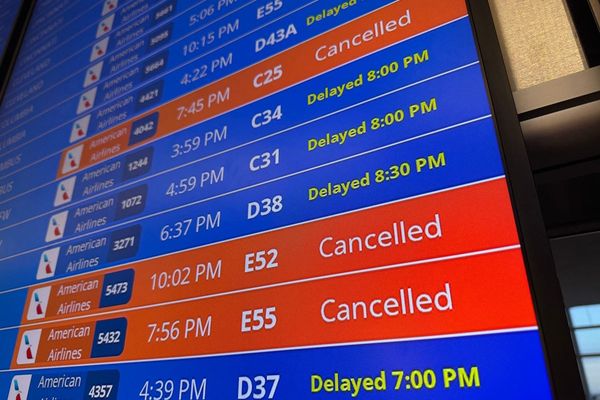
The Department for Transport has issued a paper today (pdf) about how permits could be issued to hauliers to allow them to operate on the continent after Brexit. It says it hopes that there will be a deal and that permits will not be necessary. But in the event of there being no Brexit deal, hauliers will need permits - and the number of ECMT [European Conference of Ministers of Transport] permits available is much, much smaller than the number of hauliers who might want one (only 5% of the total, according to one estimate).
The paper explains how ECMT permits would be allocated. Various criteria will be used. But there will also be a random element, the paper says, to increase the number of haulage companies that benefit. It says:
We believe it is important that a large number of UK hauliers can continue to haul goods internationally. Including a weighted random element to the scoring of applications will give the highest scoring operators many, but not all, of the permits they applied for. Instead, those permits are allocated to a larger number of operators who have also scored highly on the other criteria. It also gives a fair and equitable chance for small and medium sized operators to receive permits. We estimate that around four times as many operators will receive permits if an element of weighted random selection is included in the allocation process.
UPDATE: In the comments heemstra points out, rightly, that this is a problem not just for hauliers, but for industry generally.
Updated
Lunchtime summary
- Leo Varadkar, the taoiseach, has told Theresa May in a phone call that he would oppose any plan for the Irish backstop that would allow the UK to opt out unilaterally. (See 1.19pm.) The backstop is the key issue preventing the UK and the EU reaching an agreement for the UK’s withdrawal. Both sides accept that there must be a mechanism (the backstop) to ensure there is no hard border between Northern Ireland and the Republic after Brexit if other provisions supposed to ensure this (a future trade deal involving frictionless borders) don’t materialise. But London and Brussels cannot agree on the details.
- Matt Hancock, the health secretary, has said in a speech that the NHS will not be sustainable without a “radical shift” towards preventing disease and illness.
- The Ministry of Defence must find “immediate” savings to address a £7bn black hole in the armed forces equipment budget, the National Audit Office has said.
Updated
There will be an urgent question in the Commons at 3.30pm on what will happen to EU nationals in the event of there being a no-deal Brexit, prompted by Caroline Nokes’ much-criticised evidence to the home affairs committee on this subject last week. Sajid Javid, the home secretary, has already had to correct his junior minister and declared that employers hiring EU nationals won’t be expected to check when they entered the country from April next year if there’s a no-deal Brexit.
Big UQ granted at 3:30, about @carolinenokes appearance at @CommonsHomeAffs. @YvetteCooperMP to ask @sajidjavid if he will make a statement on arrangements for EU citizens in the event of no deal being agreed in the Article 50 negotiations.
— Labour Whips (@labourwhips) November 5, 2018
@HackneyAbbott for frontbench.
Updated
No 10 says May and Varadkar had 'constructive' call in which May stressed need for backstop to be temporary
Downing Street has now released its own read-out of the May/Varadkar conversation. Unlike the department of the taoiseach, which does not use an equivalent adjective to describe the nature of the conversation, Downing Street says the call was “constructive”. It also stresses May’s desire for the backstop to be temporary.
Here is the read-out in full.
The prime minister spoke to the taoiseach this morning to take stock of the progress being made in the negotiations, including on the Northern Ireland backstop. In a constructive conversation, the prime minister and the taoiseach discussed the remaining issues.
They agreed that the intention was that the backstop should only be a temporary arrangement and that the best solution to the Northern Ireland border would be found by agreeing a future relationship between the UK and the EU. In order to ensure that the backstop, if ever needed, would be temporary, the prime minister said that there would need to be a mechanism through which the backstop could be brought to an end.
She affirmed the UK’s commitment to the Belfast Good Friday agreement and to avoiding a hard border between Northern Ireland and Ireland. The prime minister and the taoiseach agreed that discussions should continue.
Updated
Here is the full text of the read-out from Leo Varadkar’s office of the content of his call with Theresa May this morning. (See 1.09pm.)
An taoiseach Leo Varadkar spoke to the British prime minister, Theresa May, this morning by phone. She sought the call in order to update the taoiseach on the current state of the Brexit negotiations.
Both leaders emphasised their commitment to avoiding a hard border and the need for a legally operable backstop.
The prime minister raised the possibility of a review mechanism for the backstop. The taoiseach indicated an openness to consider proposals for a review, provided that it was clear that the outcome of any such review could not involve a unilateral decision to end the backstop. He recalled the prior commitments made that the backstop must apply ‘unless and until’ alternative arrangements are agreed.
They both expressed the hope that the negotiations could conclude in a satisfactory manner as soon as possible.

Updated
Varadkar tells May UK will not be allowed unilateral opt-out from Irish backstop
Theresa May spoke to Leo Varadkar, the Irish prime minister, this morning. The Irish have released their read-out, and it shows that Varadkar reiterated Dublin’s opposition to any backstop plan that would allow the UK unilaterally to withdraw from it.
That’s the point Simon Coveney, Varadkar’s deputy, made this morning. (See 9.22am.)
This is from Sky’s David Blevins.
Irish Government statement after phone call between Leo Varadkar and Theresa May. #Brexit pic.twitter.com/GbB28EzNEb
— David Blevins (@skydavidblevins) November 5, 2018
Updated
Downing Street lobby briefing - Summary
Here are the main points from the Number 10 lobby briefing.
On Brexit
- Downing Street played down suggestions that a Brexit breakthrough is imminent. The prime minister’s spokesman told journalists:
We continue to make good progress in the negotiations but there is work still to do.
Yesterday the Sunday Times splashed on a report purporting to give details of Theresa May’s “secret plan to secure a Brexit deal”. The spokesman was dismissive.
I have read in the past 24 hours that we have done a deal, that it was 50/50, that a deal was hanging by a thread and - my favourite - that we are in a ‘doom loop’.
As my colleague Dan Sabbagh reports, if there is going to be an emergency EU Brexit summit this week, it is now not expected until the last week of November.
Delay delay. Don't expect a meaningful Brexit update at cabinet this week. No10 not talking up progress this morning. Key European summit could be top of week of Nov 25...no news, not exactly good news.
— Dan Sabbagh (@dansabbagh) November 5, 2018
- The spokesman confirmed that Brexit will be discussed at tomorrow’s cabinet, but played down suggestions that this would be the moment when Theresa May would present her colleagues with a final deal that they would have to accept or reject. Ministers would be discussing deal and no deal scenarios, he said.
- The spokesman did not deny the Telegraph story saying Dominic Raab, the Brexit secretary, privately told the Irish foreign minister that he wanted the UK to be able to leave the backstop after three or six months. (See 9.22am.) The spokesman said he did not comment on “private conversations”. But he did confirm that the government wants to ensure that the backstop is not in place indefinitely and that the deal includes a mechanism to achieve that.
The position that we have set out is we don’t want the backstop to be in place indefinitely and we will be looking to a mechanism to achieve that.
- The spokesman would not say whether Raab would be travelling to Brussels this week for talks with Michel Barnier, the EU’s chief Brexit negotiator. (If he does go, that suggests there’s been a breakthrough; if not, ongoing stalemate.)
- The spokesman refused to respond to Boris Johnson’s latest newspaper attack on the PM’s Brexit strategy. (See 9.22am.) “There isn’t anything new in that article for me to respond to,” the spokesman said.
On other matters
- Downing Street criticised Washington’s decision to reimpose sanction against Iran. Asked about the move, which follows President Trump’s withdrawal from the Iran nuclear agreement, the spokesman said:
We regret the reimposition of sanctions by the US. We continue to believe that the Iran nuclear deal makes the world a safer place and our position remains that as long as Iran continues to meet its obligations under the deal, by respecting strict limits on its nuclear activity, we will be committed to it too. As such, we continue to fully support expanding our trade relationship with Iran and encourage UK businesses to take advantage of the commercial opportunities that arise.
- The spokesman accepted that there was “more to do” in tackling knife crime. But, when the subject was raised in the light of the three fatal stabbings in London in recent days, the spokesman also highlighted measures already taken by the government, including more support for those at risk of knife crime, £22m for an early intervention youth fund, £1.5m for anti-knife crime projects, and the publication of a serious violence strategy.
- The spokesman said a new sports minister, to replace Tracey Crouch, will be appointed today.
- The spokesman refused to comment on the revelation that Jeremy Wright, who as culture secretary oversees media policy for the government, does not subscribe to any newspapers. He said he had no seen Wright’s comment. But he assured journalists that May “does read newspapers” and that “there’s a healthy supply of newspapers to the PM’s private office”. Wright made his comments at the Society of Editors conference, my colleague Jim Waterson reports.
The secretary of state for media and culture Jeremy Wright has said he does not subscribe to any British newspapers or magazines other than "Time magazine", reads columns by Danny Finkelstein and Matthew Paris, and is influenced by "Abraham Lincoln".
— Jim Waterson (@jimwaterson) November 5, 2018
Wright also struggled to name a female columnist he admires.
Jeremy Wright insists he also reads women journalists and a "whole variety of columnists". After being asked five times to name one of these women columnists he names Allison Pearson of the Telegraph.
— Jim Waterson (@jimwaterson) November 5, 2018

Updated
ITV’s Robert Peston has written an interesting post on his Facebook page about the Brexit talks. Here’s an extract.
Because the British government – not Brussels, not the EU 27 leaders – has decided that unless there is a deal this month, the default option of a no-deal Brexit becomes the probable outcome.
“We don’t want no-deal. But because of the parliamentary timetable it becomes very hard to avoid if talks continue past this month,” said a senior member of the government. “And that is why negotiation have massively shifted up a gear, with officials working through the night.”
The important dates are tomorrow, when the prime minister briefs her cabinet on the likely shape of a deal, and (probably) next Monday – which is the probable cut-off day for organising an emergency Brexit council of EU leaders.
And RTE’s Tony Connelly has written a useful Twitter thread on the process. It starts here.
Here's my latest on Brexit, having spoken to various officials this morning:
— Tony Connelly (@tconnellyRTE) November 5, 2018
There's growing pessimism about a breakthrough this week, basically because London is still "negotiating with itself", or "test balloons are being floated above the Thames", as one diplomat put it
Updated
There are two statements in the Commons today.
Breaking news: Two Oral statements today from 3:30 on: 1) Universal Credit – Esther McVey, 2) Government vision on prevention – Matt Hancock
— Labour Whips (@labourwhips) November 5, 2018
The Brexit talks have entered a stage being described by insiders as “the tunnel”. Proverbially there may be light at the end of the tunnel. But, on the basis of what we were told at the Downing Street lobby briefing, there is certainly no light coming out of it at the moment. We learnt nothing of substance about the negotiations.
Still, in the interests of thoroughness, I will post a summary, squeezing the flannel for every last drop of Brexit intel, with all the non-Brexit lines that emerged too.
Channel 4 News has released some new polling showing support for a second referendum on Brexit. Here are the figures.

More results from the poll will be released tonight.
The first results released from our survey show significant but not overwhelming support for a new referendum on the terms of Brexit. Support depends on what question you ask but the most popular choice we found was Deal v Remain. #C4Brexit
— Krishnan Guru-Murthy (@krishgm) November 5, 2018
Tonight at 8pm we will reveal how people would vote if the 2016 question was asked again tomorrow, what voters’ red lines are on doing trade deals, immigration and following EU rules. And what they think of Theresa May’s suggested deal. #C4Brexit
— Krishnan Guru-Murthy (@krishgm) November 5, 2018
I’m off to the lobby briefing now. I will post again after 11.30am.
In September the DUP MP Ian Paisley narrowly survived an attempt to force him to defend his seat in a byelection. After he was suspended from the Commons for becoming a “paid advocate” for the Sri Lankan government and failing to declare family holidays worth at least £50,000, opponents used the recall procedure introduced by the coalition government to try to trigger a recall byelection. But they needed 10% of the electorate in North Antrim to sign the recall petition, and in the event they collected signatures from just 9.4% in the time allowed (7,099 people, not the 7,543 required).
There were complaints at the time that only three venues were opened where people could sign the petition. Up to 10 were allowed under the legislation.
But, in a report today, the Electoral Commission concludes that the petition was well-run and that having more signing places would not have affected the outcome. It says:
We recognise that the decision to use only three signing places was the subject of much debate and criticism. However, we have found no evidence that an increased number of signing places would have contributed to a different result at the end of the recall petition.
This was the first time a recall petition had been organised under the Recall of MPs Act. The petition was open for six weeks, but the commission says in its report that this was too long and that the government should consider shortening the signing period for future petitions.

Grieve says voting down Brexit deal could be justified even if it triggers crisis
The Downing Street Brexit strategy seems to be relying heavily on the assumption that, even if Tory MPs strongly dislike some aspects of her deal, when faced with the choice between that and a no vote that would trigger a crisis, and possibly a no-deal Brexit, they would reluctantly vote for the compromise.
But on the Today programme this morning Dominic Grieve, the Conservative former attorney general who led the Commons revolt on the “meaningful vote” last year, said he did not accept that logic. He told the programme:
I don’t accept that rejecting the deal would necessarily mean it is no deal at all.
Of course it would provoke a political crisis ... but there comes a point where you have to look to the long-term.
If the long-term is that we are simply going to be continuing this argument long after we’ve left the EU on 29 March next year as to what our future relationship with it is going to be, then, quite frankly, it would be better to have that argument now and let the public decide what they want and if they are content with the arrangements the government has come up with.
Grieve also used the interview to express reservations about the idea of the UK remaining in the EU customs union for good (which is what many suspect would be the eventual outcome if Theresa May were to agree to the UK as a whole staying in the customs union as her version of the Irish backstop, without the UK having an opt-out clause). Grieve said:
At the end of the day [the prospect of the UK staying in the customs union for good] highlights why the entire enterprise is questionable, because in fact what we are likely to end up with is leaving the EU but staying in a relationship of sufficient dependency on it without influence as to call into question the whole project.
Ironically, this argument is very similar to the one that Boris Johnson, the Brexiter former foreign secretary, is making in his Sun column – from the opposite end of the Brexit spectrum. Johnson said:
We will be told that we have protected ‘our precious union’.
But we have done that by agreeing that the whole of the UK will remain in the EU’s customs union, and in alignment with the EU’s rulebook on goods and agriculture and much else besides. We have agreed to remain in vassalage forever. We have gone along with the claptrap that this is essential – as the only way to avoid a hard border between Northern Ireland and Ireland.

Updated
Sabine Weyand, who is deputy to Michel Barnier, the EU’s chief Brexit negotiator, has given Simon Coveney’s Irish backstop tweet (see 9.22am) the Brussels stamp of approval.
Still necessary to repeat this, it seems. https://t.co/fnZHvuPNp6
— Sabine Weyand (@WeyandSabine) November 5, 2018
Updated
EU and Ireland will never accept time-limited backstop, says Dublin
Not for the first time, we are entering what seems to be a crucial week for Brexit. As the Guardian reports, by Friday the EU will have to decide whether there has been enough progress towards a deal to justify scheduling an emergency summit later this month to finalise it. (The talks could extend into December, but Theresa May would rather avoid that because then there would be no chance of getting the parliamentary vote over before Christmas, the whole deal could unwind over the holidays, and even if it didn’t, it would start getting very hard getting all the required legislation through parliament before the end of March.)
But the UK and the EU remain at odds over the Irish backstop. The Daily Telegraph (paywall) today claims that Dominic Raab, the Brexit secretary, last week told the Irish government that he wanted the UK to be able to leave the backstop within three or six months. The paper reports:
Mr Raab’s proposal to [Simon Coveney, the Irish foreign minister and deputy prime minister] was that within three months of the backstop coming into force – or six months at the very most – the UK would have the unilateral right to trigger a “review mechanism” in which the backstop would only persist by “mutual consent”.
“The idea that an alternative arrangement that delivers no hard border in Ireland would be ready in three months is totally unrealistic,” said a senior EU source, adding that it was “hard to believe” that Mr Raab was not aware of that.
Mr Raab’s position was apparently contradicted by Mr Lidington on a visit to Dublin last Friday for a British-Irish intergovernmental conference at which the two leaders said they were “very close” to a deal.
In an article in the Sun today Boris Johnson, the former foreign secretary, said that without the ability to terminate the backstop, the UK will “remain in vassalage forever”.
But this morning Simon Coveney has insisted that the EU will never agree to a “time-limited backstop”. He posted this on Twitter.
The Irish position remains consistent and v clear that a “time-limited backstop” or a backstop that could be ended by UK unilaterally would never be agreed to by IRE or EU. These ideas are not backstops at all + don’t deliver on previous UK commitments #Brexit pic.twitter.com/y7AQ8V1jMo
— Simon Coveney (@simoncoveney) November 5, 2018
More on this all day, of course – and all week, and no doubt ad infinitum.
Here is the agenda for the day.
9.30am: Matt Hancock, the health secretary, speaks at the International Association of National Public Health Institutes annual meeting. As Denis Campbell reports, Hancock will call for a big increase in people making healthier lifestyle choices, such as reducing the amount of alcohol and junk food they consume.
11am: Downing Street lobby briefing.
After 3.30pm: MPs debate the Laura Cox report into the bullying and harassment of Commons staff.
4pm: Jon Thompson, permanent secretary at HM Revenue and Customs, and Paul Lincoln, director general of the Border Force, give evidence to the Commons public accounts committee about Brexit planning.
4.30pm: Philip Hammond, the chancellor, gives evidence to the Commons Treasury committee about the budget.
As usual, I will also be covering breaking political news as it happens, as well as bringing you the best reaction, comment and analysis from the web. I plan to post a summary at lunchtime and another when I wrap up, after the Hammond hearing is over.
Here is the Politico Europe round-up of this morning’s political news. And here is the PoliticsHome list of today’s top 10 must-reads.
If you want to follow me or contact me on Twitter, I’m on @AndrewSparrow.
I try to monitor the comments BTL but normally I find it impossible to read them all. If you have a direct question, do include “Andrew” in it somewhere and I’m more likely to find it. I do try to answer direct questions, although sometimes I miss them or don’t have time.
If you want to attract my attention quickly, it is probably better to use Twitter.
Updated









Andrew, great blog this, but there is a major issue with items that pop up late in the day, that would benefit a lot from expert input of commenters and that are lost as so much (4000!) people commented already. The haulier permit issue is a totally separate make or break problem for ALL industry, because when 95% of British vehicle/drivers will not be able to travel to and from the continent we are royally stuffed. This is no longer project fear, it is far far far worse.