
Summary
I will be wrapping up now, as most commentators and MP’s have retreated to their boudoirs it seems, in preparation for tomorrow’s Brexit questions in the Commons, kicking off at 09.30am.
Here a short summary of what happened tonight:
- Boris Johnson has lost another big Commons vote as MPs blocked his bid to trigger a general election.
- It is not clear yet under what circumstances and at what time Labour will back a general election. Shadow chancellor John McDonnell said that the people want to wait and see what deal Johnson brings back from Brussels. Other Labour MP’s have echoed this view.
- The Benn bill, designed to outlaw a no deal Brexit, passed its second and third reading with ease in the Commons.
- The House of Lords is still voting on amendments to a business motion tabled by Labour that aims to get the Benn bill through all stages before parliament is prorogued.
- About 10 of the Tory MPs who had their whip withdrawn after they rebelled against the government last night have threatened legal action and announced they plan to stand again for the Conservatives.
- Three Conservative MPs have announced they are standing down at the next general election: the pro-Remain former defence secretary Michael Fallon, Caroline Spelman, who rebelled against the Tory whip tonight, and Nicholas Soames, who is standing down as an MP after 37 years – after he was expelled from the Conservative party for voting against the government.
This tweet from Jess Phillips will sum this day up for many MPs, reporters, pundits and onlookers:
Just got home. Today is one of those days when I have no recollection of if I've eaten or not. It's been a blur. Thanks for all your loveliness.
— Jess Phillips Esq., M.P. (@jessphillips) September 4, 2019
And on this note, goodnight.
This from the Birmingham Post’s Jonathan Walker:
Caroline Spelman has announced she is standing down at the next election https://t.co/QhWyRaY3p0
— Jonathan Walker (@jonwalker121) September 4, 2019
This from ITV’s Alastair Stewart:
On @BBCBreaking #PaperReview @mrlanceprice says he can't predict the outcome of the #Genelec when it comes.
— Alastair Stewart (@alstewitn) September 4, 2019
"Party loyalties will change; it won't be party as much as #Brexit that settles it ".
Lance is a former Director of Communications for @UKLabour.
And here my colleagues Heather Stewart, Jessica Elgot and Peter Walker have written up what went down in the Commons tonight.
By the way, here is a handy overview of how each MP voted tonight:
The House of Lords is still bogged down in voting on amendments.
This from the LibDem peer Paul Strasburger:
Still voting away in the Lords. Just won for thirteenth time. The record of 14 votes is in grave danger. We are being kept up all night by a handful of Brexit ultras who are trying to talk out our effort to save us from no deal Brexit.
— Paul Strasburger (@LordStras) September 4, 2019
And this from parliamentary researcher Robbie Lammas:
A message of hope: Tonight, while exhausted MPs and politicos rest, patriotic Lords are trying all they can to prevent the #SurrenderBill from passing. They might even succeed. Good luck! God bless! And good night! pic.twitter.com/CJugAP4pvc
— Robbie Lammas (@RobbieLammas) September 4, 2019
Updated
Michel Barnier, the EU’s chief Brexit negotiator, is said to have advised European diplomats that the negotiations with the British government are in a state of paralysis - in stark contrast to claims by the PM and his circle that progress is being made.
He also said that Britain seemed intent on reducing the level of ambition in the political declaration that will frame the next stage of the negotiations.
According to BBC Europe editor Katya Adler, the statement was leading EU leaders to think Mr Johnson “cannot have a solution up his sleeve - despite all the rhetoric”.
Updated
The Conservative MP and former cabinet minister Sir Michael Fallon, who supported Remain in the referendum, has announced a little while ago that he is standing down as a Tory MP at the next general election, after 31 years or service. Fallon was forced to resign as defence secretary in 2017 after a series of sexual harassment allegations.
In a letter, he thanked his Sevenoaks constituents and said he and his wife would continue to live locally.
Salma Shah, a former adviser to Sajid Javid, tells Peston that she believes it’s still possible that it all works out for the PM in the end, and that he is trying to unite the leave votes with his current course.
Grieve says May lost an opportunity in January to put her rejected Brexit deal to the people in a referendum. He says he’s getting “irritated” by politicians who only aim to further their own career interests.
Updated
McDonnell’s comments about the timing of a general election are at odds with those of Jeremy Corbyn.
This from Sky’s Beth Rigby:
Labour: Corbyn tells Commons he will back GE once No Deal gets royal assent (suggests next few days). And McDonnell tells @Peston party still talking about whether to delay it past Oct 31 https://t.co/ITJwqU7jE7
— Beth Rigby (@BethRigby) September 4, 2019
This, however, from the BBC’s Laura Kuenssberg, makes it look as if Corbyn is aligned with his McDonnell:
A senior Labour MP has just said Jeremy Corbyn told him tonight he would NOT allow Boris Johnson to have an election before 31st October
— Laura Kuenssberg (@bbclaurak) September 4, 2019
Updated
McDonnell tells Peston now that Labour wants the electorate to have a “proper choice” when they go to the polls, and says this would be the case after the PM has met with the EU council and has come back with a deal or nothing.
He says the problem is that the Fixed Parliament Act does not provide an option for MPs to set a binding date for a general election, but that that’s precisely what parliament is now trying to achieve.
“We will offer the people the final say,” he says.
Lots of MP’s are insisting that Boris Johnson cannot be trusted tonight. Here Labour MP Lisa Nandy on BBC Newsnight. “If I’ve learnt one thing about Boris Johnson over the last few months, it’s that you can’t trust a word he says.”
Labour MP Lisa Nandy says that she believes it is important that the Brexit delay bill "is implemented, not just passed… before we vote for a General Election” because “you just can’t trust a word” Boris Johnson says.#Newsnight | @lisanandy pic.twitter.com/Wkf9ZDcVmL
— BBC Newsnight (@BBCNewsnight) September 4, 2019
Shadow chancellor John McDonnell is now on Peston. He says once there is legislative security around no deal being outlawed, Labour will look at a date for a general election.
He says party members are being consulted on the best time for a general election. He says he “desperately” wants one, but that the PM can’t be trusted. He says that he believes a deal can still be done.
This from ITV’s Joe Pike:
PM tells @Peston on his purge of rebels: ‘These are friends of mine.’ He takes ‘no pleasure’ in withdrawing whip but they were warned of the consequences.
— Joe Pike (@joepike) September 4, 2019
Is Boris Johnson confident that he’ll get his general election before the EU council meeting? Is he going to be “a permanent lame duck?”, asks Peston.
“I think the position by the Labour party, to be so consumed by cowardice as to resist a general election, is not politically sustainable,” the PM responds.
The PM told Peston earlier that “it’s been a very good day”, before starting to list several areas his government is intending to invest in, such as schools, police and social care.
He said tonight’s events effectively wrote the letter to the EU asking for another extension for him.
Like earlier in the Commons, he uses the word “sad” again to describe the situation.
Peston asks if he really will expel Tory MPs who might vote against his deal with Brussels, like the PM said he would yesterday.
Johnson repeats his “what’s sauce for the goose is sauce for the gander” line, but is otherwise pretty evasive.
Peston has just started, where Jess Phillips and Dominic Grieve currently discuss the punishment of the 21 Tory rebels who defied the government whip yesterday.
Grieve, introduced to the audience as a “Former Conservative” tonight, says it’ll depend on when the next election is and on the circumstances whether he will run or not.
Phillips repeats she wouldn’t trust Johnson on anything, and that she believes he will try and force no deal.
This from Metro’s Joel Taylor:
Boris Johnson is now wanting to ‘trust in the British people’ in a general election https://t.co/fJniSLSwBj
— Joel Taylor (@JoelTaylorhack) September 4, 2019
Anna Soubry is one of many MPs that are outraged by the treatment of the Conservative rebels.
This is utterly disgraceful and I cannot believe that the likes of @AmberRuddHR @NickyMorgan01 @RobertBuckland @MattHancock are standing by, mute & letting this happen the #ConservativeParty is making the Corbynistas look like a bunch of pussy cats https://t.co/nJpFFdRUkA
— Anna Soubry MP (@Anna_Soubry) September 4, 2019
This from David Gauke, one of the Tory MP’s who rebelled against the government and had their whip withdrawn yesterday.
Just received a text to say that my Association Chairman has been told that I am no longer a member of the Conservative Party. First I’d heard of that.
— David Gauke (@DavidGauke) September 4, 2019
Not even a member of the Conservative Party?
I finally have something in common with Dominic Cummings.
This from ITV’s Paul Brand:
NEW: PM tells @Peston says the opposition will find themselves in an "unsustainable position" and will eventually have to vote for an election.
— Paul Brand (@PaulBrandITV) September 4, 2019
"To be so subsumed by cowardice is not politically sustainable."
Allister Heath, the editor of the Sunday Telegraph, also believes Boris Johnson will eventually get his way.
He writes (paywalled):
The Tory party is dead; long live the Tory party. The seismic realignment that was supposed to take place in 2016 is finally upon us, and a tougher, rougher, non-deferential conservatism is making its explosive debut.
[...]
Right now, Johnson and Cummings are still on a path to success, even if they have had to recalibrate their journey several times as obstacles have emerged. The situation is tense, the PM is feeling the pressure and much of the Cabinet is in a state of shock. But Boris hasn’t been “humiliated”. He hasn’t been “wrong-footed”.
The semi-prorogation didn’t “backfire”: it flushed out his hardcore opponents and allowed him to expel them. He knew he would have to do something drastic at some stage and there was no way that those committed to derailing his plans would ever have been allowed to stand under Tory colours at the election. His party was already split de facto, if not de jure; he was always leading a minority government in all but name. The sackings merely formalised this.
[...]
Last but not least, engineering a delay in Brexit would simply encourage the Government to go for broke. If they were to back a no-deal Brexit, Nigel Farage would step aside and the Leave vote would unite. I am sure those in No 10 genuinely and rightly want a deal. But they may not have a choice if furious voters begin to turn to the Brexit Party again. Do the Remainers really want to goad Downing Street in this way?
Johnson’s gamble was breathtaking in its ambition: he would take over a fatally divided Tory party with no majority, forcibly reform it in his image and gain a pro-Brexit majority. For all of the madness of the past few days, I’m still predicting that he will pull it off.
There is still some confusion about what happened earlier in the Commons when the Kinnock amendment was passed automatically because the government didn’t provide any tellers, and about the potential consequences.
This from BuzzFeed’s Alex Wickham:
Labour say their legal advice is that Kinnock amendment is not legally significant so no drama
— Alex Wickham (@alexwickham) September 4, 2019
And this from the editor of Politics.co.uk, Ian Dunt:
Had to step away, and everything just went completely weird with the Kinnock amendment and now I'm lost in an avalanche of what the fuck is actually going on.
— Ian Dunt (@IanDunt) September 4, 2019
Updated
There seems to be a rift in the Labour party regarding when it will vote for a general election.
This from Kevin Schofield from PoliticsHome.com:
Labour press release says Labour will back an election once rebel bill gets Royal Assent.
— Kevin Schofield (@PolhomeEditor) September 4, 2019
That directly contradicts what Keir Starmer told Labour MPs this morning and the Commons this afternoon.
Labour MP: "That is not party policy." pic.twitter.com/ciTZF41H9t
Peers in the House of Lords meanwhile are still voting on amendments to the Labour business motion that is designed to ensure the no-deal Benn bill will get through the House by 5pm on Friday, just in time before parliament is to be suspended.
They have to vote on over 100 amendments. Earlier there were rumours that the peers were adjourning, but they’ve carried on. As my colleague Andrew Sparrow explained earlier today, Tory peers have the opportunity to filibuster the process, as this kind of debate can in theory go on for as long as it wants to.
This from Conservative peer Ralph Lucas earlier:
It appears to me that the effectiveness of the filibuster has been accepted, and the focus therefore moves to whether a deal can be done in the Commons to bring the filibuster to an end. Lord Forsyth says the price for that is Boris being allowed to call an election.
— Ralph Lucas (@LordLucasCD) September 4, 2019
I’ll be rounding up a few reactions to tonight’s events now.
This here from the FT’s editor Lionel Barber:
Am hearing many Tory MPs, including majority of Boris Johnson’s Cabinet, believe expelling two former Chancellors, moderates and long serving Tories like @NSoames was huge error. “We’ve got to bring them back if we want to win the coming election” said one. Watch this space
— Lionel Barber (@lionelbarber) September 4, 2019
The Commons has now moved on to a debate on Treasury funding for the Department of Health and Social Care.
Updated
The prime minister along with the shadow chancellor, John McDonnell, SNP Westminster leader, Ian Blackford, Jess Phillips and Dominic Grieve will be on Peston in a bit. Should be fun.
Updated
Boris Johnson responded by saying that 48 hours ago, Corbyn wanted to “stop the coup” and let the people vote. “Now he is saying ‘stop the election and stop the people from voting’.
“I think he has become the first leader of the opposition in the democratic history of our country to refuse the invitation to an election. I can only speculate as to the reasons behind his hesitation. The obvious conclusion I’m afraid is he does not think he will win,” Johnson said.
Updated
Government is defeated again in motion on general election
As expected, Boris Johnson has suffered another big loss, with the Commons rejecting his motion calling for a general election.
The PM would have needed 434 votes to reach a two-thirds majority.
Ayes: 298
Noes: 56
Updated
MPs are now voting on the government’s motion calling to hold a general election.
This from my colleague Lisa O’Carroll:
Michel Barnier cancelled a planned engagement in Belfast on Monday telling organisers at Queen’s University that his speech could be “used by some to undermine the chances of an orderly Brexit”.
It is understood he agreed to deliver the Bill Clinton Leadership Lecture some time ago but decided the timing was no longer appropriate when “the UK is engaged in an intense political debate” about its future.
“In many respects, we have finally arrived at a moment of truth for the country. It is my judgment that pronouncing myself publicly in the midst of the debate that is ongoing in Westminster would not be appropriate,” he wrote.
He said he had wanted to deliver a speech showing “full respect” for the sovereignty of the UK and the EU and UK’s “common goal” to achieve an orderly Brexit for Northern Ireland in particular.
Updated
Labour’s Lloyd Russell-Moyle is having a rant. “What the PM has offered us is really a poisoned chalice,” he says. He says that Johnson is a man who has been sacked twice for lying. “He clearly is a person we cannot trust,” he says.
Updated
The Tory MP John Baron says: “If you’re not prepared to walk away, it makes for a worse deal.”
He says there are too many MPs who are trying desperately to derail Brexit and points out that Labour promised originally to deliver Brexit.
Too many members of the Commons are secretly remain MPs and have kicked the can down the road too often, and should own up to the fact that what they really want to do is stop Brexit, he says.
Labour’s Sandy Martin is up next. “I am absolutely desperate for a general election,” he says. But, he says, the PM is calling for a general election in order to be in sole control, when parliament is prorogued, when Britain leaves the EU. He says revoking article 50 would be “entirely wrong”.
“I want to see a viable deal that would not destroy the economy of this country being agreed by this parliament.” He adds that he wants this deal to be put to the people again in a people’s vote.
Updated
Labour’s Thelma Walker says the PM once said the chambers “were just theatre” and that the real business was going on in meetings. This stayed with her, she says.
She says she wants a general election to get a government acting with honour and integrity, but only if there is no chance of a no-deal Brexit. She says Brexit has made Britain “the laughing stock of the world”.
“Our country deserves much better,” she adds.
Updated
Jenkin says there is fear in the Commons about the consequences of a general election. He predicts the rise of “far more extremist parties” if the House continues putting off making a decision.
Updated
Jenkin asks what will happen after another extension has been granted.
“There’s a definition of madness: to repeat the same decision again and again and expect a different outcome,” he says.
He says getting on with Brexit requires respecting the decision of the people who voted to leave.
Updated
The Conservative Sir Bernard Jenkin is speaking and describes the paralysis of this “zombie parliament”. He says the legitimacy of this House is in danger if the referendum is not honoured.
“What is going to be gained in putting off the decision again?” he asks.
Updated
Caroline Lucas is not holding back. She calls the dissolution of parliament “a desperate and utterly cynical move”. She is delighted that the PM needs to “try and own his own horrendous mess”.
She says it is vital that no election happens before there is an extension of article 50.
She remarks on the fact that Boris Johnson has left the chambers: “He can’t even be bothered to listen to the debate on his own motion on something as important as a general election.”
Updated
Nigel Evans is speaking again and says Labour campaigned on a similar platform as the Tories are now and promised to honour the referendum result.
Labour MP Clive Efford says the Benn bill does “absolutely nothing” unless the PM fails to come back from Brussels with a new deal. If he comes back with a deal MPs will vote on it on 19 October, and if it passes, Britain will leave the EU with that deal. If it doesn’t pass, the House will vote on no deal, and only if that’s rejected will MP’s go for another extension.
Updated
Philips says she doesn’t believe we should have a general election, that parliament should not go on conference recess and that that it should not be prorogued.
She says she’ll vote against an election until the end of October.
Updated
Labour MP Jess Phillips is now speaking. “I have no faith in anything the PM says, in nothing,” she says.
“The PM is playing some bully-boy game, that I’m probably not able to understand more than parliamentary procedures,” she says.
She says the PM could bring his plans to parliament, that some of her colleagues were “begging him” to reveal details of his negotiation progress. She says her constituents won’t be collateral in the games Boris Johnson is playing to realise his personal ambitions.
“There are thousands of EU migrants in my constituency and they have absolutely no idea what’s going to happen,” she adds.
Updated
Ian Duncan Smith is now speaking. He says Labour and the SNP called for an election just days earlier but now block it. He says the problem with a people’s vote is that the result would not be accepted if people voted to leave again, as the matter would go back to parliament and nothing would get decided again.
He calls for people to instead be asked in a general election.
“I have never seen a moment when an opposition party does not want to take over ... Put up, or shut up,” he says, to cheers.
Updated
Soubry says the Benn bill has been carefully drafted in the best interests of the country and is not about stopping Brexit, just about stopping no deal.
She calls for a people’s vote. “I think the British people have now changed their minds.”
Updated
Anna Soubry is now speaking. She says the PM has chosen repeatedly to use the word “frit” and “frightened” to describe MPs, when really it took a lot of courage to make their decisions, with some choosing to end their parliamentary career in order to protect their constituents.
She says that people in the UK are sick “to their back teeth” of Brexit and the matter must be brought to a conclusion.
Updated
LibDem leader Jo Swinson says MPs should put party interest aside and focus on national interest. She says the way Tory rebels have been treated is “shameful”.
Asked whether the Lib Dems would pledge to revoke article 50 at a general election, she says her party has been “crystal clear” on wanting to stop Brexit.
She says the PM had wanted the job so long “it has been almost painful to watch”, and that he said Britain would get a great deal. “Now he has the job, go and get that deal”, she says.
She adds that she doesn’t believe there is a majority in Britain for a specific kind of deal, perhaps not even in the Conservative party, and any election should happen in a “calm and orderly way”, not under the imminent threat of a no-deal exit.
Updated
Conservative MP Nigel Evans accuses Labour of “running scared’ of a general election after having spent two years asking for one.
His colleague Craig Mackinlay says many Labour MPs seem to crave EU vassalage and that voters have waited long enough. Says this parliament serves no further purpose. “It’s time for a general election,” he says.
Blackford says the SNP does not trust the prime minister because of his “contempt for democracy”. “He has treated this House and the country with contempt.”
He then calls the government “shambolic and irresponsible”.
Updated
Blackford says nobody voted for a no-deal Brexit as it was not on the ballot paper, and challenges the Tories to “shout us down, as you tried last night”.
The PM should quit the stunts, he says. The SNP is “ready to bring down the Tory government” to give Scotland a chance, and ready to work across the house in order to determine their own future.
“It should be Scotland’s right to decide its own future.”
Updated
Ian Blackford has just called on the PM to sack Dominic Cummings and to bring Ken Clarke in instead.
He says the Benn bill is designed to remove the cliff edge.
“It is the SNP’s top priority to avoid no deal,” he says.
Updated
Ken Clarke, who lost the Conservative party whip last night, is now speaking and is calling for “more time” to find a solution with the EU. He says it may be desperate to find a deal, but not desperate enough to wreck the customs union and to mess up the situation in Northern Ireland.
Updated
Jeremy Corbyn has responded to the prime minister. Theresa May, he said, at least made detailed speeches.
“This PM claims he has a strategy, but can’t tell us what it is ... and he can’t tell the EU either. There really is absolutely nothing there.”
Corbyn says PM knows there is no mandate for no deal.
He says parliament must decide whether to throw this government out.
“If he has a Brexit plan, he should put it before the public in either a referendum or a general election.”
Updated
Boris Johnson calls for a general election on 15 October
Evening everyone. Boris Johnson is now speaking.
So far, much of it sounds almost identical to his speech earlier in the Commons.
He says the Benn bill is essentially one that ends the negotiations, “hands control to our partners.“
There’s only one way forward and the house has repeatedly voted to leave the EU, he says.
“Today [parliament] has voted to stop, to scupper any serious negotiations,” he says. He adds that the purpose of the Benn bill is to take away the right of the UK to determine how long it wants to stay in the EU and to hand it to the EU.
He says the country must now decide whether it is him or the leader of the opposition who goes to Brussels.
“Under any circumstances this country will leave the EU on 31 October”, he says.
He calls again for an election on 15 October.
“I think it’s very sad that MP’s have voted like this. I think it’s a great dereliction of their duty.”
Updated
MPs pass third reading of Benn bill by majority of 28
MPs have given the Benn bill its third reading by 327 votes to 299 - a majority of 28.
At second reading the majority in favour was 29.
That is all from me for tonight. I am now handing over to my colleague Jedidajah Otte who will cover the debate on an early election.
Updated
This is from Graeme Cowie, a Commons clerk, on the Kinnock amendment.
I’m not sure what this amendment actually does. It attaches a purpose for the desired extension, but it doesn’t actually compel the Government (or anyone else for that matter) to actually introduce a Bill.
— Graeme Cowie (@woodstockjag) September 4, 2019
Am I missing something? https://t.co/5ROz1patdx
Here is Labour’s Alex Sobel on the Kinnock amendment division - or non-division.
The amendment in the name of Stephen Kinnock didn’t have a vote as the Government didn’t provide tellers to count. This meant the amendment went through although the No Lobby was full. This wasn’t an accident you can be assured there’s some skullduggery going on
— (((Alex Sobel MP))) (@alexsobel) September 4, 2019
This is from the Labour MP Sarah Champion, who is one of the MPs who signed the Kinnock amendment that has been passed.
Big big win, my amendment to publish the withdrawal bill passed. We can now have an informed debate and hopefully secure a deal the House can accept. I both astounded and delighted!!
— Sarah Champion (@SarahChampionMP) September 4, 2019
MPs are now voting to give the bill its third reading.
From Labour’s Jim McMahon
Mays Withdrawal Agreement is coming back...
— Jim McMahon MP (@JimfromOldham) September 4, 2019
Here is some comment from journalists on what has just happened.
From the BBC’s Laura Kuenssbeg
It looks like the Kinnock amendment to put Theresa May's deal back to the Commons for another vote just went through by mistake.... things are getting very very odd around here indeed
— Laura Kuenssberg (@bbclaurak) September 4, 2019
From the Spectator’s James Forsyth
So, Theresa May’s Brexit deal has got further tonight—with her out of office—than it ever did with her in office. Strange times…
— James Forsyth (@JGForsyth) September 4, 2019
From the Mirror’s Pippa Crerar
Has the Government done this deliberately to screw the whole vote?
— Pippa Crerar (@PippaCrerar) September 4, 2019
MPs agree amendment to Benn bill to put cross-party version of May's deal back on table
MPs started voting on Stephen Kinnock’s amendment 6. But then, a few minutes into voting, Lindsay Hoyle, announced that the division had been called off because the amendment had been passed - because MPs opposed to it did not put up tellers.
Here is the explanation of what the Kinnock amendment does.
This amendment would set out as the purpose of seeking an extension under article 50(3) TEU the passage of a withdrawal agreement bill based on the outcome of the inter-party talks which concluded in May 2019 – see NC1 for contents of the Bill and Amendment XX for text of the request letter to the European Council.
This means that, if the PM needs to request an article 50 extension (because he has not negotiated a new deal, and MPs have not voted to approve a no-deal Brexit), then getting an extension to pass a version of the Theresa May deal becomes government policy.
Effectively, that means that any Brexit delay would not be a blind delay; it would be a delay to enable a version of the Theresa May going through.
It is not clear whether this has passed by accident - or as a result of some cunning plot.
The Richard Graham amendment (see 7.10pm) was defeated by 495 votes to 65 - a majority of 430.
According to the Lib Dem MP Layla Moran, there are rumours there could be 10 votes on amendments.
Rumours of ten votes. One down...
— Layla Moran 🔶 (@LaylaMoran) September 4, 2019
What comes next in the Commons tonight?
MPs are now voting on amendments to the Benn bill, which is designed to stop a no-deal Brexit on 31 October. We don’t know yet how many amendments will be put to a vote. Each vote takes about 15 minutes. But it may well be that all amendments get voted down.
After that there will be a vote on the third reading of the bill. The result of this is set to be identical, or almost identical, to the vote at second reading - which was the important vote on principle. The opposition and Tory rebels won the comfortably. (See 5.22pm.)
After the third reading the bill will be ready to go to the Lords.
And then MPs will have a 90-minute debate on Boris Johnson’s motion saying there should be an early election. It may be a lively debate - Johnson is opening for the government - but the opposition will not back the motion, and so Johnson will not get the two-thirds majority he needs under the Fixed-term Parliaments Act for an early election to actually go ahead.
MPs are now voting on the first amendment - amendment 19.
The full list of amendments is here (pdf).
And the full text of the bill is here (pdf).
Amendment 19 has been tabled by the Tory Richard Graham. It is an amendment that is designed to ensure that parliament would get the chance to debate whether it wanted the existing deal after the EU council in October.
Explaining it, Graham told MPs:
There are many of us in this house on all sides who do not want no-deal and yet ... many colleagues have not supported a deal and therefore my simple amendment to the bill today proposes that the amendment requires the government to have a vote on Monday 21st October, the first sitting day after the EU council on a deal - whether it be a new deal or the previous deal and that should that vote be successful and be approved by members of this house, then the government would be required, if they needed more time, to ask for an extension from the EU purely in order to get the legislation through parliament.
It gives us all one last chance to vote for a deal if we do not want no-deal.
Barclay says the EU says it is ready for a no-deal Brexit. But he says there is a difference between having the right regulations in place (where he implies EU preparations are satisfactory) and operational readiness, which he says varies from state to state.
Caroline Flint, a Labour MP backing the Kinnock amendments, tells Barclay in an intervention that many of her colleagues now regret not voting for a Brexit deal. She says she would like both front benches to get this message. Now is the time to move on, she says.
Stephen Barclay, the Brexit secretary, is now winding up for the government. He says the government opposes the bill. He says it is “so flawed” that the government has not even proposed amendments to it.
Referring to the Kinnock amendments, Barclay complains that Kinnock voted against the Brexit deal all three times.

In the debate Paul Blomfield, the shadow Brexit minister, is winding up for Labour now. He says he has some sympathy for the Kinnock amendment, but he argues that it is flawed because, he says, the cross-party talks did not actually reach an agreement on a revised withdrawal agreement text.
Updated
The debate on the 29 amendments tabled to the Benn bill has not been especially illuminating. The most interesting ones are those tabled by Labour’s Stephen Kinnock and other, mostly Labour, MPs designed to allow MPs to vote for a version of Theresa May’s deal, incorporating the changes proposed during the cross-party talks.
Proposing his amendments, Kinnock said:
It is a travesty that parliament did not get to vote on the withdrawal agreement bill as it was very different to the former prime minister’s blind Brexit and provided far more clarity on EU and UK relations.
Here are some lines about what Boris Johnson told the Conservative 1922 Committee this afternoon.
From Sky News
Prime Minister Boris Johnson has told the 1922 committee of Conservative MPs
— Sky News Breaking (@SkyNewsBreak) September 4, 2019
there must be an election and Britain will leave the EU on Oct 31st
From the Sun’s Tom Newton Dunn
More trouble for Boris. Lots of Tory backbenchers in a 1922 Committee meeting with the PM now just cheered Edward Leigh and Damian Green for speaking up for the 21 rebels, and booed Dan Kawczynski for attacking them.
— Tom Newton Dunn (@tnewtondunn) September 4, 2019
I'm told Boris is now explaining his alternative Irish backstop idea to the 1922, an all-Ireland agrifood zone, by quoting Ian Paisley Snr: "Our people may be British but our cows are Irish”.
— Tom Newton Dunn (@tnewtondunn) September 4, 2019
In reply to backbenchers demanding the whip is restored to the 21, I’m told Boris repeatedly said he “can’t undermine the chief”. Tory MPs say it was the PM who instructed the Chief Whip to do it.
— Tom Newton Dunn (@tnewtondunn) September 4, 2019
From the FT’s Sebastian Payne
Boris Johnson came under sustained attack in the 1922 committee this evening for withdrawing the whip from the 21 anti no deal rebels.
— Sebastian Payne (@SebastianEPayne) September 4, 2019
The prime minister blamed it on the chief whip, saying it would be wrong to undermine him. "It was completely pathetic," said one MP.
Johnson was also questioned about the role of Dominic Cummings in the sacking of the 21 rebels. The PM responded that Cummings shouldn't be blamed as it was him in a "latex mask".
— Sebastian Payne (@SebastianEPayne) September 4, 2019
From the Spectator’s James Forsyth
Boris Johnson’s deployment of Ancient Greek to explain his decision to take the whip away from 21 Tory MPs hasn’t totally reassured Tory MPs. But there does seem to have been a hint of eventual reconciliation
— James Forsyth (@JGForsyth) September 4, 2019
Dame Caroline Spelman will not lose the Tory whip for voting against the government tonight, the Telegraph’s Gordon Rayner reports.
Sounds as though Caroline Spelman will be spared. Govt source says today's vote was NOT being treated as a confidence vote so she won't be kicked out despite breaking three-line whip. Where does that leave party discipline though?
— Gordon Rayner (@gordonrayner) September 4, 2019
Thornberry admits Labour has not got settled view on when early election should be held
Emily Thornberry, the shadow foreign secretary, admitted on Sky News that Labour has not got a settled view on exactly when it wants an early election to be held. She said:
We want the general election after we’ve sorted out the no deal … I can’t help you with exactly what date it’s going to be. Or when it is that we’re going to put it down.
Whether it’s going to be the mechanism which is two-thirds [of MPs voting for an election] or whether we’re going to go for [a confidence vote] later on - I’m not sure at the moment because we’re making decisions on an hourly basis.
Thornberry also said her preference would be to wait for a few weeks.
I personally think that we need to have a general election when we’re going to win it. I’ll wait a couple of weeks. If we can give them a little bit of extra rope – just let them be in power for a few more weeks, then people can really see how bad they are.
Updated
My colleague Peter Walker has been covering the Young Conservatives for a People’s Vote protest outside Conservative Campaign Headquarters this afternoon about the effective deselection of pro-European Tories. He has found out that the group does exist.
I’ve popped from parliament to Conservative HQ nearby, where we’re promised a demo by Young Conservatives aghast at Boris Johnson’s approach to Brexit and party purges. So far there’s about a dozen media people... but no protesters. It’s not due just yet, so hopefully not a hoax.
— Peter Walker (@peterwalker99) September 4, 2019
The disgruntled Young Conservatives *do* exist, but not in great numbers - fewer than the assembled media so far. They seem to also be linked to the Conservative Group for Europe, headed by Ken Clarke, so these are very much the pro-remain edge of the party. pic.twitter.com/Gn7KHlXlFp
— Peter Walker (@peterwalker99) September 4, 2019
They’re now eagerly chanting, “We want our party back,” and “Dominic Cummings is not a Conservative”. Given their Ken Clarke-like views on Europe, “our party back” potentially means from some time in the Heath era.
— Peter Walker (@peterwalker99) September 4, 2019
Updated
'Boris knows how to win' - Trump backs Johnson despite PM's latest setback
Donald Trump has been speaking about Boris Johnson. Asked by reporters what he thought about developments in the UK, and the Commons defeat Johnson suffered last night, Trump replied:
He’s a friend of mine, and he’s going at it, there’s no question about it … Boris knows how to win. Don’t worry about him.

Updated
Jeremy Corbyn’s video tweet of Labour MP Tanmanjeet Singh Dhesi urging Boris Johnson at PMQs to apologise for his comment about Muslim women has been retweeted by the American congresswoman Ilhan Omar. Omar herself has been the subject of racist abuse from Donald Trump.
In every corner of the globe and certainly here in America, every constituent deserves courageous Representatives who could call out hate and bigotry.
— Ilhan Omar (@IlhanMN) September 4, 2019
Demand it, expect it and don’t even allow them to coward! https://t.co/IXtV3XfTN9
Updated
Voting on the Benn bill was much the same as voting on the SO24 motion yesterday, but there have been some minor changes.
New Tory rebel
Dame Caroline Spelman has joined the Tory rebels. Yesterday she voted against the SO24 motion, but today she voted for the Benn bill.
Non-voting rebel
But there were 21 Tory rebels in the vote at 5pm, the same number as last night. That’s because Caroline Nokes, who rebelled last night, did not vote this afternoon. It is not clear why.
Independents joining the rebels
Two independents who did not vote yesterday, Kelvin Hopkins and John Woodcock, both voted with the opposition and Tory rebels today.
Extra non-voting Labour MP
Yesterday, two Labour MPs did not vote: Sir Kevin Barron and Derek Twigg. Today, a third Labour MP, Ronnie Campbell, did not vote. Yesterday, Campbell voted with the Labour whip for the SO24 motion.
Updated
The division lists for the second reading vote on the Benn bill are here.
Boris Johnson is addressing the Conservative 1922 Committee, according to the Spectator’s James Forsyth.
The usual desk banging reception for the Tory leader at the ‘22. But Boris Johnson will need to reassure a slew of Tory MPs nervous after last night’s expulsions
— James Forsyth (@JGForsyth) September 4, 2019
Dame Caroline Spelman, the former environment secretary, was the new Tory rebel, the Sun’s Tom Newton Dunn reports.
The Tory rebellion is growing: Govt defeated on 2nd reading of Benn bill to delay Brexit by one more than last night; 329-300. Caroline Spelman is the new rebel.
— Tom Newton Dunn (@tnewtondunn) September 4, 2019
The amendments are available on the Commons website here (pdf).
I will highlight some of the main ones soon.
Updated
MPs are now debating amendments to the bill.
Sir Mike Penning, a Tory Brexiter, has just complained that printed copies of the amendments are not available yet in the vote office.
Lindsay Hoyle, the deputy speaker, says they will appear soon, and well before voting at 7pm.
MPs give bill to stop no-deal Brexit second reading by majority of 29
MPs have voted to give the bill to stop a no-deal Brexit on 31 October a second reading by 329 votes to 300 – a majority of 29.
That majority is two bigger than last night (when the SO24 motion was passed by 328 votes to 301).
Updated
'There's a strong democratic case for it' - Dominic Cummings in 2016 on holding referendum on terms of Brexit
This is from the Daily Mirror’s Jason Beattie.
I'd forgotten that Dominic Cummings told the Economist in 2016 there was a "strong democratic case" for putting any Brexit deal back to the peoplehttps://t.co/eOiQk0HTXJ
— Jason Beattie (@JBeattieMirror) September 4, 2019
This is what Dominic Cummings, Boris Johnson’s de facto chief of staff, said about a second referendum in an Economist interview in January 2016 (before the referendum on leaving the EU). At the time, Cummings was campaign director for Vote Leave. Asked if he thought the government would hold a second referendum, on the terms of Brexit, in the event of a vote to leave, Cummings replied.
I think that is a distinct possibility, yes. It’s obviously not something that we can force. We’re a campaign group. But I think it is perfectly possible that leadership candidates to replace David Cameron will say that they think there are good grounds for a new government team to offer the public a voice on what the deal looks like. And we obviously wouldn’t oppose that, if that’s what senior politicians want to offer. I think there’s a strong democratic case for it.
There’s also the issue of the profound loss of trust that the establishment has suffered over the past 20-30 years. All parties have told lies about this subject, whether it’s John Major and David Cameron or Gordon Brown, Tony Blair and Nick Clegg. People have repeatedly promised referendums then not held referendums. So given that, it wouldn’t surprise me at all if leadership candidates to replace Cameron said: we need a mechanism so people can have confidence in what we say.
Updated
MPs vote on bill intended to stop no-deal Brexit on 31 October
MPs are now voting on the Benn bill. The result will be announced in about 15 minutes.
Updated
Stephen Barclay, the Brexit secretary, is winding up the second reading debate on the Benn bill for the government.
He claims the bill would undermine the government’s negotiation with the EU. And he insists progress is being made. Originally the EU said the withdrawal agreement could not be rewritten, he says. But now they are saying they are open to effective alternatives to the backstop.
Updated
Margot James, who was a Conservative MP until she lost the whip last night after voting against the government, has added her voice to those criticising Dominic Cummings, the PM’s de facto chief of staff. (See 3.17pm.) At PMQs she asked Boris Johnson about him, saying he should remember Margaret Thatcher’s words: “Advisers advise, ministers decide.” After PMQs she told PA Media she had received “a lot of very supportive texts from people in No 10” after asking her question. She continued:
The levels of comments stretches far and wide and it’s high time [Cumming’s] wings were clipped.
Asked what she thought of Cummings, James said:
Very dangerous, very dangerous indeed. He is ruthless, he couldn’t care less whether we got a deal or whether we didn’t and he rules with a rod of iron.
I don’t approve of the way he treats people, apropos that poor special adviser who did nothing wrong whatsoever.
I mean, I could go on but you know my opinion of the man.
Updated
Boris Johnson will open the debate holding an early election in the Commons this evening, Downing Street said. The prime minister’s spokesman said:
The prime minister, while not wanting an election, believes that if his negotiating position has been destroyed then that should be tested at an election and the public should be able to decide on the next steps forward.
The shadow chancellor, John McDonnell, has said Labour and other opposition parties have yet to decide when they might support Boris Johnson’s call for an election, saying this would only happen when they were certain that no-deal Brexit on 31 October had been blocked.
The parties were taking legal advice, and would decide day by day, he told reporters, saying it meant Labour could still back an election on Johnson’s preferred date of 15 October, once a backbench bill seeking to block no deal had become law, but also possibly not till the Brexit date had been delayed.
The key, McDonnell said, was that they could not trust Johnson, calling him “beyond all the norms of political and constitutional practice in this country”. He said:
We want to get the legislation secure, with royal assent, but we’re also not going to be tricked or conned, so we’re looking at every way in which, having secured the legislation, that he can’t wriggle out of abusing by the law.
At the moment there’s nothing that Johnson has done in recent weeks that gives us the confidence that he’s going to abide by the law.
McDonnell’s stance seems closer to that advocated by Keir Starmer, the shadow Brexit secretary, than Jeremy Corbyn’s team. Starmer was due to meet other opposition parties on Thursday morning, McDonnell said, saying the SNP’s stated preference for an earlier election was “not a settled position by any means” among other parties.
He said:
We haven’t got a preference. Our preference is to stop a no-deal Brexit. So any mechanism that’s available to us, we’re exploring.
Updated
From Sky’s Lewis Goodall
My understanding is that the strong view of Starmer, McDonnell and virtually all factions of PLP is that there shouldn’t be an election before November.
— Lewis Goodall (@lewis_goodall) September 4, 2019
Am told Starmer told PLP: “we need to implement the bIll too- which necessarily means going beyond October.”
Here is an extract from Sir Nicholas Soames’ speech.
I want to support this bill. But before I do so, I want to make clear that I have always believed that the referendum result must be honoured. And indeed I voted for the withdrawal agreement on every occasion it has been presented to the house, which is more than can be said for the prime minister, the leader of the house and other members of the cabinet whose serial disloyalty has been such an inspiration to so many of us.
I think history will in due course favour the view articulated so clearly last night by [Sir Oliver Letwin] that a threat to commit an act of self harm if your counterparts in a negotiation do not do exactly as you wish is not exactly likely to be an effective or successful negotiating strategy ...
I am not standing at the next election. And I am thus approaching the end of 37 years’ service to this house which I have been proud and honoured beyond words to be a member of. I’m truly very sad that it should end in this way and it is my most fervent hope that this house will rediscover the spirit of compromise, humility and understanding that will enable us finally to push ahead with the vital work in the interests of the whole country that has inevitably had to be so sadly neglected whilst we have devoted so much time to wrestling with Brexit.
UPDATE: Here is video.
Updated
In the parliamentary estate the division bells have just sounded, signalling that there is a vote in the House of Lords. It is on a closure motion, designed to terminate the debate on an amendment tabled by the Tory Brexiter Lord Forsyth. As explained earlier (see 11.15am), this will be the first of what could theoretically be more than 100 votes as pro-Brexit peers to to filibuster a business motion intended to help the Benn bill become law.
Sir Nicholas Soames has just finished an emotional, and at times very funny, speech in the debate. At one point he seemed close to tears as he was talking about how his long career in parliament has ended (with the removal of the whip last night). I will post the quotes in a moment.
The Labour MP Ben Bradshaw has welcomed Sir Keir Starmer’s declaration that Labour will not back an early election until the provisions of the Benn bill have been implemented. (See 4.08pm.)
Good to hear @Keir_Starmer confirm at the despatch box that Labour will not back an election until the Bill preventing no deal is enacted & its provisions - including an #Article50 extension implemented.
— Ben Bradshaw (@BenPBradshaw) September 4, 2019
Starmer says Boris Johnson decision to refer to Benn legislation as 'surrender bill' is 'beneath contempt'
Labour’s Angela Eagle asks Starmer if he agrees that Boris Johnson’s decision to label this bill with the hashtag #surrenderbill is “beneath contempt”.
If MPs vote for Jeremy Corbyn’s #SurrenderBill tomorrow, we’re going to have to make a choice:
— Conservatives (@Conservatives) September 3, 2019
🇬🇧 Brexit on 31st October with @BorisJohnson and the Conservatives
🏳 Years of delay and arguments with Jeremy Corbyn and Labour pic.twitter.com/c0U42ooerh
Starmer agrees that this label is “beneath contempt”.
He says the concerns about a no-deal Brexit are real. Businesses know that, he says.
(This morning we learnt that the business minister Kwarsi Kwarteng also has reservations about this language. See 7.51am.)
Updated
Starmer says Labour should not back early election until Benn bill has been passed and implemented
Sir Keir Starmer, the shadow Brexit secretary, is speaking now.
He says Boris Johnson is wrong to claim that he is getting closer to a deal.
Labour’s Ben Bradshaw asks for an assurance that Labour will not vote for a general election, not just until the Benn bill has been passed, but until it has taken effect.
Starmer says Labour will not be voting for an early election tonight. He says the party will wait for the “passing and implementation” of the bill.
The use of the word “implementation” is significant. It goes further than what an official party spokesman was saying earlier (see 2.48pm), and it clearly implies delaying an election until November - see 2.35pm - (although conceivably one might argue that “implementation” just means getting royal assent.)
Updated
Hammond also questions the claim that backing this bill will put Jeremy Corbyn in power.
He says: “I would sooner boil my head than hand power to [Corbyn].”
He says it is Johnson’s strategy that is damaging the chances of a deal.
Philip Hammond, the former chancellor who lost the Tory whip last night, is speaking now.
He says MPs need to legislate now because campaigners may need to go to court to get the government to comply with this.
He says he wants to address two claims about the bill.
Boris Johnson says this bill will cut the legs from under his negotiation.
But that is wrong - because no negotiation is taking place, he says. He says that has been made clear from the EU side and the UK side.
And he says this displays a misunderstanding of EU politics. EU leaders are used to making deals, because more of them work in PR systems where coalition politics is the norm.
Hammond says what is undermining Johnson’s position is his refusal to set a realistic negotiation objective. He says by demanding the total removal of the backstop Johnson is asking for too much.
Jane Dodds, the new Lib Dem MP for Brecon and Radnorshire, delivered her maiden speech in the debate, saying she was proud to use her first vote in the Commons last night to allow this debate to go ahead.
Alistair Burt, the former Tory Foreign office minister, was the second speaker in the debate. He is a joint sponsor of the bill. He started by saying that, to his surprise, he was speaking as an independent today, having had the whip withdrawn last night after he voted against the government.
He said he was firmly against a no-deal Brexit. As a Scot, he said he was appalled by polling evidence showing that Conservatives would rather go ahead with Brexit, even if it resulted in Scottish independence. And he said he was worried about the impact of a no-deal Brexit on Ireland. Within the EU, Ireland and Britain became best friends, despite their troubled past. But now Brexit is hurting that relationship, he said.
He said when he first became an MP there were “giants” like Denis Healey and Willie Whitelaw in the Commons. They had served in the war, and they were committed to the cause of Europe because they had seen their friends die.
And he said he was worried about what was happening to the Conservative party. In the last week, it has lost Ruth Davidson as Scottish leader, George Young, who resigned as a government whip in the Lords, and Philip Hammond, who had the whip removed last night.
What are people going to think about what we have left and what we have lost.
Updated
Benn ended his speech by saying a no-deal Brexit would not resolve the crisis.
At the point the UK would still have to decide what relationship it wanted with the EU, he said.
Back in the debate Hilary Benn is explaining what his bill would do.
He says the 19 October 2019 deadline is deliberate. It is the day after the October EU summit. So it allows time for the PM to negotiate a deal at that summit, but it means that if no deal has been agreed at that summit, the PM either has to get MPs to approve no deal or request an article 50 extension.
He says there have been claims that the bill would allow the EU to determine what Brexit the UK must accept. But that is not correct, he says. He says if the EU were to offer an extension other than one until 31 January 2020 (the extension proposed in the bill), the PM could decide whether or not to accept.
Benn is referring to this subsection of the bill.
This part of the Brexit extension bill is v. significant.
— Matt Dathan (@matt_dathan) September 2, 2019
It states the EU can choose the length of the extension - without a limit - and the Prime Minister must agree to it: pic.twitter.com/nZMn4rkSza
This tweet is misleading because it ignores subsection 3(3), which says the PM does not have to accept the new extension proposed by the EU if MPs have voted to reject it.
The Commons library briefing has a fuller explanation.
Turning back to the issue of Labour’s position on an early election (see 2.48pm), my colleague Peter Walker says John McDonnell has been setting out his views in a briefing for journalists.
John McDonnell has just explained Labour election yes-or-no plan to reporters: take it a day at a time, and don’t back one till it’s 100% sure no deal can’t happen on 31/10. So, could be before then or after.
— Peter Walker (@peterwalker99) September 4, 2019
McDonnell says Labour are in daily contact with other opposition parties, with more talks tomorrow. Says the central point is they cannot trust the “slippery” Johnson government to do what they promise - has to be watertight.
— Peter Walker (@peterwalker99) September 4, 2019
There have been various messages emanating from Labour on this. McDonnell’s view seems more on the Keir Starmer end of things.
— Peter Walker (@peterwalker99) September 4, 2019
A Tory puts it to Benn that all his bill does is actually delay the moment at which the UK has to decide what to do about Brexit.
Benn concedes there is some truth in this, but says if you are offered a choice between jumping off a cliff, and waiting for three months before jumping off a cliff, it makes sense to wait.
There is a short summary of what the Benn bill says here.
And here is a Commons library briefing explaining the bill in more detail.
Updated
MPs debate Benn bill intended to stop no-deal Brexit on 31 October
Hilary Benn, the Labour chair of the Commons Brexit committee, is not making the opening speech in the second reading debate on the bill bearing his name. For the next four hours Benn is effectively in charge of the Commons order paper, as a result of the SO24 motion passed last night.
The bill, European Union (withdrawal) (No 6) bill, is not on the parliamentary website yet. But Benn posted a copy of the text on Twitter on Monday.

Boris Johnson should sack 'foul-mouthed oaf' Dominic Cummings, says Tory MP
The veteran Conservative MP Roger Gale said the strategy pursued by Boris Johnson and his advisor Dominic Cummings “is in danger of tearing the party apart” and said the 1922 Committee of backbench Conservatives may have to act.
“I think to have an unelected, foul-mouthed oaf at the heart of Downing Street is dangerous and unacceptable,” he told ITV news.
The time has come for Mr Johnson to get a handle on this and have Mr Cummings frogmarched out of Downing Street, because if he doesn’t the damage is going to continue.
The manner, in which I know because I have had from the horse’s mouth, some of my colleagues who went to discuss courteously with Mr Johnson their situation yesterday were treated by Mr Cummings was quite appalling. That has to stop, if it doesn’t then maybe the 1922 Committee can do something about it but we cannot go on like this.

Updated
In the Commons John Bercow, the Speaker, is taking points of order ahead of the debate on the Benn bill.
Sir Bill Cash, the Tory Brexiter, asked if the bill required Queen’s consent. Cash said he was inspired to ask the question partly by this blog by Robert Craig, a public law lecturer, who suggested Queen’s consent would be required. He argued that this would be a problem.
But Bercow told Cash he had considered this matter and decided Queen’s consent was not required.
Here is a question from below the line.
The Conservative party is still the biggest party in the House of Commons. The Commons authorities have updated the figures in the light of the Tory decision to remove the whip from 21 MPs last night. Here are the figures.

What this shows is that there are now more independent MPs in the Commons than there are SNP MPs. If they were to organise as a group, and appoint a leader (Philip Hammond?), he would get to ask two questions every week at PMQs instead of Ian Blackford.
Updated
More than 100,000 people have applied to register to vote in the past 48 hours, with young people making up the bulk of the surge, my colleague Ben Quinn reports.
Simon Coveney, Ireland’s deputy prime minister, confirmed that he has seen zero plans for an alternative to the backstop solution for the Irish border. He told the Guardian:
We’ve seen nothing in writing, it’s as simple as that.
He said all they have heard are some “conceptual ideas largely”.
He said he did not recognise claims by Dominic Raab last week that the EU had come round and he learned in Helsinki at a summit of foreign ministers that they were “willing to contemplate opening up the withdrawal agreement in a way that wasn’t there before”.
“I was in Helsinki and I listened to Dominic Raab, and I talked to all of the same people,” and did not hear that, he said. He said it was important for the British to “understand there is a difference between a willingness to look at proposals that do the same job as the backstop” and a renegotiation.
Updated
More voters think Boris Johnson’s decision to suspend parliament was undemocratic than not, according to a YouGov poll for the People’s Vote campaign. Here is an extract from the People’s Vote news release.
Voters regard Johnson’s suspension of parliament as undemocratic by an overwhelming 46% to 32%, while the prime minister’s decision to throw 21 of his MPs – including two former chancellors of the exchequer and the grandson of Sir Winston Churchill – out of his party is also viewed as undemocratic by 45% to 32%.
Barely a fifth (22%) of voters think people voted in 2016 to leave with no deal, reinforcing claims by Johnson’s opponents that he has no mandate to impose this on the British people now. But only 21% think a general election is the right way to settle Brexit. Instead, a majority – 53% excluding don’t knows – say they support a new public vote.
Johnson has defended his hardline stance by claiming he’s seeking to negotiate a new deal but fewer voters (39%) think he’s serious about this than think he’s not serious (42%).
Updated
Labour says the party is still in favour of calling a general election once the Benn bill becomes law, not once the 19 October deadline has passed (see 2.35pm), PoliticsHome’s Kevin Schofield reports.
Spokesman for Jeremy Corbyn says this is not the position. Labour would back an election once the extension bill has Royal Assent, meaning it could still happen on October 15th. https://t.co/fV5VISvYYb
— Kevin Schofield (@PolhomeEditor) September 4, 2019
And here is a video of the moment where Boris Johnson, “from a sedentary position”, as they like to say in the Commons, appeared to call Jeremy Corbyn “a great girl’s blouse”.
And here is Martin Belam’s story about it.
Here is the video of the Labour MP Tanmanjeet Singh Dhesi demanding an apology at PMQs from Boris Johnson for comparing Muslim women to letterboxes and launch an inquiry into Islamophobia. It was the most compelling moment of PMQs.
And here is my colleague Kate Proctor’s story.
From the BBC’s Adam Fleming
Here's the draft legislation to allow EU27 member states to claim from the major disasters fund in case of a No Deal #Brexit. To apply they'll have to prove economic damage of at least €1.5bn or 0.3% of Gross National Income. https://t.co/HuH2lHrtNQ
— Adam Fleming (@adamfleming) September 4, 2019
Corbyn under pressure to rule out backing early election until November
Labour’s position on the timing of an election is shifting. These are from the BBC’s Laura Kuenssberg, reflecting what was said at today’s meeting of the parliamentary Labour party. (See 11.50am.)
1. ok - last night official line from Labour was they will back an election 'as the Bill to stop No Deal becomes law.' - and the statement referred to Friday night
— Laura Kuenssberg (@bbclaurak) September 4, 2019
2. Now, Labour MPs say Keir Starmer told them at the PLP that Labour will NOT vote for an election until the bill has been passed AND implemented, which means AFTER October 19th - which obviously means no chance election until much later on
— Laura Kuenssberg (@bbclaurak) September 4, 2019
Starmer was referring to 19 October because that is the deadline in the Benn bill being debated this afternoon when the PM would have to seek an article 50 extension, unless either MPs had passed a Brexit deal or they had voted for a no-deal Brexit.
If MPs were to vote for an election after 19 October, it would take place in November at the earliest.
Updated
Here is my colleague Phillip Inman’s main story about the spending review.
Here is the Treasury’s spending review document (pdf).
And here is the Treasury’s own summary of what was in the announcement.
McDonnell describes government as a 'unique combination of rightwing extremism and bumbling incompetence'
McDonnell says Javid has given no sign of appreciating the seriousness of the climate crisis.
And he says Javid has delivered “a pathetic sum to spending departments who are on their knees at the moment”.
This is not a government, but a racket, he says. They are pretending to plan ahead while plotting a no-deal Brexit. He repeats Jeremy Corbyn’s line about the government having “no mandate, no morals and no majority”.
The government has been in power for nine years. They are trying to fool the public with promises about a “fantasy Brexit”.
He describes the government as a “unique combination of rightwing extremism and bumbling incompetence”. And he ends by saying it is a government that “will never be forgiven but will soon be forgotten”.

Updated
McDonnell says Boris Johnson just said “pathetic” to him.
McDonnell says he knows what develops real pathos – seeing the experience of those suffering from benefit cuts, he says.
Updated
McDonnell asks if the 10,000 extra prison places are the same 10,000 extra prison places promised by the government in 2016, and then again in 2017, and then again in 2018.
Will anyone in government apologise to the Prison Officers Association for ignoring its warning about the safety impact of job cuts?
Updated
On the police, McDonnell says the Tories expect people to forget that they were the ones who cut police numbers by 20,000.
McDonnell says there has been a 160% increase in people sleeping rough.
He says people have died sleeping rough just outside parliament.
And yet Javid expects MPs to celebrate an inadequate plastering over of the problem.
McDonnell says education spending has been cut by £10bn in real terms since 2010.
So schools will still be sending out begging letters, he says.
He says councils have a shortfall of £1.2bn for special educational needs funding by 2021. So they will still be out of pocket, he says.
He says the NHS spending announcement has already been exposed as referring to money already in the system.
McDonnell says a full fiscal event would have meant new economic forecasts.
Instead, this is a sham spending review, he says.
He says Javid is using “headroom” (an option to increase spending) that he knows has disappeared.
John McDonnell dismisses spending review as 'grubby electioneering'
John McDonnell, the shadow chancellor, is responding to Javid.
He welcomes Javid to his new job. But he says after that speech, he is starting to miss the old one.
He says his own father was a bus driver too. But he says that is probably all they have in common.
He says the speech was “a compendium of meaningless platitudes”.
He says Javid should take it back to the person who wrote it - Dominic Cummings.
He says Boris Johnson is shouting at him now. He tells Johnson that the last time Johnson shouted at someone, they had to call the police, he said.
He criticises Cummings for sacking a Treasury aide, and having her escorted out of No 10 by an armed police officer.
He says this was not a proper spending review. It was “grubby electioneering”, he says. And it was “straight out of the Lynton Crosby handbook of opinion poll politics”.
Javid proclaims the 'end of austerity', saying no government department faces a cut next year
Javid says he is now turning to the departments that have not had their departments protected in recent years.
They have had a difficult time, he says.
- Javid says no government department will have its budget cut next year. He says that is what he means by the end of austerity.
Updated
Javid praises the UK’s record on diversity.
And the UK’s values of openness and tolerance are nowhere better on display than in the aid budget, he says.
He says the MoD budget will go up by £2.2bn - an increase of 2.6%.
“An additional £2.2bn of funding for the @DefenceHQ, a real terms increase of 2.6% for their budget next year. Increasing again the share of our national income we spend on defence and national security.” @SajidJavid #SpendingRound pic.twitter.com/Ez08GpQ29T
— HM Treasury (@hmtreasury) September 4, 2019
He announces extra funding for the Normandy Memorial Trust, which commemorates D-day.
Javid says that for too long the UK has let its trading relationships wither.
That is a disgrace, he says.
He says there will be 14 upgraded diplomatic posts. There will be an extra £60m for the “GREAT” marketing campaign.
“We support diplomacy, with £90 million of funding for 1,000 new diplomats and overseas staff, and 14 new and upgraded diplomatic posts.” @SajidJavid #SpendingRound pic.twitter.com/aLyzB0gSKv
— HM Treasury (@hmtreasury) September 4, 2019
And the government will spend over £500m on future sports events.
“In 2022, we’ll host the Commonwealth Games in Birmingham. Today I can confirm the government’s total commitment to this celebration of sport will be over half a billion pounds.” #SpendingRound pic.twitter.com/BhpkcvIT1e
— HM Treasury (@hmtreasury) September 4, 2019
Updated
Javid says the devolved administrations will get the biggest spending settlement for a decade.
Javid says he will allocate an extra £160m for Scottish farmers. They have lost out through a previous policy, he says.
Javid jokes that people may not know that his father was a bus driver.
He will spend £200m on transforming bus services, he says.
“More than £200m to transform bus services around the country. We’re funding ultra-low emissions buses and will trial new, on-demand services to respond to passenger needs in real time.” @SajidJavid #SpendingRound pic.twitter.com/xmPkYab1OH
— HM Treasury (@hmtreasury) September 4, 2019
Javid says pupils need support even after the school day is over.
Today he is asking the culture department to develop plans for a youth investment fund, including more youth centres.
- Javid says government will develop plans for a youth investment fund to pay for more youth centres.
Javid says he would not be here as chancellor if he had not been to a further education college.
He says FE will get an extra £400m next year.
Javid says he will increase school spending by £7.1bn by 2022-23.
“A good school, inspirational teachers, are the most effective engine for social mobility that there is. That’s why today we are delivering on our pledge to increase school spending by £7.1bn by 2022-23.” - @SajidJavid #SpendingRound pic.twitter.com/uOJXqUWGiw
— HM Treasury (@hmtreasury) September 4, 2019
Every secondary school will get a minimum £5,000 per pupil next year, he says.
He says teacher starting salaries will rise to £30,000 by 2022-23.
“And we’ll provide over £700m more to support children and young people with special educational needs next year – an 11% increase compared to last year.” - @SajidJavid #SpendingRound
— HM Treasury (@hmtreasury) September 4, 2019
He says most departments will be funded for just one year today, but today’s announcement includes a three-year settlement for schools.
Updated
Javid turns to the environment.
“Leaving the EU provides an opportunity to set world leading environmental standards, and we’re giving @DefraGovUK £432m of funding to do so. We’re providing £30m of new money to tackle the crisis in our air quality and another £30m for biodiversity.” #SpendingRound pic.twitter.com/mJrcWsaf07
— HM Treasury (@hmtreasury) September 4, 2019
He says this will be the first government to leave the environment in a better state than it found it.
Javid announces £54m extra to reduce homelessness and rough sleeping.
“On any given night, too many people are sleeping rough on our streets. The human cost of that is too high. Today we do more - with £54m of new funding to reduce homelessness and rough sleeping, taking it to a total funding to £422m.” #SpendingRound pic.twitter.com/fOJNLQobYH
— HM Treasury (@hmtreasury) September 4, 2019
Javid turns to the NHS, and announces an extra £6.2bn in funding for next year.
“£6.2bn increase in NHS funding next year. We’re investing more in training & professional development for our doctors & nurses, over £2bn of new capital funding – starting with an upgrade to 20 hospitals this year, & £250m for ground breaking new AI technologies.” #SpendingRound pic.twitter.com/q7yLRQ5bO6
— HM Treasury (@hmtreasury) September 4, 2019
He also announces an extra £1.5bn for councils for social care next year.
Javid announces a 5% increase for the Ministry of Justice.
Taken together, his announcements will dramatically improve the functioning of the criminal justice system, he says.
“A 5% real terms increase in the resource budget for @MoJGovUK - an increase in their capital budget to £620m next year and an extra £80m for the Crown Prosecution Service." @SajidJavid #SpendingRound pic.twitter.com/vVROOEKDFG
— HM Treasury (@hmtreasury) September 4, 2019
Updated
Javid says there have been more attacks on mosques and synagogues this year.
So he will double the places of worship fund next year.
- Javid announces an extra £30m to tackle online child exploitation.
Updated
Javid announces 6.3% increase Home Office spending
Javid says his brother is a police officer. He knows how important policing is.
- Javid announces 6.3% increase Home Office spending. He says that is the biggest increase for 15 years, and will help to finance the plans to hire 20,000 extra police officers.
Updated
Javid goes on:
As I turn to the details of today’s announcement.
That gets a cheer from Labour MPs, who feel much the same way as Dan Sabbagh. (See 1.16pm.)
Javid says total spending next year will rise by £30.4bn
“Extra funds take the real increase in day-to-day spending to £13.8bn, or 4.1%. That means I’m delivering the fastest increase in day-to-day spending for 15 years.” @SajidJavid #SpendingRound pic.twitter.com/6ILw8TduHl
— HM Treasury (@hmtreasury) September 4, 2019
Updated
Education was a lifeline for him, he says.
And he says the NHS cared for his father in his final days.
It is getting worse.
Javid says:
Health and education are not just the names of departments.
From my colleague Dan Sabbagh, who is spot on.
Sajid Javid has been on his feet for 15 odd minutes and barely announced anything yet. https://t.co/tqAcpDdK14
— Dan Sabbagh (@dansabbagh) September 4, 2019
Normally, at this stage in a statement like this, the chancellor would have moved on to substance.
Updated
Javid says he wants faster internet services.
He wants better infrastructure. He wants to build in every region. From the motor highway to the information superhighway, he wants an infrastructure revolution.
Javid says he will review the government’s fiscal framework.
- Javid says he will review the fiscal rules the government follows.
Javid says the cost of government borrowing has fallen below 1% across all maturities.
He says his judgment is that he can invest more in the economy.
But that does not mean he can borrow more permanently.
He says the country still needs to live within its means. And he will still need to make difficult choices.
Javid says he is giving certainty to departments about their budgets for next year.
He is “clearing the decks” ahead of Brexit, he says.
(Most MP will assume he means clearing the decks ahead of an election.)
Updated
Bercow reprimands Javid for using his spending round statement to attack Labour
Javid says the UK is the number one investment in Europe for inward investment.
It is a global hub for businesses, he says.
The UK is second only to the US in terms of Nobel prize winners, he says.
He says an open, free-market economy is under threat. It is not under threat from the people on the other side of the Channel, but from the people on the other side of the chamber. The number one threat to business is not Brexit, but Labour.
John Bercow, the Speaker, says what Javid is saying is “unseemly”. He says that he says this “with a heavy heart”. He says Javid is veering into matters unrelated to the spending round, which is supposed to be the subject of his statement. He says he wants Javid to adjust his remarks, so that he focuses on the spending round. He says no one is going to tell him what Commons procedures are.
- Bercow reprimands Javid for using his spending round statement to make a gratuitous attack on Labour.
Bercow has often reprimanded ministers at the despatch box, but I can’t recall any example of him giving such a severe ticking off to a chancellor during a major financial announcement.
Updated
Ken Clarke, the former Tory chancellor and father of the house, rises to make a point of order.
John Bercow, the speaker, says the chancellor’s opening remarks were out of order (because the spending review is not really about Brexit). But he exercised a degree of latitude, he says.
He says Javid consulted him yesterday about the length of his statement. Bercow says he accepted the Brexit remarks did not make it over-long.
Javid says he is today announcing an extra £2bn for no-deal planning.
“Within my first few days as Chancellor, I provided £2.1 billion of extra funding for Brexit and No Deal preparedness and today I can announce that we provide a further £2bn for Brexit delivery next year as well.” @SajidJavid #SpendingRound pic.twitter.com/f7SosKCUHA
— HM Treasury (@hmtreasury) September 4, 2019
Updated
Javid says the government has to implement the referendum result if people are to have faith in democracy.
The government wants a deal, he says. Its central ask is to remove the backstop.
But unless it is willing to walk away, it will not get a deal, he claims.
He says this is a matter of trust.
Sajid Javid's spending review announcement
Sajid Javid, the chancellor, has just started his spending review announcement.
He says he is laying the foundation for a stronger, fairer society.
PMQs - Snap verdict
PMQs has never been one of the enlightened features of our political debate. It is a shouting match all too frequently dominated by slogans, displays of machismo and cheap jokes. But even prime ministers who have been most comfortable in such a crude and brutal arena, such as David Cameron, have also acknowledged that they have been under some obligations to answer questions and address matters of policy and detail, and that while insults can get you through some of the time, they won’t work on their own.
Today it feels as if PMQs has become even more diminished, because in his first appearance in this arena Johnson seems to show no interest whatsoever in addressing the issue at hand. He has probably set a new record for dodging questions - he did not even half-answer them, as Theresa May frequently did - and instead he seemed intend on using the entire session to road-test some election slogans - principally his claim that Corbyn is championing a “surrender bill”, and that he is scared of a general election.
Johnson was also even more dishonest then usual. Corbyn said that Michael Gove told Andrew Marr that food prices would go up in the event of a no-deal Brexit. Johnson claimed Gove said no such thing. But here is the quote. Asked if food prices would go up, Gove said:
Some prices may go up. Other prices will come down.
Corbyn focused on a no-deal Brexit, and the government’s refusal to publish details of its Operation Yellowhammer assessment. He was dignified and forensic, and grown up in a way that put Johnson to shame. Although Tory MPs were cheering Johnson enthusiastically, they must have know then.
And yet, those Johnson slogans sounded not just rehearsed, but tested. Will they resonate with the public at large? Who knows, but it is not impossible.
The best questions are coming at the end. Margot James, a Conservative, has just asked about Dominic Cummings, telling Johnson that advisers should only advise.
And the Lib Dem leader Jo Swinson told Johnson his answer to Dhesi was a disgrace. He should have apologised, she said.
The Labour MP Tanmanjeet Singh Dhesi, who wears a turban, has just won a round of applause from Labour MPs for asking an angry and passionate question about Johnson’s language about minorities, and particularly his column about Muslim women looking like letter boxes. And he asked when Johnson would order an inquiry into Islamophobia in the Conservative party.
Johnson looked thoroughly embarrassed, and sheepishly asked Dhesi to read the actual article.
I will publish the full quotes soon.
Dominic Grieve asks Johnson why he has been unable to find any official or minister willing to state in court that the prorogation had nothing to do with limiting the time available for MPs to stop a no-deal Brexit.
Johnson says that case was thrown out by the Scottish court today.
We’ve got another 10 minutes or so to go, but I will post a summary now so that it can go up before the spending review starts.
Karen Bradley, a Conservative, asks about community hospitals. She asks Johnson to join a campaign to keep her local hospital open.
Johnson starts by thinking Bradley for her work as Northern Ireland secretary. He says Bradley has discussed this matter with her.
Douglas Ross, a Conservative, asks what Johnson is doing to ensure the US does not impose tariffs on Scotch whisky.
Johnson says Scotch is one of those products that will benefit from a trade deal with the US.
Updated
Labour’s Adrian Bailey says the chancellor has announced more money to help people with a no-deal Brexit. What will the total cost be to the taxpayer?
Johnson says the government is preparing for a no-deal Brexit. But it does not want one. The way to avoid one is not to vote for the surrender bill.
Labour’s Geraint Davies says people did not vote for less control after Brexit. So will Johnson ensure there is a proper referendum?
Johnson says, if Davies wants to put this to the people, he should persuade Corbyn to back an election.
Updated
Dame Cheryl Gillan, a Conservative, asks Johnson if he will consider proposals for a review of the Autism Act.
Johnson says the chancellor will soon be announcing a big investment in schools for pupils with special educational needs.
Douglas Chapman, the SNP MP, says he wants to thank Johnson for boosting support for Scottish independence. A no-deal Brexit would cost jobs, he says.
Johnson says the UK is preparing for a no-deal Brexit. But he does not think it will be as bad as the merchants of doom suggest. He wants a deal. The choice for the public is – will it be conducted by him, or Jeremy Corbyn.
John Bercow, the Speaker, reprimands Johnson for referring to Corbyn by name, not by his title or constituency.
Updated
Ian Blackford, the SNP leader at Westminster, says a no-deal Brexit must be taken off the table. Will Johnson respect that?
Johnson asks Blackford if he will respect the referendum result.
Blackford says Johnson is a new boy. But Johnson is supposed to answer questions. Blackford says he and the SNP represent Scotland. And polls today show they are set to win.
EXC: @thetimesscot poll finds
— Kieran Andrews (@KieranPAndrews) September 3, 2019
💥 SNP would win 51 seats in snap general election
💥 Scottish Tories fall to 3 MPs from 13
💥 Labour lose all bar one
💥 48% of Scots think Boris Johnson as PM makes independence more likely
💥51 No/49 Yeshttps://t.co/E0WMhfBlNv
Blackford says people did not vote for a no-deal Brexit. Will Johnson accept that?
Johnson says he is a democrat. He respects the referendum result. And he wants to have an election - he corrects himself, and says he is willing to have an election. (On Monday, outside No 10, he said he did not want an election.)
He says the SNP want to distract attention from their domestic failures. He says their signature policy is to join the euro and surrender Scottish fish by rejoining the common fisheries policy.
Julian Lewis, a Conservative, asks a closed question (one tabled in advance) about why the cabinet secretary is also the national security adviser.
Johnson says that was a decision taken by Sir Mark Sedwill, the person who does both roles.
Lewis says Johnson should not agree to this. He says the defence committee will not be able to question Sedwill. There should be two people doing these jobs, he says.
Johnson says he will make sure invitations to Lewis’s committee (he chairs the defence committee) are considered properly.
Corbyn says Johnson is refusing to answer questions about food supply. He says the government is spending £100m on an advertising campaign, but refusing to answer the facts. He says the government refused to provide figures to the poverty alliance about food supply. What has he got to hide?
Johnson repeats the claim that Corbyn would spend £1bn a month on staying in the EU. He says the poorest people are now taking more money home thanks to this Conservative government.
Corbyn says you do not have to go far from this house to see poverty on the streets. Child poverty is up, pensioner poverty is up. Johnson won’t say how his plans will impact on poverty. Yesterday Johnson lost his first vote in parliament. Now he wants to avoid it. He is “desperate to avoid scrutiny”. Johnson has no plan to get a new deal, and no authority. He says if the PM does to the country what he has done to his party in the last 24 hours, people have a lot to fear from his incompetence and his refusal to publish known facts.
Johnson says Corbyn will not submit his “surrender bill” to the verdict of the people. He is frit, frightened. He says he thinks the friends of the UK are in Paris and Berlin and in Washington. Corbyn thinks they are in Moscow and Tehran and Caracas. “Corbyn is Caracas”, he says. And Corbyn is calling for a general strike. A shadow minister said Corbyn’s economic policy was “shit or bust”. But it is both, says Johnson.
Updated
Corbyn says he cannot be accused of undermining negotiations because no negotiations are taking place. He says Michael Gove said at the weekend that food prices will go up under no deal. Will Johnson publish the Operation Yellowhammer documents so people can see what will do up, and by how much?
Johnson said Gove said no such thing.
(But Gove did. He said some prices would go up, and some down. I will post the quotes soon.)
Johnson says Corbyn is worried about free trade deals with the EU. But there is only one chlorinated chicken in this house - it is Corbyn. Will Corbyn let the people decide?
Corbyn says the British Retail Consortium said it was untrue when Gove said there would be no shortages of fresh fruit.
**NEW: Retail industry rejects Michael Gove #marr claim on No Deal shortages of fresh food.
— Faisal Islam (@faisalislam) September 1, 2019
“It is categorically untrue that the supply of fresh food will be unaffected under a no deal Brexit...” British Retail Consortium spokesperson, saying industry has been clear for 3 years
He asks Johnson to publish the Operation Yellowhammer documents.
Johnson says Corbyn used to be a democrat. Can he say if he would vote remain or leave in a referendum?
Updated
Jeremy Corbyn also pays his respects to PC Andrew Harper.
And he sends his condolences to those affected by Hurricane Dorian.
He asks Johnson if it is right that his Brexit strategy involves running down the clock and that the attorney general thinks the idea that the EU will abandon the backstop is a “fantasy” (as the Telegraph reported last night).
Johnson attacks the “surrender bill” again. He says Corbyn wants “mobs of Momentum activists” to block the roads. He challenges Corbyn to agree to an election. “Or is he frit?”
Corbyn says Johnson did not answer the first question he put to him. He tries again. What proposals have been put to the EU? The fact Johnson won’t answer suggests there are none. If the PM thinks he has made progress, will he publish those proposals?
Johnson says you don’t negotiate in public. “We are making substantial progress,” he claims.
- Johnson claims he is making “substantial progress” in talks with the EU.
He says he will get a deal. The only thing that is undermining him is “this surrender bill that will lead to more dither and delay”. He says he wants 20,000 more police officers on the streets. He says Corbyn wants to spend £1bn net a month beyond October to keep the UK in the EU.
Updated
Siobhain McDonagh, the Labour MP, says leaving without a Brexit deal is unthinkable. Johnson is pursuing a strategy of brinkmanship. If he believes in no deal, he should put it to the people.
Johnson says he will take the UK out of the EU on 31 October. He says the only thing in the way is the “surrender bill” proposed by Jeremy Corbyn. He challenges Corbyn to let the public vote on this by agreeing to an election on 15 October.
- Johnson challenges Corbyn to let public decide on what he calls the “surrender bill” by agreeing to an early election.
Boris Johnson starts by paying tribute to PC Andrew Harper killed while on duty during the summer. He says this is a reminder of the dangers faced by the police.
Theresa May on the government benches for PMQs sandwiched between Ken Clarke and Antoinette Sandbach - neither of whom are Tory MPs any longer
— Henry Zeffman (@hzeffman) September 4, 2019
Boris Johnson has just arrived in the chamber, to cheering and booing.
(Booing is very, very unusual. That says something about the reaction Johnson provokes.)
Here is the list of MPs down to ask a question.

PMQs
Boris Johnson is about to take his first PMQs.
Yesterday Nigel Farage launched 16 new video adverts on Facebook, with straplines like “We have spent the summer preparing for a general election — and we are ready”, “I founded The Brexit Party to restore faith in our broken democracy” and “We are ready for an election. It’s time for a clean break Brexit”.
It’s notable that though they are being paid for by the Brexit party, they are all promoting Nigel Farage’s personal page on Facebook, not the party’s page. Farage has six times as many ‘likes’ on his page than the party does. They are not currently spending any money on adverts from the Brexit party page itself.

Retailers have said that the end of October is “probably the worst time to face a no-deal Brexit”, warning there will be disruption to fresh food supplies and potential price rises despite claims by Michael Gove to the contrary.
Andrew Opie, the director of food and sustainability at the British Retail Consortium, told the Commons Brexit committee that he could not explain why Gove, who is in charge of the government’s no-deal planning said “there will be no shortages of fresh food” in the event of a disorderly departure from the EU on 31 October. Opie said:
Our assessment is based on discussion with our members who move fresh food every day, and the likely disruption.
We modelled that with our members who have told us there will be disruption to fresh food.
It will effect fresh food in various ways, availability, shelf life and potentially cost.
Updated
From the FT’s Jim Pickard
A special meeting of the Parliamentary Labour Party has just broken up, the near-unanimous view of the room was that Corbyn should hold off on a snap election until after November 1. Corbyn may disagree. But in the words of one figure: "They (MPs) are the ones who have the vote."
— Jim Pickard (@PickardJE) September 4, 2019
'Levelling up' at the heart of the spending review, says No 10
Downing Street has sent out this readout from this morning’s cabinet.
At cabinet this morning the chancellor discussed his plans ahead of today’s spending round where he will present an ambitious domestic agenda, delivering on the government’s priorities.
He said that thanks to the hard work of the British people and tough decisions made over the last decade, we are beginning a new decade of renewal.
We are delivering a step-change in spending on people’s priorities, which is why we are spending more on the NHS, properly funding our schools, boosting further education and tackling violent crime by hiring 20,000 new police officers.
The prime minister thanked the chancellor and HM Treasury for all of their work and said that levelling up was at the core of this spending round, unlocking the talent of the whole of the United Kingdom.
My colleague Jonathan Freedland has a good column on Boris Johnson’s election strategy. Here is an excerpt.
The assumption is that [Dominic] Cummings is intentionally baiting MPs so that he can trigger an election that Boris Johnson will then cast as a populist battle of “people v parliament”.
If that’s right, it is surely the most high-risk electoral strategy ever attempted in this country. It knowingly alienates moderate Tory voters who have always quite liked, say, Ken Clarke, thereby writing off a string of seats – in the south and the West Country – that are likely to fall to the Liberal Democrats. It similarly dooms the Tories in Scotland. So Johnson will begin the next election campaign with that immediate handicap. The Cummings plan is to make up for those lost seats, and gain many more, by winning pro-leave seats in the Midlands and north of England, many of them Labour-held, chiefly by neutralising the Brexit party. Why vote for Nigel Farage when you can get a no-deal, full-monty Brexit with Johnson?
The trouble with that is, there are plenty of onetime Labour voters who were happy to vote leave in 2016, happy even to vote for Farage in May’s European elections, who may nevertheless baulk at voting Tory. Still, Cummings and Johnson are gambling on the belief that they can burn down every other plank of historic Tory support, but win power by delighting the hardcore Brexit base. Win the 35%, enrage everyone else.
A few weeks from now, we might be watching a triumphant Johnson returned to Downing Street with a healthy majority, forced to applaud the strategic genius of Dominic Cummings. Or we might marvel that a man who inherited a precarious political situation went on a rampage of revolutionary destruction, thereby making that situation much, much worse.
And here is the full article.
Updated
Media attention will mostly be focused on the Commons this afternoon, but in the Lords peers are also gearing up for what should be an epic display of filibustering.
Peers are debating a business motion tabled by Labour designed to ensure that, if the Benn bill intended to stop a no-deal Brexit on 31 October goes to the Lords tomorrow, it can clear all its stages by 5pm on Friday. A business motion is needed because in the Lords bills are not subject to programme motions, meaning in theory debates can go on forever. The Lib Dems support the business motion and so, given that the Tories do not have a majority, it should pass.
But before peers get to vote on it they will have to debate the amendments to the business motion. On today’s order paper (pdf) there are 86 of them. In the Lords every amendment normally gets debated, and peers are normally free to speak for as long as they want, making it filibustering heaven. The only way to fast-track a vote is to move a closure motion. But even these take time, because peers first have to vote for the closure motion, and then vote for the amendment. So, in theory, 86 amendments could translated into 172 votes.
It probably won’t go on quite that long but Dick Newby, the Lib Dem leader in the Lords, has arrived for work prepared for a long night.
Arriving in Lords with duvet, change of clothes and shaving kit. Could take us a while to see off 86 wrecking amendments on timetable motion today/tomorrow. pic.twitter.com/Knbxu1Odlf
— Dick Newby (@RichardNewby3) September 4, 2019
Updated
The Tory rebels who have now lost the party whip will not be crossing the floor when parliament sits today, the BBC’s Laura Kuenssberg reports.
The now former Tory rebels are planning to stay sitting in their naughty corner in the Commons on the Conservative benches
— Laura Kuenssberg (@bbclaurak) September 4, 2019
UK falling into recession as Brexit hits companies
Britain’s private sector contracted last month, fuelling fears that the UK could be lurching into a Brexit-induced recession, my colleague Graeme Wearden writes on his business live blog. The full details are here.
Rees-Mogg's 'arrogant' speech cost government four extra votes, says Tory rebel
Turning back to Jacob Rees-Mogg, it has emerged that he single-handedly managed to push the size of the rebellion last night over the 20 mark. In an interview with the Today programme’s Ross Hawkins, Guto Bebb, one of the most prominent rebels, said that Rees-Mogg’s speech helped to persuade four MPs to join him in voting against the government. Bebb said:
There were at least four individuals who were still doubtful who changed their position to being supportive and voting with us on the back of Jacob’s performance. He was deemed to be arrogant, out of touch and I think the way in which he treated some of the interventions was a red rag to bull in many cases.
Mogg is getting most publicity this morning for his unusual posture on the Treasury bench. (See 6.37am.) Last night the government was, quite literally, flat on its back. But the picture has distracted attention from his speech which, even by Rees-Mogg’s standards, was unusually pompous, as well as peevish and at times offensive. You can read the highlights on last night’s blog here.

Updated
Boris Johnson's prorogation of parliament lawful, says Scottish court
A judge at the highest court in Scotland has found Boris Johnson’s planned prorogation of parliament lawful, the Press Association is reporting. Legal action aimed at preventing the UK government suspending parliament ahead of the Brexit deadline of 31 October was considered at the court of session in Edinburgh.
Lord Doherty revealed his decision that the prorogation was lawful this morning. It followed claims the prime minister wants to limit MPs’ scrutiny and their attempts to stop a no-deal Brexit.
Updated
Nigel Farage, the Brexit party leader, has welcomed the news that Steve Baker, the new chair of the powerful European Research Group caucus in the Conservative party, favours a pact with the Brexit party if there is an early election.
A positive step in the right direction to deliver a clean break Brexit. https://t.co/0TMAzPQjgr
— Nigel Farage (@Nigel_Farage) September 4, 2019
From ITV’s Robert Peston
I am told opposition parties will amend the government’s motion this pm to dissolve parliament, saying they will allow election if government accepts their new law that would seek to delay Brexit. What will @BorisJohnson do?
— Robert Peston (@Peston) September 4, 2019
The Scottish first minister Nicola Sturgeon says Boris Johnson should accept.
If he has any respect for democracy, Johnson will support this amendment, agree to abide by will of Parliament on the Bill blocking ‘no deal’ and then submit to the verdict of the people in a General Election. https://t.co/p4zyaJeUF1
— Nicola Sturgeon (@NicolaSturgeon) September 4, 2019
Boris Johnson has been chairing a cabinet meeting this morning. It has just finished, and ministers have been leaving No 10. According to the Press Association, the Commons leader, Jacob Rees-Mogg, did not answer when asked if he “had a good sleep” after he was pictured lounging on the Commons benches during the debate yesterday.

Agenda for the day
Here is how the day will unfold in parliament:
11.30am: The Commons sitting starts with Welsh questions.
12pm: Boris Johnson takes PMQs. This will be his first PMQs as prime minister. Given that parliament may well be prorogued by next Wednesday, and that if there is an early election he could lose, it could be his last one too.
Around 12.50pm: Sajid Javid, the chancellor, makes a Commons statement about the spending review.
3pm: MPs begin the debate on Hilary Benn’s bill designed to rule out a no-deal Brexit on 31 October.
Around 3.30pm: Peers start debating a business motion tabled by Labour designed to ensure that, if the Benn bill gets to the Lords, it will complete its passage through the house by 5pm on Friday.
5pm: MPs vote for the second reading of the bill. That is a yes/no vote on whether it should go ahead. After that MPs will spend two hours debating amendments to the bill.
7pm: MPs vote on amendments to the bill and for its third reading. There are likely to be several votes, each one taking 15 minutes.
Mid-evening: After voting on the Benn bill is finished MPs will have a 90-minute debate on Boris Johnson’s motion saying “that there shall be an early election”. The motion may well pass but the opposition parties are not voting in favour (because they want the Benn bill passed before they agree to an early election), and so Johnson is not expected to get the two-thirds majority needed under the Fixed-term Parliaments Act for an early election to go ahead.
Updated
In his morning London Playbook briefing for Politico Europe, Jack Blanchard has some more evidence of the backlash in the Conservative party against Boris Johnson’s decision to remove the whip from the 21 Tory rebels. Here’s an extract.
‘Richard bloody Benyon?’ Despite all the threats and aggressive briefings from No 10 in lead-up, plenty of Tory MPs and aides were still gobsmacked by the unprecedented purge of the moderates we saw last night. When was the last time any major political party threw out more than 20 of its MPs for disobeying orders? Worryingly for Downing Street, even slavishly loyal Brexiteers were unnerved. “It’s like something out of North Korea,” one normally supportive No 10 aide phoned Playbook to say. “I honestly think they’ve completely overreached. They have f***ed this up. We look bonkers. You’re trying to frame it as parliament vs. the people — and then you deselect 20-odd of your own MPs, including Winston Churchill’s grandson? I mean — deselecting Philip Hammond is one thing, but Richard bloody Benyon? Imagine what we’d be saying if Corbyn did something like this” ...
Caught in the middle: Centrist Tory MPs such as ex-Minister Tobias Ellwood told my colleague Annabelle Dickson they too were worried by Downing Street’s response. “It is a sad day indeed when the grandson of Churchill is threatened with deselection,” Ellwood said. “We shouldn’t lose sight of the party we used to be — an open, center-right, one nation, progressive party. Given how many people rebelled under Theresa May’s government it is a worrying precedent that has been set.” Another Tory MP told her the deselections were “completely unacceptable”, adding: “There are a lot of moderate people who won’t be at all happy with this.”
Updated
Last night was not a great night for the Conservative party. Those on the centrist, remain-voting wing of the party saw 21 of their number lose the party whip, with the result that they may effectively be purged from parliament after the next election. And they were having the confront the transformation of their party into a quasi-Brexit party. (See 9am.)
And, of course, for the Brexiters in government, it was a disaster too. Johnson lost his first vote as PM, his majority has been vaporised, and he is being pitched into a general election where he will be vulnerable to the Brexit party (although it is not impossible that in that election his “people versus parliament” message could work well for him).
But at least one Conservative did seem quite cheery as she left the House of Commons last night. Here is the former PM Theresa May, who seems to be taking some pleasure from the fact that someone who helped to bring her down failed his first parliamentary challenge so dramatically.

Updated
Rory Stewart, the former international development secretary who lost the Tory whip last night after voting against the government, has just told BBC News that, if he is not reinstated as a Conservative candidate, he will consider standing as an independent in his Penrith and The Border constituency.
Tory party has become 'Brexit party rebadged', says Ken Clarke
Good morning. I’m Andrew Sparrow, taking over from Simon Murphy.
Boris Johnson’s decision to remove the whip from the 21 Tories who rebelled last night - a move that in theory means they won’t be able to stand for the party at the next election - is generating a furious backlash. We have already quoted Ruth Davidson, the former Scottish Tory leader and a figurehead for moderate, centrist Conservatism. (See 8.13am.)
On Newsnight last night Ken Clarke, the former chancellor and now father of the house, also spoke out. He was one of the 21 who lost the whip last night, and he said he did not know if he would even vote Conservative at the next election. He explained:
I am a Conservative, of course I am … But this leader, I don’t recognise this. It’s the Brexit party, rebadged ....
[The party has] been taken over by rather a knockabout sort of character [Dominic Cummings, Boris Johnson’s de facto chief of staff] who’s got this bizarre crash-it-through philosophy … [And a] cabinet which is the most right-wing cabinet any Conservative party has ever produced. They’re not in control of events. The prime minister comes and talks total rubbish to us, and is planning to hold a quick election and get out, blaming parliament and Europe for the shambles.
For the record, here is the list of 21 Tory MPs who voted against the government last night, and who have subsequently lost the whip:
- Guto Bebb
- Richard Benyon
- Steve Brine
- Alistair Burt
- Greg Clark
- Ken Clarke
- David Gauke
- Justine Greening
- Dominic Grieve
- Sam Gyimah
- Philip Hammond
- Stephen Hammond
- Richard Harrington
- Margot James
- Sir Oliver Letwin
- Anne Milton
- Caroline Nokes
- Antoinette Sandbach
- Sir Nicholas Soames
- Rory Stewart
- Edward Vaizey
Updated
Another intriguing nugget from the interview Keir Starmer gave on the Today programme. The shadow Brexit minister said Labour could always invoke a vote of no confidence against the prime minister and seek to form a government, rather than go to the polls.
If there’s a vote of no confidence we’ve obviously got to win it and we’ll have to gauge whether we can or not. And that’s a difficult judgment call Jeremy Corbyn, as leader of the opposition, will make.
Asked whether it may be preferable to try to form a new government rather than go to the people in an election, Starmer replied:
It may well be. And if there’s a vote of no confidence that is what happens.
Updated
Following his crushing defeat in the Commons last night, Boris Johnson has woken to deliver this message on Twitter:
Corbyn and his surrender bill would mean years of uncertainty and delay. I am determined to lead this country forward and take Britain out of the EU on October 31st 🇬🇧
— Boris Johnson (@BorisJohnson) September 4, 2019
Updated
Labour’s shadow Brexit minister, Keir Starmer, confirms the party will not back prime minister Boris Johnson’s move to hold a general election.
The prime minister needs two-thirds of the Commons to vote in favour of an election but Starmer says Labour will not “dance to Boris Johnson’s tune” and wants to ensure a no-deal exit is blocked before going to the polls.
He told the Today programme:
What we want to ensure is that we’ve got the insurance policy of taking no deal off the table and that we will have a general election, we will have it on our terms not on Boris Johnson’s terms and we’re not going to fall into a trap.
He argued Labour was not “shy” of a general election but said the party would not be “trapped into abandoning control of parliament”.
Starmer accused the Tories of “destroying their own party” by removing the whip from 21 Conservative rebels. Here’s a helpful summary by my colleague, Jessica Elgot, of who the rebels are.
Updated
Ruth Davidson joins backlash against decision to remove whip from 21 Tory rebels
Ruth Davidson, who stood down as the Scottish Conservative leader last week, has waded in to the brewing row over Downing Street’s decision to remove the whip from 21 MPs who rebelled last night.
The rebels include Conservative heavyweights including Kenneth Clarke and Sir Nicholas Soames, who is Winston Churchill’s grandson.
How, in the name of all that is good and holy, is there no longer room in the Conservative Party for @NSoames? #anofficerandagentleman
— Ruth Davidson (@RuthDavidsonMSP) September 4, 2019
Last night, Soames told Newsnight he will not stand as an MP at the next general election.
Sir Nicholas Soames MP confirms to #Newsnight that he will not stand in the next general election.
— BBC Newsnight (@BBCNewsnight) September 3, 2019
“I have been told by the chief whip… that I have had the whip removed after 37 years as a Conservative MP."
“I’m not going to stand”@NSoames | @maitlis pic.twitter.com/P73srDcU4o
Updated
Jo Swinson says she is 'hopeful' more MPs will defect to Lib Dems
The Liberal Democrat leader, Jo Swinson, says that she is hopeful that more rebel MPs will join her party.
It follows former Tory MP Philip Lee’s stunt, as he walked across the Commons floor to join the Lib Dems as Boris Johnson addressed parliament yesterday.
Asked whether there will be more defections, she told BBC Radio 4’s Today programme:
I’m very hopeful that there will be because there’s a lot of MPs who are looking to see where the sense in British politics can come from, where we can really people to stop the chaos that is Brexit and to fight for a much better future for our country that people do not see under Boris Johnson or Jeremy Corbyn.
She confirmed she was in discussion with more MPs about defecting, saying:
There’s certainly many MPs who have for some time been very unhappy, whether that’s in the Conservative party or indeed also in the Labour party, with the direction that those parties are heading off in under the influence of … Nigel Farage, Brexit, Ukip tendencies in the Conservatives and the hard left in the case of the Labour party. So, of course, yes, I’ve been having conversations with those MPs.

Updated
Labour’s shadow Brexit minister, Keir Starmer, has told Sky News the party will not back a general election on Boris Johnson’s terms:
Breaking:
— Jim Pickard (@PickardJE) September 4, 2019
Labour confirms it won't back general election on Boris Johnson's terms.
Keir Starmer tells @SkyNews
"We are not voting for a general election today. We are not dancing to Boris Johnson’s tune. If Johnson says the election will be on 15 October no one trusts him”
Updated
Rory Stewart revealed on Twitter this morning that he was thrown out of the Conservative party by text last night after rebelling in the Commons:
For months it’s been clear that there is no majority for no-deal. It has been rejected repeatedly by parliament and no amount of threats or wishful thinking can make it otherwise. No-deal was never a viable strategy. https://t.co/sAvYTdzvCX
— Rory Stewart (@RoryStewartUK) September 4, 2019
In an interview with the Evening Standard on Monday, the former Tory leadership hopeful said he would still love to be prime minister.
Updated
Business minister reluctant to adopt PM's 'surrender' language about Tory rebels
Kwasi Kwarteng, the business minister who has drawn the short straw by being sent out to bat for the government after its crushing defeat last night, says the 21 Tory rebels undermined the government’s position. He told the Today programme: “That was the basis with which the whip was withdrawn.”
Asked by the BBC’s Nick Robinson whether he believed the rebels want to “surrender” to the EU – as has been suggested by Johnson’s rhetoric – he replied:
Look, I wouldn’t use the word surrender or anything like that. They are undermining the prime minister’s position and that’s why the whip was withdrawn from them.
You cannot have people standing as Conservative MPs when they are against the government policy on the key issue of the day.
He said he is not sure what is going to happen this afternoon, explaining:
But what is very clear to me is that the leader of the opposition has said consistently that he wants a general election and it’s perverse of him, I think, to say now that he doesn’t want one and it suggests to me that he’s rather frightened of a general election.
He said a general election “may well be … the best way forward” to resolve the impasse in Westminster.
Yesterday Boris Johnson described the bill being debated today, designed to stop a no-deal Brexit on 31 October, as “Jeremy Corbyn’s surrender bill”. It sounded like a phrase that he will deploy relentless if there is an early election. It is interesting to note that one of his senior ministers seems unhappy with the concept, presumably because of its world war two connotations, and its implication that the EU is the enemy.

Updated
Downing Street’s move to boot Rory Stewart out of the Conservative party, which he has served as an MP for nearly a decade, has prompted this reaction from members of the lobby:
Rory Stewart asked on @BBCr4today about the moment he had the whip withdrawn.
— Matt Chorley (@MattChorley) September 4, 2019
"It came by text."
Classy
Rory Stewart says he wants to stand as a Tory MP despite being stripped of whip
— Steven Swinford (@Steven_Swinford) September 4, 2019
He says ‘democracy is being challenged’
‘I would like to stand as a Conservative for Conservative Party
‘To deliver Brexit like this is to create a poison pill which will divide UK for 40 years’
.@RoryStewartUK on @BBCr4today "Probably the strongest reason why this is the wrong thing to do, is that to deliver Brexit like this is to create a poison pill which for 40 years will divide this country straight down the middle.
— Paul Waugh (@paulwaugh) September 4, 2019
Updated
Rory Stewart says he was told he had lost Tory whip by text message
The former Conservative leadership candidate Rory Stewart – who was among 21 Tory MPs who had the whip removed last night after voting against the government – has revealed he was dumped from the party by text.
Stewart, who until weeks ago was international development secretary, has pledged to stand again for parliament.
He told BBC Radio 4’s Today programme:
Yes, I intend to stand as a Conservative MP … I think this is very important. What’s happening here is our democracy is being challenged. It was challenged first by proroguing parliament, it’s being challenged again by something completely unprecedented.
I mean, Mrs Thatcher had very strong views on the world but she didn’t, when people disagreed with her, try to deselect them as MPs.
Asked what he can do about it and whether he would consider legal action, the MP for Penrith and The Border said:
I would consider doing the most straight forward thing of all, which is asking my constituents to support me, which they always have in the past. And I think other colleagues will do the same.

Updated
Good morning folks, Simon Murphy here taking over the live blog on what is likely to be another extraordinary day of politics in Westminster. Brace yourselves.
That’s all from me for now, I’m going to hand over to my colleague Simon Murphy.
Updated
Anna Soubry says that the expulsion of “long-serving, loyal, one nation Conservatives” is “sure-fire proof” the party is “gripped by the ideological right”.
Expelling long serving, loyal #OneNation #Conservatives for putting country first, is sure fire proof the its gripped by the ideological right. It’s an intolerant purity that has gripped @UKLabour since @jeremycorbyn ‘s election. Centrists must come together @ForChange_Now https://t.co/Jsmp6MHwV4
— Anna Soubry MP (@Anna_Soubry) September 4, 2019
How the papers covered it
There is mixed coverage of Boris Johnson’s resounding defeat and his call for an election.
The Guardian focuses on the significance of the defeat, calling it a “humiliation” for the PM. The Times gave weight to its front-page picture of an animated prime minister beneath the headline: “PM loses historic vote.” It says he “lost control of Brexit” as MPs paved the way for an extension on the 31 October deadline for an exit.
The Telegraph uses the headline: “Johnson demands election” and an image of the PM looking composed at the dispatch box. It carries a graphic with the numbers for last night’s vote without referring to the defeat. The Matt cartoon has the pets of Downing Street saying: “Somebody has made a horrible mess and I’m not clearing it up.”
The Express criticises the Tory rebels and parliament in general, accusing them of “betraying Brexit” on a shameful day for democracy. “Parliament surrenders to the EU,” is the headline, above an image of Johnson ruffling his hair.
Guardian front page, Wednesday 4 September 2019: Humiliation for Johnson as Tory rebels turn against him pic.twitter.com/265zf5MNdB
— Guardian news (@guardiannews) September 3, 2019
TIMES FRONT PAGE
— Matt Chorley (@MattChorley) September 3, 2019
PM loses historic vote pic.twitter.com/1CIw0JtSj4
The front page of tomorrow’s Daily Telegraph: ‘Johnson demands election’ #TomorrowsPapersToday pic.twitter.com/MBXikSwB06
— The Telegraph (@Telegraph) September 3, 2019
EXPRESS: Parliament surrenders to the EU #TomorrowsPapersToday pic.twitter.com/OuvAc8rOla
— Neil Henderson (@hendopolis) September 3, 2019
Tomorrow's front page: Boris loses control#TomorrowsPapersToday https://t.co/TLiHc0mvKu pic.twitter.com/zo17SmoDtX
— Daily Mirror (@DailyMirror) September 3, 2019
I: @BorisJohnson loses control #TomorrowsPapersToday pic.twitter.com/6FWEAnWBWW
— Neil Henderson (@hendopolis) September 3, 2019
Updated
Here are the Tory MPs who voted with the opposition yesterday. They were then called by the chief whip telling them the whip had been removed and they were no longer part of the Conservative party.

(As Jess Phillips, Labour MP for Birmingham Yardley, points out, that picture showing the 21 rebels makes it look like Rory Stewart is, in fact, a spy.)
Some of them have spoken out since then, including Ken Clarke, the father of the house, who told Newsnight he does not recognise his own party.
.@maitlis: "Do you recognise your party tonight?"
— BBC Newsnight (@BBCNewsnight) September 3, 2019
Ken Clarke: "No. It’s been taken over by a rather knock-about character"
The Father of the House says Boris Johnson’s cabinet is the “most right-wing cabinet any Conservative party’s ever produced” #Newsnight | @maitlis pic.twitter.com/qSzXkQs9gO
Updated
My colleague Aditya Chakrabortty has written this column about the threats to democracy we have seen this week. He writes:
Growing up, I learned that leaders who threaten democracy normally came decked out in khaki green, in front of troops toting shiny hardware. They commandeered broadcast studios, captured national buildings and imposed curfews on the streets. What is happening in Britain this week looks nothing like those grainy TV pictures, but it nonetheless marks an assault on our democracy.
The government wants to shut down parliamentary democracy, claiming it is acting for the good of parliamentary democracy. From within No 10 Dominic Cummings threatens to end the career of elected MPs. And David Gauke, the Conservative MP who just six weeks ago was secretary of state for justice, wrote to his former government colleagues on Monday to ask them to obey the rule of law.
Just because the paradoxes are so glaring makes them no less dangerous. The self-proclaimed party of law and order has this summer dropped the first bit to become merely the party of order. In this battle of Brexit-blocking politicians versus the people, the tribune of us plebs is none other than Jacob Rees-Mogg. His leader is Boris Johnson, perhaps the most slovenly would-be authoritarian in contemporary history.
A reminder of this moment from last night’s debate and the many and various jokes it spawned.
— Keith (@KW_71) September 3, 2019
— Andrew Adonis (@Andrew_Adonis) September 3, 2019
— Paul Mason (@paulmasonnews) September 3, 2019
laid back, with my mind on my money and my money on my mind
— the norms misser (@cd_hooks) September 3, 2019
rollin down the street, smokin indo, sippin on gin and juice pic.twitter.com/tFWxZRCD0i
Alas, poor Ophelia pic.twitter.com/mO3jqh39sm
— Gaz Weetman (@GazWeetman) September 3, 2019
Have you woken up in such a fog of Brexit confusion that you are struggling to remember what exactly happened yesterday and whether to be more furious, exasperated, delighted or enraged? If you need a gentle reminder I’ve written a short explainer of what happened yesterday, addressing questions like:
What just happened?
Boris Johnson has just lost a very significant vote in parliament, which has allowed MPs to seize control of the parliamentary timetable. It paves the way to introduce a bill that is designed to block a no-deal Brexit by forcing the prime minister to request an extension if he cannot strike a reworked divorce agreement with the rest of the EU.
Johnson threatened his MPs ahead of Tuesday that they should vote with him or face the penalty of having the “whip” withdrawn. Despite this threat, Johnson lost the vote. The rebel MPs and opposition parties won by 328 to 301.
What does it mean to ‘withdraw the whip’?
An arcane and slightly disturbing expression, in political-speak “withdrawing the whip” from someone effectively means booting them out of the party, without them immediately losing their seat.
An MP who has the whip withdrawn sits as an independent, but can be brought back into the party fold if it decides to restore the whip. Having the whip withdrawn is one of the most serious disciplinary actions that can be taken against an MP by a party. In this case it may mean they are barred from standing for the Tories in the next election.
What happens next?
Boris Johnson has announced he will ask parliament to allow a snap general election, which would be held on 15 October. The date of 14 October had been floated, but was deemed inappropriate as it is the Jewish holiday Sukkot.
Johnson has said that even if the rebels’ vote passes on Wednesday he will never request an extension beyond 31 October from the EU, and “the people of this country will have to choose” in an election. However, the prime minister needs a two-thirds majority to secure an early general election under the Fixed-term Parliaments Act. Which means Labour can block it – and Jeremy Corbyn quickly made clear his party would not vote for an election unless and until the anti-no-deal bill has passed.
There is talk that if things reach a stalemate, it could result in a motion of no confidence in Johnson, but the prospects of that remain unclear.
Updated
Good morning and welcome to our rolling coverage of the day in politics.
It’s only been three hours since we shut down last night’s blog, and hopefully you’ve all had some sleep and some top-shelf coffee since you logged off last night, because it’s going to be another massive day.
Yesterday Johnson suffered a humiliating defeat in his first House of Commons vote as prime minister, losing the vote 328 to 301, despite threatening his MPs that the whip would be withdrawn if they did not vote with him.
The move was aimed at paving the way for a bill, which is designed to block a no-deal Brexit by forcing the prime minister to request an extension to article 50 if he cannot strike a reworked deal with the EU27.
Former cabinet ministers including Philip Hammond and David Gauke were among 21 Conservative rebels who banded together with opposition MPs to seize control of the parliamentary timetable on a dramatic day in Westminster.
After the defeat, Johnson announced he would ask parliament to support plans for a snap October general election, saying he would never request the delay mandated in the rebels’ bill (which they are due to table today, having won control of the parliamentary debate yesterday) which he said would “hand control of the negotiations to the EU”.
However, it is unclear whether Johnson will be able to get the support needed to hold an election. The prime minister needs a two-thirds majority to secure a general election under the Fixed-term Parliaments Act, and Jeremy Corbyn quickly made clear his party would not vote for the motion unless and until the anti no-deal bill had passed.
There’s a lot that is unclear, a lot that is uncharted, but come along with us as we attempt to chart it. I’ll be with you for the first little while, before handing over to my esteemed colleagues.
As usual, get in touch through the comments, on Twitter or via email (kate.lyons@theguardian.com).
Let’s go.
Updated






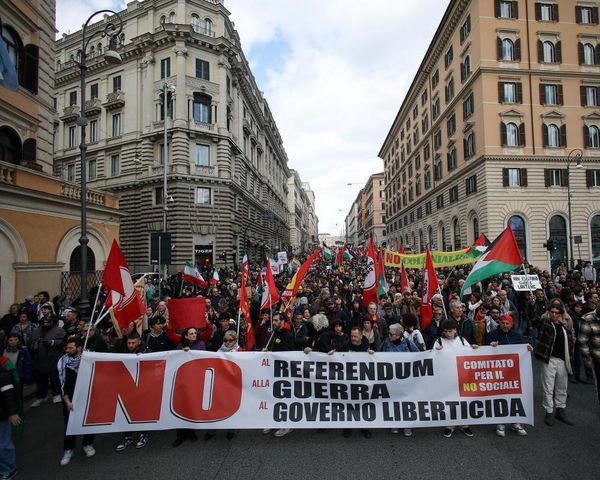





Andrew, the short-term is all that anyone has time for now (ie winning the vote to block no deal unless parliament agrees to it) but what's the most probable outcome given that Johnson's is now a minority government please?
Are the Tories still the biggest party even though 21 Tory MPs have now had the whip withdrawn (temporarily or permanently)?
If they're not the biggest party, who's got the right (eg the Speaker?) to insist on Johnson admitting that fact to the Queen?