
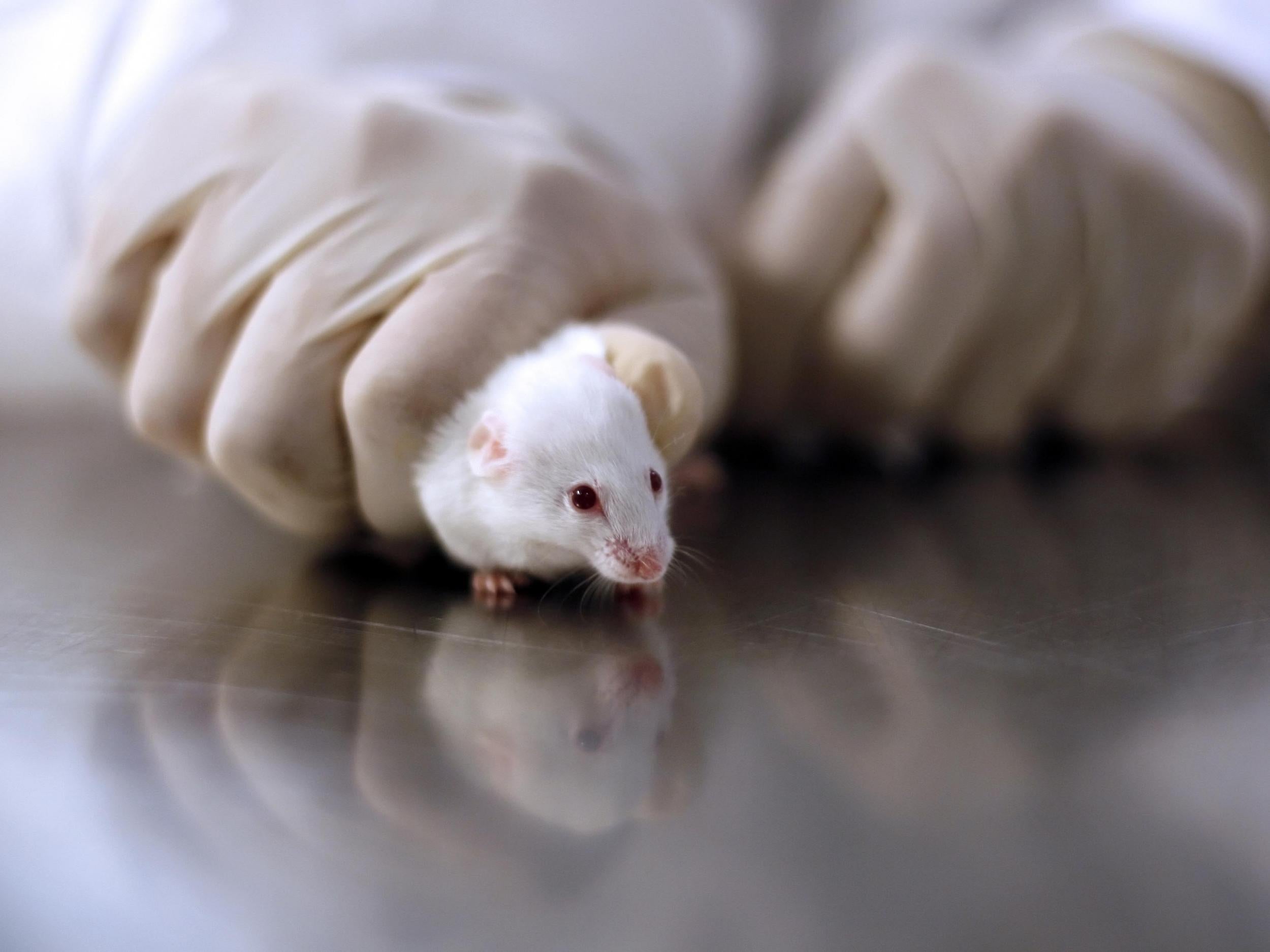
Animal testing could surge in the UK after Brexit as companies are forced to duplicate procedures underpinning the safety of everything from medicines to household cleaning products.
Experts have warned of unnecessary harm to animals, as well as considerable costs for businesses, amid the uncertainty of a potential no-deal outcome.
Chemicals found in an enormous variety of products are currently regulated under an EU programme known as Reach.
This initiative protects the public from hazardous substances and enables the UK to easily send £18bn-worth of products to the continent every year – 60 per cent of all its chemical exports.
If the government cannot agree on a deal that maintains its access to the system, it has said it will create its own UK-based version that essentially “copy and pastes” from the EU database.
However, industry experts have warned that as British companies do not own the testing data for roughly three-quarters of the chemicals covered by Reach, they may need to reproduce a lot of the tests that have been undertaken.
Peter Newport, chief executive of the Chemical Business Association (CBI), told The Independent ministers had ignored this fact despite repeated warnings from the industry.
“If the consortium that owns the data turns round and says ‘We’re not interested in the UK market’, then the only option left for the company that wants to register to UK Reach is to duplicate all the testing again,” he said.
A recent survey conducted by CBI covering 38 key companies in the chemical supply chain found most of them would not have access to their testing data once the UK leaves Reach.
Environment minister Therese Coffey has acknowledged this problem, and noted there may indeed be a need for more animal testing.
At the end of last year, a Lords committee warned the British chemicals sector, the second biggest manufacturing industry in the country, was facing “a huge cliff edge on the day we leave the EU”.
It also called on the government to “minimise or eliminate the need for additional animal testing”.
Despite these issues with the existing strategy, the government has pressed ahead with plans the shadow environment secretary Sue Hayman called “half-baked and confused” ahead of a debate in parliament.
“Michael Gove’s tireless PR efforts cannot change his party’s abysmal record on animal welfare – not least because the Tories are today trying to wave through legislation that they know may lead to an increase in animal testing,” she said.
Kerry Postlewhite, director of public affairs at animal rights group Cruelty Free International, called for collaboration across party divides and with industry to “make sure that more animals do not have to suffer”.
“We have no doubt that people in the UK – whatever their views on Brexit – want the government to do everything it can to ensure we do not repeat the animal tests already carried out to meet the requirements of European chemicals regulations,” she said.
Millions of animals, primarily rats and mice, are used in experiments every year in the UK, often as part of medical research programmes.
The EU has commitments in place to phase out animal testing where possible, and anti-vivisection groups have urged the UK government not to roll back this progress and to strengthen commitments after Brexit.
The Independent has contacted the Department for Environment, Food and Rural Affairs for comment.









.jpg?w=600)



