Afternoon summary
- Unite has agreed a statement at its policy conference saying that the union is “open to the possibility” of a second referendum on Brexit and that it is “highly unlikely” that Labour will vote for the government’s Brexit withdrawal agreement. (See 4.24pm and 5.52pm.)
- Jeremy Corbyn has said that Labour is back as the political voice of the working class and is committed to doing more to give a voice to communities who feel they are not heard in politics. Addressing the Unite conference, he said:
It’s so important that Labour is back as the political voice of the working class in all its diversity across Britain. We will be be campaigning on the issues that matter, to communities that have been held back and ignored, across the country in the weeks and months to come.
Labour exists to represent the large majority of the population, the many, not the few, lower and middle income voters, the skilled and unskilled, nurses and teachers, shop floor workers, builders, designers, technicians, professionals in every community, region and nation.
- Crawford Falconer, the government’s chief trade negotiation adviser, has told MPs that he has not been invited to Friday’s key Chequers meeting on Brexit. At least one Tory MP on the European scrutiny committee said he thought Falconer should be there. (See 2.34pm.)
That’s all from me for today.
Thanks for the comments.
Denis MacShane, the former Labour Europe minister, has written his own analysis of the Unite Brexit statement. He doesn’t think it is pushing Labour towards a softer Brexit (unlike me).
As old t. u. conference policy wordsmith here is my deconstruction of Unite statement adopted today at union conf Unite Statement No Real Move Forward as Contradictions on Brexit Prevail https://t.co/YfodKIz3kZ @PCollinsTimes @MikeGapes @gowdav @MehreenKhn @Jack_Blanchard_
— Denis MacShane (@DenisMacShane) July 3, 2018
Here’s an extract from his argument.
More worrying the Unite resolution suggests a ‘replacement migration system”. In plain English this means the UK rejecting current obligations under freedom of movement rules. Unite makes sensible suggestions for reforming the UK labour market but adds employers can only offer jobs to workers in Europe if they are under a “trade union agreement or by sectoral collective bargaining when they arrive in the UK.”
Given that only about 15% of private sector employees in the UK are in trade unions, this Unite demand – while coherent from the union’s point of view – is in effect a rejection of of existing EU freedom of movement rules which non EU nations like Norway and Switzerland accept.
The EU has made clear since day one that the UK cannot have single market access if it seeks to discriminate against EU citizens offered jobs by British employers. Unite’s line on FoM is thus in complete contradiction to its other demands for “barrier-free access to the single market” and participation in the EU customs union.
Unite's Brexit statement - Four reasons why it points to Labour embracing a softer Brexit
Len McCluskey, the Unite general secretary, is keen to ensure his union’s position on Brexit does not get misunderstood. In his speech in the Brexit debate today he said:
We are not, I repeat for my friends in the media, not, calling for a second referendum ... But we remain open to the possibility of a vote on any deal the Tories come back with.
That is correct. Unite has not suddenly aligned with the Lib Dems in calling for a second referendum, or a people’s referendum as they prefer to call it. But McCluskey was also suggesting that today’s statement does not amount to much, which may be understating it. Labour’s policy on Brexit has been in flux - the boilerplate banalities and unrealistic aspirations are cover for very deep divisions - and, while today’s statement will not by itself change much, it suggests Labour is gradually tilting towards a softer Brexit. Here are four reasons why.
1) McCluskey is making it clearer than ever that Labour will vote against the EU withdrawal agreement. This is not a given; earlier this year Emily Thornberry, the shadow foreign secretary, and Barry Gardiner, the shadow international trade secretary, said it was likely Labour would vote for the final deal. In May Sir Keir Starmer, the shadow Brexit secretary, made it sound more likely that Labour would vote against (he took umbrage at an Alastair Campbell article in the Guardian suggesting otherwise). But Unite are now all but committing Labour to vote against. It is important to remember that, although McCluskey is close to Jeremy Corbyn personally and his union is the most powerful in Labour politics, he does not decide what the parliamentary party does and on some issues Corbyn and McCluskey disagree. But it is very hard to read this afternoon’s statement (see 4.24pm) and imagine Labour not voting against the final deal.
2) Unite has now become the most powerful voice in the Labour party to say it is “open” to the possibility of a second referendum. Technically this is consistent with Corbyn’s position, because he has never ruled one out. But he always implies he does not want one, and has never gone as far as saying he is “open” to the idea since closing it down in the 2017 election campaign. Unite says its preference would be for a general election. But it is very hard to engineer an early election under the Fixed-term parliaments Act, meaning that it is quite easy to see a vote against a withdrawal agreement leading to a formal endorsement of a second referendum. (At some point, if Theresa May fails to get her Brexit withdrawal agreement through parliament, she might be persuaded to back putting it to the people too, but that’s another story.)
3) The Unite statement implies it is open to the UK staying in the single market. In its statement it says:
In line with the principles identified in our 2016 policy conference Unite remains clear that any Brexit deal must:
Deliver barrier-free access to the single market to ensure ongoing exchange of the goods and services which thousands of our members’ jobs rely on.
Secure a customs union with the European Union
Enshrine and enhance working rights, social and environmental protections which are currently based in EU law. These must be transferred into UK law through primary legislation, open and democratically.
Not undermine the Good Friday agreement or the economic integrity of the island of Ireland. There must be no hard border between the Republic and the north.
Protect the integrity of Gibraltar and the right for Gibraltarians to determine their own future.
Grant the immediate and guaranteed right to remain for European citizens in the UK and their dependents and secure the rights of UK citizens working in other EU countries.
Retain membership of beneficial European-level institutions or regulatory bodies which are vital to our industrial sectors such as the European Aviation Safety Agency (EASA), ECHA (REACH) and Euratom
According to a poll, almost 90% of Labour members want the UK to stay in the single market. Corbyn, of course, is opposed to staying in the single market, primarily it seems because he is worried single market rules on state aid and nationalisation could constrain a future Labour government. But the Unite statement does not reference these issues, which could be helpful to those Labour figures hoping Corbyn can be persuaded to budge on the single market.
4) The Unite statement suggests that, on Brexit at least, Labour’s union left is aligning with its Blairite/Brownite right. The Unite statement does not criticise EU membership beyond saying concerns about free movement must be addressed. It says:
Unite acknowledges the concerns regarding the impact which freedom of movement for EU nationals has had on parts of the labour market and some communities, factors which contributed to the referendum vote. Any post-Brexit settlement must consider freedom of movement, which will formally end when the UK is no longer covered by European treaties. Any replacement migration system should focus on comprehensive labour market regulation, addressing the abuse of agency labour and stopping the “race to the bottom” in pay and conditions. Any UK employer wishing to recruit labour abroad should only be able to do so if those workers are covered by a genuine trade union agreement or by sectoral collective bargaining when they arrive in the UK.
Finally, both the cause and consequences of Brexit must be understood in their international context.
This has echoes of Alastair Campbell’s call for a “tough on Brexit, tough on the causes of Brexit” approach.What Unite is asking for on free movement is very similar to what Gordon Brown was proposing in his recent blueprint for a very soft Brexit. Tony Blair is more hopeful than others in Labour about the possibility of Brexit being reversed, but he accepts this would require an EU rethink on free movement, something he thinks is not impossible.
Updated
Nine Labour councillors in Aberdeen face explusion from the party after their disciplinary case for agreeing a coalition with Tories in the city was considered by the party’s ruling national executive on Tuesday.
One of a slew of internal disciplinary cases handled by the NEC, it referred their cases to the party’s national constitutional committee for a final ruling. The Scottish Corbynite blog redrobin tweeted that this “will likely mean their expulsion”.
BREAKING: Aberdeen Labour Councillors reported to the National Constitutional Committee by the ruling @UKLabour NEC. This will likely lead to their expulsion.
— The Red Robin (@redrobinscot) July 3, 2018
All nine councillors, including Aberdeen’s former council leader Barney Crockett, were suspended from the party last May for agreeing a deal with Scottish Tory councillors to run Aberdeen city, against the express orders of then Scottish leader Kezia Dugdale.
Crockett and his colleagues insisted that deal would honour a strict no cuts and no redundancies policy designed by Dugdale to prevent Labour-Tory coalitions in Scottish councils in the run-up to last June’s critical snap general election.
Badly burnt by the heavy criticisms and defections the party faced for working with the Tories in opposing independence in the 2014 referendum, Labour has been scared of such deals largely because the Scottish National party has very effectively weaponised anti-Tory sentiment in Scotland.
Until 2014, all parties did local power-sharing deals with each other, including the SNP and Tories, because the proportional voting system used for Scottish council elections largely prevents one party majorities.
Alex Salmond’s first SNP government in 2007 succeeded largely because he did repeated deals with the Tories at Holyrood, enabling in part his landslide Scottish parliament elections victory in 2011 which in turn enabled him to stage the 2014 referendum.
The Tory-Labour deal in Aberdeen, which saw Labour occupy the coveted Lord Provost, or Lord Mayor role, boxed out the SNP. The SNP has since demanded the nine councillors were expelled from Labour.
Before today’s NEC meeting, Maureen Watt, the SNP MP for Aberdeen South and North Kincardine, had said their “grubby coalition” had seen cuts to services and jobs. “This is a key test of Richard Leonard’s leadership, and so far he’s failing miserably,” she said referring to Dugdale’s successor as Scottish leader.
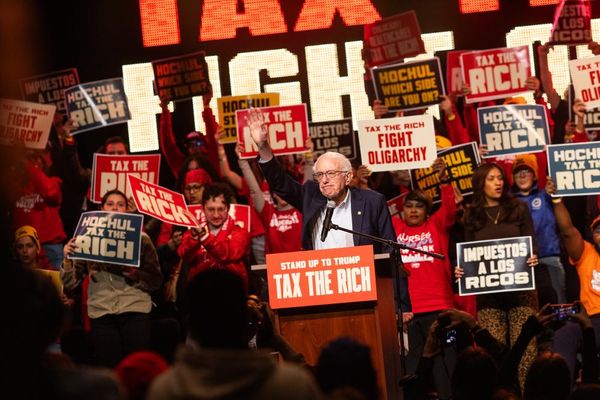
Jeremy Corbyn has been addressing the Unite conference this afternoon.
Jeremy Corbyn to #UPC2018: “Labour is back as the Party of the working class. In Government we will give working class people a larger share of the wealth you create.” pic.twitter.com/dUtK7J3gga
— Unite Politics (@UnitePolitics) July 3, 2018
Unite says it is 'open to possibility' of 2nd Brexit referendum and Labour 'highly unlikely' to back May's deal
At its policy conference in Brighton the Unite union, Labour most important financial backer, has just approved an executive statement on Brexit. It is potentially very significant.
Here is the key extract.
From manufacturing to finance, services and transport, a cliff-edge Brexit would jeopardise the livelihood of millions of working people and must be avoided at all costs. Unite has lobbied for and welcomed amendments to the withdrawal bill which secured a meaningful vote for Parliament to avoid this outcome, and will continue to work for such a process.
However, it remains highly unlikely that the final EU-UK Brexit deal due to come to parliament in the autumn 2018 will satisfy the criteria that Unite and the wider labour movement, including the Labour front bench with its six tests which must be met, have set.
At such a moment Unite will mobilise against the deal. Our priority will be to force an early general election which can lead to the election of a Labour government which would, among other things, reach a better deal with the European Union and improved relations with Europe all round. We are also open to the possibility of a popular vote being held on any deal, depending on political circumstances. Within these principles, the executive council has authority to respond as it thinks best to a fast-changing political situation.
- The Unite union says it is “highly unlikely” that Labour will be able to vote for the Brexit withdrawal agreement the government is expected to agree later this year.
- It says, assuming the deal does not pass Labour’s six test, Unite will “mobilise against the deal.
- It says it would be “open to the possibility” of a second referendum.
I will post more on this shortly.
Updated
Leaving EU with no security deal would be 'unthinkable', says former Europol chief
Turning to another committee for a moment, Sir Rob Wainwright, who was executive director of the EU policy agency Europol until May this year, told the home affairs committee that it would be “unthinkable” for the UK to leave the EU without a security deal. Speaking about an agreement, he said:
This is a complex business. You will have noticed that Brexit is not an easy path to follow. There is in this space a very complicated set of political, legal and even operational issues to overcome and navigating those is not easy, is not proving to be easy, and I think we still have further difficulties to get through.
But at least we start, I think, from the perspective of wanting to get the right security deal in place, and I can’t imagine there will be a no security deal at the end of this process. Frankly, that’s unthinkable.
Q: You seem to be saying the UK should go up the regulatory ladder after Brexit. But can you get better regulations than the EU ones? The EU is the global gold standard for regulation.
Hollingbery says the UK will be able to take advantage of its brand values, which are very high.
Labour’s Stephen Kinnock goes back to the question of what will happen to the 40 trade agreements the UK has with third countries if the UK leaves the EU with no deal. He says if the UK leaves with no deal, it will have to negotiate on WTO terms. Is the government ready to do this?
Hollingbery says a huge amount of work is going on to ensure this could happen.
But there are thousands and thousands regulations that would have to be considered, he says.
Q: So, if the UK leaves the EU with no deal, it is not about having talks with Canada etc. It is about talking to the WTO.
Hollingbery says the UK wants to carry these deals over.
Q: But that relies on there being a transition. These deals give you exemptions from the WTO’s most favoured nation status. These FTAs would simply cease to exist in the event of a no deal Brexit. Those deals cannot be rolled over.
Hollingbery says he will write to the committee if he is wrong. You learn something new in this job every day, he says.
Q: Let’s say there are 50,000 product schedules in the agriculture sector. How many have you gone through to ensure the UK would be ready to trade on WTO terms?
Falconer says the UK would have to have its own product schedules. But it would want them to be the same as the EU ones.
He says on about 4% of these schedules, they have to be divided up between the EU and the UK.
Crawford says the UK will not be able to legally start new trade negotiations until it has left the EU after 29 March 2019.
Labour’s Kate Green goes next.
Q: You said, if there was no deal, we would still be able to carry over these 40 trade deals by March 2019 for the transition. But if there was no deal, there would be no transition.
Hollingbery says the government would still want these deals agreed by March.
Q: But they could not be carry over deals, because there would be nothing to carry over to.
Hollinbery says he does not want to mislead Green. He reminds her that he is new in his job. (He only took evidence last week.) He says he will write to the committee.
Q: What is the government’s position on whether future trade deals should include investor-state dispute settlement (ISDS) arrangements?
Hollingbery says he thinks the government does not have a fixed view. In some trade deals they might not be appropriate. But in others they will be.
Updated
Q: What will happen if there is no transition and no agreement?
Hollingbery says work will have to be completed much sooner.
Q: Will the UK just fall out of these 40 trade deals?
No, says Hollingbery. He says the plan would be to carry these over by March.
Labour’s Darren Jones goes next.
Q: Is there any precedent for a country carrying over free trade deals, in the way the UK is planning to carry over the EU ones?
Hollingbery says a lot of work has gone on already in terms of speaking to these countries.
As for whether there is precedent, he says he does not know. But he says he has been advised that carrying over these deals is “tenable”. He says the government has a “reasonable degree of confidence” that it will be able to carry over these deals.
Crawford says some countries, like South Africa, Australia, New Zealand and Canada, have said they are happy to carry over these deals.
But he says in trade terms he does not think there has ever been an example quite like this, he says.
Q: How many of the 40 or so countries have said they are happy about carrying over these deals?
Crawford says he does not know how many have said they are happy about this in public. There are more who have said they are happy in private, but he says you cannot always bank on those.
Q: And have any countries objected?
Crawford says “there are a few that have asked questions”. But he says that is not the same as objecting.
Q: And have any countries tried to use the process to get better terms?
Crawford says some have asked for something extra. But the UK has said at this point it just wants to carry over these deals. He says, even if both sides wanted to renegotiate, it would not be possible to do it by March 2019 anyway.
Richard Drax, the Conservative Brexiter, goes next.
Q: Are you deeply frustrated about doing this job for a year but not having clarity about what Brexit policy will be? You have spent a year achieving probably not very much.
Crawford says he is glad to have had a year. He needed to build capacity. He says he is already working on 40 agreements that need to be carried over. This process has not received much attention. He is not complaining about that, he says. Trade negotiators are generally a shy lot, he says. He would prefer to live under a rock.
He says the government has said it will leave the customs union. As a bottom line, that is all he needs to know.
That means he will be in a position to negotiate with third countries.
Matters of detail are not resolved. But his department is not the responsible department, he says.
Cash says at least one member of the committee has left the hearing because Falconer and Hollingbery are refusing to discuss the Brexit negotiation.
Q: Will the UK be in a stronger position negotiating trade deals with other countries if it maintains regulatory alignment with the EU?
Crawford says that is another version of the question asked earlier. He says he cannot really answer because it is Brexit policy. But there are some forms of regulation that are a constrain to trade deals.
The question is, what the nature of that regulation is, and where it bites.
He says part of the reason for his reticence is that there is a negotiation on. He does not want to say anything that might constrain that.
Sir Bill Cash goes next.
Q: President Trump has reservations about the currency advantages Germany has against the US by being in the euro. How would this affect the UK?
Crawford says he thinks the UK will be able to develop trade policy in a way that is most advantageous.
Falconer says the UK wants to transition across the EU free trade agreements that the UK benefits from, so that after Brexit they continue to apply to the UK as a third country.
Back at the European scrutiny committee, Crawford Falconer, the government’s chief trade negotiation adviser, says there is case for saying the UK can do more in terms of promoting exports even while it is in the EU.
Labour will reinstate suspended MP Jared O’Mara after its ruling body was advised to issue him with a formal warning rather than refer him for expulsion, my colleague Jessica Elgot reports.
Q: Are there are enough trade negotiators?
Falconer says the facetious answer would be to say, since they are not negotiating anything now, they have more than they need.
But, for the future, he says he thinks there will be enough.
It will depend on how many negotiations are going on at the same time, he says. “We may well need to train more,” he says.
- Government may need more trade negotiator, trade chief says.
He says you do not need to have been doing trade negotiations for 20 years to be good at this. If you have done policy and you are smart, you can learn, he says. He says the UK produces many people like this.

Falconer says by 2050 eight out of 10 of the world’s biggest economies will be outside the EU. So there are huge opportunities for the UK outside the EU, he says.
Marcus Fysh asks why Greg Clark, the business secretary, is dissenting from government policy (in backing continuing single market membership). Hollingbery says that is not something he can comment on.
This is from the Independent’s Rob Merrick.
Summary of evidence from trade department so far….
— Rob Merrick (@Rob_Merrick) July 3, 2018
‘We haven’t got a clue what’s going on - ask the Brexit department”
(although they mean No 10) https://t.co/AWUp96EjLE
Government chief trade negotiation adviser says he hasn’t been invited to Chequers Brexit meeting
Sir Bill Cash, the Tory Brexiter and committee chair, goes next. He asks Falconer if he is going to the Chequers meeting on Friday.
Crawford says he has not been invited.
But he says that does not mean he thinks he should have been there, or that he is “bitter and twisted” about that. It would have been extraordinary if he had been invited. He is not at the centre of the negotiation process.
It is essentially a political meeting, he says.
- Government chief trade negotiation adviser says he hasn’t been invited to Chequers Brexit meeting on Friday.
Richard Drax, a Tory Brexiter, says Falconer should be there.
Q: Would it be better if Crawford Falconer were involved in the Brexit negotiations.
Falconer says he was not hired to do that job. He won’t say whether he is frustrated by that or relieved. He was hired to do trade deals. But he is giving advice to DExEU.
Q: Do you think cabinet ministers involved in these negotiations are aware enough of the problems?
Hollingbery says plenty of people offer advice, so he thinks ministers are informed.
Macus Fysh, a Conservative Brexiter, goes next.
Q: Will the UK remain in a customs union?
Hollingbery says the prime minister has set out the position.
Q: So why can’t you say whether you will be able to negotiate free trade deals?
Hollingbery says the PM wants the UK to be able to negotiate free trade deals. As for the negotiations, these are matters for DExEU [the department for exiting the EU].
Fysh says yesterday DExEU did not seem to know anything about the government’s latest customs plan.
Q: Would any country in the world want to do a free trade deal with the UK for services alone?
Hollingbery says he cannot answer that. It is a hypothetical question.
Q: But this is one eventuality. Have you made an assessment of whether any country would do trade deals with the UK in these circumstances?
Hollingbery says he has not had such an assessment.
Q: How would a selective application of the common commercial policy affect your ability to conclude trade deals?
Falconer says he is not sure what the question means. But the UK would have full power to negotiate and sign trade deals during the implementation period, although they would be implemented afterwards.
Q: If the UK’s backstop plan were to be implemented, wouldn’t that mean the UK could only negotiate trade deals at the point affecting services.
George Hollingbery, the minister, replies. He says this is not really a matter for his department. He says his department is preparing for every eventuality.
Government chief trade negotiation adviser questioned by MPs
Crawford Falconer, the government’s chief trade negotiation adviser, has just started giving evidence to the Commons European scrutiny committee about Brexit. e is appearing alongside George Hollingbery, who replaced Greg Hands as minister of state at the international trade department last week after Hands resigned over Heathrow.
The Tory Brexiter David Jones starts by asking which of the customs plans being considered by the government would be best for trade.
Falconer says it is not for him to handle the Brexit negotiations. He is focused on trade.
Lunchtime summary
- Philip Hammond, the chancellor, has told MPs that on Friday, when the cabinet meets to debate the Brexit white paper at Chequers, he will spell out how much the various options will cost the economy. His comment, at Treasury questions in the Commons, will be seen as an indication that he will be pushing for a softer Brexit.
Chancellor Phillip Hammond tells Commons that a way forward at Friday’s Chequers Cabinet meeting is “now urgent” and that there ministers will get private “cross Whitehall economic assessments of different potential routes forward” - only to be made public in Autumn pic.twitter.com/7ac1vzOGc3
— Faisal Islam (@faisalislam) July 3, 2018
In the Commons he also stressed the importance of listening to business, telling MPs:
I think the views of business, which is the great generator of employment and wealth and prosperity in our country, should always be taken very carefully into account. We have to listen to what business is telling us and make sure that we deliver a Brexit which delivers the needs of business.
And he said he would be pushing for a Brexit that “protects our important supply chains, protects British jobs and protects British business going forward.”
- Jacob Rees-Mogg, the Brexiter Tory backbencher who was criticised by colleagues yesterday for writing an article implying Theresa May would split the Conservative party if she opted for a soft Brexit, has said he was trying to support the prime minister. Speaking on his ConservativeHome podcast, he said those arguing for a soft Brexit were the ones being disloyal because they were arguing “against the prime minister’s speeches, against the position formally of the cabinet and against the manifesto”. He went on:
This is really serious, it is constitutionally unsuitable, it is damaging to the Conservative party and, most importantly, it weakens us in negotiations. I am trying to support the prime minister’s position and to remind people that any implementation deal has to get through parliament, and if it is a bad deal, or it doesn’t meet the manifesto commitments, people won’t vote for it.
- Len McCluskey, the Unite general secretary, has said Brexit is turning into a nightmare. Speaking at the Unite conference, where delegates are debating calls for a second referendum, he said:
[Theresa May] is held prisoner by the dogmatists and fantasists of the far right. These people see in Brexit the chance to turn Britain into the low-wage, deregulated, race-to-the-bottom society of their dreams. But Brexit is turning into a nightmare for the rest of us - a nightmare of uncertainty above all. The shadow of job losses is hanging over much of the British economy, including the jobs of tens of thousands of Unite members.
McCluskey said the Labour party and the unions should unite around an alternative to the Conservatives’ plans. He also said Unite was not calling for a second referendum but, like the Labour party, remained open to the possibility of a vote on any deal the Tories come back with.
- MEPs have said they still have concerns about the British government’s plans to allow EU nationals to claim settled status in the UK after Brexit. Guy Verhofstadt, the parliament’s lead Brexit spokesman, set out the parliament’s concerns in a news release and in a letter (pdf) to Sajid Javid, the home secretary. One objection is that EU nationals will have to pay a fee for settled status.
- Liz Truss, the chief secretary to the Treasury, has said that if President Trump visits Scotland when he comes to the UK later this month (as is expected - it is thought he will visit one of his Scottish golf courses), the UK government will pay the policing costs.
I have confirmed that should President Trump visit Scotland, we would provide funding to the Scottish Government to cover the policing costs incurred 👇👇 pic.twitter.com/UsAn0QSvca
— Liz Truss (@trussliz) July 3, 2018
Updated
Rees-Mogg says he is as likely to be next pope as next PM
Jacob Rees-Mogg, the Conservative backbencher and sometime favourite amongst Conservative members for next party leader (see 12.08pm), has said he is as likely to become the next pope as the next prime minister. Speaking in his latest ConservativeHome podcast, he said:
The Conservative party in office has always, since [1920s leader Stanley] Baldwin, elected a former chancellor, home secretary or foreign secretary.
Pressed over whether he could put himself forward as a candidate for leader, he said:
There isn’t a contest. I am technically eligible to become pope, which is open to all Catholic males, but the College of Cardinals has not elected a non-cardinal since, I think, Urban IV.
I’m very unlikely to be the next pope and I’m very unlikely to be the next prime minister, for exactly the same reason. Though technically eligible, it is not the way history will go.
Rees-Mogg also said he thought Sajid Javid, the home secretary, and Michael Gove, the environment secretary, would both be “first-class candidates” to succeed May.
On the Daily Politics Owen Paterson, the Brexiter former environment secretary, said the UK should be preparing for a no deal Brexit. He told the programme:
We should be offering the EU reciprocal free trade with zero tariffs, and if they won’t accept that then we go to World Trade [organisation] arrangements which tiny little countries like the United States, China, India struggle to trade under.
But on the programme Paterson was strongly criticised by the remain-voting Ed Vaizey, who told him:
I would respect the Brexiteers more if they said: ‘This is a fight for independence, we want to be independent for the European Union, it will cost our economy - in the short term, in the medium term it will cost our economy - but we think it is the right thing to do and that is what we are going to campaign for.’
What I can’t stand is this fantasy that there will be no economic impact at all if we simply walk away from the European Union.
This is what the Press Association has filed on the Westminster Hall debate on Scotland and Brexit this morning. (I don’t normally cover Westminster Hall debates, but there have been requests for some coverage from BTL.)
Theresa May’s Conservative government is “hopelessly divided against itself” as the UK faces its “biggest challenge” of Brexit, an SNP MP has said.
Patricia Gibson warned the people of Scotland “will not have their voices overridden by Westminster without consequence, dismiss them at your peril”.
Speaking during her Westminster Hall debate on the implications for Scotland of leaving the EU, the MP for North Ayrshire and Arran said a lot of people had watched the unfolding of the Brexit process with “horror and alarm”.
She said: “I don’t think anybody can deny that we have a UK governing party that is hopelessly divided against itself as the UK faces arguably the biggest challenge and upheaval it has faced probably since the Second World War.
“The cabinet doesn’t speak with one voice, it speaks with several confused and contradictory voices, so how can it enter into any negotiations with the EU inspiring any sort of confidence from any quarter?”
Gibson argued the “hostile environment” created would drive EU citizens to leave the UK.
She warned of the consequences of a breakdown of trust over the SNP’s “power grab” concerns in relation to the government’s Brexit legislation.
She said: “Those who value the Union beware, beware that whenever the next referendum on Scottish independence comes - and come it will - the debate has been crystallised... like never before.
“Every day this Tory government demonstrates just a little bit more that they cannot be trusted by the people of Scotland... (they) are sovereign and will not have their voices overridden by Westminster without consequence, dismiss them at your peril.”
Conservative Stephen Kerr (Stirling) said there was a need to pull together to make a success of Brexit, adding: “The SNP want to create an air of constitutional crisis but Scotland is not buying any of that talk, and people are sick and tired of the SNP’s obsession with a second independence referendum.”
Tory Colin Clark (Gordon) said the results of the Scottish independence and EU referendums must be respected, adding that “done correctly Brexit can provide many exciting opportunities for Scotland”.
SNP Joanna Cherry (Edinburgh South West) said: “The people of Scotland are not masters of their own fate because they are being taken out of the EU against their democratic will.”
Responding, Brexit minister Robin Walker said: “The government is clear that we want a deal that works for the whole UK.”
Four times as much of Scotland’s business was with the UK compared with Europe, he said, adding that the worst thing for Scottish jobs and businesses would be to split from the UK.

Updated
Tory MP Johnny Mercer urges Gavin Williamson to show more loyalty to PM
On the subject of the Conservative leadership (see 12.08am), the Conservative MP Johnny Mercer has been doing his best to ensure that Gavin Williamson, the defence secretary, does not make the shortlist. Mercer, a former soldier, has been giving a speech on defence at the RUSI thinktank. Sky’s Alistair Bunkall has some highlights.
Speaking at RUSI, @JohnnyMercerUK takes a swipe at @GavinWilliamson:
— Alistair Bunkall (@AliBunkallSKY) July 3, 2018
“What we do not want to see is a change of Prime Minister.”
Mercer: “The way some of this has been played out in the public domain has been entirely mis-informed, dangerously undermining of any logical and opinion forming strategy that could win support for more funding, and frankly embarrassing for all concerned.”
— Alistair Bunkall (@AliBunkallSKY) July 3, 2018
Mercer: “This serious debate needs to be had by serious people making serious contributions to a serious matter.”
— Alistair Bunkall (@AliBunkallSKY) July 3, 2018
Mercer: “The Military prides itself on its values most particularly of loyalty, discipline and selfless endeavor. This must be reflected at all times in the civilian control of the Military”
— Alistair Bunkall (@AliBunkallSKY) July 3, 2018
At Treasury questions the Conservative MP Robert Halfon, who has campaigned for years against increases for fuel duty, asked about today’s Guardian report saying the government is thinking of ending the eight-year freeze on fuel duty to raise money for the NHS. Halfon asked the government to rule this out.
But Mel Stride, the Treasury minister who was replying, refused to give Halfon the assurance he was seeking. Stride just said that the government would be looking at tax levels and that everybody would have to pay “a little bit more” to help fund the NHS increase.
Treasury minister Mel Stride on lifting fuel duty freeze: "We will of course be looking at taxation and everybody in their different ways paying a little bit more to make sure that we fund the significant amount we have now committed to our NHS". https://t.co/AVHsvGVgTG
— Pippa Crerar (@PippaCrerar) July 3, 2018
Updated
Hammond says he will tell cabinet on Friday how much various Brexit options will cost economy
At Treasury question John McDonnell, the shadow chancellor, also asked about the warning from the British Chambers of Commerce today. (See 9.15am and 10.14am.) Philip Hammond, the chancellor, replied by saying that he did take the BCC’s concerns seriously and that the government realised it did now have to take some firm decisions. He also said that, given that McDonnell wants to bring down capitalism, Labour should not be lecturing him about the needs of business.
McDonnell had a smart response as he asked his second question. He said:
The chancellor does not have to worry about others undermining capitalism. They are doing a pretty good job themselves.
He also asked Hammond for his latest estimate of the cost of a no deal Brexit to the economy.
In his reply, Hammond said that at Chequers on Friday he would be telling cabinet ministers of the costs of the various Brexit options to the economy.
I will be setting out the Treasury’s assessment of the implications of different potential routes forward.
- Hammond says he will tell cabinet ministers on Friday how much various Brexit options will cost economy.
(That is probably bad news for cabinet Brexiters like Boris Johnson who favour the “max fac” customs plan. HMRC, an arm of the Treasury, says this would cost business up to £20bn a year.)
Hammond also reaffirmed his commitment to publish an estimate of the economic impact of the final Brexit agreement when MPs vote on it in the autumn. He said:
When the time comes for parliament to vote on our proposed package, I will make sure that all the relevant material is put in the public domain.
In the Commons, at Treasury questions, the Labour MP Adrian Bailey has just asked about the British Chambers of Commerce list of unanswered Brexit questions. (See 10.14am.) He said many were directly relevant to the car industry, and he asked what was the government’s assessment of how much the sector would lose.
Robert Jenrick, the Treasury minister who was replying, did not refer to the questions directly. He just said the government wanted to get a Brexit deal that would allow trade to continue on as frictionless a basis as possible.
For anyone interested in who the next Conservative party leader will be, the ConservativeHome website has released some fascinating polling.
ConservativeHome does a regular survey of Conservative party members, asking them who they want to see as next party leader. It is only a survey, but their surveys have a good record of replicating the results of internal Conservative party elections.
For several months the backbencher Jacob Rees-Mogg came top in the next leader survey, although Sajid Javid, the new home secretary, leapt into top place in the most recent poll.
But these regular surveys are only of limited use because, under the Conservative party’s leadership rules, the members would only get to choose from a shortlist of two candidates selected by MPs. It is generally assumed that Rees-Mogg would never make it into the play-off because he would not have enough support from parliamentary colleagues. MPs vote for the candidate they prefer, but in these contests they are also motivated by the desire to keep the candidate who poses the greatest threat to their first choice off the final ballot paper. And that means knowing how various candidates might perform in the run-off is crucial.
ConservativeHome has been trying to find out. In a survey, it has asked members who they would prefer in six potential contests.
The findings suggest Sajid Javid is best placed to win a future Conservative leadership contest. But they also suggest that Michael Gove, the environment secretary, would have the best chance of beating him.
Survey suggests Gove would beat Johnson easily

Survey suggests Javid would beat Hunt very easily

Survey suggests Johnson would only just beat Hunt

Survey suggests Javid would easily beat Johnson

Survey suggests Gove would beat Hunt very easily

Survey suggests Javid would only just beat Gove

Updated
Here is a round-up of some of the Brexit stories in today’s papers.
The atmosphere at Westminster last night was so febrile that it was described by one senior Tory as “a bit end of days” as No 10 arranged face-to-face talks with senior ministers before their meeting at Chequers on Friday.
Another said: “It feels like the wild west. A lot of ministers have been slapped down for failing to observe cabinet responsibility and yet No 10 are the worst offenders. We are all being kept in the dark.”
Elliott and Coates say the plan amounts to a reworking of the “max fac” plan.
Two sources said that it was likely to be branded as a successor to the “max fac” plan, which relies on technology to reduce border friction and is supported by Boris Johnson, the foreign secretary, and Michael Gove, the environment secretary, while incorporating many of the elements of the “new customs partnership” plan that they object to. Such a partnership would lead to Britain collecting EU tariffs on its behalf.
Some officials made clear that they saw it as primarily a “rebranding” exercise of the plan, which Mr Johnson and others thought they had defeated. One said that the final version, which is still being worked on, could only involve the change of “a comma here and a phrase there”.
To shore up his leadership prospects, Mr Rees-Mogg’s allies are said to have interviewed PR firms earlier this year. Although presented as an attempt to kickstart efforts to match the renaissance of Labour activist groups, insiders said that the true purpose was to create a vehicle that could serve as a leadership campaign in the event of a contest for the Tory crown.
The revelation comes after reports this week that supporters of Mr Rees-Mogg, an Old Etonian and chairman of the investment company Somerset Capital Management, have raised a war chest of £750,000.
In an effort to boost his profile, Mr Rees-Mogg announced at the weekend that he had joined Snapchat, the social media app popular with young people that deletes messages shortly after they are sent.
A source familiar with the recent invitation to PR firms said: “They were asked to explain how, if Jacob was speaking at a university, they would go about maximising the publicity and harvesting the greatest number of supporters who could later be converted into voting Tory members.”
Everyone threatening Theresa May with chaos, revolt, resignations, and a leadership election if she doesn’t do as they wish needs to think carefully about what might be the consequences of their actions. A vote of no confidence in the leadership called on this issue would in all probability rally the sensible middle to the Prime Minister. Even if it didn’t, any new incumbent would face exactly the same negotiating choices and arithmetic in parliament.
Such arithmetic is what any government has to live with. When we negotiated the coalition in 2010, we had to ditch some of our ideas like abolishing inheritance tax in order to secure the overall prize of implementing a viable economic plan.
This is a parallel situation – if ardent Brexiteers push too hard they will end up without their main objective. If there is no agreement this week on a plan for customs arrangements, the Commons will be much more likely to vote in the near future to stay in the Customs Union in its entirety.
The choice is either to back a compromise plan now or to end up with a more watered-down version of Brexit that would be forced on ministers anyway.
What defines the cabinet these days is an absence of seriousness,” says one senior figure in the City. “We are facing some really big serious challenges as a country and the people in charge are frivolous.” The impression of a lack of grip was only reinforced by the revelation that Oliver Robbins, the chief Brexit negotiator, had left a folder containing cabinet briefings and emails from the prime minister on a train ...
In Imperium, Cicero describes Pompey as “a petulant child, trapped in the body of an ageing clown. What makes him vulnerable is his delusion that the whole world takes him seriously.” As they gather in Chequers this week, cabinet ministers must remember that the trappings of office do not prevent them seeming absurd. With power comes responsibility and the stakes are too high for the self-indulgent political games too many of them are playing. They should get a grip and grow up or get out.
There are only two reasons for removing the leader, to change direction or because the alternative is a major upgrade. No such figure exists to meet condition two. The Tories could use a more inspiring leader but, when one scans the obvious names, inspirational is not the word that leaps to mind. There are some solid performers, some with potential, but none yet with the look of a game-changer.
A change of political direction can only be towards a harder Brexit, but this too will fall foul of the same problems besetting Mrs May. The Tories will still be divided, there is no majority in parliament for such a position and the economic position may well deteriorate. The choice then is between a leader who grasps the complexity of Brexit and wants a compromise that does minimal damage to the economy and a leader who does not but will be forced to accept one in the end.
The Local Government Association conference is taking place this week. The LGA represents all parties and is currently Conservative-led, and its chairman, the Tory peer Gary Porter, has said councils will face an £8bn black hole in their finances by 2023.
Today Nick Forbes, the LGA senior vice chair and the Labour leader of Newcastle city council, is speaking at the conference. Echoing Porter, he will also says councils face “more pain to come” because of the £8bn funding shortfall. But he will argue that Brexit will make this even more problematic, because after Brexit people will expect better services. According to extracts from the speech released in advance, he will say:
People will expect things to be different. That’s what they voted for; they voted for change.
They will expect to see a difference in their local area, they will expect to see more housing, they will expect to see better local public services.
Now, we didn’t paint these claims on the side of a bus, but they are the expectations we will have to deal with nonetheless.
To do that, we as local government need a new settlement from central government, one that devolves powers and finances down to local communities.
The government has now published its LGBT action plan (pdf), and its national LGBT survery (pdf). And here is the news release about its 75-point action plan, focusing on the government plan to eradicate conversion therapy.
My colleague Peter Walker wrote this up in a preview story overnight.
Among other things, the survey shows that on average LGBT people are likely to have a lower life satisfaction than other members of the population.

BCC list of Brexit questions for business government has not been able to answer
Given that the British Chambers of Commerce chart (see 9.51am) may be illegible to many of you, here are the questions in a point size you may be able to read.
The BCC says there are 24 questions about Brext where business needs answer.
On two it gives the government an amber rating, meaning some progress has been made. Those two questions are:
ACCESS TO EU WORKFORCE
Will I be able to hire EU nationals in future – and under what conditions?
INDUSTRIAL STANDARDS
What industrial standards will my firm need to comply with in the future, and will the UK stick with the European model that we have strongly influenced?
And here are the 22 other questions where the BCC has given the government a red rating, meaning that little or no progress has been made.
BUSINESS TRAVEL
Will business travel between the UK and the EU involve further administration, costs or visas?
STAFF TRANSFERS
Will my business be able to move skilled staff members between the UK and the EU in future?
HORIZON 2020
Will UK firms and institutions be able to participate in European R&D projects after 2020?
EUROPEAN INVESTMENT BANK
Will UK projects be eligible for support from the EIB after 2020?
ESIF FUNDS UK REPLACEMENT
How will the UK replacement for EU Funds work, and how can my company access opportunities?
IMPORT VAT
Will I need to pay VAT on goods at point of import? Will I be able to use postponed accounting or have access to more generous deferment account terms to offset the cash-flow issues?
SERVICES VAT
Will I need to become VAT-registered in every EU member state where my firm has clients?
REGULATORY AGENCIES
Which regulator will be overseeing my business in the future, and what rules do I need to follow? Is the UK government going to charge businesses for the creation of new regulatory agencies in the UK?
PRODUCT TESTING
Will conformity assessments on products conducted by a UK body will continue to be sufficient for the product to be sold on the EU market?
DISPUTE RESOLUTION
What dispute resolution and means of redress will be available to my business in the future?
MOBILE ROAMING
Will my business have to pay mobile roaming charges in the EU after Brexit?
CUSTOMER DATA
Will my business continue to be able to hold and transfer data and personal information without any interruptions after we have left the EU?
TARIFFS
Will I be able to continue trading without tariffs with the EU in the future?
RULES OF ORIGIN
What rules of origin will I need to comply with once the UK has left the EU? Will I be able to UK and EU content to be counted as single origin, both when trading with the EU and with third countries?
CONTINUITY OF EU FTAS
Will my company still have access to markets on the same terms as now once we have left the European Union?
BUSINESS ENGAGEMENT STRUCTURE
How will my business be able to contribute directly to future trade negotiations?
AVIATION
Will I still be able to fly people and/or goods between the UK and the EU after Brexit day – or could travel be disrupted?
CUSTOMS
Will my goods be subject to new customs rules, procedures and inspections at the UK or EU border in future? Could my shipments be held up and delayed?
INSPECTIONS
Will there be new health or safety-related inspections at the UK-EU border that my company will need to deal with?
DECLARATIONS
Will I need to do additional customs-related paperwork, including import and export declarations, when trading with the EU?
TRUSTED TRADER SCHEMES
Will my business be able to become a ‘trusted trader’ to move quickly through borders in future – and what will the process be?
IRELAND
What, if any, procedures will my company face trading cross-border between Northern Ireland and the Republic of Ireland?
Updated
Here is the full list of questions from business about Brexit drawn up by the British Chambers of Commerce, with the BCC’s assessment of whether the government is providing answers. Only two topics are graded amber, meaning some progress has been made. All others are graded red, indicating little or no progress.

Business says government Brexit indecision leading to 'significant slowdown' in investment
Business groups are becoming increasingly willing to speak out about their concerns about Brexit and this morning there are two significant interventions in this field.
The first is from the British Chambers of Commerce, which says the government has made almost no progress over the last two years towards providing answers to business to the key questions about what will happen after Brexit. It says this is causing “a significant slowdown in business investment”.
Here is an extract from the BCC news release.
The British Chambers of Commerce (BCC) has today published the two-dozen top real-world questions being asked on Brexit by businesses across the UK – and says the government has managed to make limited progress on just 2 of the 24 issues where clarity is urgently needed so that firms can plan their trade following the UK’s departure from the EU.
In the aftermath of June’s European council summit – with little progress made in narrowing the gap between the two sides – and ahead of cabinet deliberations later this week on the UK’s negotiating stance, the BCC warns that continued uncertainty on firms’ day-to-day P&L [profit and loss] questions is causing a significant slowdown in business investment.
Here are some of the 24 Brexit questions it raises where businesses still don’t know what will happen.
On tax, whether a business will need to pay VAT on goods at point of import, and will services firms need to be registered in every EU Members State where it has clients?
On tariffs, what Rules of Origin firms will have to comply with to receive preferential tariff rates?
On customs, whether goods will be subject to new procedures, and delayed at border checkpoints?
On regulation, whether checks on goods conducted in the UK will be recognised by the EU?
On mobility, whether businesses will be able to transfer staff between the EU and the UK using the same processes as currently?
On R&D projects, whether UK businesses will be able to participate in EU projects after 2020?
And this is from the BBC director general, Adam Marshall.
With the time running out ahead of the UK’s exit from the EU, business patience is reaching breaking point.
Businesses have every right to speak out when it is abundantly clear that the practical questions affecting the competitiveness of their firms and the livelihoods of millions of people remain unanswered. With less than nine months go to until Brexit day, we are little closer to the answers businesses need than we were the day after the referendum.
It’s time for politicians to stop the squabbling and the Westminster point-scoring - and start putting the national economic interest first. These are not ‘siren voices’ or special interests. They are the practical, real-world concerns of businesses of every size and sector, in every part of the UK.
In a separate intervention, the Professional and Business Services Council, which represents firms working in the services sector (eg law, accountancy, consulting, advertising etc) employing 4.6m people, has written an open letter to Theresa May urging her not to ignore the importance of services. There has been a lot of speculation about May trying to keep the UK effectively in the single market for goods. The PBSC is effectively saying services need to retain full single market benefits too.
Last week the European Services Forum, which represents the same sector on a Europe-wide basis, made much the same point in its own open letter.
NEW: Business push for “towards EEA” continues from companies representing 4.6 million employees
— Sam Coates Times (@SamCoatesTimes) July 3, 2018
In a “Dear Theresa May” letter, the business and professional services council warns her: don’t forget services - and the benefits they get from the single market pic.twitter.com/RDNRvW1YYW
Here is the agenda for the day.
Morning: Theresa May chairs cabinet.
11.30am: Philip Hammond, the chancellor, takes questions in the Commons.
12pm: Jeremy Corbyn speaks at the Unite policy conference. Later delegates will vote on calls for Unite to back a second referendum on Brexit.
Lunchtime: May meets the Dutch prime minister Mark Rutte for talks in the Netherlands.
2pm: James Brokenshire, the housing and communities secretary, speaks at the Local Government Association conference.
2.15pm: Crawford Falconer, the government’s chief trade negotiation adviser, and George Hollingbery, a trade minister, give evidence to the European scrutiny committee.
2.30pm: Penny Mordaunt, the international development secretary, gives evidence to the international development committee about sexual abuse in the aid sector.
4pm: May hosts a Pride reception at Number 10.
As usual, I will also be covering breaking political news as it happens, as well as bringing you the best reaction, comment and analysis from the web. I plan to post a summary at lunchtime and another at the end of the day.
You can read all today’s Guardian politics stories here.
Here is the Politico Europe round-up of this morning’s political news from Jack Blanchard. And here is the PoliticsHome list of today’s top 10 must-reads.
If you want to follow me or contact me on Twitter, I’m on @AndrewSparrow.
I try to monitor the comments BTL but normally I find it impossible to read them all. If you have a direct question, do include “Andrew” in it somewhere and I’m more likely to find it. I do try to answer direct questions, although sometimes I miss them or don’t have time.
If you want to attract my attention quickly, it is probably better to use Twitter.
Updated